All-Day School Right Starts for First Graders
4 min read
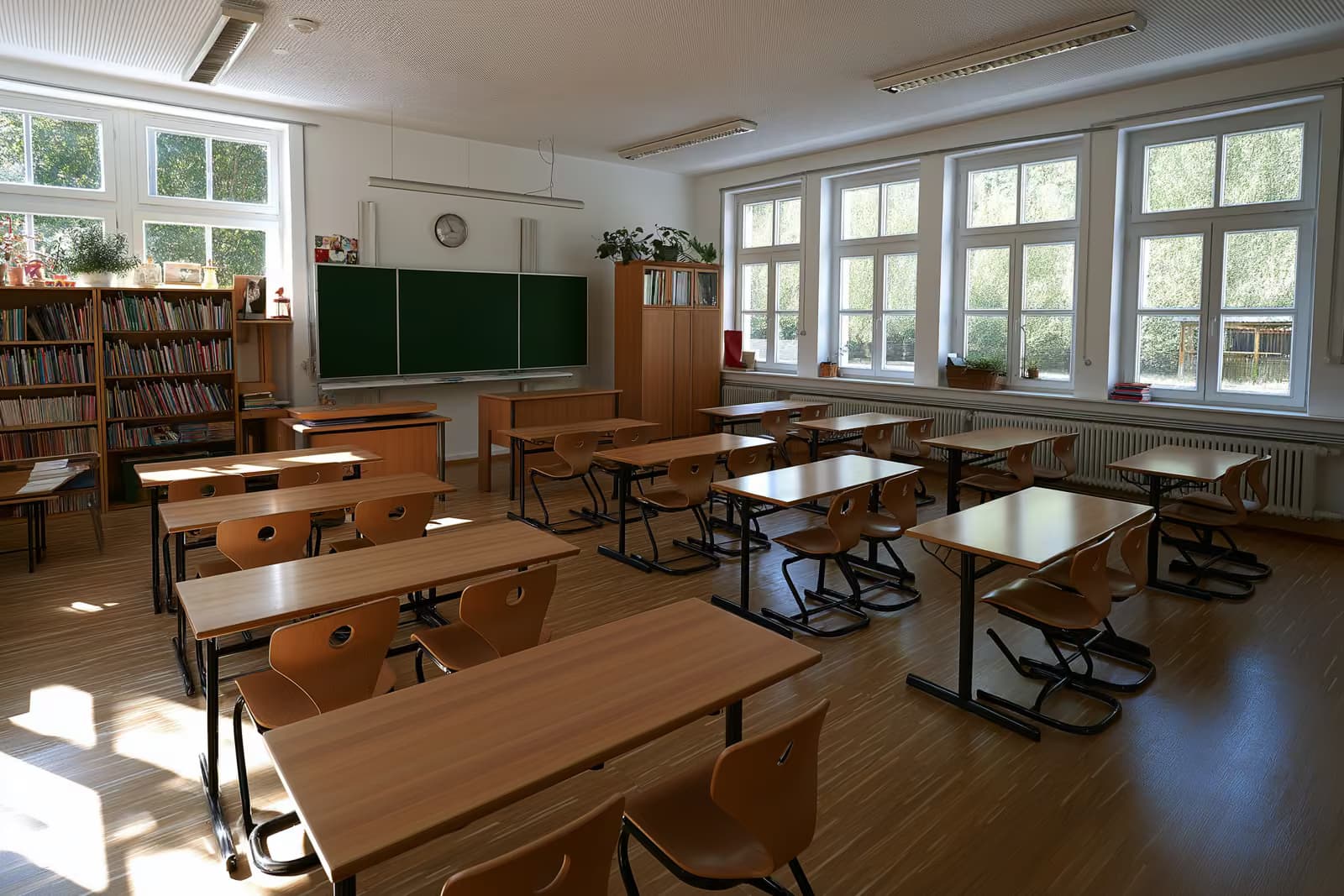
A significant change for families took effect across Germany at the start of August 2026. Every child entering the first grade now has a statutory right to all-day school care, meaning a place in supervised education and activities that extends well beyond the morning lessons. For working parents, and especially for foreign residents who often lack nearby family to help with childcare, it is one of the most consequential social reforms in years.
The right is anchored in the eighth book of the German social code, known as SGB VIII, and in the Ganztagsförderungsgesetz, the law on all-day support. It is enforceable in the same way as the existing right to a nursery place for younger children, which means an authority cannot simply decline to provide it. But turning a legal right into an actual place is where the picture becomes more complicated.
What the all-day school right covers
The entitlement guarantees care and education for at least eight hours a day, across five weekdays. In practice, for a child who has four hours of morning lessons, that translates into roughly four additional hours of supervised afternoon care. The right also runs through the school holidays, although each federal state may set a closure period of up to four weeks per year.
Crucially, the all-day school right is an option, not an obligation. Parents decide whether to use it, so families who prefer to collect their children at lunchtime are free to do so. For households where both parents work, though, the reliable afternoon coverage is exactly the gap that has long made full-time employment difficult to sustain.
How the rollout is phased
The right does not arrive for every primary pupil at once. It begins with the current first-grade cohort and then expands by one grade each year. By the 2029/30 school year, all children in grades one to four will be covered. A child who starts school in 2026 therefore keeps the entitlement as they move up through primary school, while older pupils are added group by group.
This staggered approach is meant to give schools and local authorities time to build capacity. It also means the practical experience of the reform will vary a lot depending on a child’s age and where the family lives, at least for the next few years.
Money behind the promise
The federal government is backing the all-day school guarantee with substantial funding, including around 3.5 billion euros to help create places, alongside contributions toward the ongoing running costs that fall largely to states and municipalities. The financing is designed to expand buildings, kitchens and staffing so that the legal right can be met in reality.
Money, however, does not instantly produce classrooms or trained educators. Because childcare and schooling are mainly the responsibility of the sixteen federal states, the pace and quality of provision differ from one region to the next, and some areas start from a much stronger base than others.
The staffing gap that could undermine it
The biggest doubt hanging over the reform is whether there are enough people to run it. The Bertelsmann Stiftung has estimated that Germany is short of roughly 100,000 qualified staff needed to provide good all-day care for primary-age children by the end of the decade. Without those educators, a legal right risks becoming, as critics have warned, little more than supervised storage rather than genuine education.
School leaders share the concern. In a Forsa survey commissioned by the teachers’ association VBE, about one in four head teachers nationally said they could not guarantee an all-day place for every newly enrolled child in the 2026/27 school year, with the share even higher in some states. The union GEW and other experts point to missing rooms, missing staff and tight budgets as the recurring obstacles.
What all-day school means for expat parents
For international families, the all-day school right is genuinely good news, but it should be treated as a right to claim rather than a service that will automatically appear. The single most useful step is to contact your child’s school and your local authority early, ask specifically whether an all-day place is available for the coming year, and put your request in writing so there is a record of it.
If a place is refused or delayed, the entitlement is legally enforceable, so it is worth seeking advice rather than assuming nothing can be done. To understand how the school system fits together, our guide to primary and secondary education in Germany is a useful starting point, and families managing the wider costs of raising children can review the support set out in our overview of child and family benefits. The right is now on the books; the practical task is making sure your child actually gets the place it promises.