Bomb hoax flights: Europe's week of false alarms
5 min read
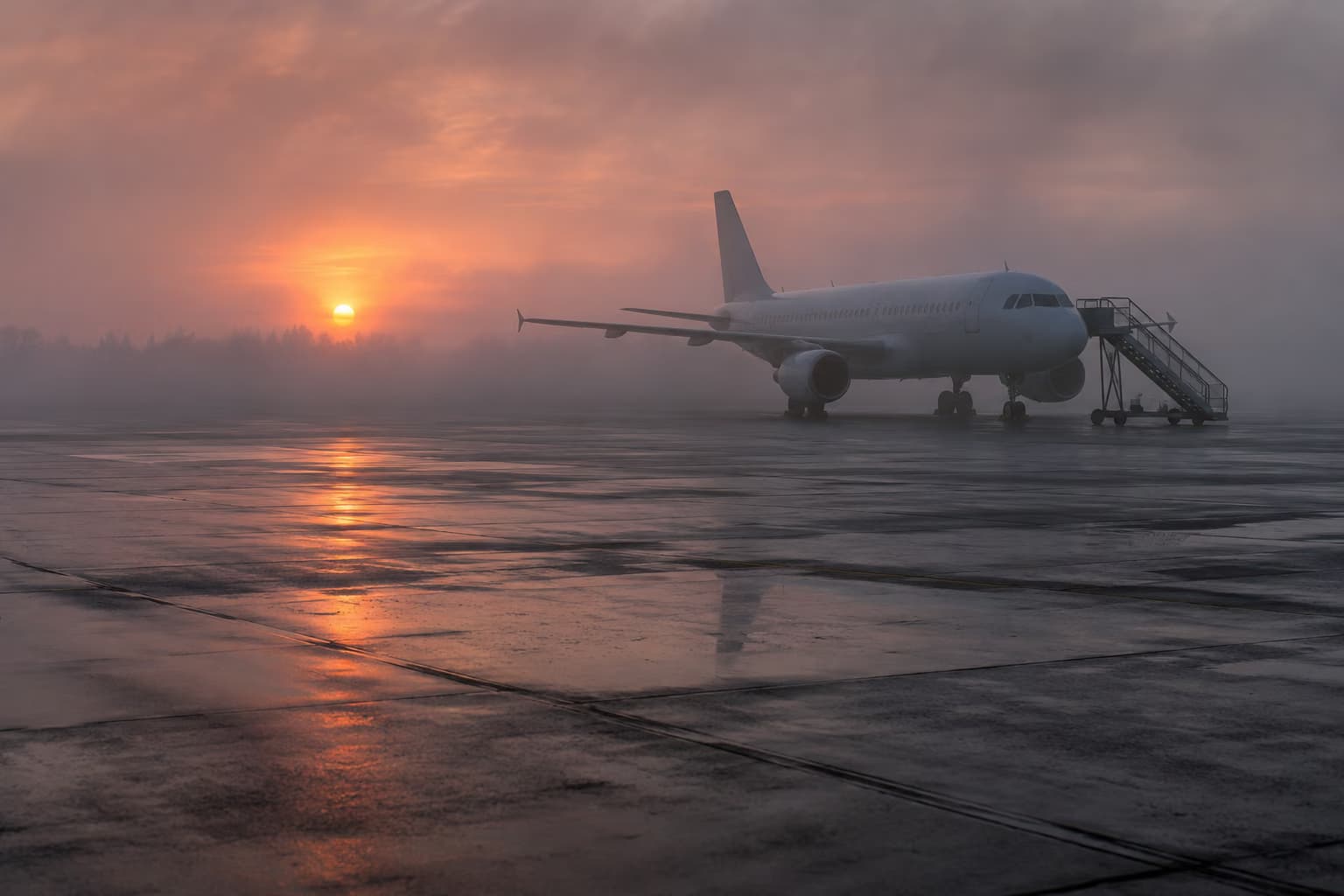
For five days in early November, a wave of bomb hoax flights unsettled European air travel. Between 2 and 6 November, dozens of passenger planes were targeted by threats, several were diverted or escorted by fighter jets, and some airports briefly stopped operations. Every aircraft landed safely, and in no case did searches find explosives.
The threats hit low-cost carriers and national airlines alike, on routes to and from Bulgaria, Italy, Poland, the Czech Republic and France. Investigations are running in several countries, but so far no authority has named who sent the messages or why. For travellers based in Germany, the main questions are how real the danger is, what happens on board when a threat comes in and what rights passengers have.
How the bomb hoax flights unfolded
The series began on Monday 2 November, when a Wizz Air flight from London to Sofia made an unplanned stop in Budapest after a threat was received in the air. On Tuesday, according to the German news agency dpa, a LOT flight from London with 181 people on board was sent to Warsaw's smaller Modlin airport, which closed temporarily while specialists checked the plane. Flights to Sofia and Rome were also searched that day. The European air traffic agency Eurocontrol counted seven threatened flights on Tuesday.
Thursday 5 November brought the peak, with threats against 14 flights. The Associated Press reported that an Aer Lingus flight from Dublin to Rome was diverted to the French military air base at Évreux after the office of the French prime minister ordered warplanes to intercept it, and that a Finnair plane bound for Rome was escorted by Italian air force jets. Three Ryanair flights heading for Sofia received military escorts as well. On Friday 6 November the wave continued: Hungary scrambled fighter jets three times to escort passenger planes, a Wizz Air flight from Prague to Rome was diverted to Venice, Prague airport reported threats against nine flights and France recorded four threats against aircraft over its territory, all of which landed safely at Paris Orly. The same day, emailed bomb threats forced the Irish broadcaster RTÉ to evacuate staff, and Bulgaria's Nova TV and the British broadcaster Sky also received threats.
No explosives found and no proven sender
All the alarms turned out to be false. British transport secretary Heidi Alexander described them as malicious hoax threats, and Eurocontrol stressed that the disruption to the network as a whole was small: the 14 threatened flights on Thursday made up only about 0.05 percent of that day's traffic. Taken together, dpa counted more than 30 alerts over the week.
Who is behind the bomb hoax flights remains open. EU transport commissioner Apostolos Tzitzikostas said it was "too early to draw conclusions on whether the reported incidents are linked" and that national investigations were continuing. Some emails to broadcasters were signed with the name "Mikhail Andropov", which may not be a real person. Officials told the AP that threats sent to Rome came from a group calling itself anti-feminist, but it is unclear whether the same sender was responsible for the others. Spain's foreign minister José Manuel Albares called the campaign hybrid aggression without naming a country. The security expert Peter R. Neumann told dpa that the pattern looks like a coordinated disruption operation, but that there is no reliable evidence so far of Russian involvement, a link that has been the subject of speculation.
The EU Commission has activated a cross-border mechanism for sharing aviation security information, in which the EU Aviation Safety Agency EASA, based in Cologne, is taking part. After talks with Eurocontrol and EASA, Tzitzikostas said security experts would meet in Brussels in the week from 9 November to discuss further measures.
What the threats meant for Germany
Germany was not at the centre of the wave, but German air traffic control was involved. According to dpa, at least four of the flights threatened on Friday crossed German airspace, and the Deutsche Flugsicherung (DFS), the German air navigation service, passed the warnings on to the crews and to neighbouring control centres. The DFS said threats of this kind are not unusual in themselves, but that it could not remember such a cluster.
Germany has seen smaller waves before. In 2023, a threat against Hamburg airport was part of a series of hoax alarms across the country. Experts quoted by dpa also warn that copycats may add their own threats while the current wave attracts attention, which is one reason why authorities treat every message seriously even when it looks implausible.
What happens on board after bomb hoax flights alerts
Airlines and airports inform the security authorities as soon as a threat arrives and set up crisis teams. If the plane is already in the air, the captain decides whether to continue, divert or land, according to the German pilots' union Vereinigung Cockpit, although states can restrict landings or send interceptor jets. Usually the crew heads for the nearest suitable airport in coordination with air traffic control. Measures on board can include switching off Wi-Fi and charging sockets and, where conditions allow, reducing the pressure difference between the cabin and the outside air to limit the effect of a possible explosion.
After landing, the aircraft is parked at a separate position where fire crews, police and explosives specialists wait. Passengers leave according to the crew's instructions before experts search the plane. Whether and when passengers are told about the reason depends on the situation, as the safe handling of the procedure comes first. These operations are costly: an aviation security expert at Coventry University, Philip Baum, estimated for the AP that each disruption can cost an airline up to 250,000 US dollars.
What this means for travellers in Germany
The risk to an individual flight remains extremely low, and the response shows that the system works as designed: crews divert quickly, planes are searched and nobody was hurt. If your flight is affected, follow the crew's instructions and expect a long delay while the aircraft is searched.
On compensation, the news is less welcome. According to the passenger rights portal Flightright, quoted by dpa, a bomb threat counts as an extraordinary circumstance, so airlines do not have to pay the flat-rate compensation under EU passenger rights rules. They must still get you to your destination as quickly as possible, if necessary by booking another airline or a bus, train or taxi. Keep boarding passes and receipts in case you need to claim costs later. For other changes that affect flying from Germany, see our report on the air passenger tax cut.