Gen Z protests: Frankfurt riots, calm elsewhere
6 min read
The Gen Z protests that the initiative "Gen Z regelt" called for 31 October brought tens of thousands of young people onto the streets of more than 30 German cities. In most places the rallies passed off peacefully during the day. After dark, however, Frankfurt saw looting, burning barricades and attacks on police, and there were also clashes in Hamburg, Cologne and Berlin. Since then, the picture has become clearer, and so has the political dispute over who was behind the violence.
The organisers had hoped for a show of strength. According to the Stuttgarter Zeitung, almost 180,000 people had signed up to take part. Far fewer came: the initiative itself later put nationwide turnout at between 100,000 and 120,000, and police counts in individual cities were mostly in the low thousands.
Who marched in the Gen Z protests and why
"Gen Z regelt" (roughly "Gen Z will sort it out") is a young and loosely organised movement. The Local, citing the broadcaster Tagesschau, reported that its core team consists of just five people, three of whom want to remain anonymous. Its list of demands is broad: more money for schools, addiction support and psychotherapy places, affordable living costs, a fairer sharing of burdens, stronger climate protection and limits on surveillance. Opposition to compulsory military service (Wehrpflicht) was one of the most visible themes on the day.
The largest crowds gathered in the big cities. Police counted up to about 5,000 people at the Brandenburg Gate in Berlin and around 8,000 in Frankfurt. In Hamburg, between 6,000 and 7,000 people rallied at the Jungfernstieg, while the city of Leipzig reported about 6,000 participants and Munich around 4,000. In Hanover, police counted about 5,800 marchers. Demonstrations in Munich, Dresden, Chemnitz, Rostock, Kiel and Göttingen were described as largely peaceful.
The youth researcher Nina Kolleck said in interviews that public warnings about possible violence in the days before the protest had probably kept some young people at home. The decision of the Federal Student Conference (Bundesschülerkonferenz), which represents school students, not to mobilise for the day is also seen as a reason for the lower turnout.
Frankfurt: a peaceful march, then a night of rioting
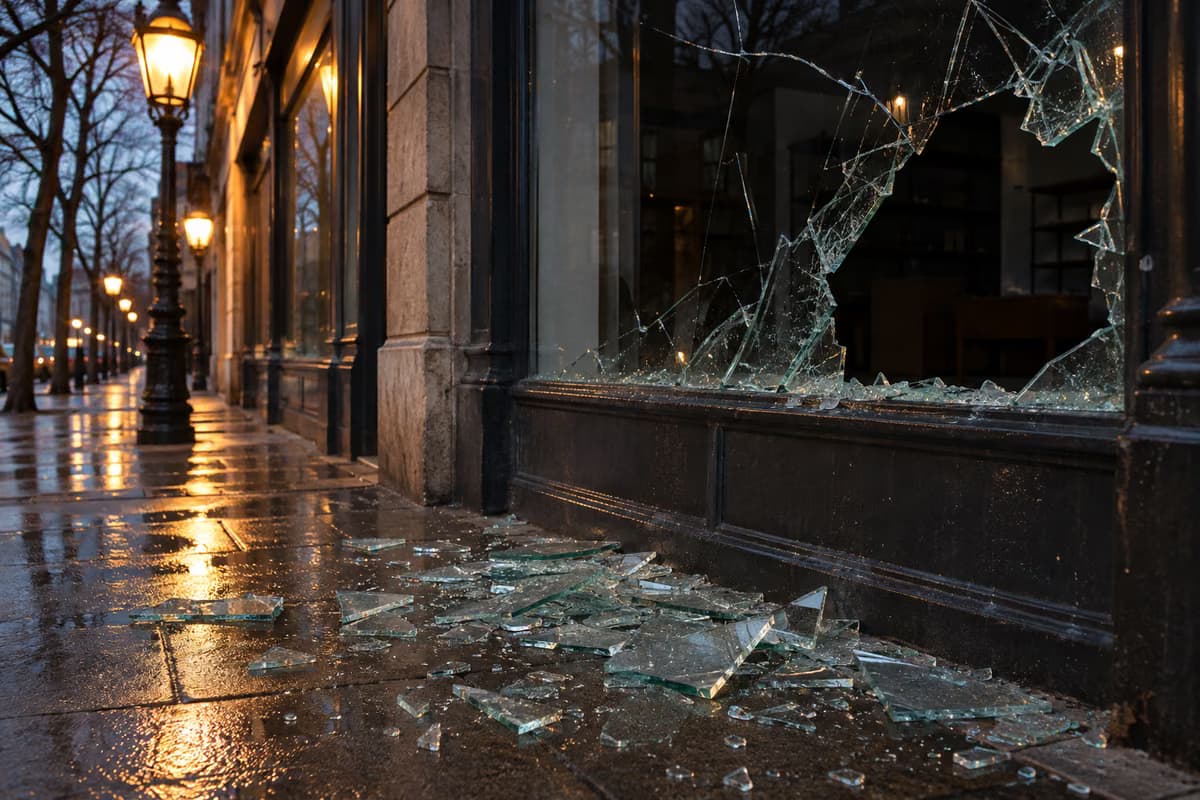
Frankfurt became the focus of the Gen Z protests. The daytime march was stopped several times because participants were masked or set off pyrotechnics. At around 6.20 pm, police dissolved the assembly near the Konstablerwache, citing its non-peaceful course. What followed lasted until the early hours of the morning. Groups moved through the city centre and the Zeil shopping street, smashed shop windows, looted shops and set barricades on fire. Officers were attacked with stones, bottles, firecrackers and Molotov cocktails.
Police said 17 shops were damaged and five were looted, among them a shoe shop and a perfumery. A gun shop was also broken into, and blank-firing pistols (Schreckschusswaffen) were taken; two of them were later recovered. Up to 1,300 officers were deployed. More than 100 were injured, one of them seriously after a stone hit him in the face. Police made 54 arrests. Those detained were between 13 and 29 years old and came from Frankfurt, other parts of Hesse and North Rhine-Westphalia. According to the public broadcaster hessenschau, police also recorded 87 criminal complaints and issued 1,225 orders to leave the area (Platzverweise).
The police operations commander, Erik Hessenmüller, spoke of a "new dimension of violence". At the same time, he stressed that the vast majority of demonstrators had acted peacefully and that the assembly had to be distinguished from the riots that followed it. Officials estimated that 1,000 to 1,500 troublemakers were involved in the disorder.
Clashes in Hamburg, Cologne and Berlin
Frankfurt was not the only city where the evening turned violent. In Hamburg, masked groups dragged construction barriers into the road and set them alight near the main station and in the Steindamm area. According to leinetal24, around ten vehicles burned out in the Dulsberg district, police used water cannon, more than 120 people were detained and eleven officers were injured.
In Cologne, police stopped the planned march early because of masking and pyrotechnics, and the rally was ended in the afternoon. Later, bottles, fireworks and even bicycles were thrown at officers near the cathedral square. Police said they seized Molotov cocktails from masked individuals. The left-leaning daily taz, on the other hand, described the police response during the day as aggressive, which police rejected. In Berlin, the main rally passed almost without incident, but a separate evening march that The Local said had no connection with "Gen Z regelt" ended in clashes around Rosenthaler Platz. There, 27 officers were slightly injured and up to 56 people were detained. Smaller incidents were also reported in Stuttgart, Bremen and Nuremberg.
A political row over who the rioters were
Hesse's interior minister Roman Poseck (CDU) called the events an "orgy of violence". He blamed a combination of around 100 left-wing extremists and violent young people and said the group was predominantly of migrant background. Most of those arrested, he added, hold German citizenship. Federal interior minister Alexander Dobrindt (CSU) spoke of a clear breach of the peace (Landfriedensbruch) and blamed violent left-wing groups and troublemakers from migrant communities. Poseck also questioned whether another demonstration of this kind should be allowed in Frankfurt.
That choice of words drew criticism. According to The Local, defence minister Boris Pistorius (SPD) asked whether "migrant groups" was meant to include German citizens whose families have lived in the country for three generations. Frankfurt's mayor Mike Josef (SPD) said he was speechless and angry about the violence, but that it did not matter to him which passport the offenders held: all of them must face the consequences. Hesse's premier Boris Rhein (CDU) said the attacks would not go unpunished. The Local also found no evidence that offenders had travelled from abroad.
Several politicians warned against losing sight of the young people's concerns. Greens leader Franziska Brantner said the violence damaged the legitimate cause of those who had protested peacefully. SPD politician Dirk Wiese said politics must respond on education and fair opportunities, and federal education minister Karin Prien (CDU) called the concerns legitimate, according to The Local.
What comes next after the Gen Z protests
"Gen Z regelt" has distanced itself from the riots. The initiative said it had no influence on what happened after its rallies had ended and that violence was never part of the movement. It wants to keep protesting: the next big date is 20 November, when the group plans to join a Europe-wide day of youth protests. Further actions at schools and universities are planned, but no dates have been announced yet.
The investigations will take longer. Frankfurt police are working through the 54 arrests and have asked witnesses to send in photos and videos. The full cost of the damage had not been calculated by Sunday. Police in Hamburg, Cologne and Berlin are also investigating offences committed on the evening of 31 October.
What the Gen Z protests mean for expats
Peaceful demonstrations are a normal part of public life in Germany, and many young foreigners and expat families share the concerns behind the Gen Z protests, from school funding to the cost of living. Anyone who joins a rally on 20 November should follow police instructions and leave promptly if an assembly is officially dissolved, because staying on can turn a participant into a suspect. The Local points out that deliberately covering your face at an outdoor demonstration is a criminal offence in Germany. Carry your passport or residence document, and keep away from groups that start throwing objects or building barricades.
For non-Germans the stakes can be higher than for citizens. A criminal conviction can matter later for a residence permit or a naturalisation application, so it is worth getting advice quickly if you are ever detained; our overview of legal services for expats explains where to find help. If you live or work near the Zeil in Frankfurt or other city-centre shopping streets, check local news before the next protest day. Many of the issues the young protesters raised, such as political distance and lack of opportunity, have been building for years, as an earlier study on young Germans feeling disconnected from politics showed.