





 Turkish
 Italian
 Spanish
 Portuguese
 Romanian
 Albanian
 Lithuanian
 Latvian
 Bulgarian
 Greek
Greek Hungarian
 French
 Croatian
 Czech
Czech
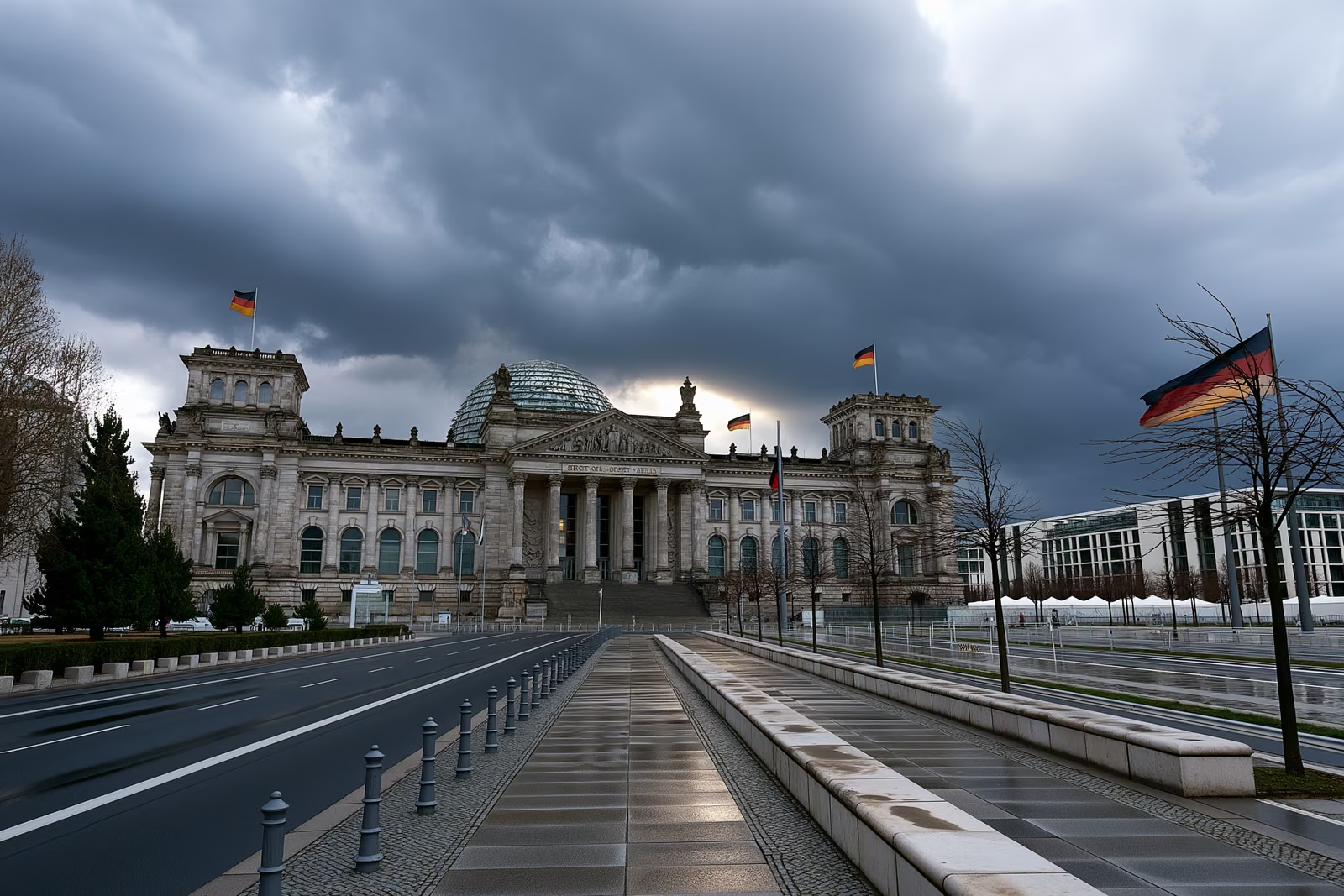
The German government has spent weeks presenting its reform agenda as a necessary repair job for the country’s finances. The public is not convinced. According to the latest ZDF Politbarometer poll, published on July 17, only 30 percent of voters believe the reforms are going in broadly the right direction, while 63 percent say they are not. For a coalition that has staked its reputation on fixing pensions, health insurance and the labour market, the numbers amount to a vote of no confidence from the electorate.
The survey was carried out by the Forschungsgruppe Wahlen, the research group behind the long-running television poll, which questioned 1,284 randomly selected eligible voters by phone and online between July 14 and 16.
Politbarometer Poll Shows Broad Rejection
The headline figure is striking on its own, but the details are worse for the government. A full 81 percent of respondents consider the planned burdens of the reform package unfairly distributed, against just 12 percent who think the load is being shared fairly. Scepticism extends to the substance of the plans: 79 percent doubt that the healthcare reforms will actually solve the financing problems of the public insurance system, with only 17 percent expressing optimism, ZDFheute reported.
Overall satisfaction with the coalition of CDU/CSU and SPD has collapsed to a level rarely seen this early in a term. In the survey, 68 percent said the federal government is doing a bad job, while 27 percent rated its work as good. Cooperation inside the coalition gets similarly poor marks, with 71 percent describing it as bad.
Merz Under Pressure, SPD Falls to Fifth
Chancellor Friedrich Merz carries much of the discontent personally. Seventy percent of those surveyed said they are dissatisfied with his work, and only 27 percent are satisfied. Those are unusually harsh numbers for a chancellor barely more than a year into office, and they follow months of disputes over welfare cuts, health insurance contributions and the pension system.
The party standings tell the same story from another angle. The AfD remains the strongest party at 27 percent, ahead of the CDU/CSU at 23 percent. The Tagesspiegel highlighted the most symbolic shift: the Greens, at 14 percent, and the Left party, at 13 percent, have both overtaken the SPD, which falls to 12 percent and fifth place. The FDP stays at 4 percent, below the threshold for entering parliament. We reported earlier this month on how the far-right party reached its record level in our article on the AfD record high.
What the Reform Package Contains
The anger has a concrete background. Over the early summer the coalition pushed through a package that touches almost every resident of Germany, from stricter rules for calling in sick to changes in health insurance financing and a restructuring of basic welfare payments. We broke down the individual measures when they were agreed in our overview of the coalition reform package.
The government argues the steps are unavoidable because the social insurance funds face growing deficits as the population ages. Critics from unions to welfare organisations counter that the savings hit employees, patients and pensioners while leaving wealthier groups largely untouched. The Politbarometer poll suggests that this criticism, not the government’s framing, has won the argument with the public so far: the sense that burdens are being distributed unfairly is shared across supporters of almost all parties.
Why the Politbarometer Poll Matters Now
A single survey does not decide anything, and the Forschungsgruppe Wahlen itself notes a margin of error of up to three percentage points. But the Politbarometer poll is one of Germany’s most established political barometers, and its trend lines are consistent with other recent surveys: the coalition parties combined no longer reach 40 percent, while the opposition on the right and the left grows.
That arithmetic matters because the reform work is not finished. Several parts of the package still need final parliamentary steps or will only take effect in 2027, and resistance inside the SPD is likely to harden as the party watches its poll numbers sink. A government that cannot convince voters of its central project tends to become more cautious, slower and more quarrelsome, which is exactly what majorities in this survey say they already observe.
What This Means for Residents and Expats
For internationals living in Germany, the Politbarometer poll itself changes nothing in daily life, but the pressure it documents will shape decisions that do. If the coalition softens parts of the package to win back support, details on sick pay, health insurance contributions and pension adjustments could still move before they reach your payslip. It is worth following the final versions rather than the announcements.
The political volatility also matters for the longer view. With the AfD stable in first place and the governing parties weakened, debates about migration, citizenship and social benefits are likely to stay loud and polarised. Nothing in the survey points to an early election, and the next federal vote is still years away by the regular calendar. But the direction of German politics is being contested more openly than at any point in decades, and residents who want to understand their new home country should expect reform, protest and polling to dominate the news well into the autumn.

