Postage increase 2027: letter to cost 1.15 euros
5 min read
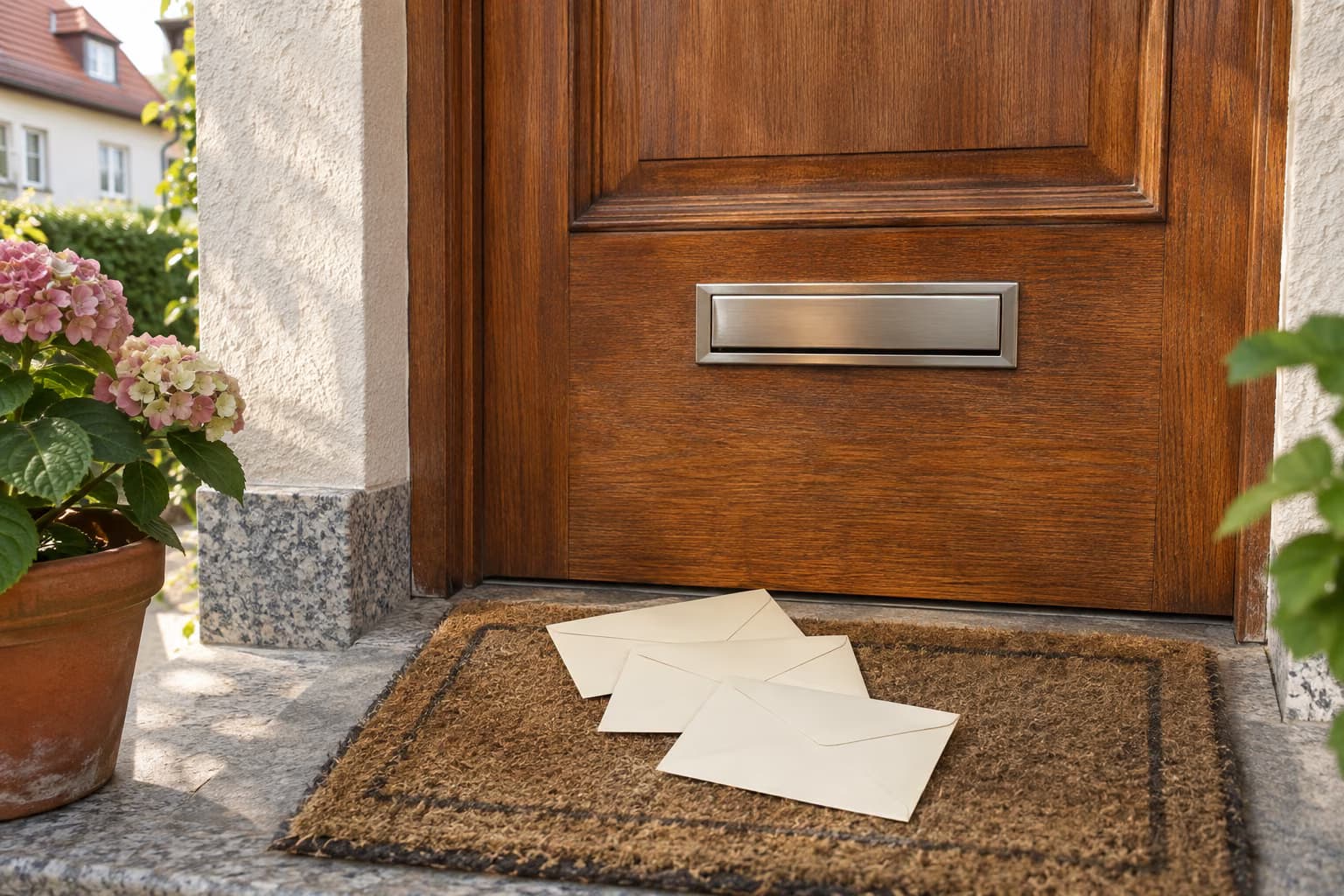
Sending a letter in Germany is about to cost more than one euro for the first time. Deutsche Post plans to raise the price of a standard letter from 95 cents to 1.15 euros on 1 January 2027, after the Bundesnetzagentur, the Federal Network Agency that regulates postal prices, proposed allowing an average postage increase of up to 20.35 percent. The postage increase 2027 is the steepest the regulator has ever allowed, almost twice the 10.48 percent permitted for 2025. Some formats will rise much more: the Maxibrief, the largest letter format, is set to jump from 2.90 to 5 euros.
The new prices are not yet final. The regulator expects to publish its final decision in November, and Deutsche Post must then have each individual price approved. Here is what is planned, why prices are rising so fast and what you can do with the stamps you already have.
Postage increase 2027: what the Bundesnetzagentur allows
On 12 October, the Bundesnetzagentur published its draft decision in the so-called price cap procedure, the process in which it sets how much Deutsche Post may raise its regulated prices. For letters sent by private customers, the average increase may reach 20.35 percent. The same limit applies to business post, and prices for private customers' parcels may rise by an average of 10.72 percent, compared with 7.21 percent in the last round. The new prices are meant to apply for two years, from 1 January 2027 to 31 December 2028.
The limit is an average across a whole group of products. How Deutsche Post spreads it is a business decision: it can raise some prices more and others less, the regulator explains. Companies, competitors and consumer groups could comment on the draft until 30 October. After the final decision, Deutsche Post applies for its new product prices, which are approved if they stay within the frame. According to ZDF, Deutsche Post has always used the full margin it was given in the past.
Deutsche Post's planned prices from 1 January 2027
Deutsche Post did not wait long. On 20 October, it presented its planned prices, subject to approval. The standard letter and the postcard are to cost 1.15 euros instead of 95 cents, an increase of about 21 percent. The Kompaktbrief (compact letter) rises from 1.10 to 1.25 euros and the Großbrief (large letter) from 1.80 to 2.35 euros. The biggest jump is for the Maxibrief, which goes from 2.90 to 5 euros, an increase of about 72 percent. The Warensendung, a cheaper service for sending small goods, is to cost 3.10 euros.
Letters abroad also become more expensive. A standard letter or postcard to another country is to cost 1.45 euros instead of 1.25 euros, according to the Berliner Zeitung and the tech site inside digital. The surcharges for registered mail (Einschreiben) stay the same. Prices for parcels and the smaller Päckchen have not yet been announced. Deutsche Post estimates that private households will pay about 75 cents more per month on average, ifun and Dr. Web reported. The last postage increase, from 85 to 95 cents for a standard letter, took effect at the start of 2025.

New sizes for Großbrief, Maxibrief and Päckchen
Along with the prices, several formats change on 1 January 2027. The domestic Großbrief may then weigh up to 1,000 grams instead of 500 grams and be up to 3 centimetres thick instead of 2. The Maxibrief grows to a maximum of 38.1 by 30.5 centimetres and up to 2,000 grams, but its maximum thickness falls from 5 to 3 centimetres. The extra-charge Maxibrief for oversized items is dropped, so anything larger must go as a Päckchen or parcel, the consumer organisation Stiftung Warentest explained.
The Päckchen, the small parcel service, will in future include tracking and liability of up to 20 euros, but its maximum weight falls from 2 to 1 kilogram. For international mail, Deutsche Post introduces a Midibrief for documents of up to 500 grams at 3.80 euros, while the international Maxibrief disappears. The international Großbrief, now allowed up to 1,000 grams, is to cost 6.80 euros. If you regularly send thick envelopes, documents or small items, it is worth weighing and measuring them again in January.
Why the postage increase 2027 is so steep
The main reason is the sharp fall in the number of letters. "The main reason for the rising postage is the sharply decreasing volume of letters," said Klaus Müller, president of the Bundesnetzagentur. When the costs of the delivery network are spread over fewer letters, each one becomes more expensive. ZDF reported that about 16.9 billion letters were sent in Germany in 2005, compared with roughly 9.4 billion in 2025. The regulator names digitalisation as the driver, from companies and public offices moving their communication online to the mandatory e-invoice for businesses from 2028.
Deutsche Post points to higher costs for wages, energy and materials. "If fewer and fewer letters run through this infrastructure, the cost per letter inevitably rises," board member Nikola Hagleitner said, as quoted by the Berliner Zeitung. The regulator stresses that it stayed below what Deutsche Post had asked for and did not accept several of the costs the company claimed. For comparison, a standard letter cost 55 cents in 2012, so the price will have more than doubled in 15 years. Competitors such as Hermes, DPD, GLS or UPS are not bound by these rules, ZDF noted, because they are not obliged to provide the universal postal service.
What the postage increase 2027 means for you
You do not need to use up your stamps before the new year. Stamps with a euro value and the word "Deutschland" have no expiry date, so 95-cent stamps stay valid after 1 January 2027, the Berliner Zeitung explained. You simply add a 20-cent Ergänzungsmarke (supplementary stamp), which is sold at post offices and in Deutsche Post's online shop. For the same reason, stocking up on stamps now brings no advantage.
For many foreign residents in Germany, letters are still part of daily life: contracts, letters to the Ausländerbehörde (immigration office), tax offices and insurers often require paper, and cards to family abroad will cost 1.45 euros each. Check whether a public office accepts documents online or by e-mail, and compare parcel services before sending larger items. If something goes wrong with a delivery, you can file a complaint online; read our report on the platform for postal service complaints. The final prices will only be fixed once the Bundesnetzagentur has approved them, so small changes are still possible before January.