Berlin Left Party vote: 160,000 flats at stake
6 min read

Berlin's Left Party (Die Linke) decides at a state party congress on Saturday 31 October whether to open formal coalition negotiations with the SPD and the Greens. If the Berlin Left Party says yes, the capital could get its first Left Party mayor, Elif Eralp, and a government that wants to move about 160,000 rented flats from large corporate landlords into public ownership. The federal government is preparing a law designed to make the plan extremely expensive, while the coalition also faces pressure over antisemitism.
Why the Berlin Left Party vote matters
The Left Party won the Berlin state election on 20 September with 25.7 percent of the vote. The CDU came second with 18.8 percent, followed by the AfD with 16.3 percent, the Greens with 14.3 percent and the SPD with 12.1 percent, its worst result in the city's history. The outgoing coalition of CDU and SPD lost its majority, and after exploratory talks the three left-of-centre parties agreed on a joint paper. The SPD and the Greens have already approved the start of coalition talks.
Eralp, who leads the Berlin Left Party group in the state parliament, expects the congress to back negotiations by a large majority. "In my assessment, the party will decide by a large majority to begin coalition negotiations," she told the Berliner Morgenpost, as reported by dpa. She said she expected criticism at the congress and considered it legitimate, adding that the party had to accept painful compromises because it won 25.7 percent and not an absolute majority. According to the news agency AFP, Eralp is a 45-year-old lawyer born to Turkish immigrants, and she could become Berlin's first Left Party governing mayor (Regierende Bürgermeisterin).
The final coalition agreement would still need approval from all three parties. According to dpa, the Berlin SPD leadership has set up a member vote, the Left Party plans a binding member vote, and the Greens want a digital poll of members followed by a decision at a delegates' meeting.
The plan to socialise 160,000 flats
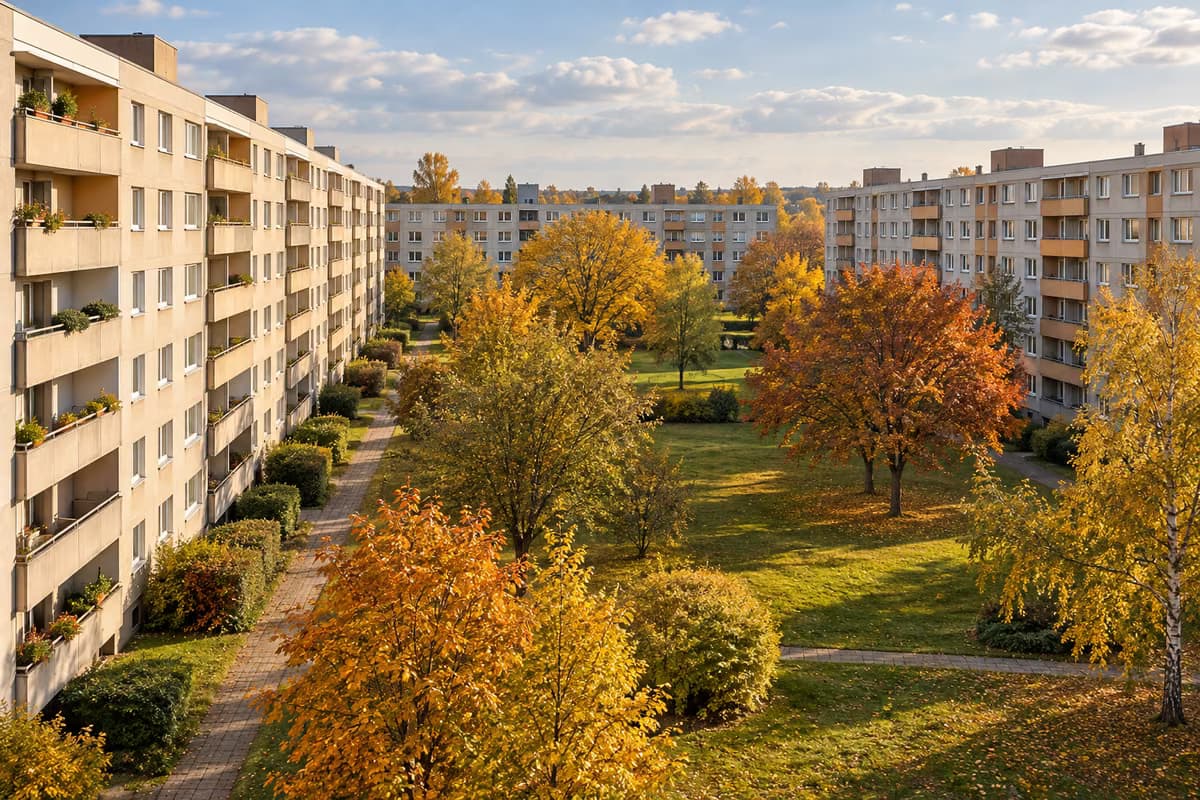
Housing is central to the project. The exploratory paper envisages transferring flats owned by large private housing companies into public ownership, a process known in German as Vergesellschaftung (socialisation). Most outlets, including The Local, describe the plan as targeting companies that own more than 10,000 flats in Berlin. The news agency dpa describes the threshold slightly differently: firms with 10,000 or more flats in the city would be affected, but they could keep a base stock of 10,000 flats. In total, about 160,000 flats from five companies would be transferred. According to dpa, the largest is Vonovia with about 130,000 flats in Berlin, while housing cooperatives, public-interest landlords and flats built since 2021 would be excluded.
Compensation for the companies would be capped at 16 billion euros, which several outlets note is likely to be below market value. According to dpa, the money would be borrowed and repaid through the rents, and a draft law is to be presented in mid-2028 and would come into force a year after it is passed, so The Local expects the change to take effect no earlier than 2029. The parties also plan to cap rent increases at state-owned housing companies at 2 percent a year and to issue 100,000 building permits by 2031.
The plan would rely on Article 15 of the Basic Law (Grundgesetz), which allows land and property to be transferred into public ownership for compensation. Unlike expropriation under Article 14, it has never been used, so there is no case law on how far it goes. Berliners voted in favour of socialising large housing companies in a referendum five years ago, and according to dpa the housing industry has already announced legal challenges.
Dobrindt's counter-plan and Merz's promise
Federal Interior Minister Alexander Dobrindt (CSU) presented key points of an Investitionsschutzgesetz (investment protection act) on 25 October, first reported by Bild. Under the plan, a state would have to prove that socialisation is strictly necessary and that all alternatives, such as funding or building new housing, have been exhausted. Compensation would have to match full market value, set by an expert valuation, and be paid immediately in cash. Dobrindt told Bild that an "arbitrary left-wing socialisation fetish" was incompatible with the Basic Law.
Eralp told ZDF's Morgenmagazin that the plan was unconstitutional, arguing that a federal law cannot block what the Basic Law allows and that the proposal was aimed against tenants, legal news site beck-aktuell reported. Federal Left Party co-leader Luigi Pantisano predicted it would not survive the Federal Constitutional Court. Members of the governing coalition also expressed doubts: the SPD's rental law spokesman Hakan Demir and Greens leader Franziska Brantner questioned whether an ordinary federal law can restrict Article 15. A spokesperson for the Federal Justice Ministry said a blanket ban would be unconstitutional, but noted that Dobrindt's points set conditions rather than a ban, according to beck-aktuell.
Chancellor Friedrich Merz (CDU) has repeatedly promised to stop the Berlin plan and urged the SPD, his national coalition partner, to change course. The SPD is divided: at federal level it backed the idea of an investment protection law earlier this year, while the Berlin SPD signed up to socialisation. The Local points out that the CDU, CSU and SPD have a Bundestag majority of only 12 seats, so a handful of rebels could block the bill.
The dispute over antisemitism
The talks have also been overshadowed by accusations that parts of the Berlin Left Party tolerate antisemitism, an issue that is likely to come up again at the congress on 31 October. The SPD, the Greens and the Left Party signed a joint declaration rejecting antisemitism, which affirms Israel's right to exist and pledges stronger police powers to protect Jewish life. According to AFP, some Left Party members see the declaration as a betrayal of the party's pro-Palestinian stance.
Eralp has distanced herself from Vanessa Emde, a Left Party member of the state parliament who is accused of questioning Israel's right to exist. "All Left Party members must stick to our party resolutions. She did not," Eralp said, according to dpa, adding that there was no longer a common basis for working together. AFP also reported that the police union GdP said more than 70 officers had asked to be transferred to other states rather than serve under a Left Party mayor.

What the Berlin Left Party plan means for tenants now
For now, the Berlin Left Party decision on 31 October will not change anything for people renting in Berlin. Your rental contract, your landlord and your rent stay as they are, and existing federal tenant protections continue to apply. Even if the coalition is formed, the socialisation law would not be presented before mid-2028, and court challenges are almost certain. If you rent from Vonovia or another large company, there is no need to react to rumours or to sign anything new because of this debate.
Whether socialisation would make flats cheaper is disputed. Vonovia puts the current average net rent in the affected flats at 8.26 euros per square metre, dpa reported, while DIW economist Konstantin Kholodilin calculated that about 9.78 euros would be needed to cover the costs without subsidies. The proposed 2 percent cap at state-owned companies would apply only if the coalition is formed and implements it. Tenants seeking advice on their current rights can turn to a local tenants' association (Mieterverein) and read our overview of tenant rights and responsibilities. Background on the pressure behind the debate is in our report on rising rents and falling supply.