




 Turkish
 Italian
 Spanish
 Portuguese
 Romanian
 Albanian
 Lithuanian
 Latvian
 Bulgarian
 Greek
Greek Hungarian
 French
 Croatian
 Czech
Czech
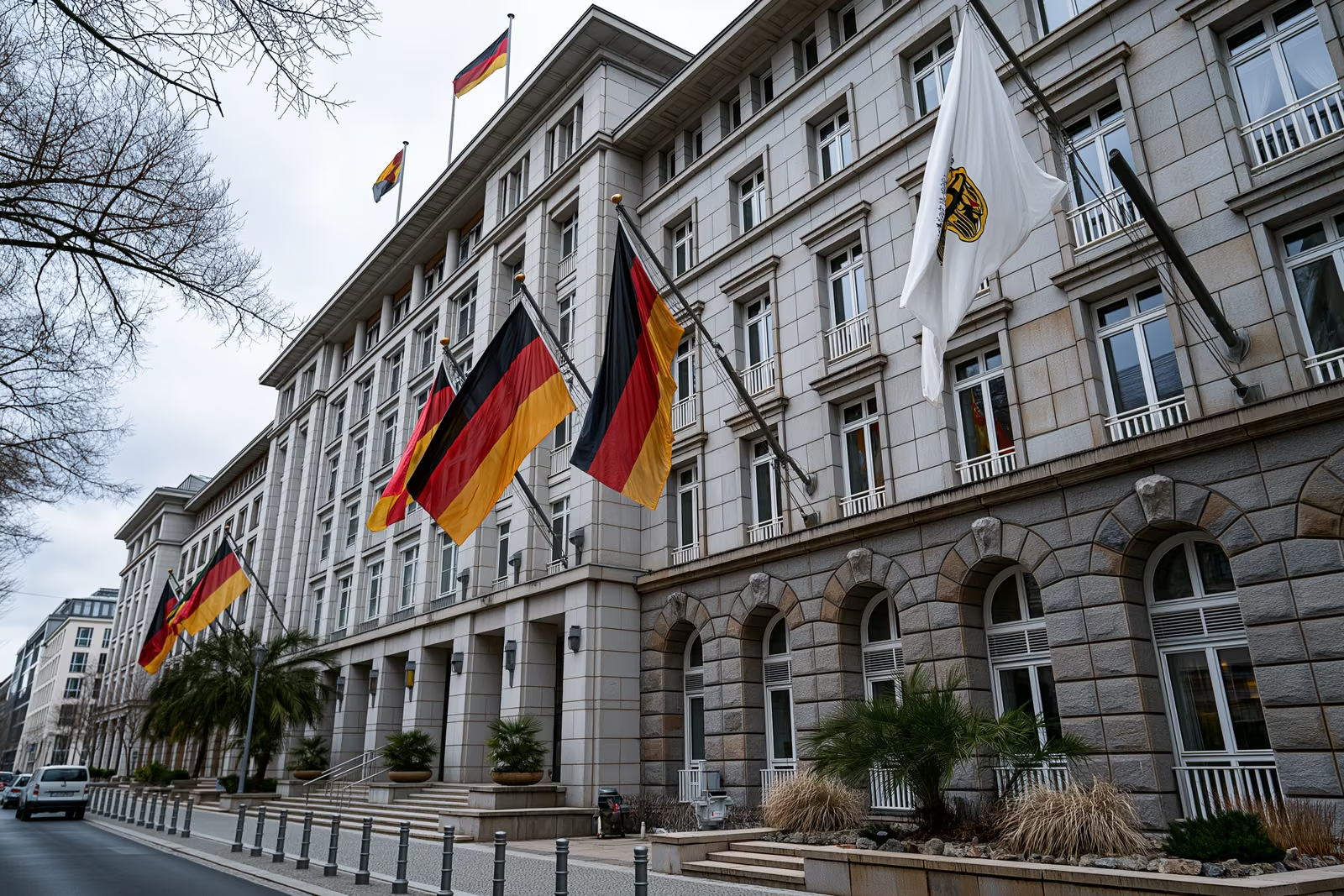
Germany’s Interior Minister Alexander Dobrindt has taken a hard position on draft-age Ukrainians living in the country. In an interview with the newspaper Welt am Sonntag published on July 18, the CSU politician said that Ukrainian men of military age who have no individual grounds for asylum face an obligation to return to Ukraine. His central sentence: “Flucht vor Wehrpflicht ist kein Asylgrund” – fleeing conscription is not grounds for asylum.
The statement affects a large group. More than 260,000 Ukrainian men between 23 and 60 years old currently live in Germany, according to figures reported by the dts news agency and carried by outlets including the Berliner Sonntagsblatt. The remarks have drawn support from parts of the governing coalition and sharp criticism from human rights voices, making this one of the most contested migration questions of the summer.
What Dobrindt Said About Draft-Age Ukrainians
Since Russia’s full-scale invasion in 2022, Ukrainians in the EU have received protection under the so-called mass influx directive, a blanket status that spares them individual asylum procedures. Dobrindt now wants draft-age Ukrainians removed from this collective protection. Instead, men aged 23 to 60 should go through regular individual asylum procedures, where each case is examined on its own merits.
The minister was explicit about the consequence. The asylum path formally remains open to Ukrainian men, he said, but because avoiding conscription is not a recognized ground for protection, most applications from this group would fail. If neither blanket protection nor individual asylum applies, an obligation to leave for Ukraine follows as what he called a logical consequence. Dobrindt also defended the approach politically, arguing it is consistent for a country that supports Ukraine militarily to expect men needed for its defense not to sit out the war abroad.
The EU Decision Behind the Shift
Dobrindt’s remarks did not come out of nowhere. In the week before the interview, EU member states agreed to restrict automatic protection for newly arriving Ukrainian men of fighting age. Under the decision, blanket protection for new male applicants in this age group is reserved for those who have fulfilled their military obligations in Ukraine; others must rely on individual procedures. According to t-online, the change was made at the request of the Ukrainian government itself, which faces severe manpower shortages at the front and has long pressed European partners to stop shielding men from mobilization.
The EU-level decision concerns new arrivals, while Dobrindt’s push goes further by targeting the status of draft-age men already living in Germany. How and when such a change would be implemented nationally remains open. The general framework of temporary protection for Ukrainians was recently extended, as we reported when the EU extended Ukraine protection to 2028, so any carve-out for men of military age would sit inside that longer timeline.
Criticism From the Council of Europe
Human rights bodies pushed back quickly. Michael O’Flaherty, the Council of Europe’s Commissioner for Human Rights, warned against growing pressure to wind down temporary protection early and specifically against restricting access for men of military age. Stripping all draft-age Ukrainians of protection as a group would be discriminatory, he argued, because European states are obliged to assess every asylum case individually, even where Ukraine has a legitimate right to mobilize its citizens. He also cautioned that conditions for a safe and dignified return to Ukraine do not currently exist.
Criticism came from inside Germany as well. The taz described the tightening of protection for men liable for military service as a fundamental shift in how Europe treats people fleeing the war. Supporters counter that the policy simply aligns refugee protection with Ukraine’s own laws, which ban men aged 23 to 60 from leaving the country. The disagreement is therefore not only legal but moral: whether Europe should help enforce another state’s conscription rules through its asylum system.
What Draft-Age Ukrainians in Germany Should Know
For now, nothing has changed in law for Ukrainian men already registered in Germany. Existing residence permits under the temporary protection rules remain valid, and Dobrindt’s interview describes a political intention, not an enacted regulation. Any move to shift draft-age Ukrainians into individual asylum procedures would require concrete legal steps, and forced returns to a country at war would face high legal hurdles, as the Council of Europe’s warning underlines.
Still, the direction of travel is clear, and affected men should follow developments closely rather than assume the status quo is permanent. Newly arriving men aged 23 to 60 are already subject to the stricter EU line unless they have completed their military service. Anyone uncertain about their status should seek qualified advice early, document any individual circumstances that could support an asylum claim, and keep an eye on how Germany implements the new European framework, which we explained when the new EU asylum rules took effect. For the wider expat community, the debate is a reminder that protection statuses in Europe can be adjusted even years after arrival.

