




 Turkish
 Italian
 Spanish
 Portuguese
 Romanian
 Albanian
 Lithuanian
 Latvian
 Bulgarian
 Greek
Greek Hungarian
 French
 Croatian
 Czech
Czech
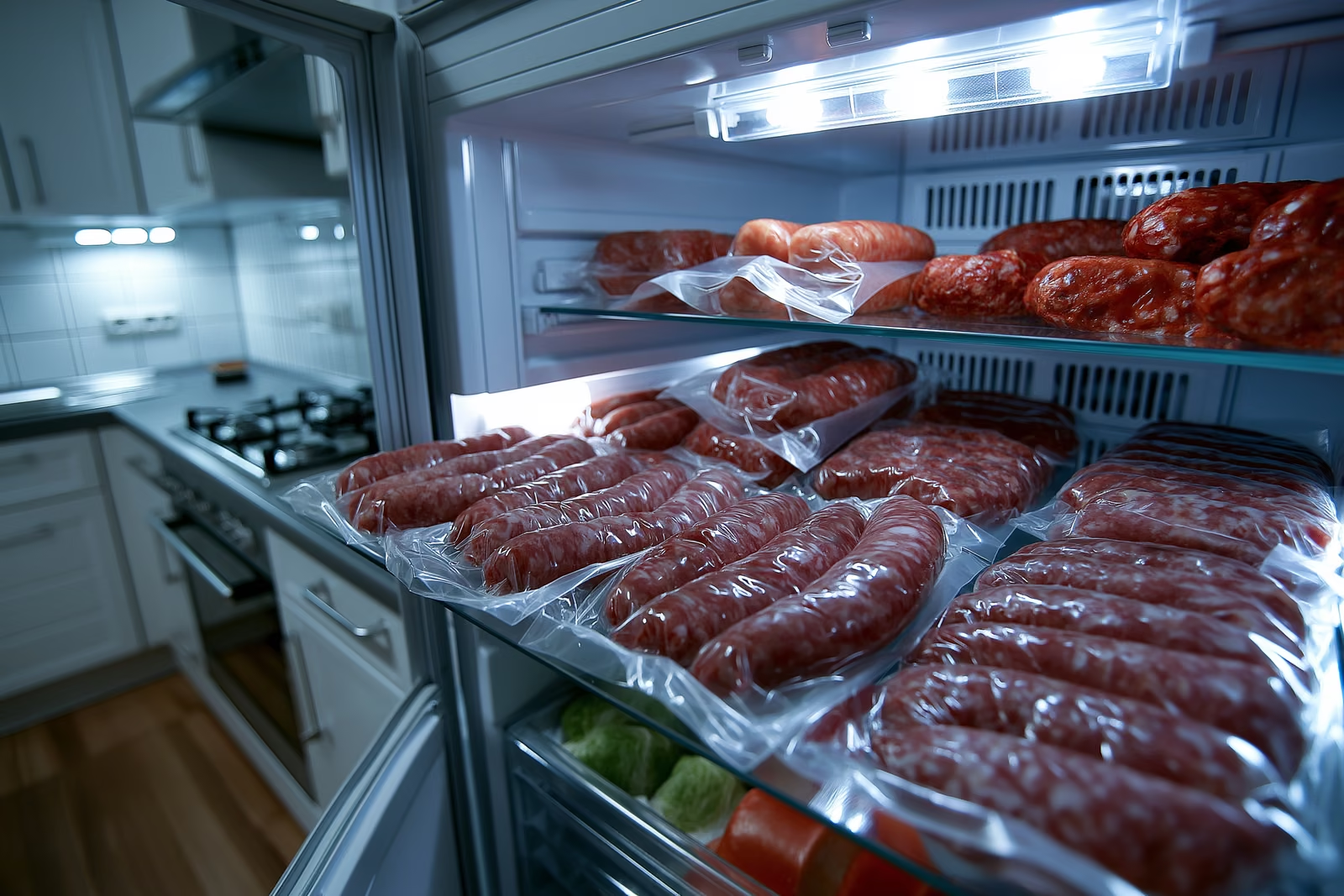
If you bought raw spreadable sausage in a German supermarket recently, it is worth opening your fridge tonight. An EHEC sausage recall affecting products from Fleischwaren Wulff, a meat producer based in Göttingen in Lower Saxony, has been expanded and now covers stores in 14 of Germany’s 16 federal states. Authorities found Shigatoxin-producing Escherichia coli bacteria, better known as EHEC, in the company’s raw sausage products, and they warn that eating them can cause serious illness, especially for small children, older people and anyone with a weakened immune system.
Which products the EHEC sausage recall covers
The recall was issued by the district authority of Göttingen, the Landkreis, which oversees the producer. It concerns several varieties of raw, spreadable sausage: Zwiebelmettwurst, a raw minced pork sausage with onions sold in 100 gram, 150 gram and 500 gram packs, Schinken-Zwiebelmettwurst, small snack sausages sold as Pfefferlinge in packs of six, and coarse Streichmettwurst. The affected batch numbers are 621301, 621302, 621303, 621304 and 621312, printed on the packaging next to the best-before date.
This is already the second wave of the action. According to t-online, an earlier recall at the beginning of July covered a further set of Wulff batches before the authority extended the warning to the current list midweek. If you are unsure whether a pack in your fridge is included, the official portal lebensmittelwarnung.de lists every affected product and batch, and the safest rule is simple: do not eat any Wulff raw sausage you cannot clearly rule out.
Where the sausages were sold
The products covered by the EHEC sausage recall reached both supermarkets and wholesalers across most of the country. According to the warnings published on lebensmittelwarnung.de, every federal state except Baden-Württemberg and Saarland received deliveries, so shoppers from Hamburg to Bavaria and from North Rhine-Westphalia to Saxony may have the sausages at home. Regional editions of t-online reported that the products were sold at Rewe stores, among other retailers.
Raw sausage of this kind is typically found in the refrigerated section and has a short shelf life, which works in consumers’ favour: packs bought more than a couple of weeks ago are likely past their date and discarded. The risk sits with recent purchases, opened packs already in use, and anything transferred out of its original packaging where the batch number is no longer visible.
What EHEC can do to your health
EHEC stands for enterohaemorrhagic Escherichia coli, strains of gut bacteria that produce a poison called Shigatoxin. Symptoms usually appear within about a week of eating contaminated food and include watery diarrhoea and abdominal cramps; in more serious cases the diarrhoea can become bloody. The most dangerous complication is haemolytic uraemic syndrome, known as HUS, in which the toxin damages blood cells and the kidneys and can lead to acute kidney failure.
Severe courses are most common in infants and small children, the elderly, pregnant women and people with weakened immune systems, which is also why German health authorities generally advise these groups against eating raw meat products such as Mettwurst at all. The Göttingen authority says a precautionary doctor’s visit is not necessary if you have no symptoms. However, anyone who ate one of the recalled products and develops severe or persistent diarrhoea should see a doctor and mention a possible EHEC infection, and should not take anti-diarrhoea medication on their own, since slowing the gut can keep the toxin in the body longer. Our guide to accessing medical care in Germany explains how to find a doctor quickly, including the 116117 out-of-hours service.
Check your fridge: how the EHEC sausage recall refund works
Handling a German product recall is straightforward once you know the routine. Check the packaging for the producer name Fleischwaren Wulff and one of the listed batch numbers. If you find a match, do not taste it to check whether it is fine; the bacteria cause no visible spoilage. Seal the pack in a bag, wash your hands, and clean any knife, plate or fridge surface that touched the sausage with hot water and detergent, because EHEC spreads easily through smear contamination.
You can return affected packs to the store where you bought them and get your money back, and reports on the recall note that retailers refund the purchase price even without a receipt. That is standard practice in German recalls, not a favour by the shop. If you want to understand your broader rights when products turn out to be faulty or unsafe, see our overviews of consumer protection laws in Germany and product warranties and returns.
What this means for expats in Germany
Recalls like this one are a regular feature of the German food system, and they work best when consumers actually hear about them. If you are new to the country, it pays to know the official channel: lebensmittelwarnung.de is the joint portal of the federal states and lists every current food warning, searchable by product and state. Checking it takes a minute whenever a recall makes the news.
The EHEC sausage recall is also a useful reminder of what Mettwurst actually is. Unlike most sausages on a German shelf, Zwiebelmettwurst and its relatives are made from raw pork and are eaten uncooked, usually spread on a bread roll. Many newcomers do not realise this when they first buy it. Raw pork products carry an inherent risk of bacteria such as EHEC and salmonella even outside recall situations, so households with small children, pregnant women or elderly members may prefer to skip them altogether. For everyone else, this weekend’s task is short: check the fridge, and when in doubt, take it back.

