





 Turkish
 Italian
 Spanish
 Portuguese
 Romanian
 Albanian
 Lithuanian
 Latvian
 Bulgarian
 Greek
Greek Hungarian
 French
 Croatian
 Czech
Czech
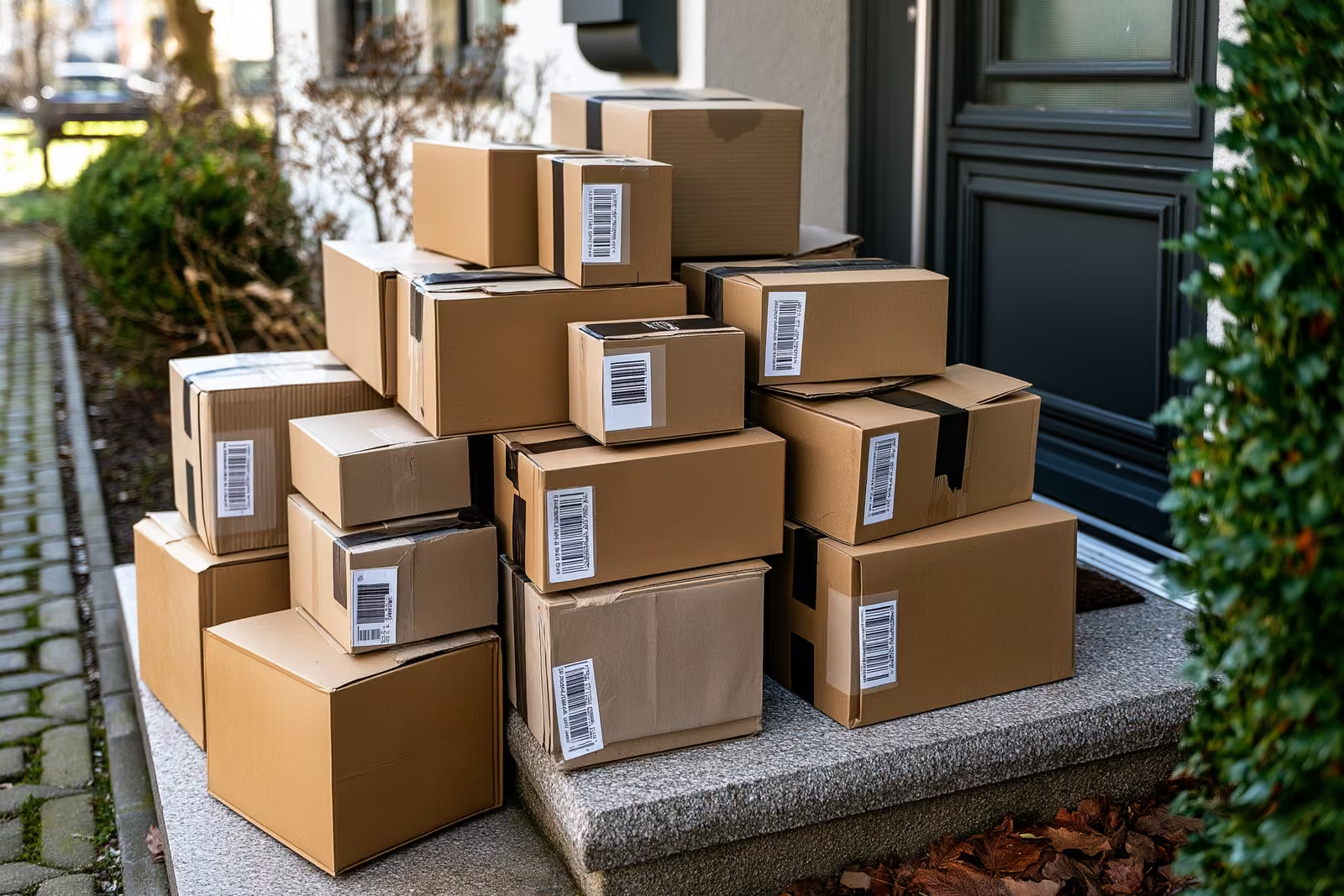
The European Commission has imposed a 550 million euro AliExpress fine, the largest penalty issued so far under the European Union’s Digital Services Act (DSA). The decision, announced on 20 July 2026, punishes the Chinese marketplace owned by the Alibaba Group for failing to keep illegal and dangerous goods off its platform. For the many people living in Germany who order cheap clothing, gadgets and household items from AliExpress, the ruling is a reminder that a low price does not always come with the safety checks buyers expect.
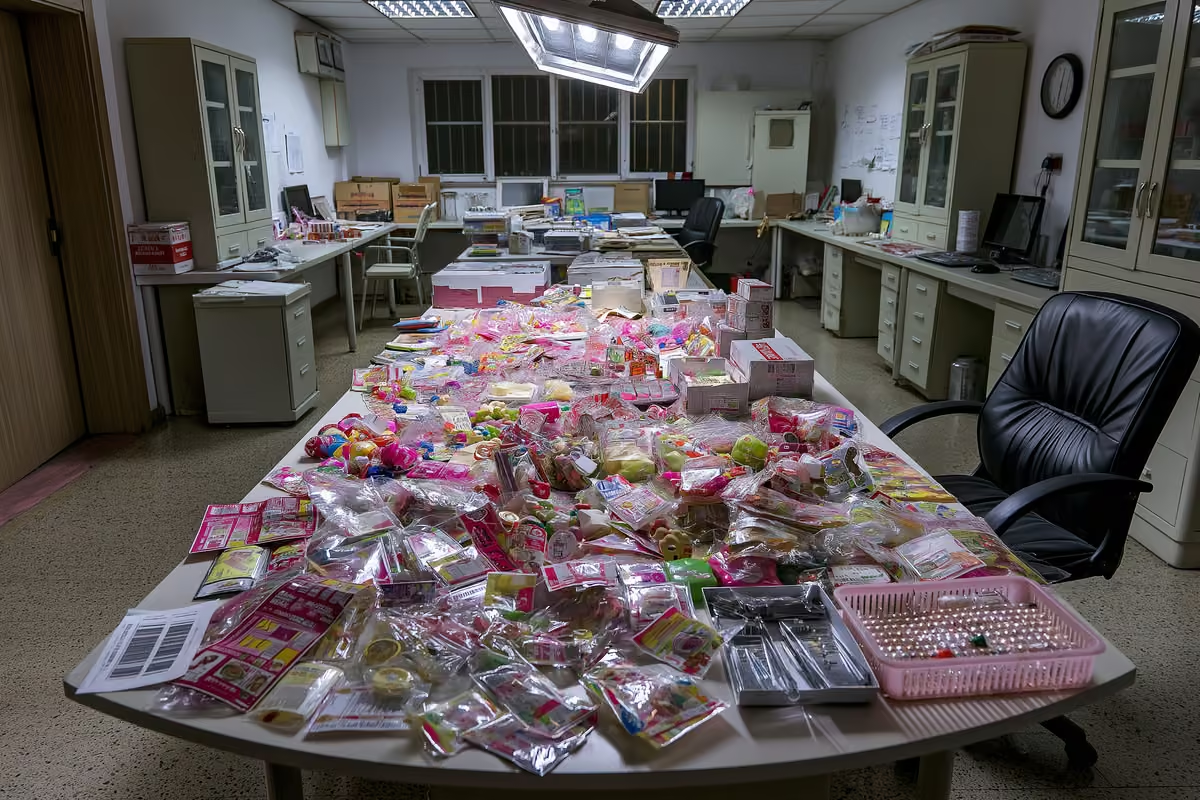
The DSA is the EU law that sets rules for large online platforms and requires them to identify and reduce risks to their users. Regulators concluded that AliExpress did neither well enough. According to the Commission and reports by golem.de and boerse-express, counterfeit branded clothing, unsafe toys and dangerous cosmetics stayed available for weeks, and millions of already flagged items reappeared and remained online for more than a month.
Why the AliExpress fine was set at 550 million
The Commission split the AliExpress fine into two parts. It set 110 million euros for inadequate risk assessment, meaning the company did not properly judge whether it had enough staff to review suspect listings. A further 440 million euros was set for insufficient countermeasures, because AliExpress overestimated how well its automatic detection systems worked compared with the real workload facing its human moderators.
Investigators found that review teams were badly understaffed. According to the legal outlet EU Law Live and German technology site golem.de, moderators had only a few dozen seconds to check each reported product. The result was that goods flagged as illegal kept slipping back onto the marketplace. The Commission called this a serious failure to protect consumers, a group the DSA is meant to shield.
What happens next for the platform
AliExpress must submit a detailed action plan to the Commission by 20 October 2026, setting out how it will fix the problems and comply with the DSA. If the measures fall short, the company could face further enforcement. AliExpress rejected the decision, calling the penalty disproportionate and pointing to what it described as proactive steps it has already taken.
The pressure did not stop with the fine. On 23 July 2026 the Commission opened a second DSA proceeding against the platform. This new investigation looks at child protection, so-called dark patterns (design tricks that push users into choices they might not otherwise make) and the transparency of advertising. That means the legal questions around AliExpress are far from settled, and more decisions are likely in the months ahead.
What the AliExpress fine means for shoppers in Germany
Anyone in Germany can legally buy from AliExpress, and the fine does not shut the platform down or make orders illegal. What the case shows is that some products sold there may not meet EU safety standards, even when a listing looks trustworthy. Toys, electrical goods, chargers and cosmetics are areas where regulators have repeatedly found problems, and these are exactly the categories the Commission named.
Before ordering, it helps to look for the CE mark on electrical items and toys, read recent buyer reviews, and be cautious with prices that seem far below the market. Well-known brand names offered at a fraction of the usual cost are a common sign of counterfeits. If a cosmetic or toy has no clear ingredient list or safety information, that is a reason to hesitate. You can learn more about your rights as a buyer in our guide to consumer protection laws in Germany.
Your rights if something goes wrong
When you buy as a consumer from a trader based in the EU, you are covered by strong statutory rights, including a two-year warranty on most goods and a 14-day right to cancel many online orders. These rules apply regardless of the AliExpress fine, and they are worth knowing before a problem arises. Our overview of product warranties and returns explains how to claim a repair, replacement or refund.
Enforcing those rights can be harder when the seller sits outside the EU, which is common on large marketplaces. Keep your order confirmation, payment records and photos of any faulty item, and raise a complaint through the platform first. If a product is unsafe, you can report it to German market surveillance authorities, and dangerous items are logged in the EU’s Safety Gate rapid alert system. The Commission’s action signals that regulators expect platforms, not just shoppers, to carry more of the responsibility for keeping unsafe goods out of people’s homes.

