




 Turkish
 Italian
 Spanish
 Portuguese
 Romanian
 Albanian
 Lithuanian
 Latvian
 Bulgarian
 Greek
Greek Hungarian
 French
 Croatian
 Czech
Czech
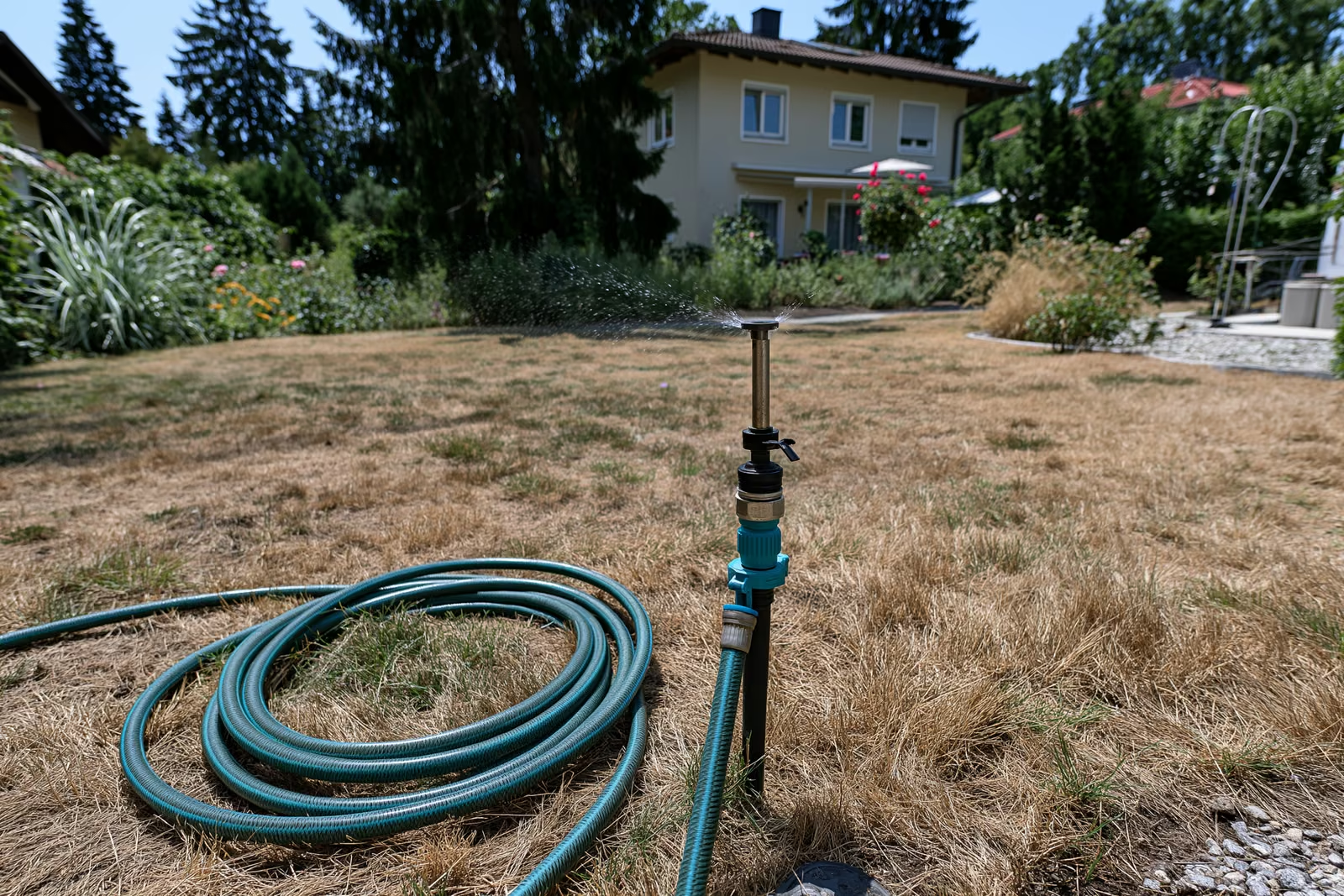
Munich has become the first major German city this summer to restrict how residents use water. A so-called Allgemeinverfügung, a general order that applies to everyone in its area, has been in force since July 14 and runs until August 1, with an extension possible if the drought continues. The Munich water ban prohibits watering lawns, filling private pools and washing cars at home, and the city has attached a serious threat to it: violations can be punished with fines of up to 50,000 euros. For a city that sits on some of the best drinking water reserves in the country, it is an unusual emergency measure, and it affects hundreds of thousands of gardens, balconies and backyards.
What the Munich water ban prohibits
The order targets the thirstiest private uses of water first. Watering or sprinkling lawns and ornamental green spaces is banned outright, as is filling or topping up private swimming pools, paddling pools and decorative fountains. Washing cars outside commercial car washes is no longer allowed, and neither is hosing down terraces, walls, paths or streets. Even spraying water on construction sites to keep dust down falls under the restrictions.
Importantly, the order does not only cover tap water. It also restricts water taken from private wells and forbids pumping water out of lakes, rivers and ditches, with narrow exceptions for scooping by hand, watering livestock and agricultural use. The city wants to protect not just its drinking water network but the stressed water bodies around it.
Where the Munich water ban applies and until when
The rules reach well beyond the city limits. Because the municipal utility Stadtwerke München supplies several neighbouring communities, a parallel order extends the restrictions to Aschheim, Garching, Neubiberg, Neuried, Oberschleißheim, Unterföhring and Unterhaching, as the district of Munich confirmed on its official site. Anyone living in these areas is bound by the same rules as residents inside the city.
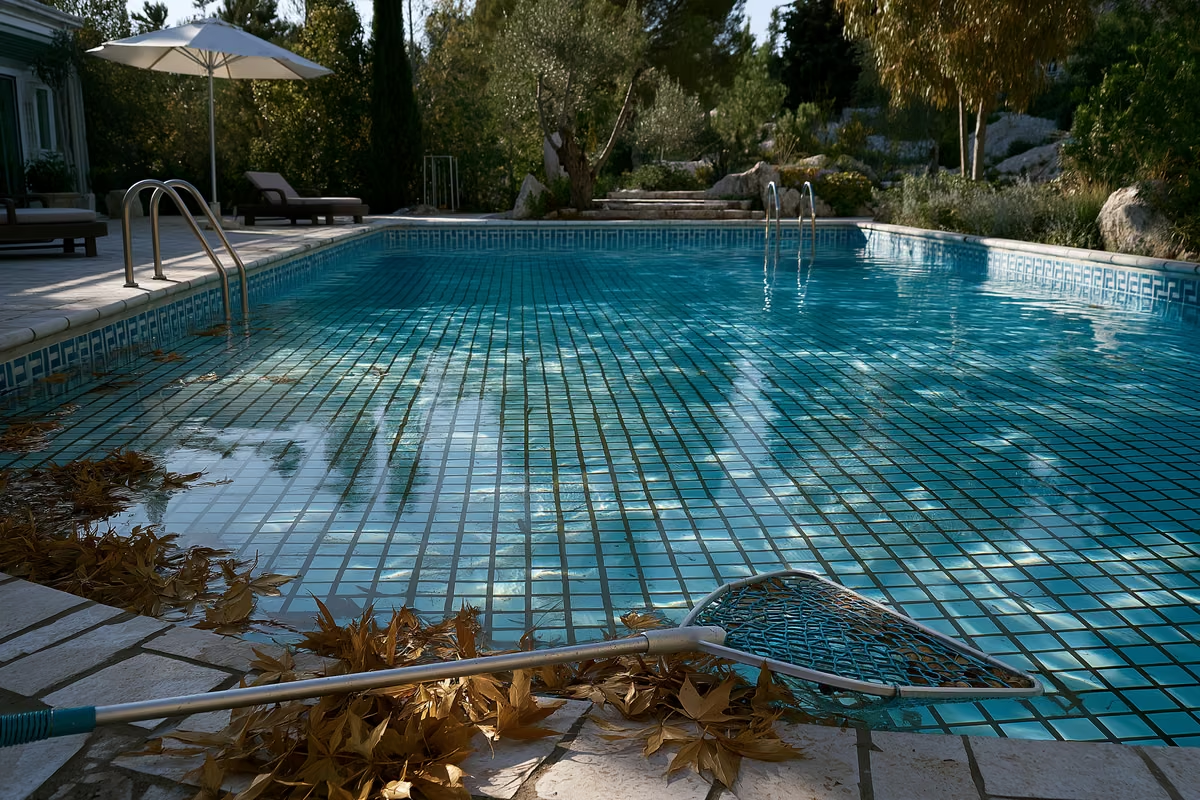
The order is initially limited to August 1, 2026, but the city has stated openly that it can be extended if the situation does not improve, or revoked early if rain refills the system faster than expected. The fine framework of up to 50,000 euros is a maximum for serious cases; in practice, authorities are expected to warn first. Still, the number signals how seriously the city takes the situation, and reports from Telepolis and other outlets suggest enforcement will not be symbolic.
Why the city pulled the emergency brake
The immediate trigger was the June heatwave, when temperatures in parts of southern Germany climbed above 40 degrees Celsius. During those weeks, daily water consumption in the Munich network jumped from a normal average of around 300 million litres to more than 360 million litres per day, according to figures published by the city. Much of that extra demand went into gardens and pools rather than kitchens and bathrooms.
Behind the spike lies a longer problem. The city points to an exceptionally dry winter and spring, which left groundwater levels and the spring catchments in the Mangfall and Loisach valleys, where Munich draws most of its drinking water, lower than usual for the season. The supply is not about to run out, officials stress, but without limits on discretionary use, a longer hot spell could push the system towards real shortages.
What is still allowed
The Munich water ban is stricter on lawns than on vegetables. Private kitchen gardens and allotments may still be watered, but only before 9 am and after 7 pm, when less water evaporates. Water-saving drip irrigation is exempt from the time window altogether. Balcony flower boxes and potted plants can be watered normally with a can, and there is no restriction on ordinary household use: showering, cooking, washing machines and drinking water are unaffected in quality and availability.
Commercial and public irrigation, for example of sports pitches or market gardens, follows separate rules and is not covered by the blanket private ban. If you are unsure whether your situation counts as private or commercial use, the city’s service hotline and the published text of the Allgemeinverfügung are the places to check before you turn on a pump.
What this means for residents and expats
If you rent a flat with a garden share or own a house in Munich or one of the seven affected communities, the safest summary is this: let the lawn go brown, keep the pool empty, take the car to a commercial wash, and water your tomatoes early in the morning or late in the evening. Landlords and property managers cannot oblige tenants to water lawns while the Munich water ban is in force, and neighbours are unlikely to be forgiving if they see a sprinkler running, since everyone is being asked to cut back.
The bigger picture matters for anyone planning a life in Germany. Water restrictions of this kind used to be a southern European phenomenon, but repeated drought summers are making them part of the German reality too, alongside the heat itself. Our guide to heat and storms in Germany explains how to prepare for extreme weather here, from heat protection at work to storm damage insurance. Munich’s order expires at the start of August if the weather cooperates, but few in the city hall would bet against it returning in future summers.

