





 Turkish
 Italian
 Spanish
 Portuguese
 Romanian
 Albanian
 Lithuanian
 Latvian
 Bulgarian
 Greek
Greek Hungarian
 French
 Croatian
 Czech
Czech
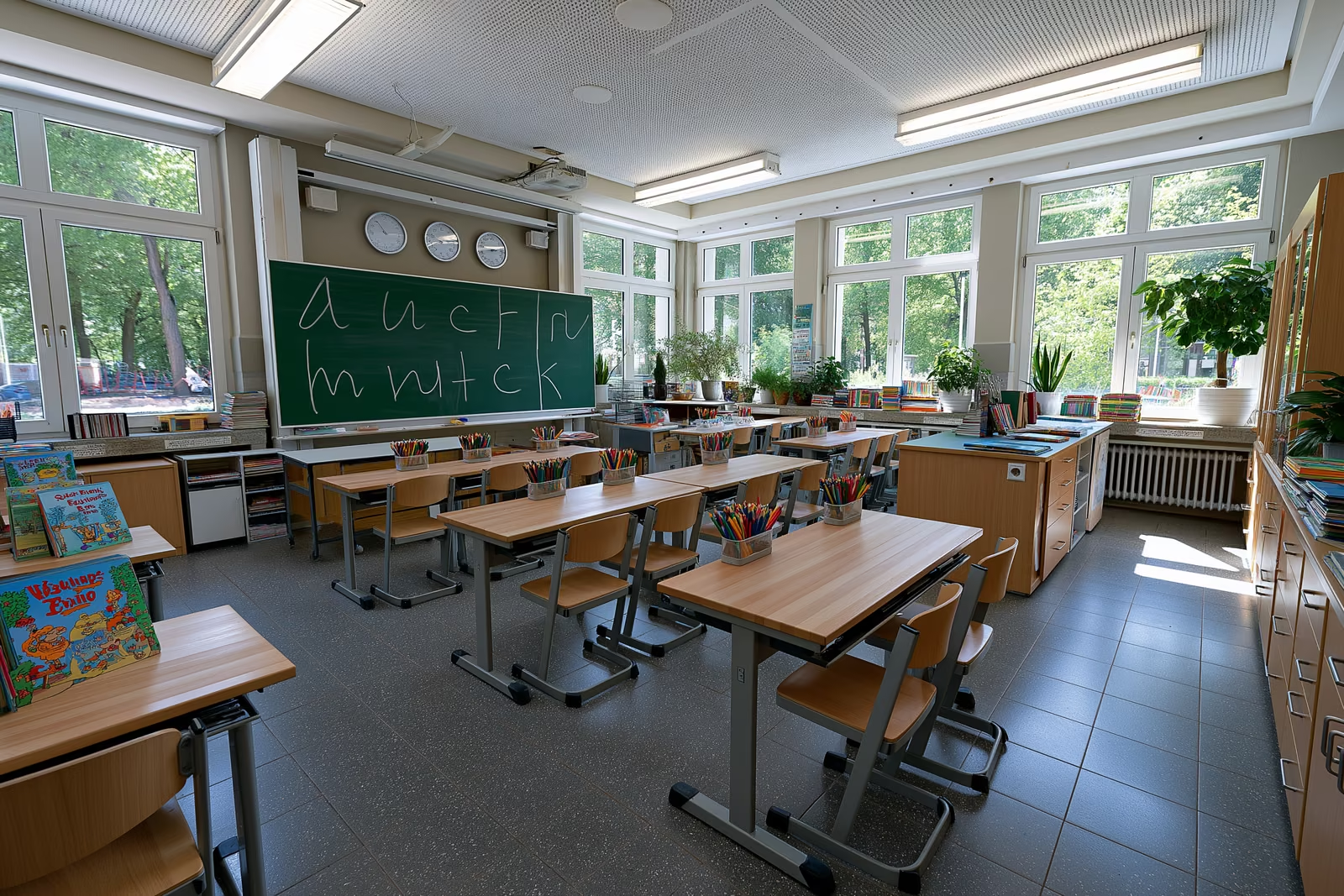
North Rhine-Westphalia has passed one of the most far-reaching school reforms in Germany in years. On July 16, 2026, the state parliament in Düsseldorf approved a law that introduces so-called ABC-Klassen, mandatory ABC language classes for preschool children whose German is judged too weak for first grade. From spring 2028, every child in NRW will take a standardized language test before school entry, and from the 2028/29 school year around 50,000 children per year are expected to attend the new compulsory courses. For immigrant families, this changes the path into primary school considerably.
What the New Law Says
The reform responds to a problem schools have reported for years: roughly one in three children in NRW starts school with significant German language deficits. Because NRW has no Kita obligation, the compulsory daycare attendance that some countries know, thousands of children reach school age without ever having been in a German-speaking group setting. The new law is meant to catch exactly these children before they sit in a classroom for the first time.
Two elements are central. First, a unified language test: from spring 2028, all children will be assessed with the same procedure in the year before they start school, replacing the patchwork of local tests used until now. Second, the ABC-Klassen themselves: children whose test shows a clear need for support must attend a language course based at a primary school, whether or not they go to daycare. Participation is not optional; the classes become part of compulsory education for children who reach school age from August 1, 2029.
How ABC Language Classes Will Work
The ABC language classes run for one year before enrollment, with two sessions of two hours each per week. The courses take place at primary schools and are designed to prepare children for the language used in lessons: understanding instructions, building vocabulary, and getting familiar with letters and sounds. Education Minister Dorothee Feller of the CDU has presented the model as a way to give every child a fair start in first grade.

The scale is considerable. The state calculates around 1,650 additional teaching positions, which can partly be filled with socio-pedagogical staff, and about 108 million euros per year just for transporting children to the course locations, according to figures reported by t-online. Since many of the affected children live far from the nearest participating school, the state must organize bus services for four- and five-year-olds twice a week, a point that has drawn heavy criticism.
Who Voted for It – and Who Warns Against It
The vote itself caused a political stir. The law passed with the votes of the governing CDU and Greens, and additionally with the support of the AfD, while the SPD and FDP opposed it, as MiGAZIN and other outlets reported. FDP education politician Franziska Müller-Rech called the project “an incredible disappointment” and mocked the plan as a program of expensive bus trips rather than real early support.
Welfare organizations are even more critical. Christian Woltering of the Paritätischer Wohlfahrtsverband, one of Germany’s large welfare associations, described the ABC-Klassen as a professionally questionable parallel structure and argued that daycare staff are the ones trained to support children in this sensitive phase of development. A broad alliance of daycare providers, parent representatives and unions had urged the parliament to stop the law, warning that shuttling tens of thousands of preschoolers between institutions is pedagogically questionable and that singling children out for separate classes risks stigmatizing them.
Why ABC Language Classes Matter for Immigrant Families
Families who speak little or no German at home are the group most directly affected. If your child reaches school age from August 1, 2029, expect an official invitation to the standardized language test in the spring of 2028 or later. A child who passes the test simply starts school as normal. A child with an identified support need must attend the ABC language classes for a year, in addition to any daycare place the family already has.
Important to know: attending the course is a legal duty, comparable to school attendance itself, so families cannot simply opt out. The state organizes and pays for transport where needed. Speaking another language at home is not a problem in itself; the test measures German skills, and the course exists precisely to build them before first grade. Parents who want to prepare can ask their Kita about language support offers that already exist today.
What Expat Parents in NRW Should Do Now
There is no immediate action required; the first tests are almost two years away. Still, parents of toddlers in NRW should factor the new system into their planning. A daycare place remains the best preparation, because children who hear German daily from age three rarely end up needing a mandatory course. How school enrollment works in general is explained in our guide to primary and secondary education in Germany.
It is also worth understanding where the ABC-Klassen sit in the wider system: Germany’s school landscape differs from state to state, and NRW is so far the only state with this specific model. Our overview of the German education system covers the stages from Kita to Abitur. Whether the ABC language classes reduce inequality or create new hurdles will only become clear once the first cohort starts in 2028; the debate in Düsseldorf is certainly not over.

