St Martin lantern parade: songs, goose, dates
5 min read
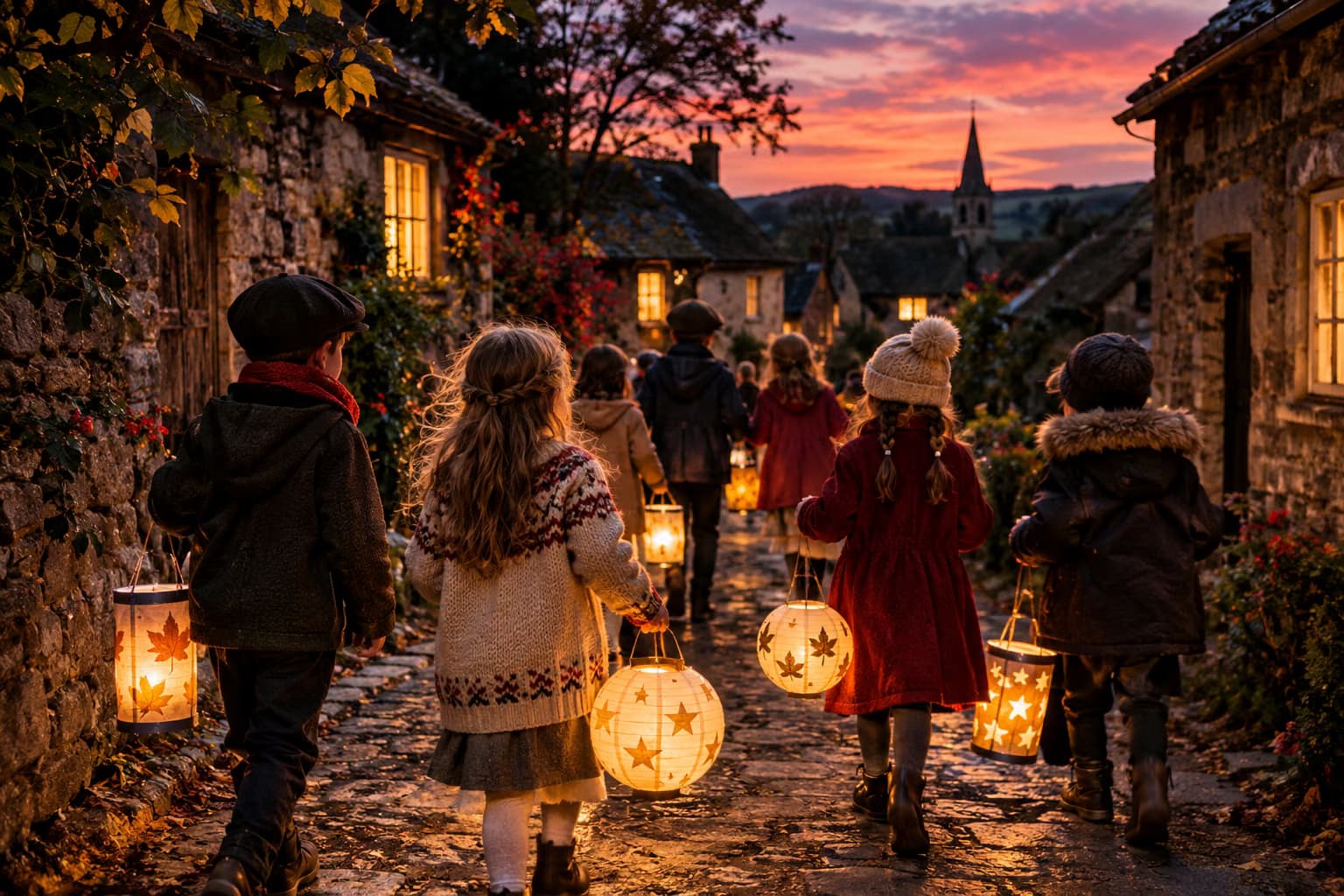
Wednesday 11 November is Martinstag, St Martin's Day, and across Germany children will walk through dark streets with glowing paper lanterns. For many international families the St Martin lantern parade is the first German custom their children bring home from the Kita (daycare centre) or primary school, often together with a homemade lantern and a list of songs to practise.
The evening looks simple from the outside, but the details vary a lot from town to town: some parades are led by a rider on horseback, some end at a bonfire, some take place days before or after the actual feast day. Here is what to expect this week, where the big processions are and why roast goose is on so many restaurant menus.
Why 11 November is not a day off
Despite the processions, singing and church services, Martinstag is not a public holiday in any German state. It is a day of remembrance in the church calendar, so schools, offices, shops and public authorities keep their normal hours on 11 November. Most parades are therefore held in the late afternoon or early evening, after the working and school day, when it is already dark.
The date itself is not always the date of the parade. Kindergartens, schools and parishes plan their own events, and many choose a weekend or a quieter weekday. In the Germersheim district of Rhineland-Palatinate, for example, the local Wochenblatt Reporter lists parades on 7, 11 and 12 November, with several Kita groups walking short routes through their own neighbourhoods on the evening of the feast day itself.
The story behind the St Martin lantern parade
The custom goes back to Martin of Tours, a fourth-century figure born around the year 316 in what is now Hungary. As a young Roman soldier he is said to have met a freezing beggar near Amiens in northern France, cut his military cloak in two and given one half away. That scene of sharing is the heart of the tradition and is re-enacted in many towns as the Martinsspiel, a short open-air play before or during the procession.
Martin later became Bishop of Tours, reportedly against his will. According to legend he hid in a goose pen to escape the appointment, and the cackling birds gave him away. He was buried on 11 November 397, which is why the feast falls on this date. Protestants in Germany also keep the custom, partly because Martin Luther was born on 10 November 1483 and baptised on 11 November, and the Protestant church remembers that baptism on Martinstag.
Where a St Martin lantern parade takes place this week
Munich's city centre parishes stage one of the best known processions in the south. According to the city portal muenchen.de, the Martinsspiel starts at 4.30 pm on 11 November on Frauenplatz in front of the cathedral, followed by a walk through the old town via Löwengrube and Ettstraße to the Jesuit church of St. Michael on Neuhauser Straße, where a short service with the cathedral choirs closes the evening. If it rains, everything moves into St. Michael. The city advises taking the U-Bahn or S-Bahn to Marienplatz and bringing your own lantern.
The Rhineland is the stronghold of the tradition. Düsseldorf scheduled its large Old Town procession for the evening of 10 November, with bands setting off from Stiftsplatz at 5 pm and a rider in the role of St Martin sharing his cloak twice, in front of the town hall and later at Burgplatz. In April 2026 the Martinstradition of the Rhineland was added to Germany's nationwide inventory of intangible cultural heritage, according to the state government of North Rhine-Westphalia, which described it as a creative and inclusive form of culture.
Smaller towns follow the same pattern on a smaller scale. A procession usually gathers at a church, school or town hall, walks through the neighbourhood behind the rider or a group of musicians, and ends with a play, a bonfire called the Martinsfeuer, or hot drinks and snacks sold by a parents' association.
Songs, pastries and the Martinsgans
Singing is part of every St Martin lantern parade. The Stuttgarter Zeitung names "Laterne, Laterne", "Ich geh mit meiner Laterne" and "Sankt Martin ritt durch Schnee und Wind" as the classics. In some regions children also go from door to door with their lanterns, a custom called Martinssingen or Martinisingen, and receive sweets, fruit or pastries in return. In parts of northern Germany with a strong Protestant tradition this happens on 10 November, in other regions on the 11th.
The typical treat is a sweet yeast bread shaped like a little man, which has a different name in almost every region: Weckmann, Stutenkerl, Wecken or Dambedei. Many parades hand one out to every child at the end. Adults tend to remember the day for the Martinsgans, a roast goose served with red cabbage and dumplings, in memory of the geese that betrayed Martin.

Goose will cost a little more this year. The Saxon poultry association expects prices to rise by no more than about five percent, pointing to the higher minimum wage of 13.90 euros per hour since January and to feed costs. According to the regional news site MS-Aktuell, fresh German geese sold for around 20 euros per kilogram last season and frozen ones for about 15 euros, so a fresh bird from a German farm often costs 100 euros or more. The same report notes that around 90 percent of the goose meat eaten in Germany is imported, mostly from Poland and Hungary, which explains why frozen supermarket geese are much cheaper. If you want a fresh goose, butchers and farms usually ask you to order in advance.
What this means for expat families
If your child attends a Kita or a Grundschule (primary school), expect a note about a lantern workshop and a parade date, and do not assume it falls on 11 November. Lanterns are often made together in class, and a simple paper lantern on a stick is perfectly fine for children who missed the workshop. Both muenchen.de and family guides published ahead of the day recommend LED lights rather than real candles, because a paper lantern can catch fire quickly in a crowd.
Most parades are free and open to everyone, whether or not you belong to a church, so they are an easy way to meet neighbours and other parents. Dress children warmly, bring a torch for the walk home and agree on a meeting point in case you get separated. For more on the German calendar, see our overview of public holidays and customs, our guide to traditional German dishes, and the opening dates of the Christmas markets 2026, which start only days after the St Martin lantern parade season ends.