Saxony-Anhalt premier vote: Left takes on AfD
5 min read
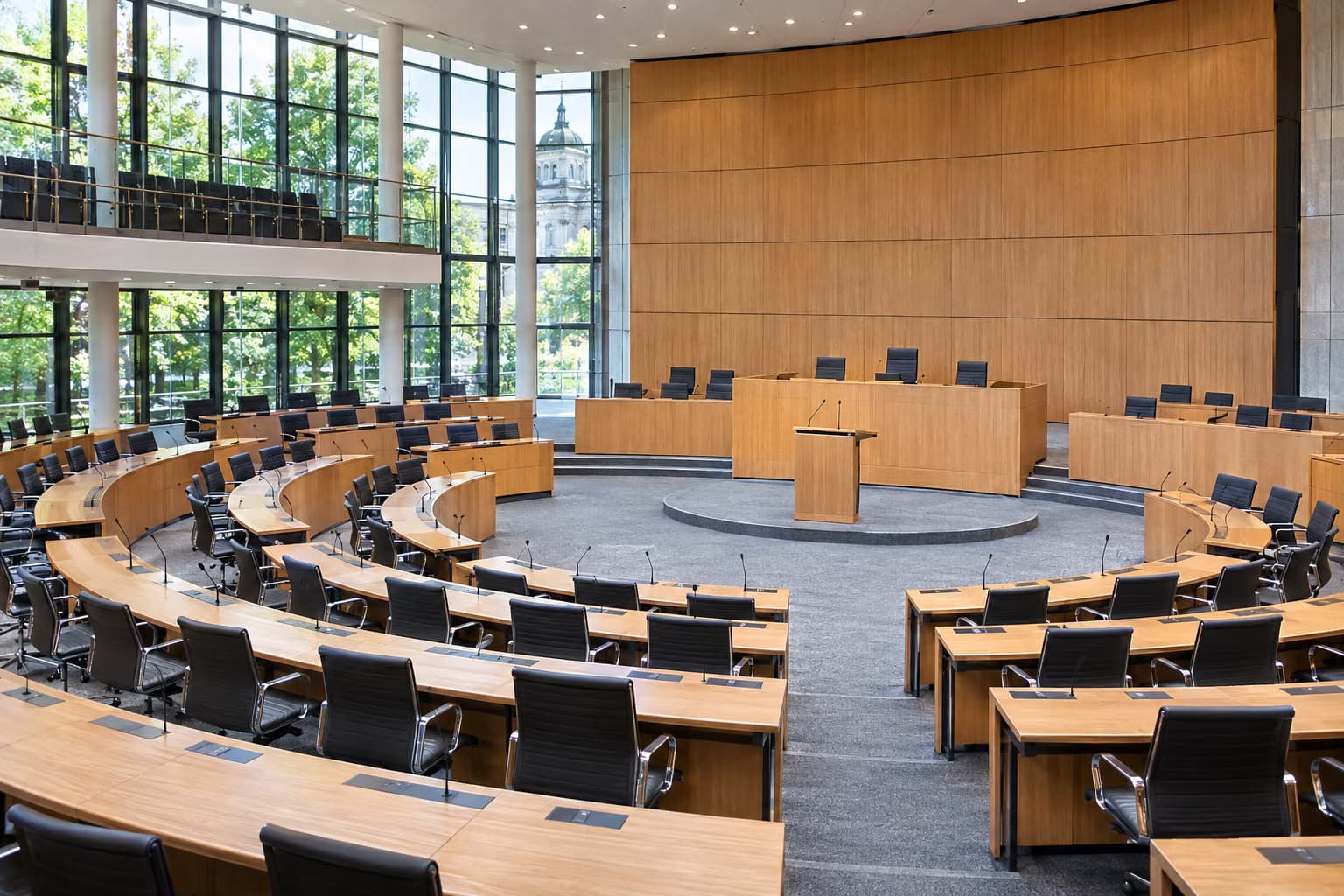
The race to become the next Saxony-Anhalt premier now has two candidates. On 10 November, the Left party (Die Linke) nominated its parliamentary leader Eva von Angern to run against Ulrich Siegmund of the far-right AfD, which won the state election on 6 September by a wide margin. The vote in the Landtag, the state parliament in Magdeburg, is expected on 15 December. If Siegmund wins, Germany would have its first state government led by the AfD.
Nobody expects von Angern to win. But her candidacy changes the arithmetic of a vote in which the CDU plans to leave the chamber and the BSW wants to abstain, and it has caused open irritation among the other parties that oppose the AfD.
Who wants to become Saxony-Anhalt premier
Ulrich Siegmund led the AfD into the September election, in which the party won 43.8 percent of the vote and 39 of the 83 seats. That made it by far the strongest force, well ahead of the CDU with 17.2 percent and 15 seats, but three seats short of an absolute majority. The SPD, the Greens and the Left each have 8 seats, and the BSW, the party founded by Sahra Wagenknecht, has 5. The state's domestic intelligence agency classifies the regional AfD as confirmed right-wing extremist, MDR notes.
Eva von Angern, a 49-year-old lawyer, has been a member of the Landtag since 2002 and was the Left's lead candidate in the election, which her party finished in fifth place with 8.6 percent. Her parliamentary group backed her unanimously, MDR reported. She will stand in the first two rounds; whether she also runs in a possible third round is still open, according to nd. "We are not the rabbit in front of the snake," von Angern said, as quoted by the news agency dpa. Until a new head of government is elected, the previous cabinet under premier Sven Schulze (CDU) stays in office on a caretaker basis.
How the Saxony-Anhalt premier vote works
The Landtag elects the premier (Ministerpräsident) in a secret ballot. In the first and second rounds, a candidate needs an absolute majority of all members, which currently means at least 42 of 83 votes. If the first round fails, the second must take place within seven days. If that also fails, parliament has 14 more days to decide whether to end the legislative period early, which would mean dissolving the Landtag and holding a new election.
If parliament does not vote for dissolution, a third round follows immediately. In that round, a simple majority of the votes cast is enough: more yes votes than no votes, with abstentions not counted. This is the round in which the AfD sees its best chance. Von Angern argues that a second candidate changes the ballot, because members could then only vote yes for one of the two candidates or abstain, nd reported.
CDU walkout and BSW abstention
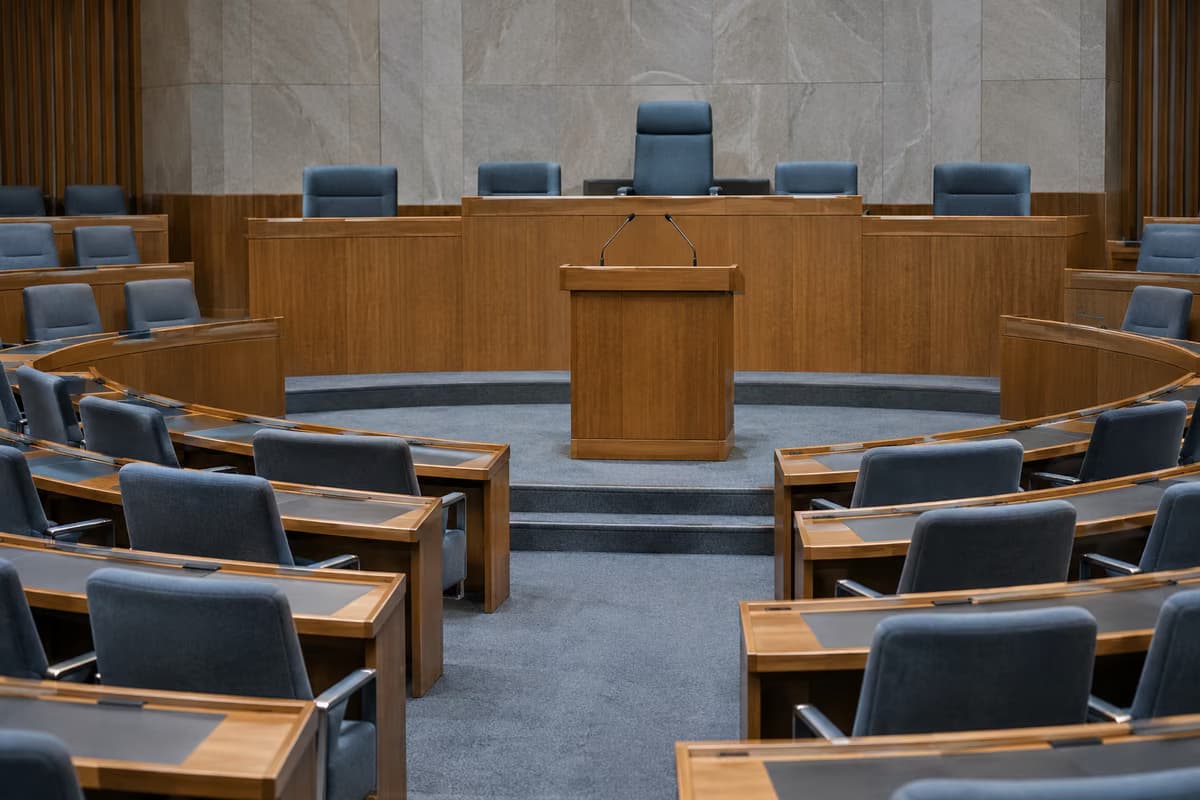
The CDU group decided in mid-October that its members will leave the plenary chamber during the first round. The decision was meant to stop speculation about CDU members secretly voting for the AfD. That speculation began on 6 October, when the AfD's Tobias Rausch was elected president of the Landtag (according to nd, the first AfD politician to hold such a post in Germany) and received four more votes in the secret ballot than the AfD and BSW have seats, MDR reported. One CDU member, Guido Heuer, has said he will stay in the room. Schulze, who is not standing again as CDU state chairman at the party conference on 5 December, has said his group would return for a third round but would not vote for an AfD premier.
The BSW says it will abstain. Siegmund originally said he would only run in the first round. He has since changed course. "We may have to reassess the situation," he told the newspaper Volksstimme, according to MDR, and he called the CDU's walkout a procedural trick. CDU general secretary Mario Karschunke replied that Siegmund lacked a reliable partner. The numbers explain the tension: if the CDU stays out in a third round, the BSW abstains and the SPD, Greens and Left vote against him, Siegmund would win by 39 to 24. If the CDU returns and votes no, the result would be a 39 to 39 tie, a case the state constitution does not clearly regulate.
Criticism of the Left's candidacy
The other parties reacted coolly to von Angern's bid. SPD parliamentary leader Katja Pähle called it "a political ego trip at the worst possible time", t-online and MDR reported. She warned that a candidate supported only by the Left could make things easier for the AfD in a third round, and said that stopping an AfD premier would need a candidate acceptable to all democratic parties. The SPD had invited the other parties to talks on a joint approach after the election, but the CDU declined and the SPD ended the effort after the vote for the Landtag president.
Green parliamentary leader Susan Sziborra-Seidlitz told MDR her group was surprised by the move. BSW deputy leader Claudia Wittig mocked the idea of a premier from a party with 8.6 percent as an ambitious contribution to political entertainment. Von Angern could only win if the CDU, SPD, Greens, BSW and Left all voted for her, which both t-online and nd describe as unlikely. Left state chairman Hendrik Lange defended the decision, saying the candidacy stands for a political alternative to the AfD.
What an AfD-led Saxony-Anhalt premier could change
Even without a majority, an AfD premier could govern as head of a minority government. MDR explains that the premier could appoint and dismiss ministers and reorganise ministries without parliament's approval, while new laws and a new state budget would need majorities in the Landtag. The BSW has signalled support on individual issues but rules out electing Siegmund or forming a coalition with the AfD. Saxony-Anhalt still has no approved budget for 2027, which would limit new spending.
For foreign residents, some AfD plans are directly relevant. According to MDR, the party's 100-day programme includes a general work obligation for asylum seekers and special school classes for the children of asylum seekers. MDR points out that such classes would be legally problematic if children were excluded from regular lessons only because of their residence status, and that federal law limits what a state can do. The AfD also wants to cut state funding for democracy projects and for the counselling association Miteinander, which supports victims of right-wing violence. The federal education ministry said on 4 November that it would look for other ways to keep such projects running, MDR reported. For background on the campaign, read our report on the AfD Magdeburg campaign launch. The rules on residence permits, citizenship and asylum are federal law and would not change with a new state government, although state and local authorities apply them.