





 Turkish
 Italian
 Spanish
 Portuguese
 Romanian
 Albanian
 Lithuanian
 Latvian
 Bulgarian
 Greek
Greek Hungarian
 French
 Croatian
 Czech
Czech
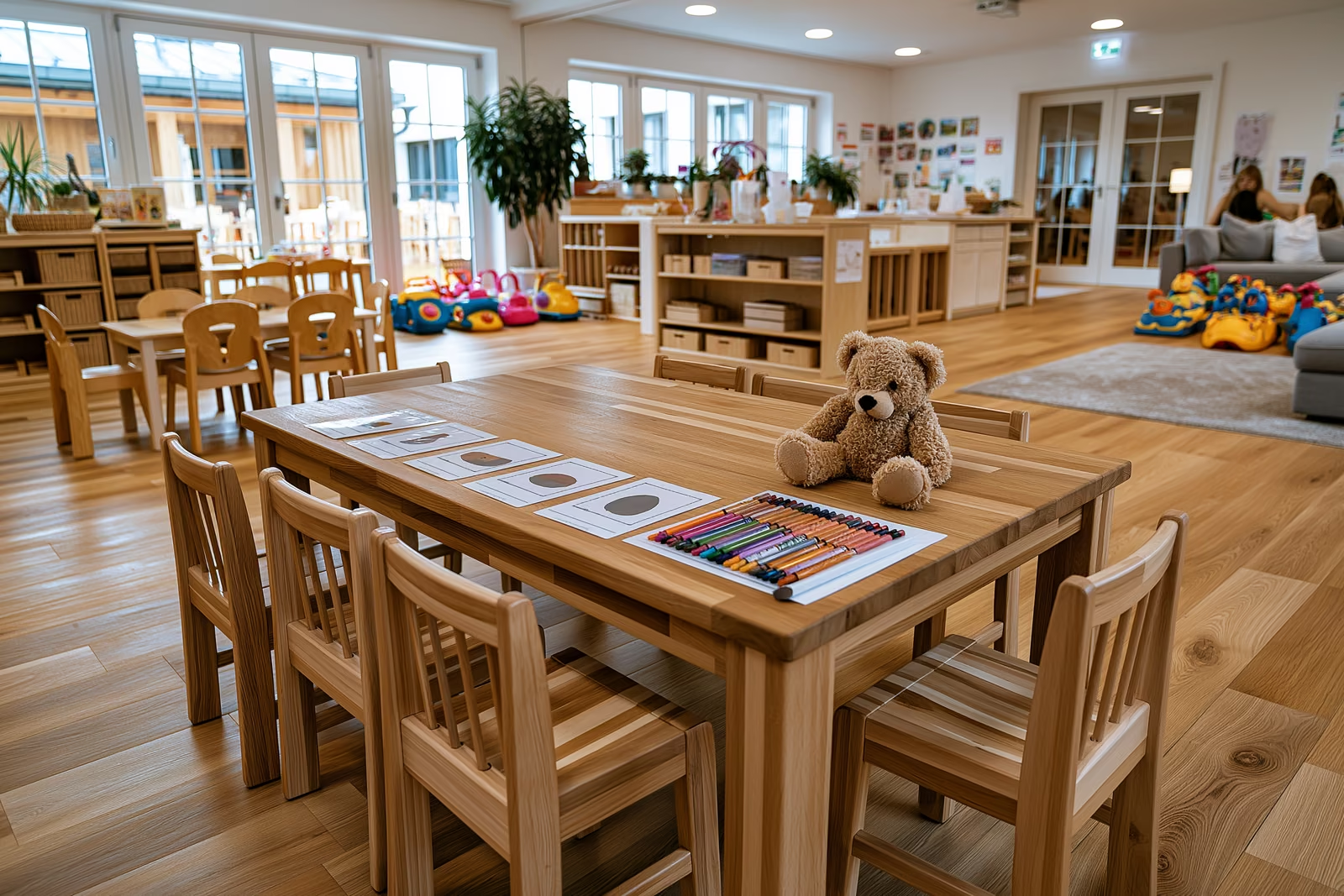
Every four-year-old in Germany would take standardized German language tests under a draft law from Federal Education Minister Karin Prien (CDU), reported by the dpa news agency in mid-July 2026. The planned Kita-Startchancen-und-Qualitäts-Entwicklungsgesetz would, for the first time, screen children nationwide by uniform standards, including those who do not attend a Kita, Germany’s daycare centers, and back the effort with 9.25 billion euros in federal money through 2034.
Why Berlin wants language tests for all children
The problem the draft targets is well documented: according to dpa reporting carried by regional papers such as the Rhein-Neckar-Zeitung, up to one third of children starting school in Germany do not speak German well enough to follow lessons from day one. Gaps that open before first grade tend to widen through a child’s entire school career, which is why the ministry wants problems identified and treated years before enrollment.
Today, whether and how a child is screened depends on the federal state. Some states test thoroughly, others barely at all, and children outside the daycare system are often missed entirely. The new law would replace this patchwork with language tests and developmental checks that follow the same standards everywhere in Germany, at age four, giving roughly two years for targeted support before school starts.
What the draft law provides
The legal news service LTO, which reviewed the draft, reports that Kitas would receive dedicated time budgets for the task: about two hours per child for the assessment itself and at least 30 minutes per week per child for planning and delivering follow-up support. Testing would be mandatory, and children not enrolled in any Kita would be invited to an assessment as well.
Money is concentrated where need is greatest. At least ten percent of daycare centers in each state, chosen for their share of children from low-income households, non-German-speaking homes or with developmental concerns, would receive extra staff hours, between 20 and 60 additional weekly hours depending on their size. Test results could also be shared with primary schools so support continues across the transition.
Language tests alone are not enough, critics warn
Approval for early diagnosis is broad, but experts question whether the support side can be delivered. Waltraud Weegmann, head of the Deutscher Kitaverband, an association of independent daycare providers, points to a structural flaw: the children who most need early German exposure often enter daycare late, get no place at all, or find it too expensive. “If all children are to start school with good German, we must make sure they enter daycare as early as possible,” she said.
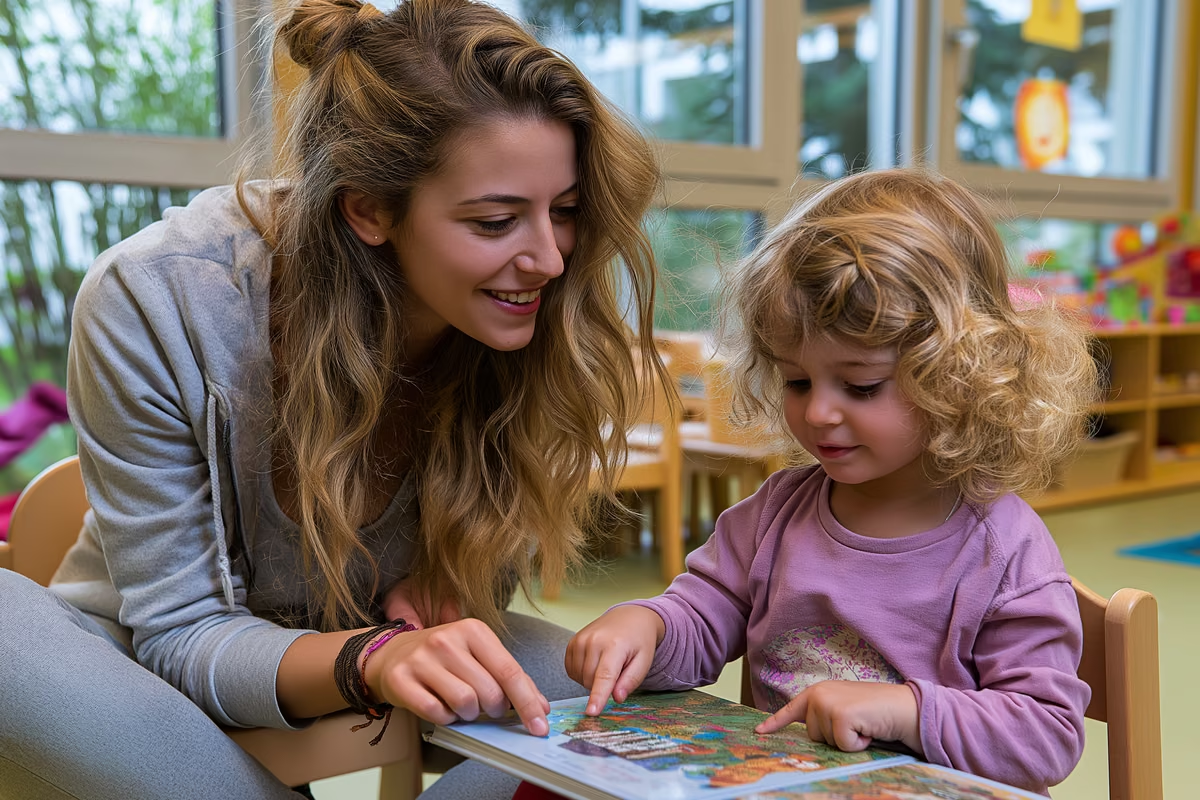
Education unions raise a related concern: language support ultimately depends on qualified staff, and Kitas in many regions already struggle to fill positions. Weegmann also warned against saving money as birth rates fall, arguing that freed-up capacity should be invested in quality rather than cut. A test that diagnoses a deficit helps no one, critics say, if there is no course, place or educator available afterward.
Not the same as NRW’s ABC classes
The federal plan should not be confused with a separate law in North Rhine-Westphalia, which introduces so-called ABC-Klassen, special preparatory classes at primary schools for children who arrive at enrollment without sufficient German. We covered that state-level program in detail in our article on NRW’s ABC language classes.
The two approaches work at different points: NRW intervenes at school entry, after the gap has appeared, while Prien’s draft aims two to three years earlier, in the Kita phase, so that fewer children ever need such catch-up classes. If the federal law passes, both systems would exist side by side, and screening results from age four could determine which children receive support long before any school placement decision.
What immigrant parents should expect
For families raising children in another home language, the practical message is: expect an invitation to the language tests around your child’s fourth birthday once the law takes effect, whether or not your child attends daycare. The draft still has to pass the cabinet and Bundestag, so the start date is not fixed, but the funding framework runs from now until 2034. A multilingual upbringing is not a problem to be tested away; the screening only measures whether German is on track for school.
The best preparation is early daycare attendance, since Kita remains the main place children pick up German naturally. Waiting lists are long in many cities, so apply earlier than feels necessary and ask about subsidies; our guides to child and family benefits and the German education system explain what support exists and how the path from Kita to school works. If your child is flagged for support, that means extra help at no cost, not a mark against the family.

