Solar Feed-in Tariff Falls Again on August 1
4 min read
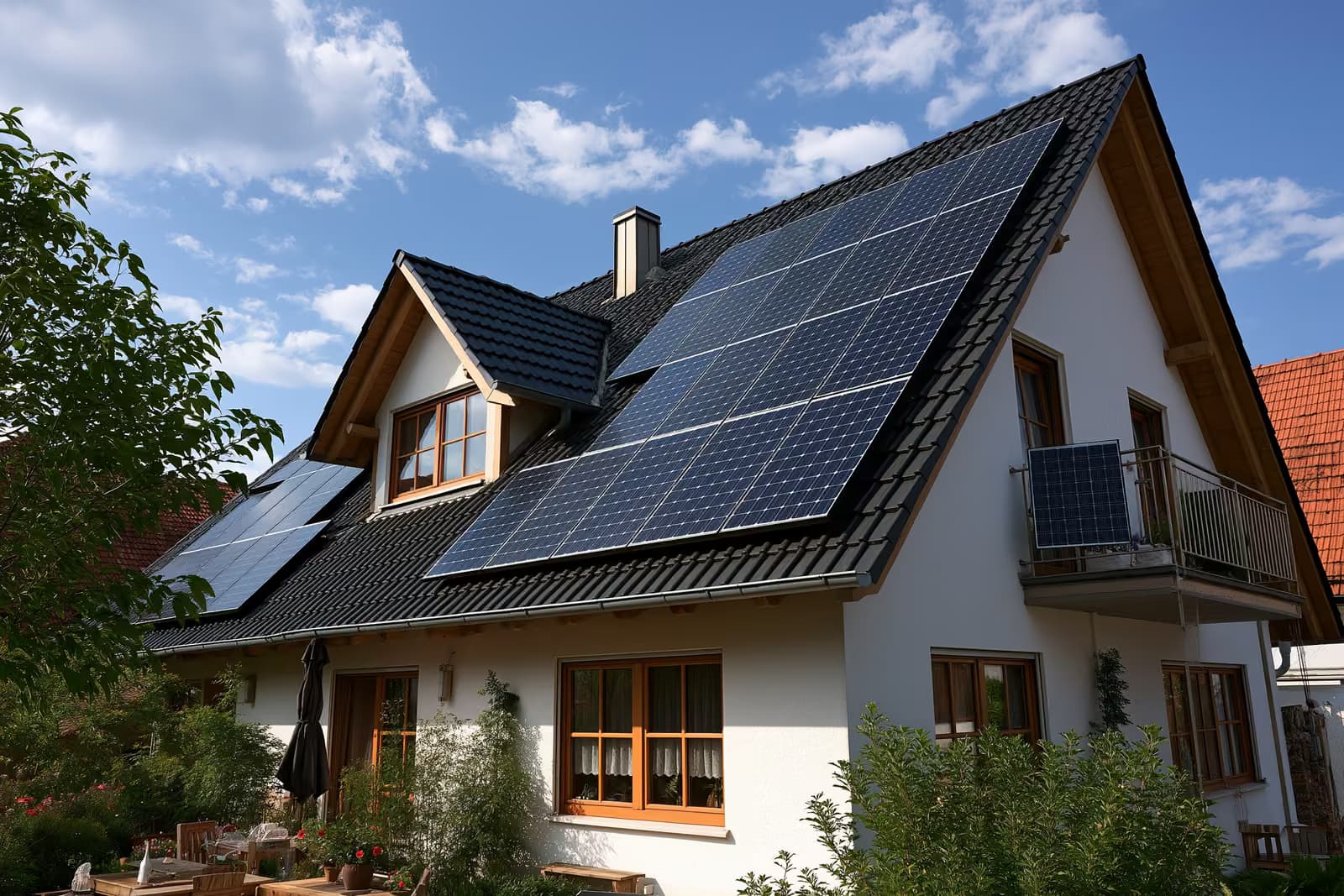
The solar feed-in tariff for new photovoltaic systems in Germany falls again on 1 August 2026. The rate a household earns for sending surplus solar power into the public grid, known in German as the Einspeisevergütung, drops in the regular half-yearly step written into the Renewable Energy Sources Act (Erneuerbare-Energien-Gesetz, or EEG). The cut is small this time, but it lands just as the government prepares a much larger change to how new solar power is paid, so anyone weighing a rooftop or balcony system should understand both.
How Much the Solar Feed-in Tariff Drops
For a new system of up to 10 kilowatts peak (kWp) that feeds only its surplus into the grid, the so-called Teileinspeisung or partial feed-in, the rate falls from 7.78 to 7.70 cents per kilowatt hour, according to the ADAC. That is a reduction of about one percent. Systems that feed in their entire output, the Volleinspeisung, see the top rate for the same size class drop from 12.34 to 12.22 cents per kilowatt hour.
Larger systems fall in the same way. For partial feed-in, installations between 10 and 40 kWp now earn 6.66 cents per kilowatt hour and those between 40 and 100 kWp earn 5.45 cents. This one percent reduction is not a surprise or a political decision. Since February 2024 the EEG has trimmed the solar feed-in tariff automatically every six months, on 1 February and 1 August, in a mechanism called degression. The 1 August 2026 step is simply the latest of these, as the windkraft-journal notes.
Only New Systems Lose the Higher Rate
The most important point for existing owners is that nothing changes for them. The feed-in tariff is fixed for 20 years from the moment a system is switched on, so whoever commissioned a system before 1 August 2026 keeps their old rate for the full funding period. The degression only sets the starting rate for systems connected to the grid from that date onward.
In practice this means the date your installer registers your system with the grid operator matters. A rooftop array or a Balkonkraftwerk (a plug-in balcony solar unit) switched on in late July locks in the higher rate, while the same system switched on a few days later starts on the lower one. The difference of 0.08 cents per kilowatt hour is tiny for a small household system, so this alone is no reason to rush or delay a project.
A Bigger Solar Feed-in Tariff Change in 2027
The routine cut is overshadowed by a plan that would end the guaranteed solar feed-in tariff for new small systems altogether. On 29 July 2026 the federal cabinet approved a package from Economy Minister Katherina Reiche that would replace the fixed payment with direct marketing, meaning operators of new systems would have to sell their power on the electricity market rather than receive a set rate. The planned start date is 1 January 2027.
After criticism, the draft no longer proposes an abrupt end. Instead, systems built between 2027 and 2029 would receive a reduced transition payment of 5.2 cents per kilowatt hour for up to 36 months before moving to direct marketing, and the state would add a small direct-marketing bonus. The plan still has to pass the Bundestag and Bundesrat, expected in September 2026, and win EU approval, so it is not yet law. Systems connected to the grid by the end of 2026 would keep their fixed 20-year payment unchanged.
Does Rooftop or Balcony Solar Still Pay Off
Falling feed-in rates change the maths but do not remove the case for solar. The feed-in tariff has been modest for years, and most of the value of a home system now comes from self-consumption, using your own power instead of buying it. With household electricity prices far above 7.70 cents per kilowatt hour, every unit of solar power you use yourself saves much more than you would earn by exporting it. That is why solar with a battery, which shifts daytime generation into the evening, remains attractive.
For balcony solar the export rate barely matters, because these small units are sized to cover a household’s baseline load and feed in little. The economics rest almost entirely on the electricity you avoid buying. If you are comparing what you pay for power in the first place, our guide to energy providers and options in Germany explains how tariffs and contracts work. The clear message from the coming reform is that the era of relying on a generous solar feed-in tariff is ending, and that using your own solar power, rather than selling it, is where the savings now sit.