





 Turkish
 Italian
 Spanish
 Portuguese
 Romanian
 Albanian
 Lithuanian
 Latvian
 Bulgarian
 Greek
Greek Hungarian
 French
 Croatian
 Czech
Czech
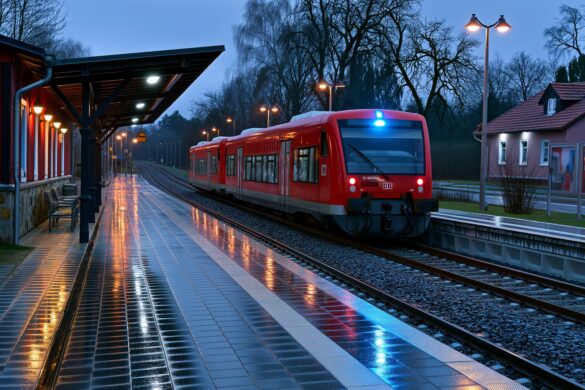
A routine ticket check on a regional train in Baden-Württemberg ended with a young railway worker fighting for his life. On Friday evening, a 26-year-old DB security guard fell from a train travelling at roughly 120 kilometres per hour between Offenburg and Karlsruhe after a dispute with a passenger turned physical. He was found critically injured beside the tracks near Ettlingen-Bruchhausen, south of Karlsruhe. On Saturday, a court declined to issue an arrest warrant against the 36-year-old suspect, a decision that has added a second layer of controversy to an already shocking case.
How the DB security guard was injured
According to the Karlsruhe police, the sequence began at around 7:30 pm on July 17, when a 36-year-old passenger could not show a valid ticket during an inspection and then refused to give his personal details to the train conductor. Two employees of DB Sicherheit, the railway’s own security service, were called to assist. Investigators say the man, who was intoxicated, became increasingly aggressive and attacked one of the security workers with punches.
The struggle took place in the entrance area of the carriage, next to the doors. In the course of the altercation, one of the train doors was damaged and a gap opened between the door and the floor. The police statement describes how the 26-year-old, after being struck again, lost his balance and fell against the lower part of the already damaged door, which gave way. He fell out of the moving train about 900 metres before Ettlingen-Bruchhausen station.
A search along the tracks at 120 km/h
The train was travelling at approximately 120 kilometres per hour at the moment of the fall, a speed at which a fall from a train is very rarely survivable. Emergency services launched a large-scale search along the line and found the injured man beside the tracks, roughly two kilometres from where the train eventually came to a stop. The DB security guard was taken to hospital with critical injuries.
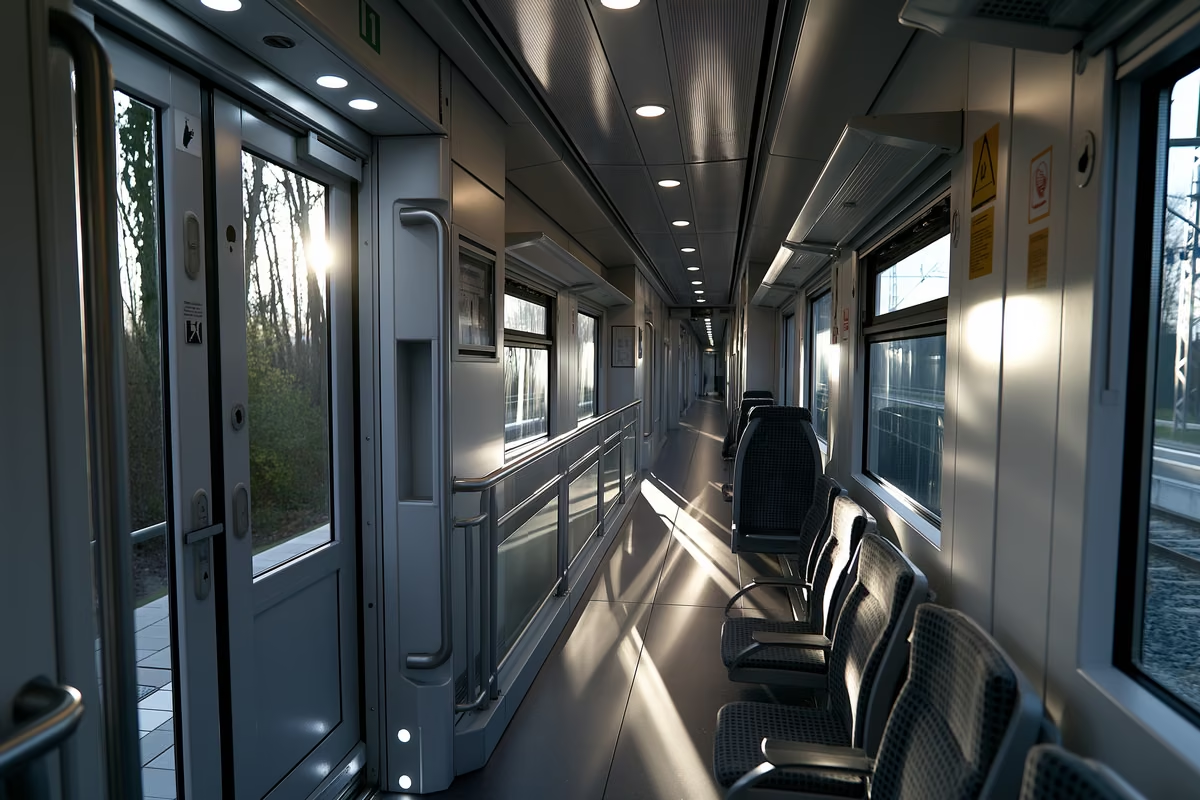
The suspect was detained while still on board. The fact that a door of a modern regional train could be forced out of its anchoring during a scuffle has raised technical questions as well; ZDFheute reported that the door was damaged in the struggle before the fall, and investigators are examining exactly how it failed. For passengers, such door failures are extraordinarily rare: the incident stemmed from massive force applied in a confined space, not from a spontaneous malfunction.
Why the court rejected an arrest warrant
On Saturday, the district court in Karlsruhe examined the case and declined to issue an arrest warrant, after which the 36-year-old was released. According to the Badische Neueste Nachrichten, surveillance video from the carriage left doubts about the exact sequence of events, so the court did not see the urgent level of suspicion required for pre-trial detention. Prosecutors had pointed out that a central legal question is whether the accused could have foreseen that his blows might send the DB security guard out of a moving train.
The court also found no risk of flight, noting that the man has a fixed address, family ties and a full-time job. Reports in regional media say the suspect has previous convictions, mainly for violent offences, and was under a suspended sentence at the time. The investigation into serious assault continues, and release from custody does not mean the case is closed: German courts regularly try defendants who remain free during proceedings. Pre-trial detention, the Untersuchungshaft, is legally an exception that requires strict conditions, not a punishment in advance.
Union anger after the DB security guard’s fall
The decision to release the suspect has angered railway workers. The train drivers’ union GDL, the Gewerkschaft Deutscher Lokomotivführer, demanded tougher protection for staff on Sunday. “We need decisions from the courts, we need legislative changes and we need enforcement powers,” union leader Mario Reiß said, according to the Badische Neueste Nachrichten, adding that attacks on railway employees must carry consequences that visibly deter offenders. The union says many conductors and security staff are increasingly afraid of assaults during their shifts.
The fear is backed by numbers. According to a German government answer to a parliamentary question, the Federal Police recorded around 2,690 attacks on Deutsche Bahn employees in 2025, roughly eleven percent more than the year before. Ticket inspections are a frequent flashpoint, which is why conductors in many regions are now accompanied by security teams in the evening hours, and why Deutsche Bahn has been expanding the use of body cameras for staff.
What this means for rail passengers in Germany
For everyday passengers, the practical risk of anything comparable happening around them remains very small. Millions of people ride German regional trains daily without incident, and the system as a whole is safe, as our overview of the German public transportation system explains. Still, the case is a reminder of a few sensible habits: always carry a valid ticket, since most escalations begin with a fare dispute, and if you use the Deutschlandticket on your phone, make sure it is downloaded and your battery is not empty when the conductor arrives – our guide to the Deutschlandticket covers how the subscription works.
If a conflict does break out near you on a train, keep your distance, do not intervene physically, and alert staff or call the police on 110; every carriage also displays the number of the security control centre. The wider debate that this case has triggered, about how the state protects the people who keep trains running, will continue well beyond the criminal proceedings. For the 26-year-old at its centre, colleagues across the network are hoping for news of recovery.

