Knockout drops: Bundestag sets 5-year minimum
5 min read
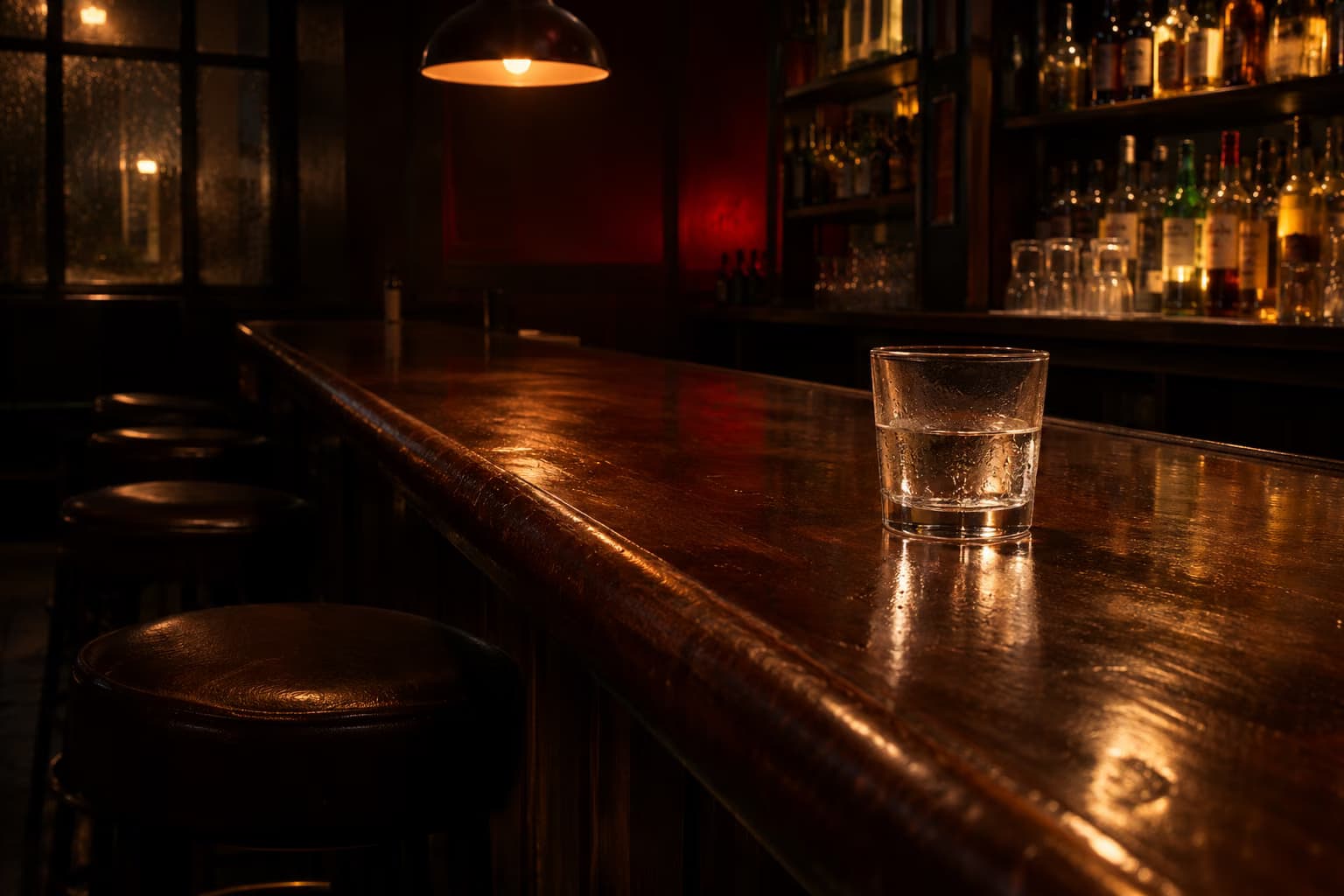
Anyone in Germany who uses knockout drops to commit rape or robbery will face at least five years in prison. The Bundestag passed the tougher penalty on Friday, 6 November, with votes from the CDU/CSU, the SPD, the Greens and the Left, while the AfD abstained. Until now, the minimum sentence in such cases was three years. Knockout drops, known in German as K.-o.-Tropfen, will in future be treated by the courts in the same way as a weapon or a dangerous tool.
The coalition summed up the reform with the slogan "one drop, five years". Victims' groups and opposition MPs welcomed the signal but warned that a higher penalty alone does little for the people who wake up with no memory of the night before.
What the knockout drops law changes
The reform amends two sections of the Strafgesetzbuch, the German criminal code. Section 177 deals with sexual assault and rape, and section 250 with aggravated robbery. Both already set a minimum of five years when the offender uses a weapon or a "dangerous tool". The new law adds a third category, the "gefährliches Mittel" or dangerous means. According to the Bundestag's own news service, a substance counts as dangerous if, in the specific case, it is able to cause serious injury or considerable damage to health.
The change also covers cases that happen at home. ZDF reported that the law applies when a partner drugs and abuses someone in a private setting, not only in bars or at parties. In the final committee session on 4 November, the coalition clarified the wording so that every form of sexual offence under section 177 is covered, responding to concerns raised by the Bundesrat, the chamber of the federal states.
Why a court ruling forced the change
The trigger was a decision by the Bundesgerichtshof, Germany's Federal Court of Justice, on 8 October 2024. The judges ruled that knockout drops given in a drink are not a "dangerous tool" in the legal sense, because a liquid has no fixed form and is not an object. Reading the law more broadly, they argued, would break the constitutional rule that crimes must be clearly defined. As a result, such cases fell under a lower category with a three-year minimum, and the drugging could only be taken into account as an aggravating factor.
The federal states North Rhine-Westphalia, Hamburg and Saarland first pushed for a fix through the Bundesrat in 2025. The government later presented its own bill, which had its first reading in September. Justice Minister Stefanie Hubig (SPD) called it "a clear stop sign" for offenders, and in the debate she pointed to the French rape case of Gisèle Pelicot as well as to cases in Germany.

Praise and criticism in the Bundestag
Speakers from all parties backed the goal. "Anyone who uses knockout drops to rape a woman crosses every line of our rule of law," said Sonja Eichwede, deputy leader of the SPD parliamentary group, as quoted by beck-aktuell and dpa. CSU politician Susanne Hierl called the use of such drugs a particularly cruel way to make a person defenceless.
Critics said the law leaves out what victims need most. Lena Gumnior of the Greens said there are still too few accessible support centres, and the Greens' proposal for a national strategy against spiking, the secret adding of drugs or alcohol to a drink, was rejected. Luke Hoß of the Left pointed out that the substances can often be detected in the body for only a few hours, which offenders exploit. The AfD called the reform symbolic and demanded nationwide rapid toxicology tests. Sven Rebehn of the German Judges' Association told dpa the tougher minimum is appropriate, but that the risk of being caught deters offenders more than the length of a sentence. Lawyers' associations had already criticised the plan in 2025 as symbolic politics, according to the legal news site LTO.
Knockout drops: how big the problem is
Nobody knows exactly how often knockout drops are used. German police statistics do not record such cases separately, and many victims never report them because they cannot remember what happened. ZDF cited a 2026 study by the Federal Criminal Police Office (BKA) in which 6.7 percent of women and 3.7 percent of men said they had been drugged at least once in their lives.
The most common substances are GHB and GBL, which turns into GHB in the body. Both are also used as party drugs. They are colourless and almost tasteless, and their effects can look like ordinary drunkenness: dizziness, nausea, sudden tiredness and gaps in memory. According to the Stuttgarter Zeitung, GHB can be reliably detected in the blood for only three to four hours and in urine for up to twelve.
What expats should know
The new penalty does not take effect yet. According to dpa, the law still has to pass the Bundesrat and is planned to come into force on 1 January 2027. German criminal law protects everyone in the country, whatever their passport, and the same applies to the new rule. It is part of a wider series of reforms of sexual offences, such as the planned voyeurism law.
If you think you or a friend has been drugged, act quickly. Go to a hospital emergency department as soon as possible so that blood and urine samples can be taken, and call 112 for an ambulance or 110 for the police if needed. In some regions, clinics offer confidential evidence collection, so samples can be stored before you decide whether to report the crime. Free helplines include the victim support line of the Weißer Ring on 116 006, the helpline for violence against women on 116 016 and the helpline for violence against men on 0800 1239900. To lower the risk, do not leave drinks unattended, do not accept open drinks from strangers and keep an eye on each other on a night out. Anyone who needs legal help after an attack can find advice in our guide to finding a lawyer in Germany.