




 Turkish
 Italian
 Spanish
 Portuguese
 Romanian
 Albanian
 Lithuanian
 Latvian
 Bulgarian
 Greek
Greek Hungarian
 French
 Croatian
 Czech
Czech
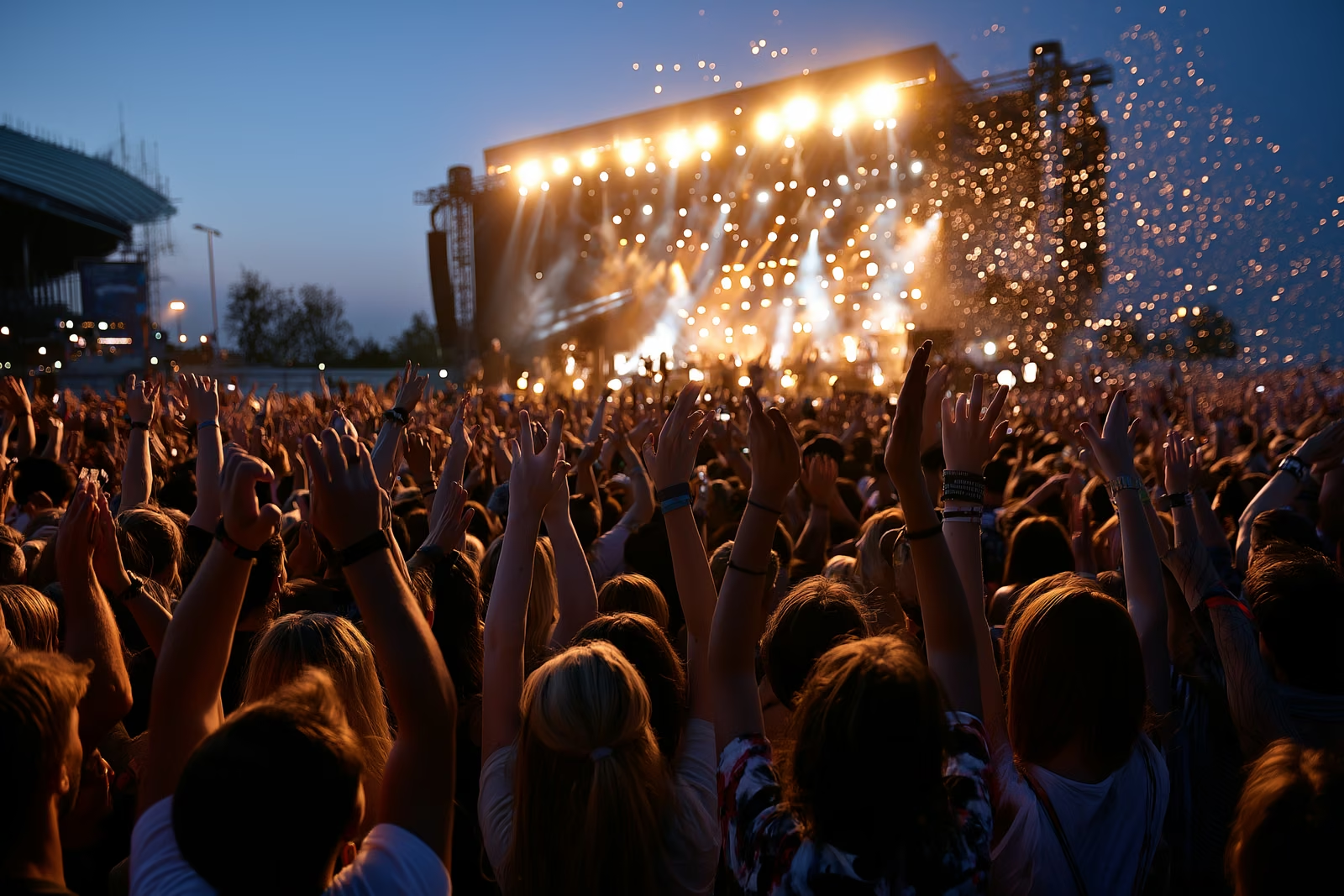
As the last songs echo across the Olympiapark tonight, Berlin is wrapping up one of the loudest weekends of its summer. Lollapalooza Berlin 2026 took over the Olympiastadion and the surrounding park on July 18 and 19, with tens of thousands of visitors each day, five stages, and a bill topped by Pitbull, Lewis Capaldi and Lorde alongside German superstar Ayliva. The festival turns midnight tonight, closing a weekend in which the west of the city belonged to music fans from all over Europe.
Two days, five stages in the Olympiapark
The Berlin edition of the festival, which began in Chicago in 1991 and now has offshoots from São Paulo to Mumbai, has been staged at the Olympiastadion complex since 2018. The historic stadium and the park around it hold the event comfortably: according to Berlin Magazine, around 50,000 visitors were expected on each of the two days, spread across the main Essence Stage, the TK Maxx Stage, the electronic Perry’s Stage, the New Horizon Stage and the Fashionpalooza Stage.
Gates opened at 11:00 on both days. The Saturday programme ran deep into the night until 01:00, while tonight’s finale ends at midnight, a nod to the working Monday that follows. The weather largely cooperated, with a dry Saturday reaching about 26 degrees, while Sunday stayed cooler with a risk of showers towards the evening, according to the forecast reported by Berlin Magazine.
How Lollapalooza Berlin sounded this year
Saturday belonged to two very different crowd magnets. Miami party veteran Pitbull brought his greatest-hits show to Berlin, while Ayliva, the top-billed German act of the weekend and one of the country’s most streamed artists, drew an enormous audience of her own. Tonight, the mood shifts from party to emotion: Scottish singer Lewis Capaldi and New Zealand pop auteur Lorde share the closing honours, a pairing Tagesspiegel highlighted as the emotional counterweight to Saturday’s spectacle.
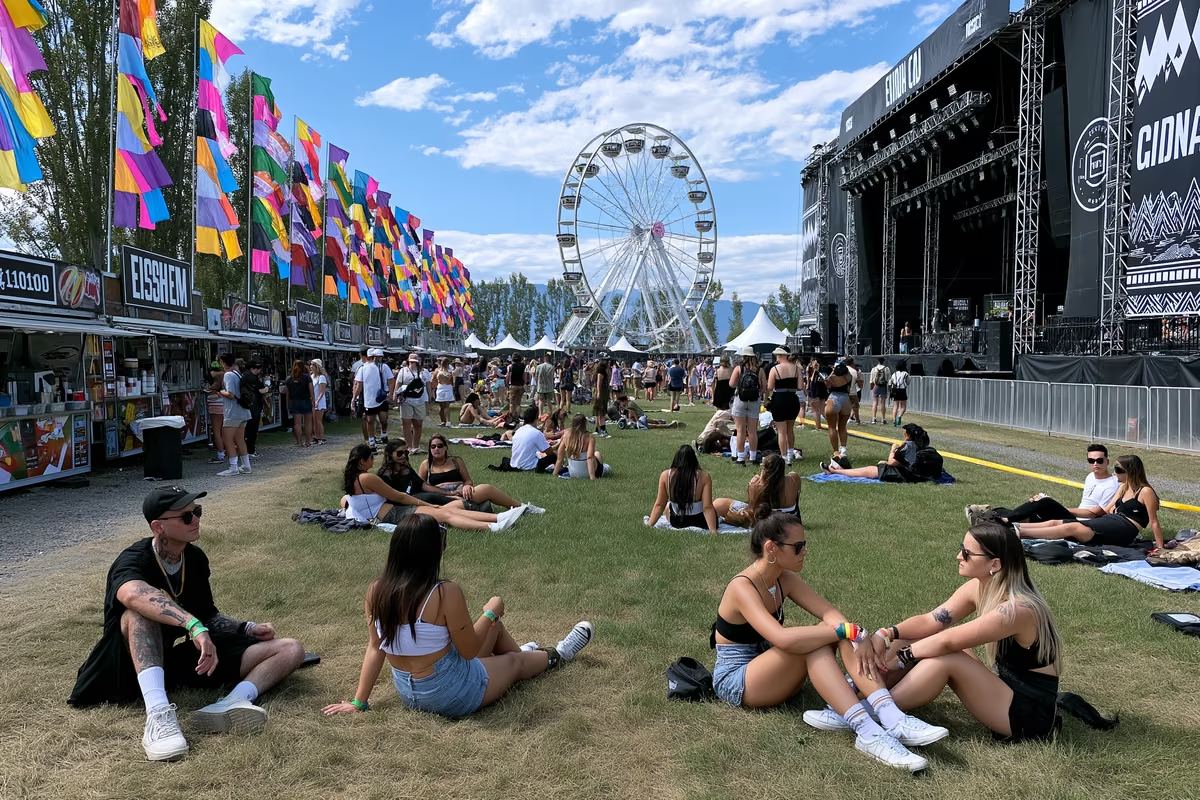
The undercard read like a cross-section of current pop. Teddy Swims, Lily Allen and Zara Larsson all played prominent slots, Berlin’s own techno veteran Boys Noize represented the local club heritage, and acts such as Tom Odell, Anitta, Self Esteem and Japanese group Atarashii Gakko! filled the daytime hours. As at every Lollapalooza, part of the pleasure was in the collisions: stadium pop, German-language rap and hard electronic sets within a few hundred metres of each other.
Lollapalooza Berlin beyond the music
The festival has always sold itself as more than a concert series, and the Berlin edition leans into that. Kidzapalooza, a dedicated indoor and outdoor children’s area with its own family entrance, makes it one of the few major German festivals that genuinely works for parents; children’s tickets for this year were sold out well in advance. Fashionpalooza offered styling sessions and workshops, and the Grüner Kiez, the festival’s green district, bundled sustainability projects, from recycling initiatives to environmental groups presenting their work between the stages.
Prices reflected the premium billing. A weekend ticket cost 219 euros, a Saturday day ticket 134 euros and a Sunday ticket 124 euros, with reduced teen tickets at 99 euros. That places Lollapalooza Berlin at the expensive end of the German festival calendar, though still below what a single stadium show by one of the headliners can cost. For a broader look at what else the scene offers, from Rock am Ring to smaller regional events, see our guide to music and arts festivals in Germany.
A big weekend for the city, and how to get home
With tens of thousands of festival guests on top of normal summer tourism, this ranked among the busiest event weekends of Berlin’s year, and the transport system felt it. The S3 and S9 lines to S-Bahnhof Olympiastadion and the U2 to Olympia-Stadion carried the bulk of the crowds, complicated by construction on the S-Bahn ring, where replacement buses ran between Neukölln and Tempelhof. Anyone leaving the site tonight should expect full trains towards the city centre until well after the final encore.
Festival tickets in Berlin typically include public transport for the day within the fare zones, and the BVG traditionally adds extra capacity for major events at the Olympiastadion. If you are new to the city and still decoding the S-Bahn map, our overview of the German public transportation system explains how the zones and night services work.
What this means for expats in Berlin
If you spent this weekend at the Olympiapark, you experienced one of the easiest entry points into German festival culture: an international lineup, English spoken everywhere on the grounds, and a location reachable by U-Bahn rather than a muddy field three hours from the city. If you missed it, the pattern is predictable enough to plan for. Lollapalooza Berlin takes place every July, tickets go on sale in stages from late autumn, and the cheapest phases sell out long before the lineup is complete.
The broader lesson for newcomers is that Berlin’s summer calendar rewards early planning. Between open-air club seasons, stadium tours and festivals, the best weekends fill up months ahead, and accommodation near major venues gets scarce whenever 50,000 visitors arrive at once. Our overview of major German festivals is a good starting point for choosing next summer’s dates – tonight, the last chords at the Olympiapark are a reminder of why it is worth the effort.

