Music and Arts Festivals
14 min read
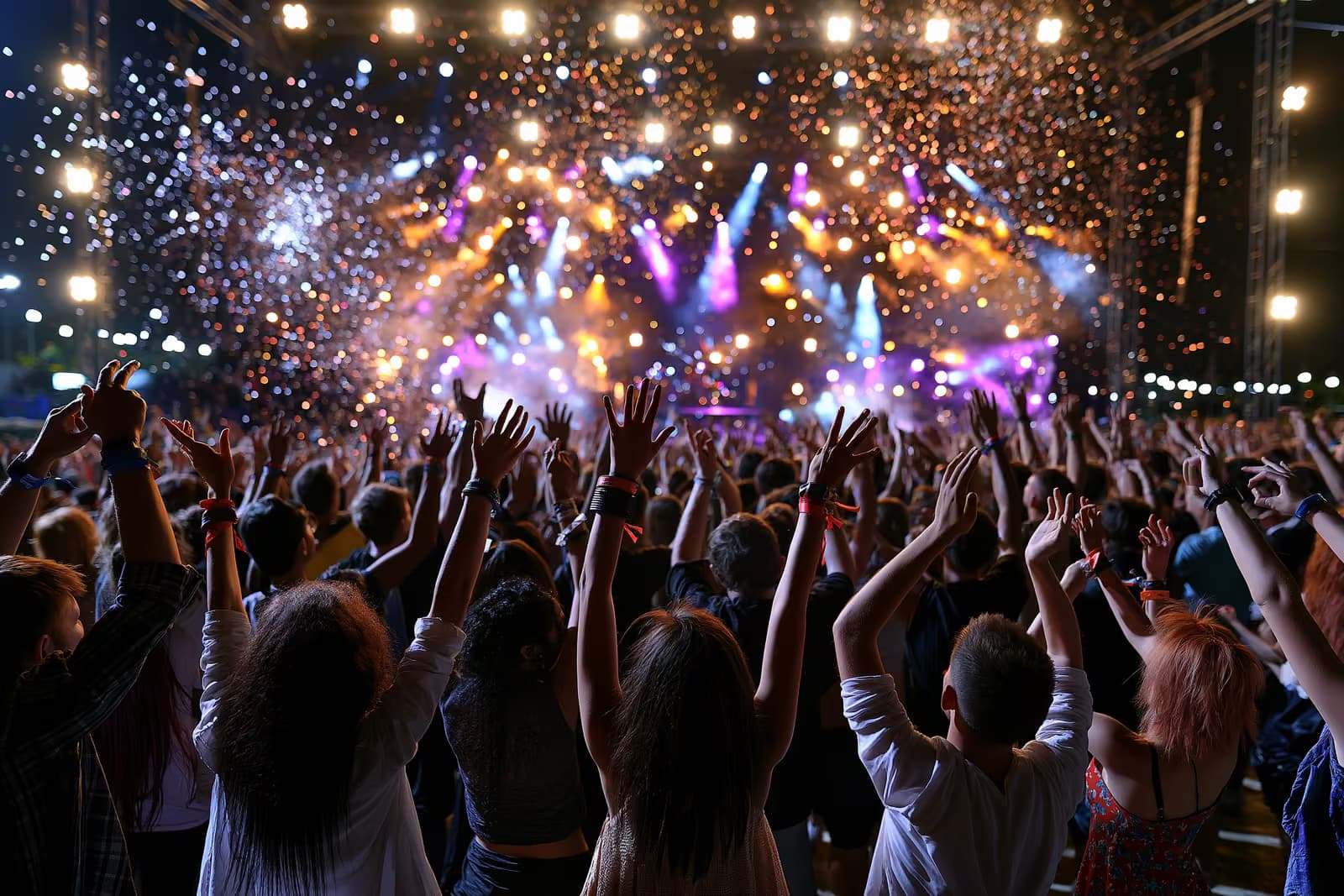
Few things reveal how Germany spends its summers - and its passion for culture - as clearly as its festivals. Across the year the country stages some of the largest music and arts festivals in Europe, from muddy rock fields and all-night techno raves to Wagner opera on a wooded hill and a contemporary-art exhibition so large that whole cities plan their calendars around it. This chapter is a newcomer’s guide to those festivals: which ones are worth knowing about, what each is actually like, and how to attend one without getting lost in the practicalities of tickets, camping and rural train connections.
The focus here is deliberately on festivals - the concentrated, dated events you travel to. Germany’s year-round cultural institutions, its opera houses, museums and galleries, are covered in our guide to cultural activities in Germany. Film and literary festivals such as the Berlinale and the big book fairs have their own chapter on film and literary events, the club scene lives in nightlife and entertainment, and the street parades and Carnival belong with street parades and carnivals. What you own on this page is music and arts festivals in the narrow sense: the rock, pop, electronic, classical, jazz and world-music events, and the big contemporary-art, theatre and light festivals. For the wider overview of the German festival calendar, see our anchor guide to major German festivals. Nothing here is legal or financial advice; it is a practical orientation.
The big rock and pop festivals
The loudest fixture in the German summer is the twin pairing of Rock am Ring and Rock im Park. The two run on the same June weekend with almost the same lineup, one at the Nürburgring motor-racing circuit in the Eifel hills and the other in Nürnberg, so the headline bands simply swap venues across the days. In 2026 both take place from 5 to 7 June, and the bill runs to the kind of names - Iron Maiden, Linkin Park and dozens more - that pull tens of thousands of people into the campgrounds for a long, muddy, gloriously exhausting weekend. Rock am Ring in particular is treated by many young Germans as a rite of passage, the first big festival you go to with friends after finishing school.
The northern equivalent is another twin pairing, Hurricane and Southside. Hurricane takes place on the Eichenring in Scheeßel in Lower Saxony and Southside near Neuhausen ob Eck in the south, again on the same weekend with an identical roster, 19 to 21 June in 2026. Where Rock am Ring leans hard rock and metal, Hurricane and Southside sit closer to the indie, alternative and pop-rock mainstream, and both have grown into fixtures - Hurricane marked its thirtieth edition in 2026. Deichbrand, near Cuxhaven on the North Sea coast, is a slightly younger addition in the same rock-and-pop family and has built a loyal following of its own.
In a category by itself is Wacken Open Air, the largest heavy-metal festival in the world. It happens every summer in Wacken, an otherwise quiet village in Schleswig-Holstein with a population of roughly 1,800, which for one long weekend plays host to around 85,000 metal fans from more than eighty countries. Local farmers open their fields for camping, the village embraces the invasion, and the result is one of the genuinely singular events in world music. Tickets for the four-day festival routinely sell out within hours of going on sale, often the better part of a year in advance, so Wacken is one to plan for early rather than decide on at the last minute. It also runs a foundation that supports up-and-coming metal bands, so the culture extends well beyond the weekend itself. Our anchor guide to major German festivals places Wacken in the wider picture.
A word on the culture of these big outdoor festivals, because it catches many newcomers off guard. Most are camping festivals: the ticket buys you a patch of field for a tent, and the experience is as much about the campsite - the improvised communities, the neighbours, the days spent between stages - as it is about any single band. Facilities are basic, the weather is a genuine variable, and the whole thing runs on a mix of tolerance and good humour. If your idea of a concert is an evening out with a clean bathroom nearby, a full camping weekend will be a shock; if it sounds like an adventure, it is one of the best ways to spend a German summer.
Electronic and techno festivals
Germany’s relationship with electronic music runs deep, and Berlin’s reputation as a techno capital is well earned - though the year-round club side of that scene, the legendary door policies and the endless weekends, belongs to our guide to nightlife and entertainment. What this chapter owns is the festival version: the concentrated, dated events where the same music moves out of the clubs and into halls, forests and old industrial sites.
The most concentrated of them is Time Warp in Mannheim, held each spring inside the vast Maimarkthalle exhibition hall. Around 20,000 people file in for a single marathon night that runs across several stages from evening into the following afternoon, and the lineup reads like a who’s-who of international house and techno. From 2026 the festival runs one German edition a year, in March, so it has become the annual pilgrimage for the scene rather than a twice-yearly one. If Time Warp is the indoor cathedral, Nature One is its outdoor counterpart: it takes over a former nuclear-missile base, the Raketenbasis Pydna near Kastellaun in the Hunsrück, over four days at the end of July, with tens of thousands of ravers dancing across open-air floors and inside the old concrete bunkers.
The most unusual of all is Fusion Festival, held on a former military airfield at Lärz in Mecklenburg, in the lake district north of Berlin. Fusion describes itself as a kind of temporary parallel society - its own phrase is “Ferienkommunismus”, holiday communism - with no commercial sponsorship, no advertising banners and a deliberately non-commercial, counter-cultural spirit. It is real, it is genuinely beloved, and it is famously hard to get into: demand so far outstrips capacity that tickets are allocated by lottery rather than sold on a first-come basis, with registration the previous December. If you are drawn to the idea of a festival that feels like a self-governing village of art, music and theatre rather than a branded event, Fusion is the one to learn about - though you will need luck as much as planning to attend.
The scene also has a public, open-air face in Rave the Planet, a techno parade that fills Berlin’s Straße des 17. Juni between the Brandenburg Gate and the Siegessäule on a Saturday in the height of summer. It was founded by Dr. Motte, the original organiser of the old Love Parade, and is styled as that event’s spiritual successor and as a political demonstration for electronic-music culture. It is worth being clear that the original Love Parade itself ended in 2010 after the tragedy in Duisburg and is not coming back; the parade tradition and its history are covered in our guide to street parades and carnivals. Rave the Planet is free to join, easy to reach and one of the most accessible ways to experience the German rave scene without committing to a full festival.
Classical music festivals
Germany is a classical-music powerhouse, and its summer festival circuit is where that heritage is most visible. The most storied of all is the Bayreuther Festspiele, the Wagner festival held every summer in the Festspielhaus that Richard Wagner had built to his own specifications on a hill above Bayreuth in Bavaria. For decades the festival has been a byword for scarcity: demand so far exceeds the number of seats that would-be attendees traditionally joined a waiting list for years before their name came up. The 2026 season, which marks the festival’s 150th anniversary, sold out almost as soon as tickets became available. Getting in is genuinely difficult, but even for those who never attend, Bayreuth is worth understanding as the extreme end of how seriously Germany takes its musical inheritance. It also features in our anchor guide to major German festivals.
The good news is that most of the classical circuit is far easier to reach. The Schleswig-Holstein Musik Festival, founded in 1986, spreads more than two hundred concerts across the northern state each summer, staging them in manor houses, converted barns, historic churches and old shipyard halls rather than only in concert venues - part of its charm is hearing a world-class orchestra in a hay barn near the Baltic. In the Rhine wine country, the Rheingau Musik Festival does something similar among the vineyards, monasteries and palaces of the region. Leipzig honours its most famous resident with the Bachfest, a celebration of Johann Sebastian Bach in the city where he worked, and Bonn returns to its most famous son with the Beethovenfest, dedicated to Ludwig van Beethoven in his birthplace.
You do not need a ticket, formal clothes or even much money to hear classical music in Germany, and this matters for newcomers who assume the whole genre is expensive and forbidding. Many cities run open-air classical events in summer - Nürnberg’s Klassik Open Air, for instance, draws large crowds to a public park for a free evening of orchestral music - and churches across the country hold organ recitals and concert series, often for a small donation or free of charge. Classical music also carries a quiet advantage for anyone still learning German: the language barrier essentially disappears. A symphony or an organ recital asks nothing of your vocabulary, which makes a concert one of the most accessible cultural evenings available to a recent arrival.
Jazz, world and open-air music
Between the stadium-scale rock festivals and the classical circuit sits a quieter but rich seam of music festivals that reward a bit of curiosity. Jazz has a strong following: the Jazzfest Berlin, running since the 1960s, is one of the longest-established jazz festivals in Europe and fills the Haus der Berliner Festspiele and neighbouring clubs each autumn with everything from mainstream to deeply experimental music. The Moers Festival, in a small town in the Rhineland, has built an international reputation for adventurous, avant-garde jazz and improvised music, and each year turns its host town into a gathering point for musicians who push at the edges of the form.
World music is well represented too. The Africa Festival in Würzburg, running since 1989, is the largest and oldest festival of African music and culture in Europe, bringing artists from across Africa and the Caribbean to the Bavarian city each spring for concerts, a bazaar and a broad cultural programme. Alongside these named events, most German cities run open-air summer concert series - free or low-cost evenings of music in a park, a market square or a palace courtyard - that never make national headlines but are among the most pleasant ways to spend a warm evening. These are exactly the kind of local happenings you will find in the city culture calendars, which we cover in our guide to local cultural events.
One more music festival deserves a mention because it sits slightly apart: the Reeperbahn Festival in Hamburg. Held each September across the clubs of the St. Pauli district, it is Europe’s biggest club festival, built around discovering new and emerging artists rather than booking established stars, and it doubles as a major music-industry conference. For anyone who enjoys the thrill of seeing a band in a small room before anyone has heard of them, it is one of the best festivals in the country.
The big arts festivals
Germany’s arts festivals are as ambitious as its music ones, and the most important of them is documenta in Kassel. Held only once every five years, documenta is one of the most significant contemporary-art exhibitions in the world, spreading works across museums, halls and public spaces throughout the city and drawing hundreds of thousands of visitors over its run of roughly a hundred days. The next edition, documenta 16, opens in the summer of 2027, so it is worth marking in the calendar well ahead of time. Berlin’s contribution to the contemporary-art calendar is the Berlin Biennale, held every two years across a changing set of venues in the capital and known for showing bold, sometimes politically pointed work; its next edition falls in 2027. documenta also appears in our anchor guide to major German festivals.
Some of the most memorable arts festivals make a virtue of their settings. The Ruhrtriennale, held each late summer across the old industrial Ruhr region, stages music theatre, dance, drama and large-scale performance inside former coal mines, gasometers and steelworks - the cavernous Jahrhunderthalle in Bochum, the Zollverein colliery in Essen and the Landschaftspark in Duisburg among them. Watching an opera in a decommissioned power hall is an experience the region has made its own. For theatre specifically, the Berliner Theatertreffen each May gathers what a jury judges to be the ten most notable German-language productions of the year from Germany, Austria and Switzerland, making it the single best place to take the pulse of German theatre - though the most demanding pieces will test your language skills.
Not every arts festival asks anything of you at all. The Festival of Lights in Berlin, held over ten evenings each October, turns the Brandenburg Gate, the cathedral, the television tower and dozens of other landmarks into canvases for projected light art, free to wander and open to everyone. It is a reminder that German arts festivals are not only for specialists. That breadth is backed by a striking level of public funding: Germany invests heavily in culture at federal, state and municipal level, which is why events on the scale of documenta or the Ruhrtriennale exist at all, and why so many concerts and exhibitions are free or inexpensive. The year-round institutions that funding supports - the opera houses, state theatres and museums - are the subject of our guide to cultural activities in Germany.
Attending a festival as a foreigner
The single most important practical fact is that the big festivals sell out, and often far in advance. Tickets go on sale through an official presale - the Vorverkauf, German for advance sale - typically many months before the event, and for the most popular festivals that presale is where they are won or lost. Wacken and Bayreuth are the extreme cases, but Rock am Ring, Hurricane, Southside and the rest all reward buying early. Buy from the festival’s own website or its named official ticketing partner; the resale market for sold-out festivals is full of overpriced and occasionally fraudulent tickets, and some festivals, Fusion among them, run their own controlled resale precisely to keep touts out. If a deal looks too good, treat it with suspicion.
For the big outdoor events you generally choose between a day ticket and a full festival pass, and the pass usually includes the campsite. A day ticket is the low-commitment option - you see the acts you want and go home - while the full pass buys the whole camping experience. If you take the camping route, come prepared: a solid tent, a sleeping mat and warm layers for cold nights, sturdy shoes and rain gear whatever the forecast, cash for stalls that do not take cards, and enough water and sun protection to get through hot days. Check each festival’s rules on what you may bring in, because glass and large quantities of your own alcohol are commonly restricted. Pack light enough to carry everything from a distant car park, because many sites are large and rural.
That rural setting is the other thing to plan for. A great many German festivals are held out in the countryside - a racing circuit in the Eifel, a village in Schleswig-Holstein, an old airfield in Mecklenburg - and reaching them without a car takes a little thought. The good news is that the larger festivals lay on shuttle buses from the nearest train station, and some sell combined tickets that bundle festival entry with travel; the regional train network will get you most of the way. It is worth planning the final leg before you set off rather than discovering on the day that the last shuttle has gone. Our guide to the basics of public transportation explains how the train and regional-ticket system works.
On cost, festivals span a wide range. A full camping weekend at one of the big rock festivals runs to a few hundred euros once the ticket, travel and food are counted, while a free open-air classical concert, a church organ recital or a wander through the Festival of Lights costs nothing at all. Language is rarely a barrier: the big music festivals are thoroughly international, English is widely spoken among both crowds and staff, and much of the music needs no translation whatever - a rock set, a techno floor or a symphony asks nothing of your German. Theatre and spoken-word events are the main exception, and those are worth checking for surtitles or an English-language strand before you book. To find out what is on near you, the city culture calendars and tourist-office listings are the place to look, and our guides to cultural activities in Germany and local cultural events point you at them.
Planning your festival year
The practical way to approach all of this is to work backwards from the calendar. Decide early which one or two festivals you most want to attend, note when their presale opens - for the big-name events that can be most of a year ahead - and set a reminder so you are ready when tickets go live. Around those anchors you can fill in the free and low-cost events, the open-air concerts, the church recitals, the Festival of Lights, that need no advance planning and let you sample German festival culture without a large outlay.
Start with something low-stakes if festivals are new to you: a free open-air classical evening, a day ticket rather than a full camping pass, or a wander through a light festival on a mild October night. From there the bigger commitments - a camping weekend at a rock festival, the lottery for Fusion, the long wait for Bayreuth - will make more sense. Between the loudest metal in the world and the quietest organ recital, Germany’s music and arts festivals cover an enormous range, and a good share of them are more open to a curious newcomer than you might expect. Pick one, plan the practicalities, and go.
Sources
The information in this chapter draws on the official sources and publications listed below, last reviewed in July 2026. It is general guidance for orientation, not individual legal, tax, or medical advice.