Community Service Projects
13 min read
Community service projects are the most direct way to become part of a place in Germany. Not the boardroom of a national charity, not a policy campaign, but the ordinary, hands-on work that keeps a neighbourhood running: sorting donated food, handing out warm meals, helping an elderly neighbour with the shopping, tending a shared garden, fixing a broken toaster so it does not end up in landfill. This chapter is about that grassroots level - the practical, local service work you can walk into and start doing, often within a week of asking. It explains what these projects are, where the biggest and most welcoming ones sit, and how you, as a foreigner still finding your feet, can join in. The word Germans use for this kind of unpaid civic work is Ehrenamt (honorary office, meaning volunteer work), and getting your hands dirty in a community project is one of the fastest ways to feel that you belong somewhere.
A quick note on where this chapter fits. The nuts and bolts of volunteering in Germany - how the roles are insured, the tax-free allowances, the difference between casual Ehrenamt and the formal Freiwilligendienste like the FSJ or Bundesfreiwilligendienst - are covered in our companion guide to volunteering opportunities in Germany, and we will point you there rather than repeat it. Whole organisations as institutions, the big social-impact players, are the subject of our chapter on social impact organizations. Here we stay close to the street: the projects themselves, and how to get involved in them.
Community Service at Street Level: The Tafel, the Kleiderkammer and the Warm Meal
The single largest field of hands-on community service in Germany is food. The Tafel (literally “the table”, the food-bank movement) collects surplus food from supermarkets, bakeries and producers that would otherwise be thrown away, and passes it on to people living on very little. It is enormous: more than 960 local Tafeln operate across the country, running some 2.000 distribution points and supported by around 60.000 volunteers, reaching roughly 1,5 million people. For a newcomer it is close to the ideal first project. The work is physical and concrete - collecting food in a van, sorting it, checking dates, packing crates, staffing the counter where people come to collect - and there is almost always a shift going spare. Most Tafeln will take you on with a simple phone call or an email to the local branch, and you can give as little as one morning a fortnight.
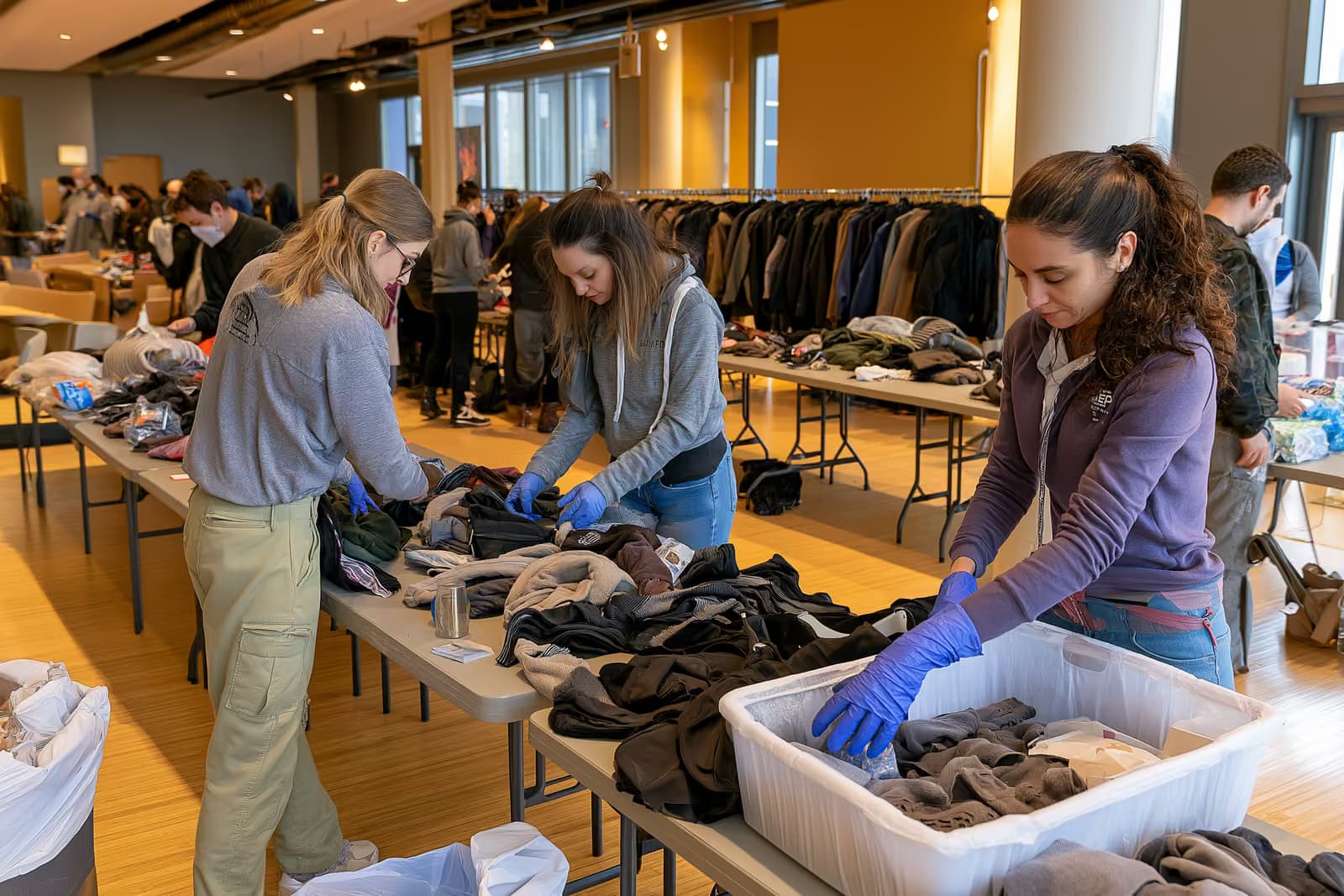
Alongside the food banks sit their clothing equivalents. A Kleiderkammer or Kleiderladen (clothing store or clothing bank) takes donated garments, sorts and cleans them, and passes them on to people who cannot afford new ones, including many refugees and newly arrived families. The work - sorting, sizing, laundering, arranging a small shop-like space - is calm, sociable and forgiving of imperfect German, which makes it a common entry point. If you find yourself drawn to the refugee and newcomer side of this work specifically, our chapter on refugee and migrant support goes deeper into it.
Then there is the warm meal. A Suppenküche (soup kitchen) cooks and serves free hot food to anyone who needs it, and in the cold months many cities also run a Wärmestube (warming room), a heated space where people with nowhere to go can sit, get a hot drink, wash and stay out of the weather. These are often run by churches, the Wohlfahrtsverbände (the big welfare associations such as Caritas, Diakonie and the AWO) or small local associations, and the volunteering is exactly what you would expect: cooking, serving, clearing up, and sitting with people who are glad of the company. None of it demands qualifications. All of it demands showing up reliably, which is the currency that matters most in German community work.
Neighbourhood Projects: Helping Hands, Shared Gardens and Repair-Cafés
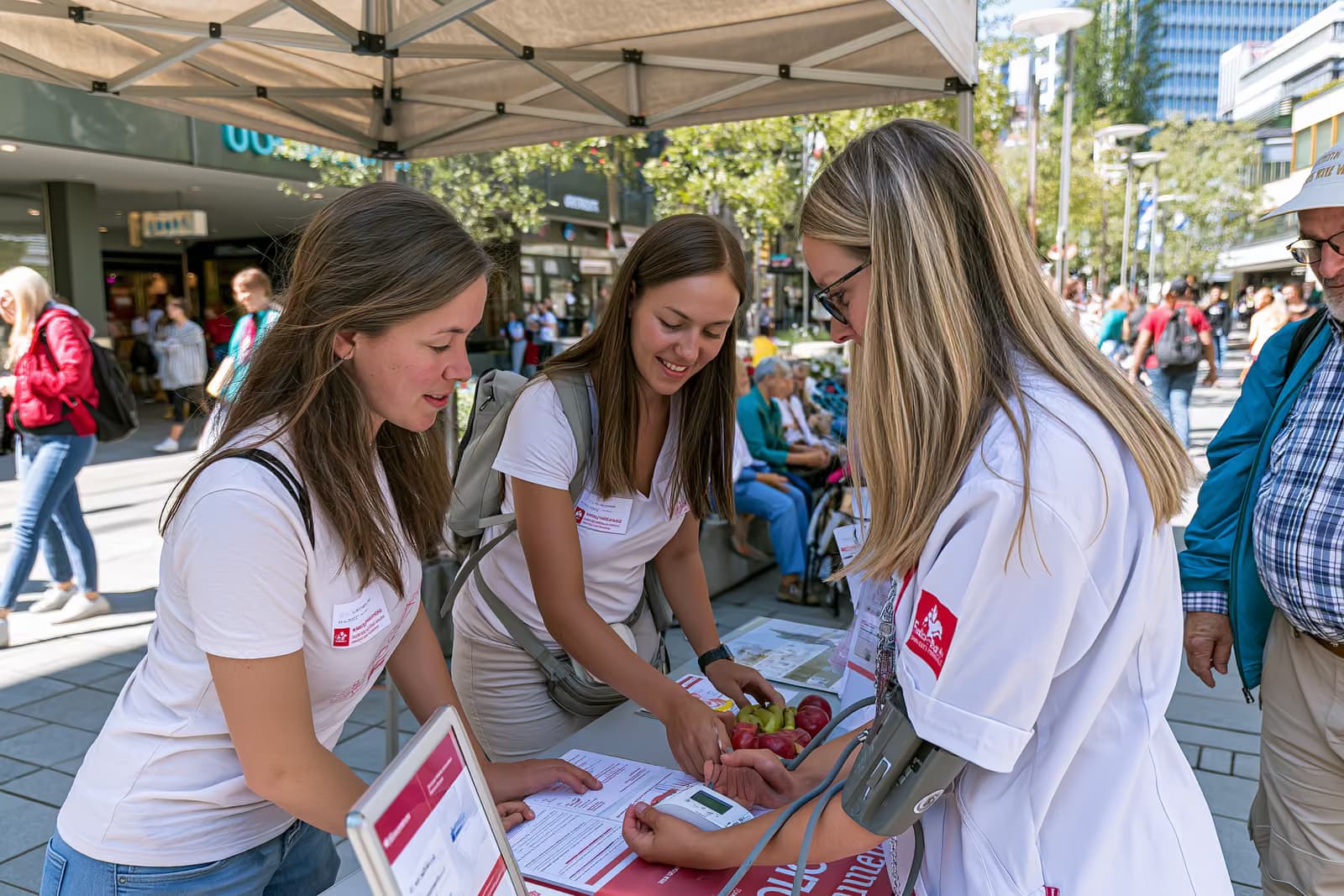
Not all community service runs through a big organisation. A great deal of it happens at the scale of a single street or block, and this is where a newcomer can often make the warmest connections. Nachbarschaftshilfe (neighbourhood help) is the organised version of simply being a good neighbour: doing the shopping for someone who can no longer carry it, walking a dog for a housebound resident, reading post to an elderly person, or lending a hand with small errands. Many towns coordinate this through a local association or a Freiwilligenagentur (volunteer agency), and the online platform nebenan.de connects neighbours who want to offer or ask for help. Because so much of it is one-to-one and low-key, it suits people who would rather help quietly than staff a busy counter. We treat neighbourhood help and local civic life more fully in our chapter on local community engagement.
Shared green space is another approachable project. Gemeinschaftsgärten (community gardens) and the closely related urban-gardening initiatives turn vacant lots, courtyards and rooftops into places where neighbours grow vegetables together, and well-known examples such as the Prinzessinnengarten in Berlin have become fixtures of city life. The appeal for a foreigner is obvious: gardening needs your hands more than your vocabulary, the pace is gentle, and a season of turning soil beside the same people builds the kind of easy familiarity that is otherwise hard to find. If your interest is more in nature and conservation than in the social side, our chapter on environmental conservation initiatives covers organised clean-ups, tree-planting and habitat work.
A distinctively modern form of community service is the Repair-Café - a regular, usually free event where volunteers with practical skills help neighbours mend broken things, from lamps and bicycles to jackets and coffee machines, instead of binning them. Hundreds of them run across Germany, and they double as a social afternoon. If you can solder, sew or fix a bike, you already have something to offer; if you cannot, you can still make coffee and greet people at the door. We put Repair-Cafés in the wider context of repair and sustainable living in our guide to eco-friendly shopping options.
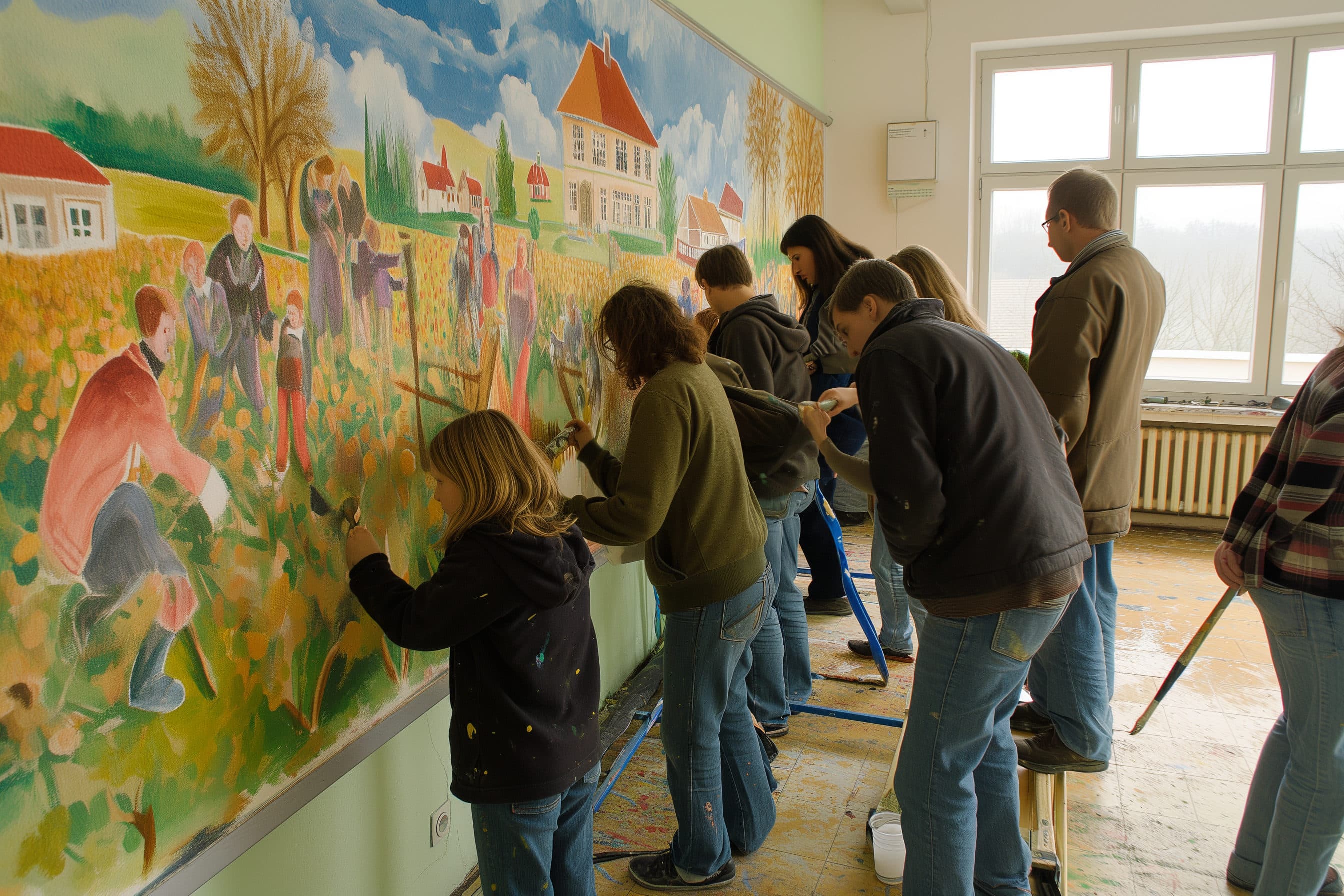
Finally, not every project asks for a standing commitment. A lot of community service in Germany happens as a one-off Aktionstag (action day): a neighbourhood clean-up where residents spend a Saturday clearing litter from a park or riverbank, a planting day, a painting day at a youth centre. The Tag des Ehrenamts (Volunteers’ Day, 5 December) prompts many such events, and companies increasingly run corporate-volunteering Aktionstage where staff spend a working day on a community project. For a newcomer, a single-day action is the lowest-risk way to try community service on for size, meet the regulars, and decide whether you want to come back.
Standing With People Who Have the Least
Some of the most meaningful community service work in Germany is aimed at people experiencing homelessness and deep poverty, and it is more accessible to volunteers than you might expect. In winter, the danger is immediate: a night outdoors in freezing temperatures can be fatal. Cities respond with a Kältehilfe (cold-weather aid) programme of emergency shelters, and several run a Kältebus (cold bus) that drives the streets at night looking for people who have not made it to a shelter, bringing warm drinks, sleeping bags and, where needed, a lift to a warm bed. The Berliner Stadtmission has run Berlin’s Kältebus since 1994, with several buses and a mobile street ambulance out every night in the cold season. Volunteers ride along, staff the shelters, and cook for the winter emergency programmes.
A gentler but equally real entry point is the Straßenzeitung (street newspaper), a magazine sold on the street by people who are homeless or were, who keep a share of the cover price. In Hamburg this is Hinz&Kunzt; in Düsseldorf it is fiftyfifty, running since 1995 under the association asphalt e.V., where the price is split - as the name says - fifty-fifty with the seller. These are not just publications but whole support projects, and they welcome volunteers for editorial work, distribution, events and the social programmes around them. Buying the magazine from a vendor and learning their name is itself a small act of participation that costs almost nothing.
One institution deserves a special mention because it is so well suited to newcomers: the Bahnhofsmission (railway-station mission). Found at more than 100 German stations, run jointly by the Protestant Diakonie and the Catholic Caritas, it is a small staffed room just off the platforms that helps anyone in difficulty - a traveller who has missed a connection, a person with reduced mobility who needs help boarding, a runaway, someone with nowhere to sleep. In 2024 the missions helped around 2,2 million people. It is a historic, deeply established field of volunteering (some missions are well over a century old), the shifts are structured, and there is always a trained colleague beside you, which makes it a reassuring place to start. Add the Suppenküchen and Wärmestuben from the previous section, and the Tafel as the flagship of poverty relief, and you have a whole landscape of service where basic German and a willingness to be kind carry you a long way. This is sensitive work, though, and the human side of it - boundaries, not burning out, meeting people as equals - is worth reading about before you begin; the social impact organizations chapter and the volunteering framework both go into it.
The German Specialty: Civil Protection and Disaster Relief
If there is one form of community service that feels unmistakably German, it is the volunteer civil-protection system, the Bevölkerungsschutz. Where many countries rely almost entirely on paid professionals, Germany has built its emergency response on hundreds of thousands of trained volunteers, and it is a genuine pillar of community life. The most famous institution is the Technisches Hilfswerk (THW, the Federal Agency for Technical Relief), a federal body staffed overwhelmingly by volunteers - around 88.000 of them across 668 local sections (Ortsverbände). The THW does the heavy, technical side of disaster response: pumping out floods, shoring up collapsed buildings, supplying power and clean water, building emergency bridges. Volunteers train regularly and can be deployed at home or abroad, and there is a THW-Jugend for younger members.
Even more woven into everyday German towns is the Freiwillige Feuerwehr (volunteer fire service). This is not a lesser version of a fire brigade; in most of Germany it is the fire brigade. Around one million people are active members across some 23.760 fire departments, and outside the largest cities it is volunteers, not career firefighters, who turn out when the alarm sounds. Joining is a serious, trained commitment with regular drills, but it also comes with a strong sense of belonging - in a village, the Feuerwehr is often the social heart of the place. For anyone who wants to be useful in an emergency and put down real roots, few things connect you to a German community faster.
Around these two sit the rest of the system. The DLRG (Deutsche Lebens-Rettungs-Gesellschaft) is the volunteer water-rescue organisation, the largest of its kind in the world, staffing lakes, pools and coasts through the summer; because it doubles as a swimming and lifesaving activity we cover it in our chapter on water sports and activities. The big aid organisations - the DRK (German Red Cross), the ASB (Arbeiter-Samariter-Bund), the Malteser and the Johanniter - run volunteer Sanitätsdienste (first-aid and medical services that staff festivals, matches and public events) and Katastrophenschutz units for major emergencies. All of these are structured, trained commitments rather than drop-in projects, so they ask more of you than a Tafel shift does. But they also give more back in skills, camaraderie and a very concrete sense that you are part of your town’s safety net. Language is worth being honest about here: because these roles involve safety-critical instructions and radio traffic, they expect a solid working level of German, so they tend to suit people a little further along than absolute beginners.
Getting Started, and Why Language Is Less of a Barrier Than You Fear
The good news for a newcomer is that starting is genuinely easy, because the demand never stops. The Tafel, the Bahnhofsmission, the local Suppenküche and almost every neighbourhood project are permanently short of hands, so the hardest part is usually just making contact. You do not need to wait for a formal opening. Search for the name of your town plus “Tafel”, “Freiwilligenagentur” or “ehrenamtlich helfen”, find the local branch, and send a short message or make a call saying you would like to help and roughly when you are free. Freiwilligenagenturen exist in most cities precisely to match people to projects, and they are used to placing beginners. For the practical scaffolding around all of this - how your volunteer work is insured, the tax-free Ehrenamtspauschale, whether a role affects your residence status - lean on our detailed guide to volunteering opportunities in Germany, which is written to answer exactly those questions.
Language is the worry that stops many foreigners before they begin, and for grassroots community service it is largely misplaced. Sorting food at the Tafel, tending a community garden, clearing a park on an Aktionstag, laundering clothes at the Kleiderkammer - this is practical work where willing hands matter more than fluent sentences, and doing it shoulder to shoulder with German speakers turns out to be one of the best language lessons you can get. You pick up the everyday vocabulary of a real workplace, you have low-pressure reasons to talk, and people are patient because you are helping. It is no accident that so many newcomers point to a volunteering project as the moment their German finally started to move. The trained emergency roles are the exception, as noted above; the everyday service projects are not.
It also helps to think of community service as a spectrum of commitment, and to start wherever feels comfortable. At one end is the single Aktionstag - a Saturday clean-up, a one-day corporate volunteering event, a Christmas meal for people who are alone - which asks nothing of you beyond the day itself. In the middle sit the regular but light commitments: a weekly or fortnightly Tafel or soup-kitchen shift, a standing arrangement to shop for a neighbour, a monthly Repair-Café. At the far end are the trained, structured roles in the THW or the Freiwillige Feuerwehr that become part of who you are. There is no wrong place to enter. Many people begin with a single action day, find they liked the people more than they expected, and drift naturally into something regular. The point is simply to begin, because the barrier to entry at the grassroots end is about as low as civic life in Germany gets.
Your First Step Into Community Service
If you take one thing from this chapter, let it be that you can start this week. Pick the project that sounds least intimidating - for most people that is a Tafel shift, a station-mission taster, or a one-off neighbourhood clean-up - find the local contact online, and send the short message. Say who you are, that you are new to Germany, and when you are free. Do not wait for perfect German or a settled life; both of those come faster once you are already involved. If you would rather ease in, keep an eye out for the next Aktionstag in your area, or for the Tag des Ehrenamts in December, and go along for a single day with no further obligation.
Grassroots community service gives a newcomer something that is genuinely hard to buy or arrange any other way: a set of people who know your face, a reason to be somewhere regularly, and the quiet confidence that comes from being useful in the place you now live. It is where the abstract idea of “settling in” turns into actual faces and a standing Tuesday. From here, you can go deeper in whatever direction suits you - into the environmental or refugee-support fields, into the broader work of the social impact organizations, or simply deeper into your own street through local community engagement. And if you want to understand how much this kind of service teaches you about Germany itself - its values, its rhythms, its unspoken rules - our chapter on learning culture through volunteering is a fitting next read. The community is already there, doing the work. It just needs another pair of hands, and it is remarkably glad when those hands belong to someone new.
Sources
The information in this chapter draws on the official sources and publications listed below, last reviewed in July 2026. It is general guidance for orientation, not individual legal, tax, or medical advice.