Networking for Entrepreneurs
13 min read
Starting a business in a new country means building a network from scratch, and in Germany that network is the difference between a lonely uphill climb and a founder journey with mentors, investors and peers behind it. This chapter is about how a foreign entrepreneur plugs into Germany’s startup and business ecosystem: where founders actually meet, which institutions support new businesses, where the funding networks are, and how German business culture shapes the way relationships form. It is a companion to our guide on professional networking events, which covers general career networking and platforms like LinkedIn and Xing; here the focus stays on founders, startups and business owners. For the legal and tax mechanics of actually going self-employed - registering a Gewerbe, choosing between Freiberufler and Gewerbe status, dealing with the Finanzamt - see our separate guide on freelancing and self-employment in Germany. This chapter is not legal, tax or financial advice; it points you to the people and institutions who provide it.
Where Germany’s Startup Ecosystem Lives
Germany does not have one startup capital in the way some countries do, but it comes closest in Berlin. The capital is where the international scene concentrates: a large share of founders, employees and investors there work in English, and many teams operate in English by default, which makes Berlin the natural first landing spot for a foreign founder who does not yet speak German. The city built its reputation on consumer apps, fintech, e-commerce and, more recently, climate and software startups, and it has the densest concentration of accelerators, coworking spaces and investor events in the country. If you want to test whether Germany’s ecosystem has a place for you before you have any German, Berlin is where that test is easiest to run.
Munich is the other major pole, with a very different character. It leans toward deep tech, hardware, mobility, fintech and business-to-business software, and it sits close to large corporations, research universities and serious engineering talent. The scene there is more corporate-adjacent and often more capital-intensive, and while plenty happens in English, German matters more day to day than it does in Berlin. Beyond these two, Hamburg is strong in media, e-commerce, logistics and games; the Rhineland around Cologne and Düsseldorf combines media, insurtech and a dense corporate base; and Frankfurt has become Germany’s fintech hub, anchored by its role as the country’s financial centre and home to the European Central Bank. Do not overlook the smaller innovation regions either. Much of Germany’s economic strength lies in the Mittelstand, the mid-sized and often family-owned companies spread across the country, and cities like Leipzig, Stuttgart, Karlsruhe, Aachen and the Ruhr area host their own growing scenes, frequently tied to a strong local university. Where you fit depends on your sector and your language: Berlin if you are building in English and want the deepest international network, a specialist hub if your field has a natural home elsewhere.
The Institutional Support Network
Germany has a dense, formal support system for new businesses, and learning to use it early saves a great deal of trial and error. The central institution is the Industrie- und Handelskammer (IHK), the chamber of industry and commerce. Membership is compulsory for most businesses once you register a Gewerbe, so you will encounter the IHK whether you seek it out or not, but it is more than a mandatory fee. Each regional IHK runs Gründerberatung (founder advice) sessions, information events, seminars and networking formats, and it can answer practical questions about permits, qualifications and local requirements. For skilled trades, the equivalent is the Handwerkskammer (HWK), the chamber of crafts, which serves tradespeople with its own advice services, events and training. Which chamber you belong to depends on your activity, and some trades carry additional requirements, discussed further below.
Alongside the chambers sits a layer of incubators, accelerators and Gründerzentren (founder centres) that provide space, mentorship and structured programmes. In Munich, UnternehmerTUM, affiliated with the Technical University of Munich, is one of Europe’s largest centres for entrepreneurship and runs the Werk1 startup hub and various accelerator tracks. Berlin hosts a wide range of programmes and coworking-based communities, and most larger cities have at least one publicly supported Gründerzentrum attached to a university or the local economic development agency (Wirtschaftsförderung). These municipal Existenzgründung (business start-up) advice services are often free and are a sensible first stop: they know the local landscape, the regional funding options and the people worth meeting. For founders coming out of universities and research institutions, the federal EXIST programme is worth knowing. Run under the federal economics ministry, EXIST supports science- and technology-based spin-offs through grants such as the EXIST-Gründerstipendium (a founder stipend) and EXIST-Forschungstransfer (for research-heavy projects), and in recent years it has added tracks aimed specifically at women founders. If your idea grew out of academic research, EXIST and your university’s technology-transfer office are natural anchors for both funding and network. All of these institutions help you prepare and connect, but none of them registers your business for you or files your taxes; for that process, see our guide on freelancing and self-employment in Germany.
Funding and Where the Money Networks Are
Raising money in Germany is as much about networks as about numbers, so it helps to know where the money actually gathers. At the earliest stage, before venture capital is realistic, many founders turn to Business Angels, experienced individuals who invest their own money and often their time. The umbrella organisation is BAND, the Business Angels Netzwerk Deutschland, which connects regional angel networks across the country and is a useful starting point for finding local groups and events. Above the angel stage sits Germany’s venture capital scene, concentrated in Berlin and Munich but active nationally, ranging from small seed funds to larger growth investors; the German Startups Association (Bundesverband Deutsche Startups) and the many pitch events described later are the usual way founders meet these investors rather than cold outreach.
Public funding runs in parallel with private money and is a genuine strength of the German system. The KfW, the state development bank (Kreditanstalt für Wiederaufbau), offers founder loan programmes such as the ERP-Gründerkredit, typically arranged through your own bank rather than applied for directly. For people who are unemployed and receiving unemployment benefit (Arbeitslosengeld I), the Agentur für Arbeit can grant the Gründungszuschuss, a start-up subsidy intended to bridge the first months of self-employment; it is a discretionary benefit, not an automatic entitlement, so the decision rests with your case handler and the specifics change over time. On top of the federal level, every Bundesland runs its own Förderung (funding and support) through regional development banks and economic development agencies, and the amounts and conditions vary widely by state and sector. Crowdfunding and crowdinvesting platforms add a further route, particularly for consumer products with a story to tell. Because programmes, rates and eligibility rules change frequently, treat this section as a map of where to look rather than as advice: verify current terms with the institution itself or an independent adviser before committing, and remember that none of these are recommendations to borrow or invest. The Förderdatenbank of the federal government, which catalogues federal, state and EU funding programmes, is the authoritative place to check what currently applies to your situation.
It is worth setting expectations honestly about the funding climate. German early-stage capital is generally more conservative than what founders arriving from the United States or the United Kingdom may be used to: rounds can take longer, due diligence is thorough, and investors often want to see traction and a credible path to revenue rather than growth on promise alone. Many German founders also bootstrap further than their international peers, or lean on the strong public-loan and grant infrastructure rather than giving away equity early. None of this means capital is unavailable, but it does mean the networking matters more, because warm introductions through the angel networks, accelerators and events carry far more weight here than a cold pitch deck. Build relationships with a few investors long before you need their money, so that when you raise, you are talking to people who already know you.
The Founder Community and Its Events
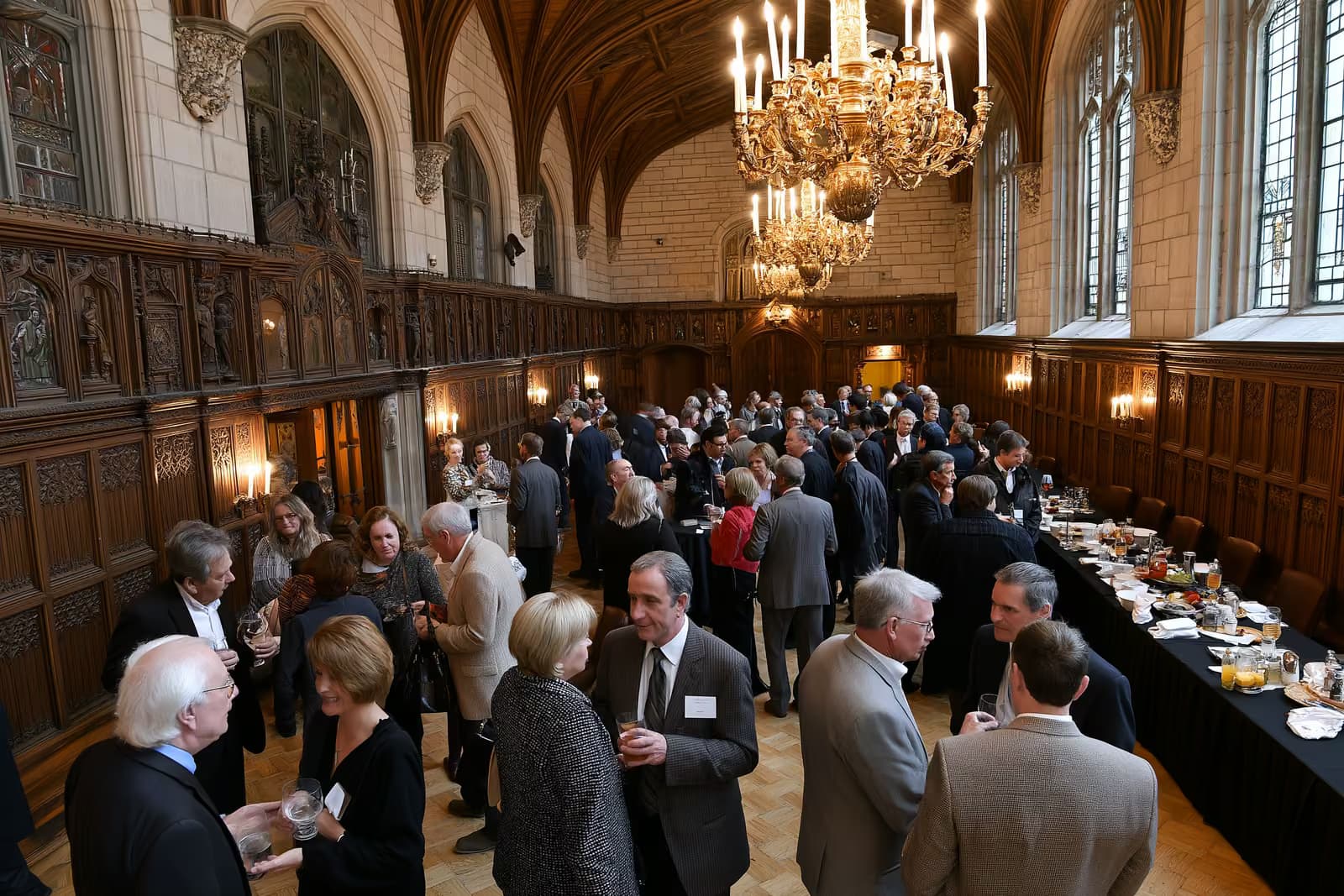
Beyond the institutions, the living part of the ecosystem is the founder community itself, and it meets constantly. At the large end, Bits & Pretzels in Munich is the best-known founders festival in Germany, drawing thousands of founders, investors and speakers each autumn around the time of Oktoberfest and mixing conference programming with deliberately informal networking. Other major gatherings move and rebrand from year to year, so rather than fixing on any single conference name it is worth checking what is running in your city and sector this season; the tech and startup press, the local IHK and the startup associations all publish event calendars. Between the big events, the everyday rhythm of the community happens at meetups, demo nights, pitch events and Stammtische, the recurring informal get-togethers where the same faces return month after month and real relationships form. Coworking spaces are central to this. The good ones function less as desk rental and more as community hubs, hosting their own events, workshops and members’ evenings, so choosing where you work is partly a decision about which community you join.
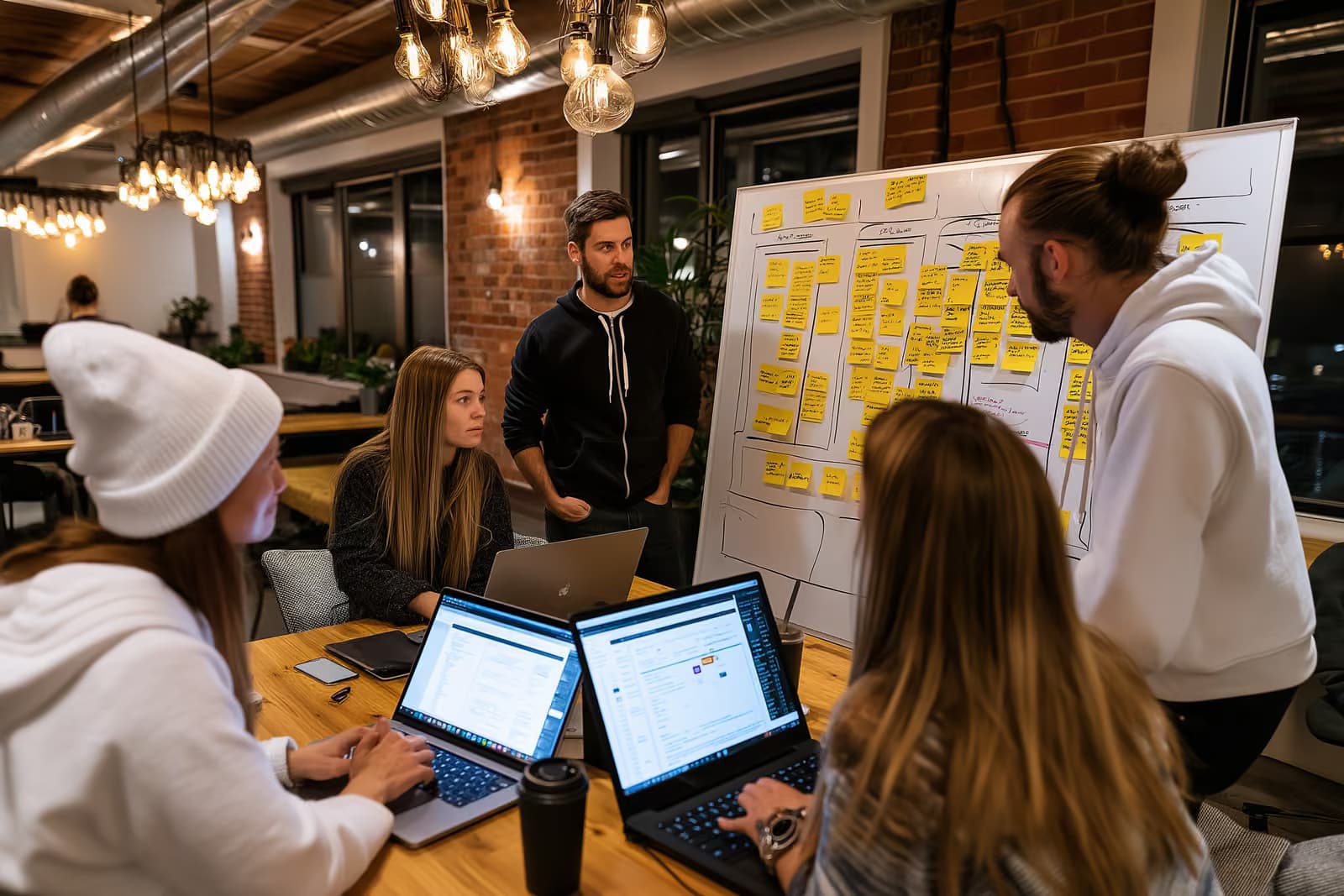
A lot of this now lives online as well. Many founder communities run on Slack or Discord, and there are active groups aimed specifically at internationals and expats, a large number of which operate entirely in English, which lowers the barrier for a foreign founder who has just arrived. There are also dedicated networks for female founders and broader diversity initiatives, including the women-focused tracks now attached to programmes like EXIST, mentoring circles, and community organisations that run their own events and funding-readiness sessions. If you are a woman or come from a background that is underrepresented in German tech, seeking these networks out early is worth the effort, both for the peer support and for access to programmes designed with you in mind. The practical advice for all of this is simple: pick two or three recurring formats that fit your sector and location, show up consistently, and let the network build over months rather than expecting it in a single evening.
Trade Fairs, Associations and the Mittelstand
Not every entrepreneur is a tech startup founder, and if you are building a more conventional business - a consultancy, an agency, a craft business, a trading or manufacturing firm - the ecosystem you want looks a little different from the startup scene. Germany’s mid-sized companies, the Mittelstand, have their own networks. The Wirtschaftsjunioren (Junior Chamber), organised under the IHK, bring together younger entrepreneurs and managers for regular local meetings, and are a good entry point if you are under forty and running or starting a business. The BVMW (Der Mittelstand. BVMW) is a nationwide association representing small and medium-sized enterprises that runs regional events and connects owners across sectors. On top of these, almost every industry has its own Branchenverband (sector association) or Berufsverband (professional association), and joining the one for your field gives you access to sector-specific events, standards discussions and a directory of the people who matter in your niche. For more established business owners, traditional service and business clubs also play a networking role in many towns, particularly outside the big startup cities.
Trade fairs deserve a specific mention because Germany hosts many of the world’s leading ones, and for business-to-business founders a Messe (trade fair) can be the single most efficient networking event of the year. Hannover Messe remains a flagship for industrial technology, and there are major sector fairs for almost everything, from food and medicine to logistics and consumer goods, held in cities like Frankfurt, Cologne, Düsseldorf, Munich and Berlin. Many of these fairs now include dedicated startup areas and pitch stages where young companies can gain visibility without renting a full stand, and even attending as a visitor puts you in a room with suppliers, buyers, partners and competitors you would struggle to reach any other way. Plan a fair like a campaign rather than a day out: identify who you want to meet, request meetings in advance, and follow up afterwards, because the connection made at the stand only becomes useful once you nurture it.
Cultural Realities for a Foreign Founder
German business culture rewards a different style from the fast, informal approach common in Anglo-American startup scenes, and understanding that difference early prevents a lot of friction. German counterparts tend to value thoroughness, reliability and precision. A plan that is detailed and realistic often lands better than one that is bold but vague, and punctuality and following through on what you promised carry real weight. There is also a more cautious attitude toward risk than founders from some other markets expect, which shows up in due diligence, in slower decisions, and in a preference for proof over promise. None of this is a caricature of Germans as humourless or rigid; it is simply that trust is built through demonstrated competence and consistency rather than enthusiasm, and once it is built the relationships tend to be durable. Communication is often direct, and what can sound blunt to a newcomer is usually meant as clarity, not rudeness. The flip side of this thoroughness is Germany’s well-earned reputation for bureaucracy, which you will meet constantly as a founder; our guide to surviving German bureaucracy covers how to handle it without losing your patience.
Two structural realities deserve a specific mention. First, certain skilled trades are regulated: to run a business in one of the trades listed in Anlage A of the Handwerksordnung (the crafts code), you generally need a Meisterbrief, the master craftsman’s qualification, or must employ someone who holds one. If your business idea sits in a regulated trade, check this requirement with the Handwerkskammer before you build a plan around it. Second, there is the visa dimension. Non-EU founders usually need a residence permit that allows self-employment, most commonly under section 21 of the Aufenthaltsgesetz (the residence act) for self-employment, while the Chancenkarte (opportunity card) offers a points-based route to come and look for work or explore founding a business. The rules are detailed and change, so treat this as orientation only and see our guide to immigration and visa assistance, and take individual advice for your case. To get your bearings on the permit side, Werkzeu.ge - the browser-based tool platform built by Cryon UG, the company behind WeLiveIn.de - offers free tools such as its Aufenthaltstitel-Checker (residence-title checker) and Blue-Card-Checker, both usable without an account. For founders who later form a company with co-founders, it also has document generators such as a Gesellschaftsvertrag-Generator (shareholders’ agreement generator, on its paid Pro tier - see current pricing). Werkzeu.ge is in beta, its free tier carries ads, and it prepares documents rather than filing anything with the authorities; it is explicitly not a substitute for legal or tax advice.
Building Your Network and What to Do Next
The most useful thing you can do is start building your network before you launch, not after. Go to a few meetups and IHK or Gründerzentrum events while your idea is still forming, book a free session with your local Existenzgründung advice service, and use those first conversations to map the landscape and find the people who can help. Mentorship is one of the ecosystem’s quiet strengths: experienced founders and advisers are often willing to give time, and the accelerators, university programmes, chambers and angel networks are where you find them. Ask for a specific piece of help rather than a general relationship, and the door opens more easily. Keep in mind the honest truth about German business relationships: they are slow and trust-based, and they reward patience. A single strong, dependable connection built over months will do more for you than a stack of business cards collected in one night.
On language, be realistic. You can genuinely found and grow a company in English in Berlin, where much of the international scene runs in English and you can hire, pitch and raise without German. Almost everywhere else, and in most dealings with authorities, banks, chambers and the Mittelstand, German helps a great deal, and even a modest, improving command of it signals commitment and opens doors that stay closed to English alone. Many founders also find that a German co-founder or a well-connected local adviser is worth more than any single introduction, because that person navigates the bureaucracy, the culture and the network on your behalf. As concrete next steps: pick the city and scene that fit your sector and language, contact your IHK or Handwerkskammer and your local founder centre, identify two or three recurring events to attend regularly, and check the Förderdatenbank and BAND for the funding routes that match your stage. Then handle the registration and tax setup through our guide on freelancing and self-employment in Germany, and let your network grow from there, one reliable relationship at a time.
About this information
This chapter is general orientation based on widely-published information about everyday life in Germany, last reviewed in July 2026. It is general guidance, not individual legal, tax, or medical advice. See the related WeLiveIn.de chapters linked in the text above for topic-specific detail and official sources.