Registration (Anmeldung) and Legal Documentation
31 min read
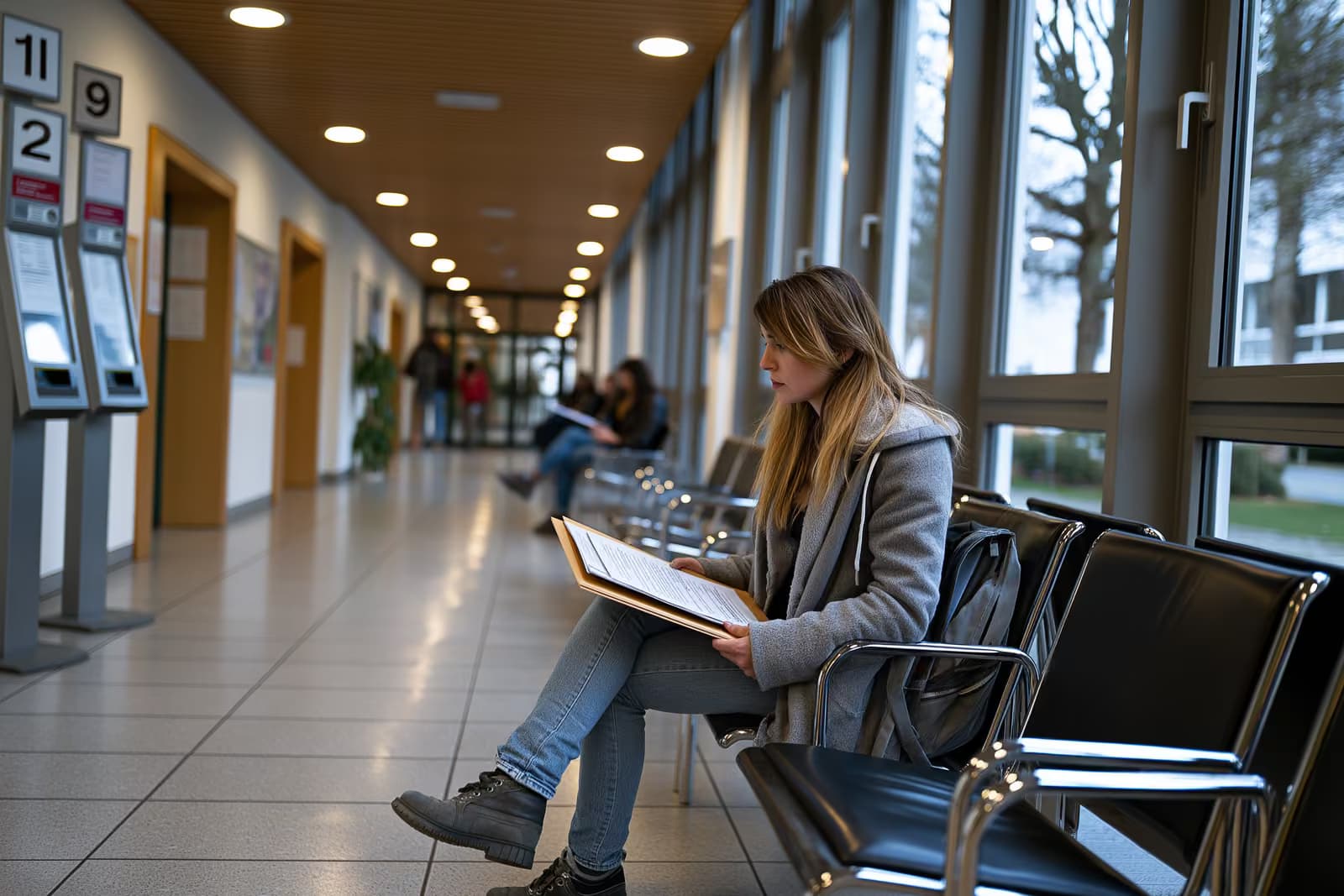
This chapter walks you through registration (Anmeldung), the compulsory recording of your address with your local authority, and the chain of documents that follows it. Anmeldung is the hinge on which German administrative life turns. Almost nothing else works until it is done: not your tax number, not most bank accounts, not your residence permit appointment, not your library card. The rules come from the Bundesmeldegesetz (Federal Registration Act), they apply identically in every one of the sixteen Länder, and they are stricter about some things and far more relaxed about others than newcomers expect.
The aim here is to tell you exactly what the law requires, what actually happens in the room, which pieces of paper you must bring, which documents arrive on their own afterwards, and where the sequence traps people. You will also find the parts most guides get wrong: the deadline is not counted from the day you landed, there is usually no such thing as deregistering when you move within Germany, and online registration, despite real progress, is very probably not available to you if you have just arrived from another country.
What Registration (Anmeldung) Actually Is
Germany keeps a population register. Every municipality runs a Meldebehörde, the registration authority, and the office you physically visit is usually called the Bürgeramt, Bürgerbüro, Einwohnermeldeamt or Kundenzentrum depending on the city. The names differ; the function is the same. The register records who lives at which address. Anmeldung is the act of entering yourself into it. It is not an immigration procedure, it does not grant you the right to be in Germany, and it does not check whether you are allowed to work. It records a fact: you live here now.
This distinction matters more than any other point in this chapter, because the single most common newcomer error is to treat the Bürgeramt as an immigration office. It is not. The Bürgeramt is a municipal service counter. Your right to be in Germany is governed by entirely separate law and administered by a different authority, the Ausländerbehörde. A later section deals with that relationship in detail. For now, hold on to the idea that Anmeldung is an address record, nothing more and nothing less.
What makes it so consequential is that dozens of other systems read from that register. The Bundeszentralamt für Steuern learns you exist and issues your tax number. The broadcasting contribution service learns a new adult has moved into a dwelling. Your Krankenkasse, your employer, your bank and your landlord will all ask to see proof that you did it. The register is the backbone, and the Anmeldung is how you get onto it.
The Two-Week Deadline and What the Law Really Says
Section 17(1) of the Bundesmeldegesetz is one sentence long: whoever moves into a dwelling must register with the registration authority within two weeks of moving in. Read that carefully, because the wording settles a question that causes real anxiety. The clock starts when you move into the dwelling, not when you entered Germany, not when your flight landed, and not when your visa was issued. If you spend your first six weeks in a hotel, a hostel or a friend’s spare room without moving in as a resident, the two-week deadline has not started running for that address.
This is the source of a persistent piece of bad advice: that you must register within fourteen days of arriving in the country. You must not, because you often cannot. Registration requires an address and a landlord willing to confirm it, and a great many people arrive before they have either. What the law asks is that once you actually take up a dwelling, you deal with it promptly. If you are living in genuinely temporary accommodation while flat-hunting, ask your municipality how it handles that situation, because practice varies, and some cities will register you at temporary accommodation if the operator confirms it.
The Anmeldung itself is free. The Bremen city portal states plainly that it is gebührenfrei, free of charge, and this is the norm across Germany. Nobody should ask you to pay to be entered in the register. Fees can arise for extra certificates or for replacement identity documents, but not for the registration itself.
Missing the deadline is an Ordnungswidrigkeit, a regulatory offence, under section 54 of the Bundesmeldegesetz. The ceiling for a late, incorrect or omitted Anmeldung is one thousand euros. It is important to understand that this is a maximum, not a price list and not a standard charge. In everyday practice, a person who turns up a few weeks late with a plausible explanation, particularly one involving an appointment backlog, very commonly pays nothing at all. Being late is worth avoiding, but it is not a catastrophe and it is not a reason to panic or to give false information. The offence that German law actually punishes severely is a different one: under section 19(6), offering or providing an address for a registration where no real move-in takes place or is intended. That is the Scheinanmeldung, the sham registration, and the ceiling for it is fifty thousand euros. The gap between one thousand and fifty thousand tells you exactly where the state’s attention is. Never register at an address you do not genuinely live at, and never let anyone sell you one.
The Wohnungsgeberbestätigung: The Form That Decides Everything
Since 2015 the piece of paper that governs whether your Anmeldung succeeds is the Wohnungsgeberbestätigung, the landlord’s confirmation of move-in. Section 19 of the Bundesmeldegesetz makes this a legal duty of the Wohnungsgeber, the person or entity providing the dwelling, and not a favour. The Wohnungsgeber, or somebody they authorise, must confirm your move-in in writing, or electronically to the registration authority, within the same two-week window. You are required to give them the information they need in order to do it. They are required to issue it.
The law also specifies exactly what the confirmation must contain, and this is worth knowing because it lets you check a landlord’s document before you queue at the counter with a defective one. There are four items: the name and address of the Wohnungsgeber, plus the owner’s name if the Wohnungsgeber is not the owner; the move-in date; the address of the dwelling; and the names of the people who are obliged to register. That is all. A confirmation that omits the move-in date or the owner’s name is the classic reason for being sent away and told to come back.
Note who may issue it. Section 19(1) is explicit that only the Wohnungsgeber or a person they have authorised may write the confirmation. If you are subletting, your confirmation comes from your main tenant, and they generally need their own landlord’s permission to sublet in the first place. If you live with a partner or a friend who holds the lease, that person is your Wohnungsgeber and signs it, even though they are a tenant and not the owner. You may not write it for yourself, and a landlord who issues a confirmation for a move-in that is not happening commits an offence.
What if the landlord simply will not do it? This happens, and the law anticipates it. Section 19(2) says that if the Wohnungsgeber refuses, or if you do not receive the confirmation in time for another reason, you must tell the registration authority without delay. Do this rather than staying silent and drifting past the deadline. The authority has teeth here that you do not: under section 19(5) it can demand information from the owner about who lives or has lived in the property, and under section 54 a landlord who fails to confirm a move-in properly or on time is themselves committing an offence with a ceiling of one thousand euros. Reporting the problem moves you from being the person in breach to being the person who complied.
What Happens at the Bürgeramt on the Day
The practical obstacle in most large cities is not the paperwork but the appointment. Big-city Bürgerämter book out, sometimes for many weeks, and the appointment portals release slots in waves. Look early and look often, check the surrounding districts rather than only the one nearest your flat, because in most cities you may register at any Bürgeramt within the municipality rather than a designated local one. Some offices keep walk-in hours or hold back a daily allocation of same-day tickets for people who arrive when the doors open. Bremen, for instance, accepts walk-ins during opening hours while also offering appointments. If you cannot get a slot before your deadline expires, take a screenshot of the booking system showing the earliest available date. That is the single most useful thing you can hold if anyone later asks why you were late.
Bring your passport or national identity card, the Wohnungsgeberbestätigung, and the completed registration form, which your city calls the Meldeschein or Anmeldeformular. If you are registering a family, bring everyone’s identity documents. Children under sixteen do not register themselves: section 17(3) puts the duty on the people into whose dwelling the child moves. Some municipalities want marriage or birth certificates, in German or with a certified translation, if you want your marital status or your children’s details recorded correctly. Bremen’s portal explicitly asks for these where such events are to be recorded. If a family member is not present, some offices accept a signed authorisation, and others insist that everyone appears in person, so check your city’s page before you travel across town with children in tow.
The appointment itself is usually short and undramatic. A clerk checks your documents, types your details in, and prints your confirmation. If your dwelling is your Hauptwohnung, your main residence, you say so. If you hold an identity document with an address printed on it, the address is updated. There is no interview, no test, and no discussion of your immigration status. People routinely rehearse for this appointment as though it were an exam. It is data entry.
Two practical notes. First, German administrative German is not conversational German, and the forms are not translated in every city, so if your German is limited, bring somebody who can help or work through the form in advance at home rather than at the counter. Second, you will not necessarily be told what happens next, so read the following sections before you go: several important documents will now come to you by post, and if you move again before they arrive, they may not follow you.
Can You Do the Anmeldung Online? The Honest 2026 Answer
German registration has genuinely digitalised, and this is one of the areas where guides written in 2023 and 2024 are now out of date. The elektronische Wohnsitzanmeldung, the electronic residence registration usually shortened to eWA, is a real, working national service. It is run by the city of Hamburg for the whole country under the Onlinezugangsgesetz on the Einer-für-Alle model, meaning one municipality builds the service and the others adopt it. As of mid-2026 it can be used across the whole of Berlin, Bremen, Hamburg, Rheinland-Pfalz and Schleswig-Holstein, and in a large and growing share of municipalities in the other Länder. The official portal is wohnsitzanmeldung.gov.de, and the rollout continues.
Now the part that matters for the readers of this chapter, and the reason you should not assume the good news applies to you. The eWA has two restrictions that, taken together, exclude most people arriving in Germany for the first time. The first is that it does not cover moves from abroad at all. The service’s own documentation states that Zuzug aus dem Ausland, moving in from abroad, is currently not supported, and Bremen’s official portal repeats it in as many words: registration via the online service is not possible when you are moving from abroad. The second is the identification requirement. Using the service needs the Online-Ausweisfunktion, the electronic identity function, which in practice means a German Personalausweis or an EU eID card. A passport cannot be used because it has no such chip function.
There is a further limitation aimed squarely at this audience: the service documentation states that it is currently not usable with an elektronischer Aufenthaltstitel, the electronic residence permit card held by non-EU nationals living in Germany, although opening it to eAT holders is described as a future goal. So a third-country national who is already resident, already holds a German residence card, and simply wants to move across town still cannot use the online route today.
The practical conclusion is straightforward. If you are arriving in Germany from another country, plan for an in-person appointment and do not waste days hunting for an online shortcut that does not exist for your case. If you are an EU citizen with an eID card, or you later hold a German Personalausweis, and you are moving within Germany inside a participating municipality, the online route is worth trying: you upload the Wohnungsgeberbestätigung, a caseworker checks it, and where there is doubt about the address the authority may post a confirmation code to it. The new address sticker for your identity document is produced by the Bundesdruckerei and posted to you, so there is no second trip to collect it. Since availability and the supported cases keep changing, check wohnsitzanmeldung.gov.de and your own municipality’s page rather than trusting any guide, including this one, on the current state of the rollout.
The Meldebescheinigung and What Registration (Anmeldung) Unlocks
At the end of your appointment you receive confirmation of your registration. The document people mean when they say Meldebescheinigung is the registration certificate under section 18 of the Bundesmeldegesetz, issued on application, showing your surname, first names, any doctoral title, date of birth, and your current addresses marked as main or secondary residence. On request it can be extended to include further data held about you in the register. Section 18(3) contains a detail worth knowing: the electronic Meldebescheinigung is issued free of charge by statute. That statutory free-of-charge rule covers the electronic certificate; a paper copy may carry a municipal fee, which is usually small.
Keep this document, and keep more copies than you think you need. It is the proof of address that the rest of German life demands. Banks ask for it. Employers ask for it. The Ausländerbehörde asks for it. Insurers, schools, gyms, mobile providers and the vehicle registration office ask for it. Scan it the day you get it and store the scan somewhere you can reach from your phone, because you will be asked for it at moments when you are not at home.
One thing the Meldebescheinigung is not is a residence permit. It says where you live. It says nothing about whether you may live there lawfully under immigration law, and no clerk at the Bürgeramt has assessed that question. People occasionally show a Meldebescheinigung as evidence that their stay is legal. It is not evidence of that, and treating it as such can lead to unpleasant surprises later.
The Steueridentifikationsnummer Arrives on Its Own
The Steueridentifikationsnummer, the tax identification number usually shortened to Steuer-ID or IdNr, is an eleven-digit number that identifies you to the German tax administration for life. You do not apply for it. The Bundeszentralamt für Steuern, the Federal Central Tax Office, states that it assigns your IdNr as soon as the registration authority has transmitted the necessary data. In other words, your Anmeldung triggers it automatically, and the number then arrives by post at the address you registered.
How long that takes is the question everybody asks, and the honest answer is that no official promise exists. The BZSt acknowledges that delays can occur due to the volume of cases, and it does not publish a guaranteed turnaround. Plan for a few weeks and do not be alarmed if it takes longer. What the BZSt does give you is a backstop: if nothing has arrived within three months of your first registration in Germany, you can chase it, using the input form in the BZSt online portal or a written request, and the office will follow up with the registration authority and send you the number.
Two properties of this number are worth internalising. It is permanent: the BZSt states that the IdNr remains valid indefinitely, surviving changes to your registration data, so it does not change when you move, marry or change your name. And it is not the same thing as your Steuernummer, the tax number your local Finanzamt issues for a specific tax matter, nor the same as a VAT number. Newcomers mix these up constantly. If a form asks for your Steuer-ID it wants the eleven-digit personal number that came in the post after your Anmeldung. Our chapter on understanding German taxes sets out how these numbers fit into the wider tax system.
Because the number arrives by post at your registered address, this is the moment where a rushed early move costs you. If you register at a temporary address and move on before the letter lands, it will not chase you. Make sure your name is legibly on the letterbox. In Germany, post is delivered to the name on the box, not to the flat number, and a missing nameplate is the single most common reason official letters vanish. If you are subletting, ask to have your name added.
The Sozialversicherungsnummer and Health Insurance
The Sozialversicherungsnummer, the social insurance number, is issued by the Deutsche Rentenversicherung, the state pension insurer, and it identifies you across the social insurance system for the rest of your working life. Like the Steuer-ID, it is normally not something you apply for. When you start your first job subject to social insurance contributions, your employer registers you with your Krankenkasse, the health insurance fund, and the Krankenkasse requests the number from the pension insurer. It then reaches you by post. Since 2023 the document confirming it is called the Versicherungsnummernachweis, the proof of insurance number, which replaced the older Sozialversicherungsausweis. If for some reason no number can be supplied through the data centre, your employer applies for one to be assigned.
Health insurance itself is compulsory in Germany and is not optional in the way it is in some countries. You will choose, or have chosen for you by your income and employment status, between gesetzliche Krankenversicherung, statutory health insurance, and private Krankenversicherung, private health insurance. This is a decision with long consequences that are hard to reverse, especially the move from statutory to private cover. Our chapter comparing public and private health insurance in Germany covers the trade-offs properly, and it is worth reading before you sign anything rather than afterwards.
The interaction to note here is that health insurance and immigration law are linked. Proof of adequate health insurance cover is a standard requirement for a residence permit. So the sequence for many people is that they need cover to secure their permit, and they need an address, and often a bank account, to arrange the cover conveniently. That sequencing problem is common enough that it deserves its own section.
The Ordering Problem: Address, Bank Account, Job
Newcomers hit a loop that looks like this. To open a normal bank account you are usually asked for proof of address, which means the Meldebescheinigung, which means the Anmeldung. To complete the Anmeldung you need a dwelling and a Wohnungsgeberbestätigung. To rent the dwelling, many landlords want proof of income and a German bank account, and sometimes a Schufa credit record that you cannot have yet because you have no German financial history. To be paid by a German employer you need a German account, and payroll wants your Steuer-ID, which only exists after the Anmeldung. Each step appears to require a step that comes after it.
The loop is real but it is not closed, and the way through it is to know which requirements are legal and which are merely institutional habit. The Anmeldung genuinely requires the landlord’s confirmation: that is statute and there is no way around it. The bank account does not universally require a registered address. Under EU rules on payment accounts, banks in Germany must offer a Basiskonto, a basic payment account, to consumers lawfully resident in the EU, and this exists precisely for people who do not fit the standard profile. Several banks, including a number of app-based ones, will also open accounts for people who can identify themselves with a passport and an address that is not yet a registered German one. Our chapter on opening a bank account in Germany goes through the options in detail.
The other lever is temporary accommodation. Many people break the loop by taking a short-term rental whose operator is willing to issue a Wohnungsgeberbestätigung, registering there, collecting the Steuer-ID and the Meldebescheinigung, and then moving on to a permanent flat and doing an Ummeldung. This is entirely lawful, provided you actually live at the address. The line you must not cross is registering at an address where you do not really live in order to unlock the paperwork. That is the section 19(6) offence with the fifty-thousand-euro ceiling, and services that offer to sell you a registration address are offering to help you commit it.
The practical ordering that works for most people is: secure any lawful accommodation whose provider will confirm the move-in; make the Bürgeramt appointment the moment you have a move-in date, since the appointment, not the paperwork, is the bottleneck; register; let the Steuer-ID come to you; open the bank account with the Meldebescheinigung; give the Steuer-ID to your employer so you are not taxed in the emergency bracket; and settle your health insurance in parallel. Our chapter on an expat’s first steps in Germany sets the same sequence in a wider context.
The Bürgeramt Is Not the Ausländerbehörde
This confusion is so widespread and so costly that it needs stating without hedging. The Bürgeramt registers your address. The Ausländerbehörde, the foreigners’ authority or immigration office, decides whether you may stay in Germany and issues your Aufenthaltstitel, your residence title. They are different offices, with different law behind them, different buildings, different appointment systems and different waiting times. Completing your Anmeldung does not book, trigger or advance anything at the Ausländerbehörde, and no clerk at the Bürgeramt is checking your immigration status while they type your address in.
What connects them is that the Ausländerbehörde will require proof of your registered address as part of your application. So the Anmeldung is a prerequisite for the immigration step, which is why it is usually the first appointment you make. But you must book the second appointment yourself, and in many cities that queue is much longer than the registration queue. Start it early. Do not assume that being registered means somebody, somewhere, is now processing your right to stay.
Whether you needed a visa before entering depends on your nationality, and one provision surprises people often enough to be worth spelling out. Section 41 of the Aufenthaltsverordnung, the Residence Ordinance, allows nationals of Australia, Israel, Japan, Canada, the Republic of Korea, New Zealand, the United Kingdom and the United States to enter Germany visa-free even for stays that are not short stays, and to obtain the required residence title inside Germany after arrival. Section 41(3) attaches the condition that matters: the required title must be applied for within ninety days of entry. The same privilege extends under section 41(2) to nationals of Andorra, Brazil, El Salvador, Honduras, Monaco and San Marino, but only where they will not take up employment, and section 41(4) excludes cases where an ICT card is being applied for. If you hold one of those passports, you can land, register and apply from within Germany, but that ninety-day clock is real and it runs from entry.
EU, EEA and Swiss citizens sit outside this system entirely. They enjoy freedom of movement, do not need a residence title, and do not deal with the Ausländerbehörde in the ordinary case. They do, however, have exactly the same Anmeldung duty as everyone else, because registration is address law, not immigration law. An EU citizen who skips the Anmeldung is in breach of the Bundesmeldegesetz just as a third-country national would be.
Aufenthaltstitel Basics
The Aufenthaltstitel is the umbrella term for the permissions that let a non-EU national stay in Germany. In practice you will meet a few main forms: the Aufenthaltserlaubnis, a temporary residence permit tied to a purpose such as employment, study, training or family reunification; the Blaue Karte EU, the EU Blue Card, for qualified employment above a salary threshold; and the Niederlassungserlaubnis, the settlement permit, which is unlimited in time and is the goal most long-term residents work towards. There is also the Daueraufenthalt-EU, the EU long-term residence permit, with a similar character but rights that travel better across member states.
Two structural points are worth carrying with you. First, most temporary titles are tied to a purpose, and the purpose has legal weight. A permit issued for study is not a permit to work without restriction, and changing purpose usually means an application, not a notification. Second, the requirements for the permanent titles are cumulative and they take planning. The settlement permit typically expects years of lawful residence, a secured livelihood, a track record of pension contributions, German language ability and basic knowledge of the legal and social order. The contributions requirement in particular is one people discover too late, because it depends on decisions made years earlier about how they worked and whether they were insured.
Immigration rules have moved repeatedly since 2024 and continue to move, in both directions and across the Skilled Immigration Act, Blue Card thresholds and citizenship law. Do not rely on a figure or a threshold you read in any guide, this one included, without checking it against the authority that will actually decide your case. The Ausländerbehörde for your city and the BAMF, the Federal Office for Migration and Refugees, are the sources that bind. Where a decision matters, a specialist lawyer is a reasonable investment rather than an extravagance.
The Rundfunkbeitrag Letter That Follows Your Anmeldung
Within a few weeks of registering, a letter will arrive about the Rundfunkbeitrag, the broadcasting contribution that funds public radio and television. People are often unsettled by it, assuming they have been reported or singled out. They have not. The contribution service receives your data automatically. Under section 11(4) of the Rundfunkbeitragsstaatsvertrag, the interstate treaty governing the contribution, registration events are transmitted to the Beitragsservice, and under section 11(5) there is a nationwide Meldedatenabgleich, a periodic reconciliation against the registration data of every adult in the country. Your Anmeldung is the trigger. It is automatic, it is lawful, and everyone gets it.
The crucial structural fact is that the contribution is charged per Wohnung, per dwelling, and not per person. A dwelling is defined as a fixed, structurally self-contained unit suitable for living or sleeping in. So a shared flat pays once in total, not once per flatmate, and a couple pays once. If someone in your household already pays, you are not additionally liable, but you do need to say so, quoting their Beitragsnummer, their contribution number. This is where the letter matters: if you ignore it, the Beitragsservice states that it will as a rule register you automatically and retroactively to the date you moved into the dwelling. Silence does not make it go away; it makes a backdated bill.
Answer the letter. If you are the only liable person in the dwelling, register and pay. If a flatmate pays, say so and give their number. If you receive certain social benefits or have a qualifying disability, there are exemption and reduction routes worth checking. The amount is a flat monthly figure per dwelling; it has been stable for several years, but the Länder periodically revisit it, so check rundfunkbeitrag.de for the current figure rather than trusting a number printed in a guide.
Registration (Anmeldung) When You Move Within Germany: Ummeldung
When you move from one address to another inside Germany, you perform an Ummeldung, a re-registration. In law this is simply another Anmeldung under section 17(1): you have moved into a dwelling, so you register, within two weeks, and you need a fresh Wohnungsgeberbestätigung from your new landlord. The new authority updates the register and, where the two municipalities differ, the old record is dealt with between the offices.
Here is the myth worth killing. Very many newcomers believe they must deregister from the old address before registering at the new one, and they waste an appointment doing it. Read section 17(2): the duty to deregister falls on somebody who moves out of a dwelling and does not move into a new dwelling in Germany. If you are moving to another German address, that condition is not met, and there is no separate Abmeldung to perform. Your new Anmeldung handles it. The exception in section 21(4) concerns secondary residences: if you give up a Nebenwohnung, a secondary dwelling, without taking a new one, you do have to notify the relevant authority.
An Ummeldung sets off a wider cascade that has nothing to do with the Bürgeramt and that nobody will remind you about. Your employer’s payroll, your Krankenkasse, your bank, your insurers, the vehicle registration office, your pension record, the Finanzamt, your utilities, your internet provider, the Beitragsservice and, if you are a non-EU national, the Ausländerbehörde, all need the new address. Deutsche Post’s forwarding service buys you time but is not a substitute for telling anyone, and it does not forward everything. Missed official post is the origin of most of the administrative disasters that befall foreigners in Germany, because deadlines in German administrative law generally start running from delivery to your registered address, whether or not you read the letter.
Hauptwohnung, Nebenwohnung and the Second-Home Tax
If you have more than one dwelling in Germany, section 21 of the Bundesmeldegesetz requires you to designate one as your Hauptwohnung, your main residence. The definition is factual rather than a matter of preference: the Hauptwohnung is the dwelling you predominantly use. Every other dwelling in Germany is a Nebenwohnung, a secondary residence. Whenever you register or deregister you must tell the authority what other dwellings you have and which is the main one, and a change of main residence must be reported within two weeks to the authority responsible for the new main home.
The reason to take this seriously is financial. Many municipalities levy a Zweitwohnungsteuer, a second-home tax, on secondary residences, and the amount is a meaningful percentage of the rent in cities that charge it. There are also knock-on effects on where your income tax is administered and on municipal allocations. Students who keep a room at their parents’ home and take a flat in their university city are the classic case, and the answer is not automatic: it depends on which one you predominantly use. Declaring a main residence that is not the one you actually live in most of the time is a false statement to the register, so decide honestly and, if the situation is genuinely borderline, ask the municipality rather than guessing.
Abmeldung: Deregistering When You Leave Germany
If you leave Germany without taking another dwelling here, you must deregister. Section 17(2) gives the mechanics precisely: the Abmeldung is due within two weeks of moving out, it can be made at the earliest one week before you move out, and the register is updated to the actual date of departure, not the date you filed the form. That one-week window matters practically, because it means you can handle the Abmeldung in the last days before your flight, which is usually the only time you know your real move-out date.
Do not skip this, and do not treat it as a formality for people who are being thorough. The Abmeldung is what stops the meter running on obligations that are attached to living in Germany. The Rundfunkbeitrag is the clearest case: liability follows your registered dwelling, so if you never deregister, the register still shows you living in a German dwelling and the contribution keeps being charged, and people do return to years of accumulated demands. The Abmeldebescheinigung, the deregistration certificate, is the document that ends it, and you should send it to the Beitragsservice rather than assume the data flows on its own.
The tax consequences are more significant still. Your unlimited German income tax liability is tied to having a residence or habitual abode in Germany. The Abmeldung is not itself the legal act that ends that liability, and it is not a substitute for filing a final tax return or for telling the Finanzamt, but it is the primary evidence of when you left and it is what the tax office will look at. If you leave without it, you may find yourself treated as still resident and still liable, and arguing the point later from another country, without documents, is far harder than spending twenty minutes at a counter before you go. The same logic applies to your Krankenkasse, which will keep charging contributions until it is properly told, to your landlord, your bank and your pension record. If you have paid into the German pension system, do not close that record casually: leave a forwarding address, because entitlements survive your departure and you will want them findable decades later.
One more reason to deregister properly: if you ever come back, a clean exit is much easier to build on than an unexplained gap in the register with unpaid contributions attached to it.
Tools That Prepare the Paperwork
Most of what goes wrong with an Anmeldung goes wrong on paper, before anyone reaches the counter: a Wohnungsgeberbestätigung missing the owner’s name, a form filled in the wrong field, the same twelve personal details typed out for the eighth time with a different transliteration of your name. Werkzeu.ge is a browser-based tool platform aimed exactly at this kind of German bureaucracy, and it is built by Cryon UG, the company behind WeLiveIn.de, so treat this as a recommendation from an interested party and judge it on whether it helps.
The part most relevant to this chapter is the Formularamt, which is free to use without an account at the Gast tier. It is a searchable library of thousands of official federal, state and municipal forms, and its distinguishing feature is provenance: each form carries a link to its official source, the date it was retrieved, its status and a checksum, so you can see whether you are holding the current version rather than a PDF that has been circulating on a forum since 2019. Forms are filled in the browser and, for guest use, the entries stay on your device. Where a form is missing, the gap is documented rather than hidden. For a registration, this is the difference between arriving with the right Meldeschein for your municipality and arriving with something close to it.
The Amtsprofil addresses the repetition. It stores your standing details once and prefills them into forms, which removes the transcription errors that get people sent home. It sits at the Kostenlos tier, meaning it is free but does require a free account, which makes sense given it saves a profile for you: the Formularamt itself needs no account, but keeping a stored profile does. If you would rather not register, you can still use the Formularamt as a guest and simply type.
Two free tools map onto the sequencing problem in this chapter. The Aufenthaltstitel-Checker and the Bank-Konto-Checkliste are both in the Einwanderung category and both usable at the Gast tier without an account: the first helps you work out which residence title category your situation points at before you queue at the Ausländerbehörde, the second walks through what a bank will actually ask for. Neither replaces advice from the authority that decides your case.
On the paid side, the tool named Anmeldung/Ummeldung/Abmeldung assembles the document set and steps for whichever of the three procedures you face, and the Ummeldung-Paket-Generator produces the change-of-address notifications for the long cascade of organisations described above. Both are Plus tier, which is paid. The Behördenbrief-Decoder, also Plus, translates the register office letters that arrive in dense administrative German into plain language, which is useful when the Beitragsservice letter lands. Pricing changes, so rather than quote a figure that will be wrong by the time you read this, see the current pricing. The free tiers carry ads.
Three honest caveats. First and most important for this chapter: Werkzeu.ge prepares and generates documents, and it never submits anything to any authority. There is no connection to your Bürgeramt, no integration with any registration system, and no way for a website to file your Anmeldung for you. You still make the appointment, you still go in person, and you still hand over the papers. Anything claiming otherwise is not describing this platform. Second, the platform is in beta until 30 November 2026 and its own terms say tools may be incomplete or contain errors, so check its output rather than trusting it blindly. Third, it is explicitly not legal advice. Registration law is administrative law with real deadlines and real penalties, and a tool that fills a form is not a substitute for the Meldebehörde’s own guidance or, where your residence status is at stake, a lawyer. On privacy, the platform is hosted in Germany on Hetzner dedicated servers, uses deterministic formulas rather than AI, and runs without tracking or advertising cookies; guest inputs stay on the device, though local processing is the aim wherever possible rather than a universal guarantee, and anything touching email or stored files necessarily reaches the server.
What To Do Next
Work in this order. Before you sign a lease, ask the landlord in writing to confirm they will issue the Wohnungsgeberbestätigung and check that their draft carries all four items the law requires: their name and address, the owner’s name if that is somebody else, your move-in date, the address of the dwelling, and the names of everyone registering. Getting this agreed at signature costs you one email and saves the most common failure in the whole process. The moment you know your move-in date, book the Bürgeramt appointment, before you pack, because the appointment queue is the real bottleneck and slots in big cities go weeks out. If the earliest slot falls after your two-week deadline, screenshot the booking page and stop worrying: you have your evidence, the fine is a ceiling rather than a tariff, and it is very commonly not imposed.
Do not go hunting for an online shortcut if you have just arrived from abroad. The elektronische Wohnsitzanmeldung is real and expanding, but it does not support moves from abroad and does not work with an electronic residence permit, so plan on the in-person appointment and check wohnsitzanmeldung.gov.de only if you are moving within Germany with a Personalausweis or an EU eID card. On the day, bring passports for everyone, the landlord’s confirmation, and the completed Meldeschein, and ask for the Meldebescheinigung before you leave the counter. Scan it that evening.
Then let the automatic machinery run and watch your letterbox, with your name on it. The Steueridentifikationsnummer will come by post without you applying; if it has not arrived three months after your first registration, chase it through the BZSt portal. Give that number to your employer as soon as you have it, so you are not taxed in the emergency bracket while payroll waits. The Sozialversicherungsnummer will arrive once your first insured job starts. The Rundfunkbeitrag letter will arrive too: answer it rather than filing it, because ignoring it produces a bill backdated to your move-in date, and say so if a flatmate already pays for the dwelling. Book the Ausländerbehörde appointment separately and early, and if you entered visa-free on an Australian, Israeli, Japanese, Canadian, South Korean, New Zealand, British or US passport, remember the ninety-day application clock started when you entered.
Keep the whole set together, digitally and on paper: Meldebescheinigung, Steuer-ID letter, Versicherungsnummernachweis, residence title, health insurance confirmation and every Wohnungsgeberbestätigung you are ever given. When you move within Germany, do the Ummeldung within two weeks and do not waste an appointment deregistering first, because there is no Abmeldung for a move to another German address. When you finally leave the country, do the Abmeldung in the week before you go, send the certificate to the Beitragsservice, tell the Finanzamt and your Krankenkasse, and leave a forwarding address with the pension insurer. The paperwork that ends your time in Germany cleanly is the same paperwork that makes it easy to come back.
Sources
The information in this chapter draws on the official sources and publications listed below, last reviewed in July 2026. It is general guidance for orientation, not individual legal, tax, or medical advice.