Local Clubs and Societies (Vereine)
9 min read
If you are wondering how to fill your free time in Germany, one answer sits quietly at the centre of local life: join a Verein. A Verein (plural Vereine) is a registered club or association, and for a foreigner deciding how to spend evenings and weekends, the world of hobby clubs is one of the most rewarding and least expensive options there is. This chapter is not about what a Verein is as an institution or how to sign up - our chapter on German club culture covers the legal shape, the membership mechanics and the case for joining one to settle in. This chapter is about the leisure landscape itself: the astonishing range of hobby and interest clubs you can join purely for fun, and what free-time life inside one actually feels like. Treat it as a menu of ways to enjoy yourself.
There Is a Verein for Almost Everything
The first thing that surprises newcomers is the sheer breadth of it. Whatever you like doing, there is very probably an organised club near you built around exactly that, and often several. Germans have turned nearly every pastime imaginable into a formal club with a name, a clubhouse and a season, which means your hobby is rarely a solitary thing here - it is something you do in company, on a fixed evening, with the same friendly faces each week. The running joke, said with affection, is that there is a Verein for everything, and once you start looking you will find the joke is barely an exaggeration.
The largest and most visible category is the Sportverein, the sports club, and it covers every sport you can name: football, handball, gymnastics, swimming, table tennis, martial arts, athletics, rowing, cycling, volleyball and dozens more, all run as member-owned community clubs rather than commercial gyms. We treat the sports themselves - the training, the leagues, which sports are popular and how to get started - in the sports part of the guide, in our chapters on popular sports in Germany and joining sports clubs. Here the point is simply that a Sportverein is as much a social club as an athletic one, and it is only the beginning of the range.
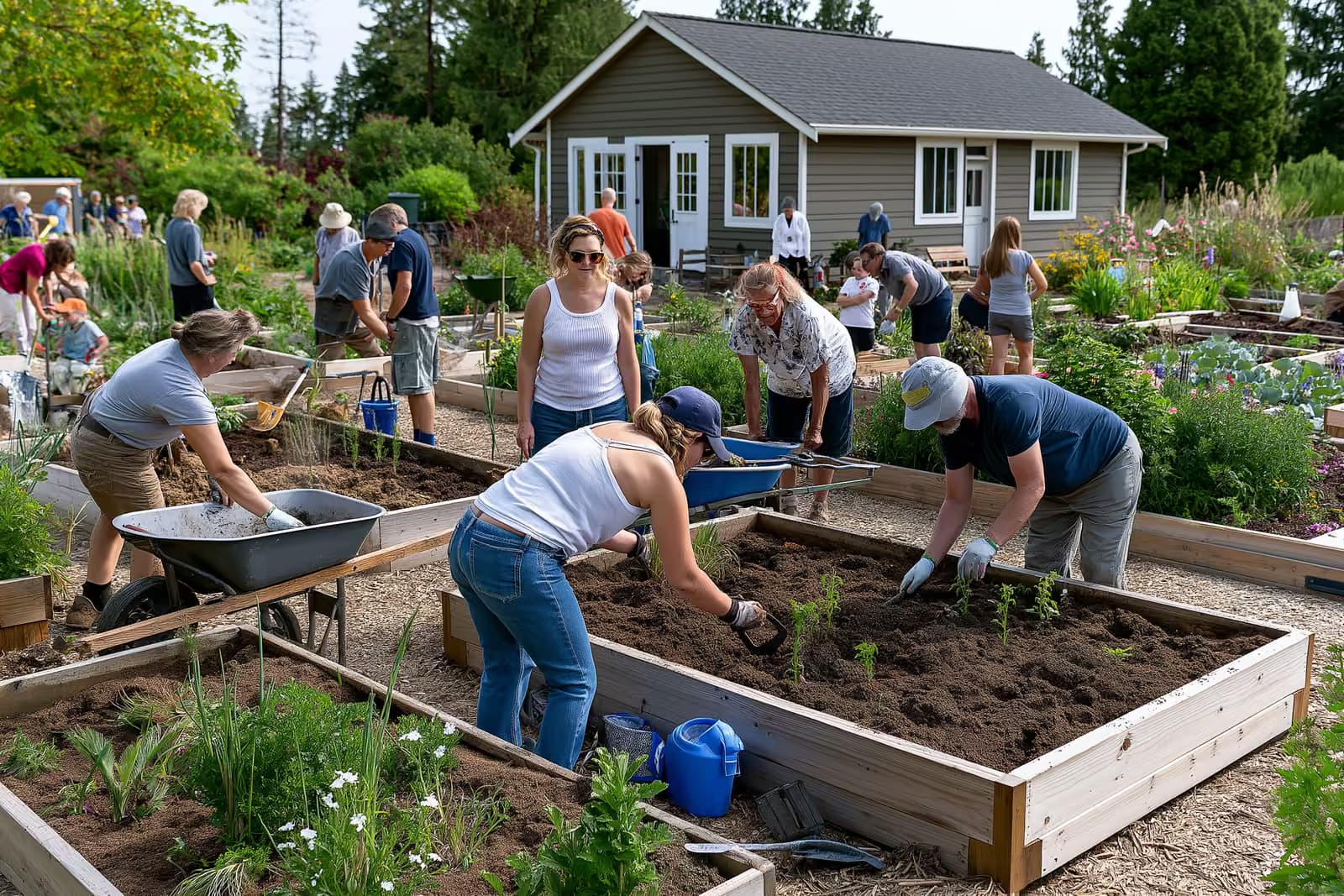
Beyond sport, the variety turns genuinely delightful. There is a whole musical world: Musikvereine and Chöre (music associations and choirs), Blaskapellen (brass bands), amateur orchestras and Gesangvereine (singing clubs), from a village wind band to a big city choral society, where you play or sing every week and perform at local festivals. There is the Schützenverein, the traditional marksmen’s club, which is enormous in rural areas and is really a centuries-old social society built around its annual Schützenfest. There is the Karnevalsverein or Faschingsverein, the carnival club that spends the whole year preparing the costumes, floats and stage sessions of the pre-Lent carnival season. There is the Kleingartenverein, the allotment-garden association that governs the beloved fenced garden plots where city dwellers grow vegetables and socialise on summer evenings - we cover that world in our chapter on outdoor activities and parks.
Then it gets wonderfully specific. There are Tierzuchtvereine, animal-breeding clubs devoted to rabbits (Kaninchenzuchtverein), racing and show pigeons, poultry or a particular dog breed, that hold their own shows and keep meticulous stud books. There are clubs for model railways and Modellbau (scale modelling), for chess (Schachverein), for dancing (Tanzverein), for angling (Angelverein, which usually also leases and looks after a stretch of water), and for Kegeln, the German nine-pin bowling that fills countless clubhouse alleys on a Wednesday night. There are Heimatvereine devoted to local history, dialect and regional custom, Karten and games clubs built around Skat or other card games, and maker and hobby clubs of every stripe. The specificity is the charm: a club existing solely to breed a certain pigeon, or to keep one village’s costume tradition alive, tells you something warm about how seriously and how fondly Germans take their pastimes.
What Free-Time Life in a Club Is Actually Like
The real appeal of a hobby Verein is not just the activity but the rhythm it gives your week. Most clubs meet on the same fixed evenings all year: the football team trains Tuesday and Thursday, the choir has its Probe (rehearsal) on Wednesday, the chess club and the Kegeln group each have their regular Treffen (meeting night). You stop having to plan your free time from scratch, because part of it is already spoken for by something you enjoy and by people who expect you. Many activities also run to a season - a competition season, a carnival season that builds to February, a summer of festivals and outdoor meets - so the year gains a pleasant shape.
At the heart of many clubs sits the Vereinsheim, the clubhouse. This is one of the quiet pleasures of German club life. A well-established Verein often has its own building or a room of its own, and it frequently comes with a small bar or Gaststätte (clubhouse pub) run by the members, where people stay on after training or rehearsal for a drink and a chat. The Vereinsheim is a genuine social hub: a warm, unpretentious room where the beer is cheap, everyone knows everyone, and the conversation flows easily because you have all just done the same thing together. For a newcomer, an hour in the Vereinsheim after the activity can be worth more than the activity itself.
The calendar is dotted with events beyond the weekly meet. There are internal competitions and Turniere (tournaments), matches or contests against neighbouring clubs, and concerts or displays for the wider town. There are the club’s own celebrations: the Sommerfest (summer party), the Vereinsfest and often a Weihnachtsfeier (Christmas gathering), where members and their families eat, drink and mark the year together. Many clubs run an annual Vereinsausflug, a club outing or day trip - a coach to a festival, a hike, a visit to another club - that is as much about the shared bus ride as the destination. Running through all of it is the thing Germans call Geselligkeit, a hard-to-translate word for easy, sociable togetherness. The activity is the reason you came, but the Geselligkeit - the after-training beer, the banter, the sense of belonging to a little community - is what keeps people coming back for decades. That combination, a shared pastime plus genuine conviviality, is the entertainment payoff of joining a Verein.
Choosing a Club for Your Hobby
The simplest way to pick a club is to start from something you already enjoy or have always meant to try, and then find the local Verein built around it. Because clubs exist for such narrow interests, the match can be surprisingly precise: not just “a music club” but the specific choir or brass band, not just “a sports club” but the table-tennis or climbing section within it. Almost every Verein lets you test the water first through a Schnuppertraining or Schnupperstunde, a no-obligation trial session where you simply turn up, try the activity and see how the group feels before you commit to anything. The practical steps for finding clubs and signing up - the directories, the trial visit, the Beitrittserklärung (membership form) - are laid out in full in our chapter on German club culture, so this chapter simply encourages you to go and try two or three.
For a newcomer, a hobby club is often a gentler place to make friends than a purely social meetup. The reason is that the shared activity carries the conversation for you. You do not have to arrive and make small talk with strangers; you arrive to play, sing, shoot, dance or breed, and the talk grows naturally out of doing the thing side by side. That takes the pressure off in a way that suits both German reserve and your own nerves as the new person. If broadening your circle beyond any single club is the wider goal, our chapters on building a social network in Germany and German club culture put the club approach in that bigger picture.
Cost is rarely a barrier. Because Vereine are non-profit and volunteer-run, membership is cheap by design - usually a modest annual Mitgliedsbeitrag (membership fee) rather than a commercial class or gym price, with the exact figures and the reasons behind them covered in the club-culture chapter. One honest point about language: mainstream Vereine run in German, and that is worth knowing before you walk in. Rather than a drawback, treat it as some of the best, most enjoyable language immersion you will get, since you are learning real spoken German while doing something you like - which pairs well with our guide to overcoming German language barriers. In larger and more international cities you will also find some English-friendly, bilingual or expat-oriented clubs, so if joining in German feels like too much at first, those exist as a bridge.
The Cultural Flavour
Part of the fun of club life is how deeply it is woven into local culture, and how different that flavour feels from one region and one club to the next. In much of rural and small-town Germany the Schützenverein is a genuine institution, and its Schützenfest is one of the highlights of the year: a marksmen’s festival with a parade, a fairground, a big beer tent and the crowning of a Schützenkönig (shooting king) who has won the year’s contest. In the Rhineland and the south, carnival clubs give the winter its shape, spending months on the costumes, music and stage sessions that erupt into the street parades of Karneval or Fasching. Joining the club that runs these traditions puts you on the inside of a local celebration rather than watching from the pavement, and there is more on such events in our chapters on local cultural events and cultural activities in Germany.
The scene shifts between countryside and city. In a village the Verein may be the main social life there is, tightly bound to family and tradition and slower to warm to an outsider, but all the more rewarding once you are in. In a big city the choice is wider and more international, the clubs turn over members more freely, and you will find niche and newcomer-friendly options more easily. Either way, part of the character is the gentle formality: the elected board, the annual meeting, the minutes, the sense that even a pigeon-breeding club is run with proper procedure. Newcomers sometimes find this bureaucratic, but it is worth seeing the way Germans do - as the quiet machinery that has kept these volunteer-run clubs fair and trusted for over a century. The Verein is a beloved, slightly bureaucratic, deeply German institution, and once you stop resisting the formality you may find it is part of the charm.
What to Do Next
Pick one thing you would genuinely enjoy doing on a regular evening - a sport, an instrument, singing, dancing, chess, gardening, fishing, model-building, anything - and treat this week as the week you find the club for it. Search your town’s name together with the activity and the word “Verein”, or look at the municipal club directory, and note two or three that look promising. Email each to ask about a Schnuppertraining, go along in ordinary clothes expecting the first visit to feel a little awkward, and stay for a drink in the Vereinsheim afterwards if there is one, because that is where you will really sense whether the group is for you.
When you find one that fits, the practical business of joining - the membership form, the modest fee, what the club expects of you in return - is all set out in our chapter on German club culture, and if it is the sport itself you are chasing, start with our chapters on popular sports in Germany and joining sports clubs. However you come to it, a hobby Verein remains one of the best-value and most enjoyable ways there is to spend your free time in Germany: a real activity you like, a fixed place in your week, and a small, welcoming community to share it with.
About this information
This chapter is general orientation based on widely-published information about everyday life in Germany, last reviewed in July 2026. It is general guidance, not individual legal, tax, or medical advice. See the related WeLiveIn.de chapters linked in the text above for topic-specific detail and official sources.