Food Festivals and Events
12 min read
Germany runs on a food calendar as much as a clock, and its festivals are where that calendar becomes something you can taste. This chapter is about the culinary side of German food festivals: what you actually eat and drink at the Wiesn, the Weinfest, the pumpkin show and the Christmas market, and how the seasons - white asparagus in spring, new wine in autumn, mulled wine in December - move the whole country’s plate along with them. It is a guide to the food and drink, not to buying tickets or catching trains. For how to get to a festival, when it opens and how the crowds work, see the Events section, starting with Major German Festivals; for the meaning behind the customs, see German Festivities and Local Traditions. Here, we stay at the table.
The Food at Oktoberfest and the Beer Festivals
Oktoberfest, held on the Theresienwiese in Munich and known locally as the Wiesn, is famous worldwide for beer, but the food is half the reason to go. The beer itself is a category: only Oktoberfestbier, a stronger märzen-style lager brewed within Munich’s city limits by the six traditional breweries, may be poured, and it comes in one size, the Maß, a full litre in a heavy glass stein. You order it by the litre or not at all, which is worth knowing before your first one arrives. Because the beer is strong and the day is long, the food is built to keep pace with it.
The signature dish is Hendl, a half roast chicken turned crisp and golden on the spit, eaten with your hands. Alongside it you will find Schweinshaxe, a whole roasted pork knuckle with crackling skin, and Steckerlfisch, whole mackerel or trout rubbed with garlic and herbs, skewered on a stick and grilled over charcoal until the skin blisters. To go with the beer there are Brezn, the giant soft pretzels sold from baskets, and Obatzda, a Bavarian spread of ripened Camembert mashed with butter, paprika and onion that you scoop up with bread or pretzel. Radi, thinly spiralled salted white radish, is the classic beer accompaniment. Whole oxen turn on the spit at the Ochsenbraterei, one of the big tents, where each animal is named and numbered and the meat is carved into rolls with gravy. When you have room for something sweet before the Lebkuchenherz, the tents also serve Kaiserschmarrn, a shredded, caramelised pancake with fruit compote, and Dampfnudeln, steamed sweet dumplings with vanilla sauce. For something sweet, look for the Lebkuchenherz, the heart-shaped gingerbread biscuits iced with sentimental messages and worn on a ribbon around the neck - more souvenir than snack, but a real one. If you want the full picture of how to plan a visit, tickets and table reservations, the Events section covers that in The Oktoberfest.
Oktoberfest is the largest of its kind, but the same food-and-beer culture runs through the year and across the south. In Munich the Starkbierfest, or strong-beer festival, falls in Lent, when the monastic doppelbock beers such as Salvator are tapped at the Nockherberg - a dark, malty beer once brewed rich enough to sustain fasting monks, still served with hearty pork and dumplings. Stuttgart’s Cannstatter Volksfest, held on the Cannstatter Wasen, is Germany’s second-largest beer festival and offers much the same spread with a Swabian accent, so you will see Maultaschen, the region’s filled pasta pockets, and Zwiebelrostbraten sharing the tables with the roast chicken. The seasonal beer styles behind all of this - the märzen, the bock, the wheat beers - are explained further in Wine and Beer Culture.
Weinfeste and the Federweißer Season
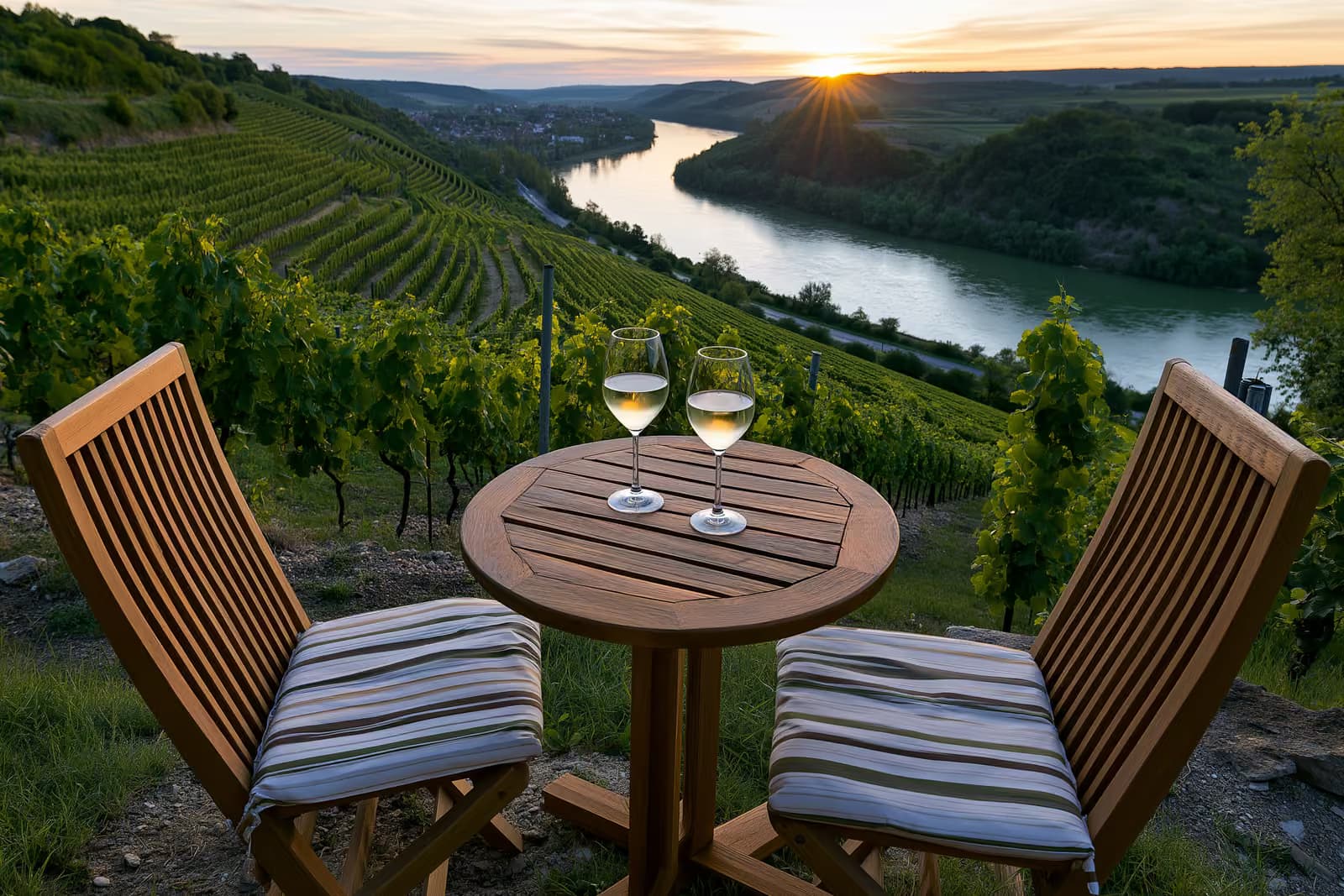
From late summer into October, Germany’s wine regions hold a rolling series of Weinfeste, wine festivals, and this is when the country’s food festivals turn from beer to grape. The undisputed giant is the Dürkheimer Wurstmarkt in Bad Dürkheim, in the Palatinate (Pfalz), which despite its name - the “sausage market” - is recognised as the world’s largest wine festival, drawing around 600,000 people over the second and third weekends of September. You drink at small stands called Schoppen, each pouring the local growers’ wine, and the wine itself comes in a Schoppenglas, a sturdy half-litre glass. Nearby, the Riesling and Weißburgunder heartlands of the Rheingau, the Mosel and Rheinhessen run their own village festivals through the same weeks, many of them small enough that the wine you drink was pressed a few hundred metres away.
The seasonal star of these weeks is Federweißer, literally “feather-white”, the partly fermented new wine caught mid-process: cloudy, fizzing, sweet and low in alcohol one day, drier and stronger the next, because it never stops fermenting. It cannot travel or keep, so autumn is the only time you will meet it, sold from the barrel at the festival or from a farm shop with the cap left loose so the gas can escape. Its inseparable partner is Zwiebelkuchen, a warm, savoury onion tart of soft baked onions, bacon and caraway in a yeasted base - the sweetness of the new wine against the richness of the tart is one of Germany’s great seasonal pairings. Further south and along the French border you will more often be handed Flammkuchen, a wafer-thin tart of crème fraîche, onion and bacon baked crisp at the edges. The rest of the drinking is easy and local: a Schorle, wine cut with sparkling water, which is how many locals pace themselves through a long afternoon, and the growers’ own plates of Winzervesper, a vintner’s snack of cold meats, cheese and bread. If the Federweißer-and-Zwiebelkuchen season sends you looking for the dishes themselves, they sit within Traditional German Dishes, and the wider wine culture is in Wine and Beer Culture.
Not every wine festival is out in the vineyards. The Stuttgarter Weindorf, the Stuttgart wine village, sets up hundreds of small booths in the city centre for a late-summer fortnight, each pouring Württemberg wines beside Swabian plates of Maultaschen and Zwiebelrostbraten, so you can work through dozens of local growers without leaving the square. Hesse pours something different again: Apfelwein, apple wine, a tart, dry cider that Frankfurt treats with the seriousness other cities give to beer. At the apple-wine festivals and in the taverns of the Sachsenhausen district it is served from a grey stoneware jug called a Bembel into a ridged glass, the Geripptes, and drunk with Handkäs mit Musik, a sharp sour-milk cheese marinated in oil, vinegar and raw onion - the “music” being the onions. Along the Rhine and Main, town after town runs its own weekend Weinfest through September, so wherever you are that month there is usually a glass of new wine within reach.
The Seasonal Food-Festival Calendar
Beyond beer and wine, Germany celebrates individual foods as they come into season, and following these festivals is the surest way to eat the country at its best. Spring belongs to Spargel, white asparagus, which is grown in sandy soil and cut before it breaks the surface so it stays pale and tender. Spargelzeit, the asparagus season, runs roughly from April to the feast of St John on 24 June, and the growing towns mark it with festivals and a Spargelkönigin, an asparagus queen, crowned to open it. Schwetzingen in Baden calls itself the asparagus capital, while Beelitz in Brandenburg gives its name to Beelitzer Spargel, a protected regional product; at either you eat the spears simply, steamed and served with new potatoes, melted butter or hollandaise and often a slice of ham. In autumn the harvest festivals take over. The largest is the Kürbisausstellung, the pumpkin exhibition, at the Blühendes Barock palace gardens in Ludwigsburg near Stuttgart - verified as the world’s largest, with something like 450,000 pumpkins built into enormous sculptures each year - where the eating is as serious as the display, all Kürbissuppe (pumpkin soup), pumpkin waffles and roasted seeds.
Between the headline seasons run the quieter ones that also fill stalls and small fairs. Spring brings Bärlauch, wild garlic, foraged from the woods and folded into soups, pesto and bread for a few short weeks, and then Erdbeerzeit, strawberry season, when roadside stands shaped like giant red berries appear and towns hold Erdbeerfeste around the harvest. High summer is mushroom time: Pfifferlinge, the golden chanterelles, and later Steinpilze, porcini, turn up fresh at market and pan-fried at the fairs. As the fruit trees come in, the wine and harvest festivals fill with Zwetschgendatschi, the Bavarian plum sheet-cake, and Pflaumenkuchen made from the deep-purple Zwetschgen plums, best eaten still warm with a cloud of cream. Deep winter has its own edible marker too: in the run-up to Karneval and Fasching, the pre-Lenten carnival that peaks around Rosenmontag, bakeries fill with Berliner - the jam-filled doughnuts dusted in sugar, called Krapfen or Pfannkuchen depending on the region - eaten by the boxful in the days before the fasting begins. None of these needs a famous festival to enjoy - the season itself is the event, and following it teaches you the German year by taste.
The autumn calendar keeps giving. The Weimarer Zwiebelmarkt, the onion market in Weimar in Thuringia, is the state’s oldest folk festival, first recorded in 1653, and every October the old town fills with more than five hundred stalls hung with Zwiebelzöpfe, plaited braids of onions, alongside onion tart, onion soup and roasted sausages. Cherry and fruit country holds its own Kirschfeste and harvest fairs when the orchards ripen. And in the north, as the first frosts arrive and sweeten the leaves, comes Grünkohl, curly kale, and with it the Grünkohlfahrt or Kohlfahrt - a bracing group walk through the cold that ends with a communal feast of kale stewed long and dark, served with Pinkel, a smoked oat-and-groats sausage, and salted pork. Each outing crowns a Kohlkönig, a kale king, usually whoever ate the most, and around Oldenburg and Bremen these walks are a fixed part of winter. One food spectacle runs all year: the Hamburger Fischmarkt in the Altona district, held every Sunday from the early hours, where market criers sell fish, fruit and eels by the crate at full volume and the smoked-fish rolls, the Fischbrötchen, are breakfast for a city that has been up all night. To place any of these dishes in their home region, see Regional Specialties.
Christmas Markets on the Plate
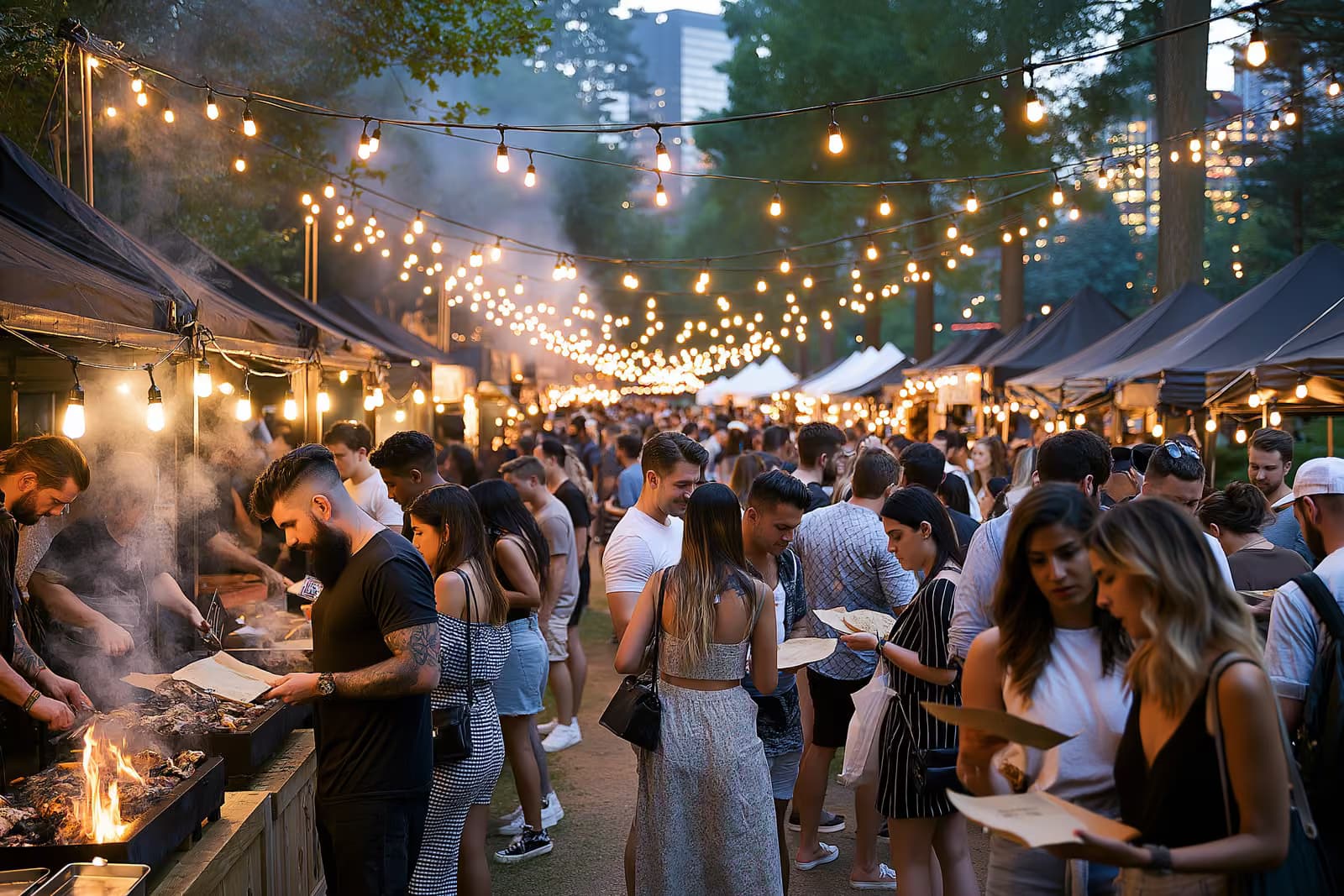
The Weihnachtsmarkt, the Christmas market, is the food festival most newcomers meet first, and while its lights and crafts get the photographs, it is really an eating and drinking event held outdoors in the cold. The centre of it is Glühwein, red wine warmed with cinnamon, cloves, orange and sugar, poured into a themed ceramic mug that changes design each year and each town. That mug comes with a Pfand, a deposit added to the price: you can return the mug to get the deposit back, or simply keep it and walk away, and most people end up with a small collection. A richer variation is Feuerzangenbowle, where a rum-soaked sugarloaf is set over the pot and lit so the caramelising sugar drips flaming into the wine. If you would rather not drink alcohol, ask for Kinderpunsch, the spiced fruit punch served to children and drivers. The Pfand system that governs the mug is the same deposit logic you meet on bottles and cans, explained in Grocery Shopping Tips.
The food is built for eating on your feet with cold hands. Bratwurst sizzles on every corner, pushed into a bread roll with mustard; Reibekuchen, fried potato pancakes eaten with apple sauce, come three to a paper plate; and the sweet stalls sell gebrannte Mandeln, almonds roasted in caramelised sugar whose smell you follow across the square, along with Schmalzkuchen, small fried doughnut pieces dusted with icing sugar. Warm chestnuts, Maronen, are roasted in drums and sold by the paper cone. In the north you will find Flammlachs, salmon nailed to a plank and cooked beside an open fire until it flakes, and most markets have a stand of Champignons, button mushrooms fried and drowned in a garlic-cream sauce, and one of Quarkbällchen, warm curd-cheese doughnut balls rolled in sugar. The baking is regional and taken seriously: Nürnberger Lebkuchen, the soft, spiced gingerbread of Nuremberg baked on wafer bases and protected by name, and Dresdner Christstollen, the dense butter-and-fruit loaf heavy with marzipan and buried in icing sugar. Dresden even devotes a festival to it - the Dresdner Stollenfest, held on the Saturday before the second Sunday of Advent, parades a single giant Stollen weighing well over a tonne through the old town and cuts it up for the crowd at the Striezelmarkt. The market as an experience, and the traditions behind Advent, belong to German Festivities and Local Traditions; here the point is simply that everything is worth eating.
Making the Most of a German Food Festival
A few practical habits make German food festivals easier to enjoy. Bring cash: many stands, especially the smaller wine and food stalls, still do not take cards, and the queues move faster when you have coins ready. Expect the Pfand deposit on almost anything you drink from, not just Christmas mugs but the Schoppenglas at a Weinfest and the reusable cups at summer street festivals - it is added at purchase and returned when you bring the vessel back, so keep a couple of euros aside for it and decide whether you are collecting or returning. Prices are modest by the measure and rise a little with the fame of the festival, but a Maß of beer, a plate of Hendl or a mug of Glühwein rarely feels like a bad deal for what it is and where you are drinking it.
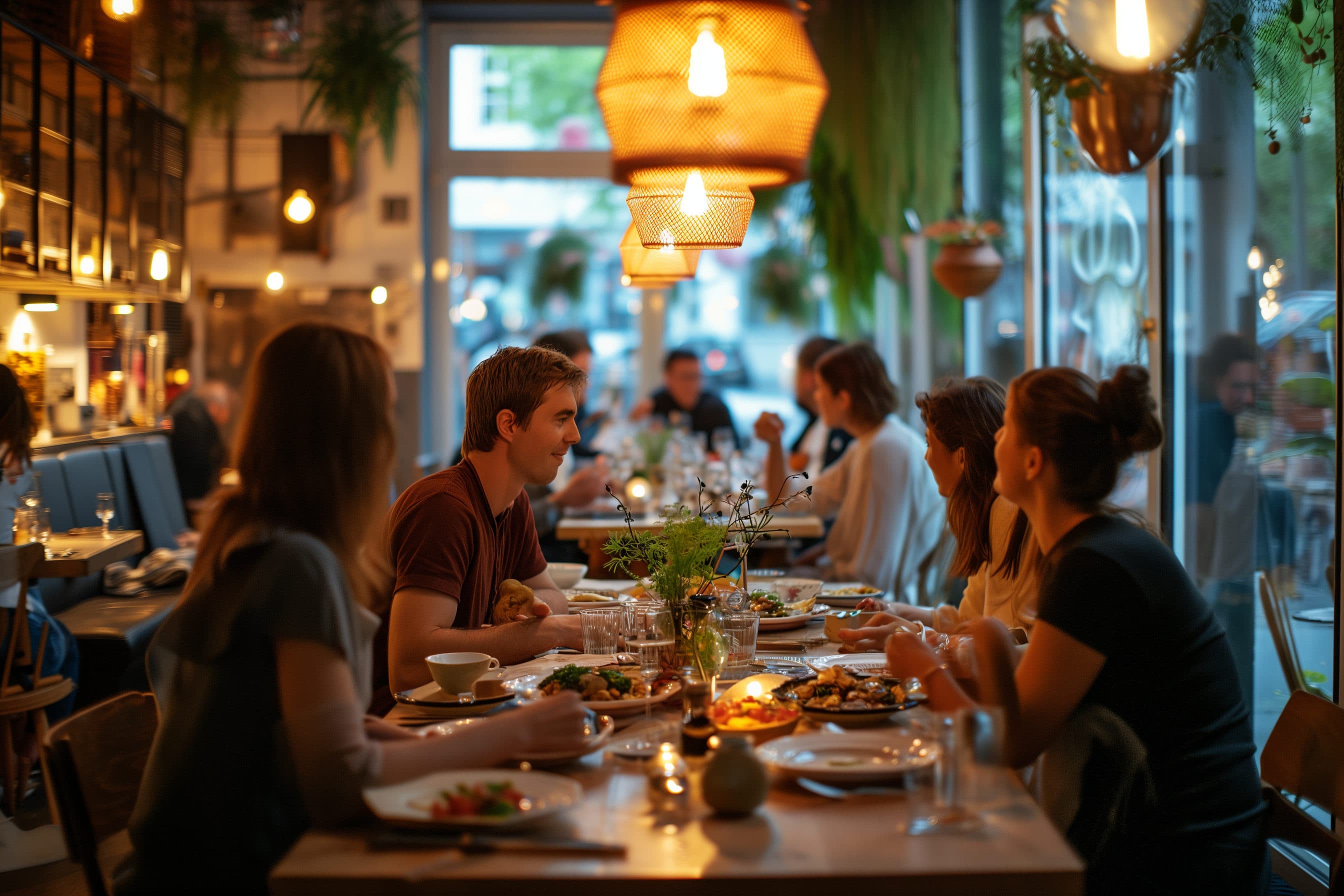
The other thing to understand is the seating. Food festivals in Germany run on long shared tables, and joining strangers is expected rather than intrusive; this is Geselligkeit, the easy sociability of eating and drinking together, and a festival table is one of the most natural places for a newcomer to fall into conversation. A friendly “Ist hier noch frei?” - “is this seat free?” - is all it takes to sit down. If using festivals to build a circle of people is part of why you came, that thread continues in Tips for Building a Social Network in Germany, and the table manners that keep it smooth - when to say prost, how to toast, who pays - are in Etiquette in German Dining Culture.
Most of all, let the calendar be your guide. Germany’s food festivals are the country handing you its seasons on a plate: white asparagus and the first strong beers in spring, the sausage-and-wine weeks and cloudy Federweißer of early autumn, pumpkins and kale and onions as the year turns cold, and the Glühwein and Stollen of December. Learn roughly when each season falls and you will always have somewhere to eat something at its peak, cooked by the people who grow it, at a shared table with the town around you. Pick the next one on the calendar, go hungry, and bring cash.
Sources
The information in this chapter draws on the official sources and publications listed below, last reviewed in July 2026. It is general guidance for orientation, not individual legal, tax, or medical advice.