Higher Education System
22 min read
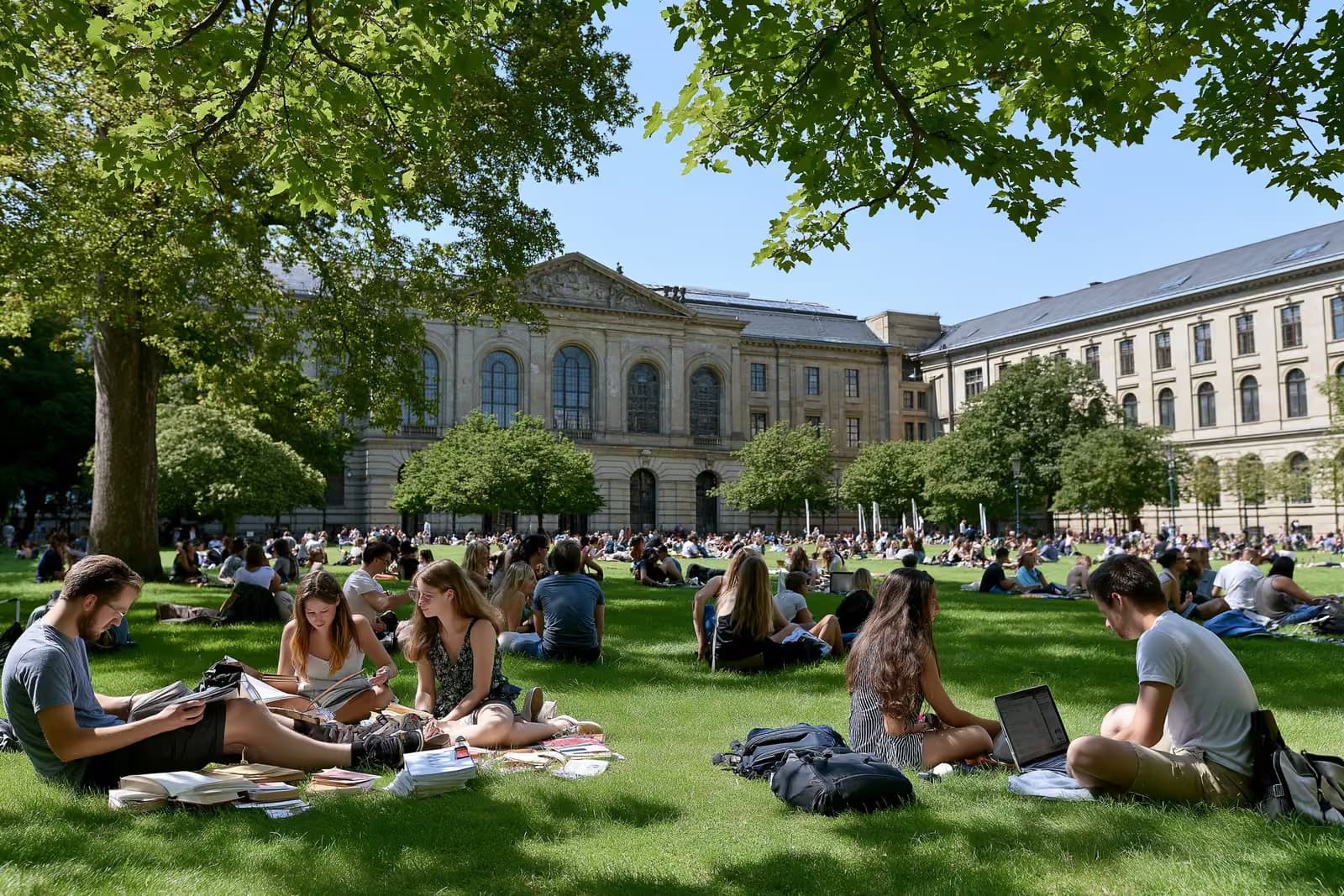
This chapter explains how German higher education actually works, so that you can tell one kind of institution from another, work out whether your school-leaving certificate opens the door at all, and understand what a place will cost you. Germany has a reputation abroad for world-class universities that charge nothing. Both halves of that sentence need qualifying in 2026, and the qualifications matter most to exactly the people who move here to study.
The system is also not one system. Education in Germany is run by the sixteen Länder, the federal states, and not by the federal government in Berlin, which means admission rules, fees and even the name of the responsible ministry change when you cross a state border. If that structure is new to you, our overview of German education explains the constitutional division and the role of the Kultusministerkonferenz. This chapter takes that structure as given and deals with what sits on top of it.
How German Higher Education Is Organised: Four Kinds of Hochschule
The German umbrella word is Hochschule, meaning any higher-education institution. Underneath it sit four distinct types, and the difference between them is the single most useful thing to understand before you apply. It is not a ranking. It is a difference in purpose, and choosing on the basis of prestige rather than purpose is the most common mistake international applicants make.
A Universität is a research institution. It teaches theory, it expects you to read, and it holds the Promotionsrecht, the legal right to award doctorates. Within this group sit the Technische Universitäten, the TUs, which concentrate on engineering, natural sciences and technology, and which include some of the most internationally visible names in the country. A Universität will usually be the right choice if you intend to do research, if you want an academic career, or if your target profession is regulated in a way that requires a university degree.
A Fachhochschule, increasingly called a Hochschule für Angewandte Wissenschaften and abbreviated HAW, is an applied institution. It teaches the same subject at the same level with a different centre of gravity: smaller cohorts, more contact hours, a compulsory Praxissemester or internship in most programmes, lecturers who are required to have worked in industry, and final projects that are frequently set by a real company. English-speaking readers tend to hear the word Fachhochschule and translate it mentally as something like a second-tier institution or a polytechnic. That reading is wrong, and it costs people good places. A Fachhochschule degree is a full academic degree, it carries the same Bachelor and Master titles, and in a large number of fields, particularly engineering, business, computer science, social work and design, employers actively prefer it because the graduate arrives able to do the work. If your goal is employment in Germany rather than academia, the Fachhochschule is very often the better instrument, not the consolation prize.
The one historical asymmetry between the two is the doctorate, and this is where most published advice is now out of date in one direction or the other. The old rule was that Fachhochschulen had no Promotionsrecht and their graduates had to find a Universität willing to supervise them. That rule has been dismantled, but not evenly and not completely. As of 2026, independent Promotionsrecht for HAW has been introduced in every Land except Mecklenburg-Vorpommern, Niedersachsen and Sachsen, and both Mecklenburg-Vorpommern and Niedersachsen have legislation in progress. Rheinland-Pfalz has allowed it since September 2025; Hamburg conferred it on its HAW in February 2025. But the right is granted conditionally and by subject area, only where an institution has demonstrated sufficient Forschungsstärke, sometimes jointly with other HAWs. So the fact that your Land permits it does not mean your Fachhochschule can supervise your doctorate in your field. If a doctorate is part of your plan, check the specific institution and the specific Fachrichtung before you enrol, and do not rely on a general statement either way.
The third type is the Duale Hochschule, which combines study with a paid contract at a partner company and alternates between the lecture hall and the workplace in blocks. You apply to the company first, not to the institution, and the company’s acceptance is what gets you the place. You earn a salary throughout and you graduate with several years of employment history, which is a genuine advantage. The trade-off is real: very little free time, holiday governed by your employment contract rather than the academic calendar, and a strong tie to one employer and one field. It is also the hardest route to enter from abroad, because you need the company contract before you can get the study permit.
The fourth type is the Kunsthochschule or Musikhochschule, for fine art, design, music, film and drama. These run on their own logic entirely. Admission is decided by an Eignungsprüfung, an aptitude examination, and by a portfolio or audition, and a strong portfolio can outweigh a mediocre school certificate to a degree that has no parallel anywhere else in the system. Deadlines are typically much earlier than for other subjects, often months earlier, so if this is your path, work backwards from the audition date rather than from the standard application deadline.
One further point about status, because it comes up constantly. German qualification levels are mapped by the Deutscher Qualifikationsrahmen, the DQR, and the vocational and academic tracks meet on it rather than running parallel forever. Our chapter on career advancement opportunities in Germany explains the DQR and the principle of gleichwertig, nicht gleichartig, equivalent but not identical, which is the honest way to think about the relationship between all of these institutions.
Whether Your Certificate Opens the Door at All
Before any of the above matters, one question has to be answered: does your school-leaving certificate count as a Hochschulzugangsberechtigung, an HZB, meaning a qualification that entitles you to enter higher education in Germany. For applicants who went to school in Germany this is simply the Abitur. For everyone else it is a question with a real possibility of the answer being no, and it is the gate that most non-EU applicants hit first. If you want to see what your certificate is being compared against, the Schulsystem-Decoder mentioned later in this chapter maps the German school tracks and where each one leads.
The authority here is anabin, the database run by the Zentralstelle für ausländisches Bildungswesen, the ZAB, under the Kultusministerkonferenz. Look your country and your certificate up in anabin and you will find it classified in one of two ways. Direkter Zugang means direct access: provided you meet the conditions listed alongside the entry, which frequently include a minimum grade and sometimes a specific subject combination or a completed year of university study at home, you may apply straight to a Bachelor programme. The alternative classification tells you that you must first pass through a Studienkolleg. Note one caveat carefully: if your certificate is not in the database at all, that does not mean it is rejected. It means it has not been assessed yet, and you should ask uni-assist or the university directly rather than assuming the worst.
A Studienkolleg is a preparatory college, usually one year over two semesters, shortenable to one semester for strong performance. It is not a language school, although it teaches German alongside everything else. It brings you up to the subject level a German Abitur would have given you, and it is streamed by target subject. At university-track Studienkollegs the streams are the T-Kurs for mathematics, natural sciences and technical subjects, the M-Kurs for medicine, biology and pharmacy, the W-Kurs for economics and social sciences, the G-Kurs for humanities and German studies, and the S-Kurs for languages. Fachhochschule-track Studienkollegs run their own equivalents: TI for engineering, WW for business, GD for design, SW for social sciences. Pick the wrong stream and you will have prepared for the wrong entrance.
The Studienkolleg ends with the Feststellungsprüfung, the assessment examination. Passing it gives you an HZB valid throughout Germany, not just at the institution that taught you and not just in that Land, which is worth knowing because it means you are not locked into the city where you did your Kolleg. Whether it admits you to universities or to Fachhochschulen depends on which track you took. State Studienkollegs offer places free of charge, though you still pay the Semesterbeitrag described below; private providers charge tuition and are not automatically faster or better.
Do not confuse any of this with the recognition of a completed foreign degree, which is a different procedure with different consequences, mostly relevant to working rather than studying. That is covered in our chapter on finding English-speaking jobs in Germany, which deals with anabin and ZAB recognition from the employment side.
What German Higher Education Actually Costs
The claim that German universities are free is still broadly true, and it is still one of the genuinely good things about the country, but it now needs two qualifications, and one of them has changed recently enough that most guides have not caught up.
The general rule holds: state universities charge no tuition for a first degree, for domestic and international students alike. This is a deliberate policy choice about who gets to be educated, and it applies to the overwhelming majority of places in the country. But it is a Land-level choice, and two Länder have departed from it.
Baden-Württemberg has charged international students who enter from outside the EU for the purpose of study 1.500 Euro per semester since the winter semester of 2017/18, under the Landeshochschulgebührengesetz. A second degree, a Zweitstudium, costs 650 Euro per semester. Exemptions exist and the individual university decides them, so ask rather than assume. You may encounter reports that Baden-Württemberg abolished this fee: it was announced and then dropped for lack of financing, and the fee is still being charged. Check the responsible ministry, the Ministerium für Wissenschaft, Forschung und Kunst, rather than a news headline.
Bavaria has now followed, by a different mechanism, and this is the part that most advice still gets wrong. The Bayerisches Hochschulinnovationsgesetz, in force since the beginning of 2023, empowers each Bavarian Hochschule under Article 13 to levy fees on students from third countries. It does not impose a statewide fee: it permits each institution to decide, and each institution sets its own level. The result is a patchwork, and at the upper end it is expensive. The Technische Universität München charges newly enrolled non-EU students from the winter semester of 2024/25 on a scale that typically runs to 2.000 or 3.000 Euro per semester for a Bachelor and 4.000 or 6.000 Euro per semester for a Master. Other Bavarian institutions charge considerably less. TUM’s exemptions cover EU and EEA citizens, holders of a German higher-education qualification, doctoral and exchange students, students with an established domestic connection under the BAföG rules, and students from Switzerland, Turkey and the United Kingdom under bilateral agreements. One detail there is counter-intuitive and catches people out: attending a Studienkolleg does not exempt you from fees in the Bachelor programme that follows it.
The practical consequence is that “study in Germany for free” is no longer a safe planning assumption if your target is in Baden-Württemberg or Bavaria. Check the fee page of the specific institution before you commit, because the difference between one Land and another can now be tens of thousands of Euro across a degree.
Separately from all of that, and often confused with it, comes the Semesterbeitrag. This is not tuition. It is an administrative contribution, charged every semester by every institution including the free ones, typically somewhere in the low-to-mid hundreds of Euro, and it is compulsory: you are not enrolled until it is paid. It funds the Studierendenwerk, the body that runs student housing, the Mensa canteens and student counselling, plus the student body’s own administration, and it normally bundles a public-transport ticket.
That transport component has changed and is still moving. What used to be a local Semesterticket covering your own transport region has in most places become a Deutschland-Semesterticket, a student version of the nationwide Deutschlandticket, valid on regional and local transport across the entire country rather than just your own city. It is run as a Solidarmodell: every liable student pays it through the Semesterbeitrag whether or not they use it, which is what makes it cheap. It is also getting more expensive, because it is pegged to the Deutschlandticket, which rose to 63 Euro per month in January 2026, pushing the semester price up with it. Some institutions instead offer a cheaper local ticket with an optional paid upgrade to the national one. Because this varies by institution and is changing from semester to semester, treat any figure you read as a snapshot and check your own Studierendenwerk. The one thing that holds everywhere is the principle: the Semesterbeitrag is a fee for services and a transport ticket, it is not a charge for teaching, and a university that charges it is not charging you tuition.
For living costs, scholarships and the BAföG system, see our chapter on scholarships and funding. If you are coming on a student permit, the amount you must show in a Sperrkonto, a blocked account, is set by a specific statutory formula and is explained in our chapter on student visas and permits, together with how many days a year you are allowed to work.
Numerus Clausus and How Places Are Allocated
Numerus clausus, usually abbreviated NC, is Latin for closed number and it is the most misunderstood term in German admissions. It is not an entrance exam and it is not a pass mark. It is simply what happens when a programme has more applicants than places: the applicants are ranked, places are filled from the top, and the grade of the last person admitted becomes that year’s NC. It is therefore a result, published after the fact, not a threshold announced in advance. Last year’s NC tells you roughly how competitive a programme was, not what you need this year. A programme with no NC, described as zulassungsfrei, admits everyone who meets the formal requirements.
There are two separate machines for allocating restricted places, and knowing which one applies to you determines where you apply. Most restricted programmes operate a local NC, an örtlicher NC, where the university itself ranks and admits, and you apply either to the university directly or through the Dialogorientiertes Serviceverfahren, the DoSV, a coordination portal that stops one applicant from blocking several offers at once. In the DoSV the universities still make their own decisions; the portal only manages the offers.
Four subjects are different, and only four: Humanmedizin, Zahnmedizin, Pharmazie and Tiermedizin, that is human medicine, dentistry, pharmacy and veterinary medicine. These are allocated centrally for the whole country through hochschulstart.de, the successor to what older sources still call the ZVS. You cannot apply to a medical faculty directly; the application always runs through hochschulstart. Under the Staatsvertrag über die Hochschulzulassung of April 2019, places in this central procedure are split into three quotas: 30 percent through the Abiturbestenquote, ranked purely on school-leaving grades; 10 percent through the Zusätzliche Eignungsquote, the ZEQ, which is explicitly grade-independent and instead counts aptitude tests such as the TMS, completed vocational training, relevant work experience, a Freiwilliges Soziales Jahr and similar; and 60 percent through the Auswahlverfahren der Hochschulen, the AdH, where each faculty applies its own mixture of grades, test results, interviews and prior training. The practical point for anyone whose grades are good but not exceptional is that 70 percent of medical places are decided by something other than the Abiturbestenquote, so a strong TMS result or relevant prior training genuinely changes your odds.
If you hold a foreign certificate, most universities will not accept your application directly and will route you through uni-assist, the Arbeits- und Servicestelle für internationale Studienbewerbungen. It is a shared clearing house: it checks that your documents are complete and authentic, converts your grades into the German scale, and passes the result on. It charges 75 Euro for the first Studienwunsch in a semester and 30 Euro for each further one in the same semester, with the same rates for the VPD, the Vorprüfungsdokumentation, a preliminary review document that some universities require before you apply to them directly. The counter resets each semester. Two things follow from this pricing: applying to seven programmes in one semester is far cheaper than applying to one programme in each of seven semesters, and the fees are not refundable if you are rejected, so it is worth checking that you meet the formal requirements before paying.
Grade conversion is worth a note of its own, because it is a recurring source of confusion. German grades run from 1,0 as the best to 5,0 as a fail, which is the reverse of most systems people arrive with. Converting your own foreign grade into that scale is not something you can do reliably yourself: it is done with a standardised formula, and it is uni-assist’s job as part of your application or your VPD. What you can usefully calculate yourself is a German-scale average once you are already inside the system, which matters when you apply for a Master and need your Bachelor average from modules weighted by ECTS credits rather than counted equally.
Language, and the English-Taught Question
For a programme taught in German, you must prove German at roughly C1 level on the Common European Framework. Two certificates dominate. The DSH, the Deutsche Sprachprüfung für den Hochschulzugang, is set by universities themselves; DSH-2 is the level that admits you without restriction to all programmes and corresponds to C1. The TestDaF is a standardised external examination reported on a four-level scale per skill; TDN 4 in all four components is generally recognised for unrestricted admission. Treat TDN 4 as a rule of thumb rather than a rule: some engineering and computer-science programmes accept TDN 3 in a single component, while translation studies may demand TDN 5. Other routes exist, including the German component of the Feststellungsprüfung and the Deutsches Sprachdiplom Stufe II, the DSD II, from a German school abroad. Check what your specific programme accepts, because the list is set per institution.
English-taught programmes have grown enormously, but the growth is lopsided, and this is the practical fact to plan around. At Master’s level, English-taught programmes are now common across engineering, computer science, business, data science and the natural sciences, and you can complete an entire Master’s in Germany without formal German. At Bachelor’s level they remain rare: the great majority of undergraduate teaching is in German, and the English-taught Bachelor’s that exist are concentrated at private institutions or at a handful of internationally oriented programmes, often with fees attached. The DAAD’s International Programmes database is the place to search, and its results make the asymmetry obvious at a glance.
Two warnings about the English-taught route. First, an English-taught programme does not produce a German-speaking graduate, and the German labour market outside a small number of international employers will still expect German. Students who arrive planning to stay frequently discover in their final semester that the degree opened a door the language keeps shut. Second, being admitted without German does not mean living without it: your Ausländerbehörde, your landlord, your health insurer, your bank and your Studierendenwerk will all deal with you in German. Starting German in your first semester rather than your last is the cheapest decision available to you.
Bachelor, Master, Staatsexamen and the Clock
Germany restructured its degrees under the Bologna Process, so the main sequence is the internationally familiar one. A Bachelor takes three to four years, usually six or seven semesters, and is a full professional qualification in its own right. A Master takes one to two years on top, either consecutive, following directly on from a related Bachelor, or weiterbildend, designed for people with work experience and sometimes charging fees even at a state institution. A Promotion, the doctorate, follows, and in Germany it remains predominantly a research apprenticeship rather than a taught programme: you are matched with a Doktorvater or Doktormutter and you write, though structured graduate schools now exist alongside the traditional model. Credits are counted in ECTS, with 180 for a typical Bachelor and 120 for a typical two-year Master.
Every programme has a Regelstudienzeit, a standard period of study, and international students routinely underestimate how much this number does. It is not advisory. It is the reference period the entire system is calibrated to. BAföG, the state student funding system, ties its Förderungshöchstdauer to the Regelstudienzeit, so exceeding it is the point at which funding stops rather than a matter of mild embarrassment. Your health-insurance status as a student is time-limited too. And if you are here on a residence permit for study, your Ausländerbehörde expects reasonable progress and will ask about it when you renew; the details, including why a student permit does not build toward permanent residence in the way you might expect, are set out in our chapter on student visas and permits. The margin of tolerance is real, and one or two extra semesters is common and rarely fatal, but the clock exists and it is worth knowing where you stand on it before someone else tells you.
Then there is the Staatsexamen, which is a genuinely separate animal and does not fit the Bachelor-Master picture at all. Law, human medicine, dentistry, pharmacy, veterinary medicine and, in most Länder, teaching are not examined by your university. They end in a state examination set and marked by the state, because the state is licensing you to practise. The consequences are concrete. There is no Bachelor exit point along the way, so leaving early leaves you with nothing to show. The programmes are long. They are followed by a second, practical stage before you can actually work: the Referendariat and the Zweites Staatsexamen for lawyers and teachers, the practical year and licensing for doctors. And because the state doing the licensing is the Land, the rules differ across the sixteen of them. If your plan is one of these professions, treat it as a different system with a different map, and read the specific Land’s requirements rather than general advice about German degrees.
Private Universities and Why Accreditation Matters
Around nine in ten German students are at state institutions, and the private sector is small but visible, partly because it advertises and the state sector does not. Private institutions charge real tuition, often many thousands of Euro per semester. What you are buying is generally convenience rather than quality: smaller groups, more flexible entry, more English-taught programmes, more support with the bureaucracy, sometimes an easier admission route when a state programme’s NC is out of reach. None of that is dishonest, and for some people it is worth paying for. What it is not is a shortcut to a better degree. A private institution’s degree does not outrank a state university’s in the German labour market simply because it cost more, and in some fields it carries less weight, because German employers know which institutions do the research and which do not. Price is not a proxy for prestige here, and applicants arriving from countries where it is should recalibrate.
What genuinely matters, and what you should check before paying anyone anything, is accreditation. This is not a badge of distinction; it is a legal requirement, and its absence is a warning. Since 1 January 2018 the Studienakkreditierungsstaatsvertrag has been the binding framework for quality assurance in German higher education. It comes in two forms. Programmakkreditierung examines an individual degree programme. Systemakkreditierung examines a university’s entire internal quality-management system, after which that institution may accredit its own programmes under the Akkreditierungsrat’s seal. Both end in the same seal and both are equally valid; a system-accredited university is not cutting a corner.
The Stiftung Akkreditierungsrat publishes every accreditation result in a public database called ELIAS, covering programme accreditations, system accreditations and alternative procedures. Search for the specific programme, not just the institution, because an institution can be perfectly legitimate while a particular new programme is not yet accredited. Check the separate question of state recognition too: a private institution needs staatliche Anerkennung from its Land to award degrees at all, and the Hochschulkompass, the Hochschulrektorenkonferenz’s official register, lists which institutions hold it. An unaccredited or unrecognised degree can fail later at exactly the moment it matters most, when an employer, a professional body, a foreign authority or an Ausländerbehörde assessing a residence permit asks what it is worth. That check takes ten minutes and it is the single highest-value thing in this chapter.
Tools That Help With the Paperwork
Several of the steps above involve working out where you stand before you can act, and a few free browser tools can shorten that. Werkzeu.ge, which is built by Cryon UG, the company behind WeLiveIn.de, has a set of them that map onto this chapter’s tasks. They are free without an account at the Gast tier, they run deterministic formulas rather than AI, and inputs stay on your device. Two honest caveats: the free tier carries ads, and the platform is in beta until the end of November 2026, so its own terms note that tools may be incomplete. If you want to know what the paid tiers include, check the current pricing page, since the figures change.
The Anerkennungs-Navigator (Gast) walks you through which body assesses a foreign qualification and what evidence it wants, which is the question underneath both the HZB gate and later degree recognition. The Schulsystem-Decoder (Gast) maps the German school tracks and where each one leads, which is useful context when you are trying to see what your own certificate is being compared against. The Sprachkurs-Finder (Gast) helps locate a course at the level you need, which is the practical starting point if you are aiming at DSH-2 or TestDaF TDN 4. The Aufenthaltstitel-Checker (Gast) helps you work out which residence title fits your situation, which becomes the live question the moment you have an admission letter.
For grades, the Notendurchschnitt-Rechner (Gast) is worth knowing about, but be clear about what it does. It computes a weighted average from German grades, converts between Abitur Noten and the 0 to 15 Punkte scale using the KMK table, and calculates an ECTS-credit-weighted average, which is the number a Master’s application asks for. It does not convert a foreign grade into the German scale: that conversion is uni-assist’s job as part of your application or VPD, and no calculator substitutes for it. Used for what it is, it is a quick way to read what an NC value means and to work out your own average before applying.
None of these tools submit anything on your behalf. There is no integration with a university, with uni-assist or with hochschulstart, and there cannot be: they prepare and calculate, and you still file the application yourself through the proper portal. They are also not legal advice, which matters here because residence and recognition questions turn on individual circumstances.
What To Do Next
Start with the gate, not the dream. Look your school-leaving certificate up in anabin and find out whether you have direkter Zugang or need a Studienkolleg, because that single answer decides whether your timeline is one year or two and which stream you should be preparing for. If your certificate is not listed, ask uni-assist rather than assuming you are excluded.
Then choose the institution type on purpose. Decide honestly whether you want research or employment, and let that decide between a Universität and a Fachhochschule instead of letting a half-remembered translation decide it for you. If a doctorate is in the plan, check whether your specific Fachhochschule holds Promotionsrecht in your specific field, since the answer now varies by Land, by institution and by subject.
Next, price the actual place. Look up the fee page of each institution you are seriously considering, not a general article about Germany, because Baden-Württemberg charges non-EU students, Bavarian institutions may each set their own fee, and the range between them is wide. Add the Semesterbeitrag, which everyone pays everywhere, and check with the local Studierendenwerk what the transport ticket now costs and covers.
Work out which application machine applies. If you are aiming at medicine, dentistry, pharmacy or veterinary medicine, everything runs through hochschulstart.de and you should look hard at the ZEQ and AdH quotas rather than assuming your grade decides everything. For anything else, check whether the programme uses the DoSV, applies a local NC, or is zulassungsfrei, and whether it wants you to go through uni-assist. Batch your applications into one semester, since the first costs 75 Euro and each further one 30 Euro.
Book the language examination early, because DSH and TestDaF dates fill and a missing certificate delays enrolment by a whole semester rather than a week. And before you commit to any institution, particularly a private one, search ELIAS for your programme and the Hochschulkompass for the institution. If a programme you are being asked to pay for is not accredited, that is not a detail to sort out later. That is the answer.
Sources
The information in this chapter draws on the official sources and publications listed below, last reviewed in July 2026. It is general guidance for orientation, not individual legal, tax, or medical advice.