Family-Friendly Activities
14 min read
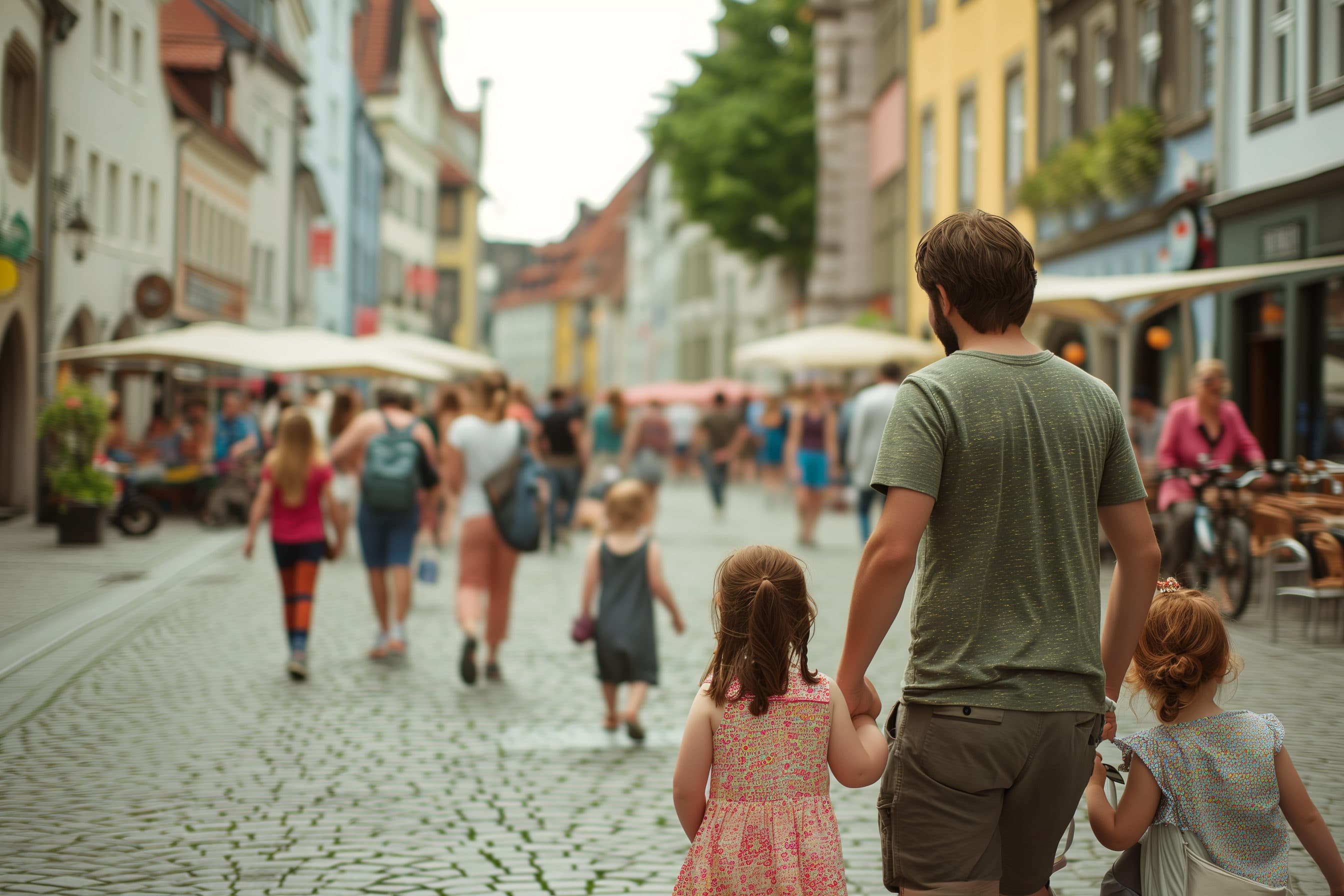
This chapter is a practical guide to the things you can actually do with your children in Germany, from a wet Tuesday afternoon to a once-a-year day out. It is written for parents who have just arrived and are working out where a family goes here, what it costs, and how the German rhythm of playgrounds, pools, forests and festivals fits together across the year. Germany is genuinely built for families, and once you know the everyday infrastructure that every town shares, the rest falls into place quickly.
Two things are worth saying at the start. German family life leans outdoors and it leans toward independence, so a lot of what you do here happens in the open air and gives children more freedom than you may be used to. That culture, and how German parenting works day to day, is covered in our chapter on German family dynamics and parenting. Here the focus is different and simple: where to go, what it is called, and how to make it work.
The Everyday Family Infrastructure
The single most useful thing to understand about family life in Germany is how much is already built into every neighbourhood. The Spielplatz (public playground) is the backbone of it. There are thousands of them, they are free, and they are often far more adventurous than the fenced plastic play areas many newcomers expect: wooden climbing structures, rope bridges, water-and-sand pumps, zip lines and tall slides are normal, and children are trusted to test their own limits on them. You will find one within a few minutes’ walk of almost any home, and locating them is a good first way to meet other parents. Because playgrounds and green space are a subject in their own right, our chapter on outdoor activities and parks goes deeper into where to find the best ones.
When the weather turns, the Indoor-Spielplatz (indoor playground) takes over. These are large heated halls full of ball pits, trampolines, climbing frames and soft-play towers, usually with a cafe where parents sit while children run, and they are what saves the long grey German winter for families with small children. You pay an entry fee per child, socks are usually required, and most have space for birthday parties.
Swimming is close to a national pastime, and the public pool is central to it. Towns run a Freibad (outdoor pool, open in summer) and usually a Hallenbad (indoor pool, open year round), both cheap and welcoming to families, with shallow areas, slides and separate toddler pools. Swimming lessons are a normal part of childhood here, and the first milestone is the Seepferdchen (literally “seahorse”), the beginner badge a child earns by jumping in, swimming 25 metres and retrieving an object from shoulder-deep water. It is a proud moment and the cloth badge gets sewn onto swimming bags everywhere, but it is worth knowing that the Seepferdchen marks the start of learning to swim rather than the point of being safe in water; the German lifesaving organisation DLRG treats the Bronze badge that comes later as the first real proof of safe swimming. Book a course early, because places fill up.
Two more everyday resources are easy to miss. The Stadtbibliothek (city library) almost always has a generous children’s section with picture books, toys, events and often English-language titles, and a library card is cheap or free, which makes it a reliable rainy-day destination. And most towns have one or more Familienzentren (family centres), community hubs that run parent-and-baby groups, cheap activities, advice and drop-in mornings; they are one of the fastest ways for a new family to find footing. Finally, do not overlook the ordinary cafe and the Biergarten (beer garden). German hospitality is relaxed about children in a way that surprises many arrivals: kids are welcome, many Biergärten have a play corner or a patch of gravel to dig in, and taking children to a leisurely outdoor lunch is completely normal.
Zoos and Tierparks: A Great German Day Out
Germany has an unusually strong tradition of zoos, and a good one is often the easiest all-day outing with children of any age. The distinction in the names is worth knowing: a Zoo tends to be a large collection of animals from around the world, while a Tierpark is often more spacious and focused on native and regional species, though the words are used loosely. Either way, entry is reasonable, family tickets are standard, and most have playgrounds, picnic lawns and cafes so the day is about more than the animals.
A few are genuinely world class. The Zoologischer Garten in Berlin is one of the oldest and most species-rich zoos anywhere, sitting right in the middle of the city and easy to reach by public transport. Leipzig’s zoo is famous for Gondwanaland, a vast covered tropical hall you can wander through in any weather, which makes it a strong winter option. In Hamburg, Tierpark Hagenbeck pioneered the idea of open, moat-separated enclosures without bars more than a century ago and remains a favourite, with polar bears and walruses. In Munich, Tierpark Hellabrunn arranges its animals by continent as a so-called geo-zoo. Most large cities have at least one excellent zoo of their own, so you rarely need to travel far.
Practical tips make these days easier. Many zoos sell a yearly family pass that pays for itself in two or three visits, which is worth it if you have young children who tire quickly and you expect to come back often. Feeding times and keeper talks are usually posted at the entrance and are the highlight for children, so it is worth planning a loop around them. Bring a picnic, because on-site food adds up, and check whether the zoo allows a Bollerwagen (a pull-along handcart), which many German families use to haul small children and supplies around a big site.
Theme Parks and Freizeitparks
For a bigger day out, Germany’s Freizeitparks (theme and amusement parks) are among the best in Europe, and there is one to match almost any age and nerve. Europa-Park in Rust, near the French and Swiss borders, is the flagship: it is one of the largest theme parks on the continent, laid out as a tour through themed European areas, with gentle fairy-tale rides for small children alongside serious roller coasters such as Silver Star and Blue Fire for teenagers and adults. It is a destination in its own right, with on-site hotels, and easily fills two days.
Phantasialand, near Cologne, is smaller but exceptionally atmospheric, known for immersive themed worlds and standout coasters like Taron, and it is an easy day trip from the whole Rhineland. For younger families, Legoland Deutschland in Günzburg, between Munich and Stuttgart, is built squarely around brick-loving children and skews to a gentler age range. In the north, Heide Park near Soltau offers big coasters and a full day out for the Hamburg and Bremen region. Between them these four cover most of the country, and most regions also have a smaller local Freizeitpark that is cheaper and calmer.
A few things smooth the day. Tickets are almost always cheaper booked online in advance than at the gate, and the big parks run a full season roughly from spring into autumn plus special winter and Halloween openings, so check dates before you set out. The parks are well equipped for families, with pushchair hire, baby-care rooms and quiet areas, and the biggest ones are large enough that a plan of which zones suit your children’s ages will save a lot of walking and negotiation.
Museums, Science Centres and Hands-On Discovery
German museums are far more child-friendly than their serious reputation suggests, and many are built around touching, pressing and trying rather than looking. The Deutsches Museum in Munich, one of the world’s largest science and technology museums, has a dedicated children’s area called the Kinderreich where under-eights can climb, build and experiment, alongside halls where older children crank generators and watch demonstrations. It is the classic rainy-day destination in the south, and similar science centres exist around the country: Phaeno in Wolfsburg is an entire hall of hands-on physics experiments, and the Universum in Bremen is a large interactive science centre aimed squarely at families, though it is worth checking opening details before a long trip as parts are periodically renovated.
Beyond the big science museums, look for the many Kindermuseen (children’s museums), which are designed entirely for young visitors and change their themes regularly, and for specialist collections that happen to delight children, such as toy, transport, chocolate or natural-history museums with their dinosaur skeletons. A standout of a different kind is Miniatur Wunderland in Hamburg, the world’s largest model railway, an astonishing miniature world of trains, airports and tiny animated scenes that holds children and adults equally; it is extremely popular, so book a timed ticket in advance.
Museums are also where the family-ticket habit pays off most. Almost every museum offers a Familienkarte or family rate covering two adults and their children for far less than separate tickets, and many run free or low-cost workshops and holiday programmes for children. If you enjoy museums and galleries as a family, our chapter on cultural activities in Germany covers the wider cultural scene in more depth.
Fairy Tales, Forests and Climbing
Germany takes its fairy tales seriously, and for good reason: the Brothers Grimm collected many of their stories here, and the country markets a Märchenstraße (Fairy-Tale Route) through the towns connected to them. For families this translates into a whole category of gentle attractions. A Märchenwald or Märchenpark is a woodland park dotted with model scenes from the classic tales, often with a small train, a petting area and modest rides, and these are ideal for younger children who would find a big theme park overwhelming.
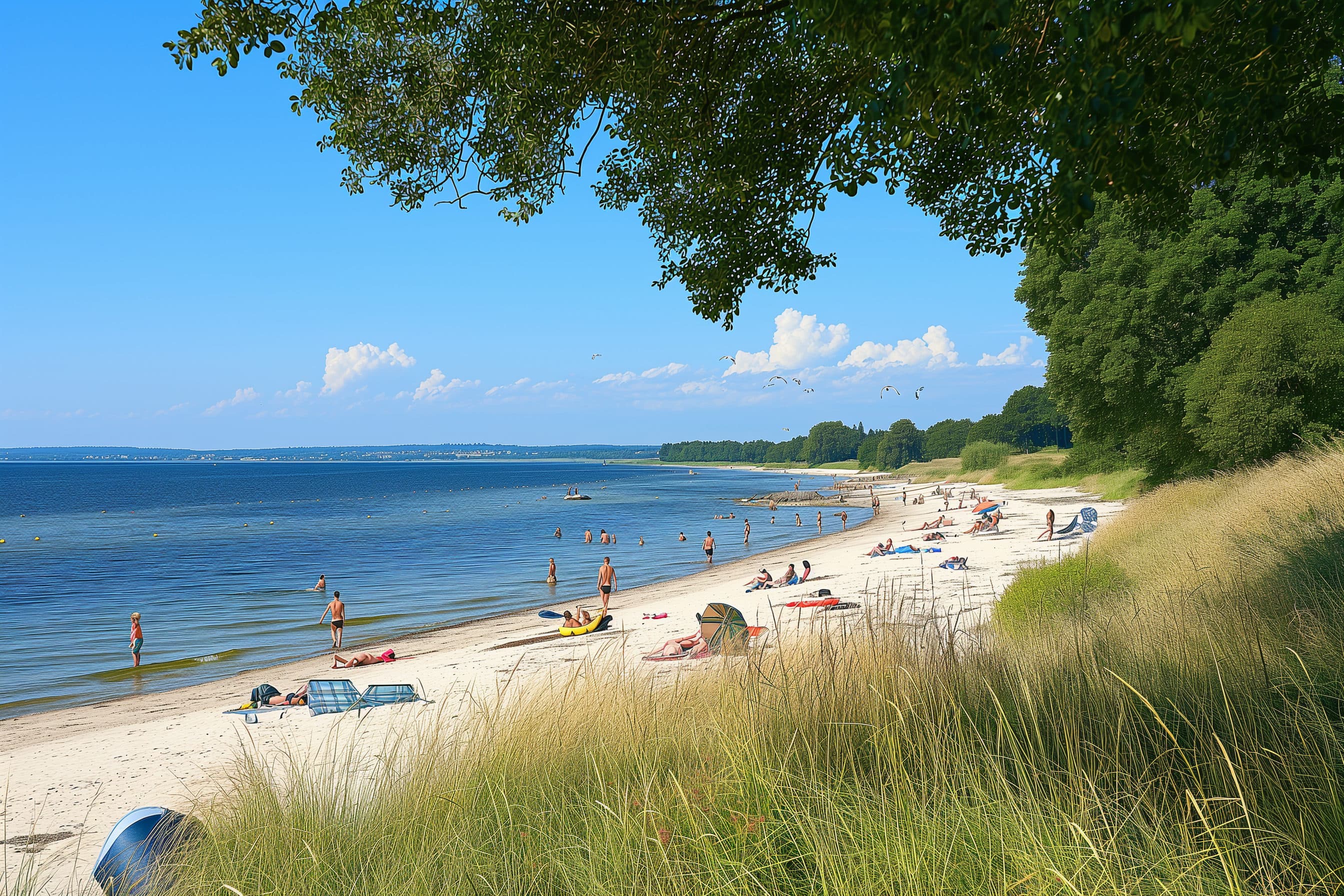
The forest itself is the other great free resource. Germans treat woodland as a shared playground, and a Waldspielplatz (forest playground) or a marked family walking trail with stations to climb and balance on turns an ordinary afternoon into an adventure. Many regions have a Barfußpfad (barefoot sensory path) or a Baumwipfelpfad (elevated treetop walkway) that children love. For a bigger thrill, the Kletterwald or Hochseilgarten (high-ropes adventure course) sends older children and teenagers through rope bridges and zip lines strapped into a harness, with courses graded by height and difficulty and staff on hand. Lakes and swimming spots round out the summer, and because forests, lakes and trails are covered fully elsewhere, see our chapter on outdoor activities and parks for the detail.
The Family-Friendly Machine: Discounts, Facilities and Days Out
Once you start looking, you notice that Germany quietly assumes families will be out and about, and prices and facilities are set up accordingly. Family tickets are the norm rather than the exception: museums, zoos, pools and public transport nearly all offer a Familienkarte or family rate, and many cities and regions sell a broader Familienpass giving reduced entry across dozens of attractions for a year. On public transport, young children travel free and older children at a reduced rate, and many regional day tickets are designed for a whole family to travel together cheaply, which makes car-free days out realistic.
The practical facilities are just as reassuring. A Wickelraum (nappy-changing room) is standard in shopping centres, motorway services, museums and larger stations, a Stillraum (breastfeeding room) is common, and the Bollerwagen handcart mentioned earlier is a genuine part of German family life for hauling children and gear to the park or the lake. Restaurants and cafes routinely have a Hochstuhl (high chair) and often a small children’s menu. During the school holidays, towns and cities run a Ferienprogramm, an organised programme of low-cost holiday activities for children, from craft workshops to sports days and excursions; these are advertised through the city’s family portal and the local Familienzentrum and are excellent value, as well as a good way for children to make friends. Birthday culture is its own institution: a Kindergeburtstag is often a proper hosted event, and indoor playgrounds, pools, climbing walls and zoos all offer party packages, which takes the pressure off hosting at home.
On the money side, families in Germany are supported by real financial benefits, most importantly Kindergeld (the monthly child benefit paid for each child) and Elterngeld (parental allowance after a birth), but those belong to a different chapter. For how the benefits work and how to claim them, see our guide to child and family benefits rather than treating a day out as a budgeting exercise. If your idea of a family break includes warm water and relaxation, many German Thermen (thermal spa complexes) have dedicated family and children’s areas with slides and shallow pools; our chapter on wellness and spas explains which are suitable for children and which are adults-only.
The Family Year: Seasons and Celebrations
German family life follows the seasons closely, and knowing the rhythm helps you plan. School holidays are staggered by Bundesland (federal state), so the summer break rolls across the country in waves rather than all at once; this is deliberate, to spread traffic and crowds, and it means the dates that apply to you depend on where you live. Check your state’s Ferien calendar early each year, because it drives everything from holiday-programme sign-ups to the price of flights.
The year has a set of celebrations children grow up with. In autumn comes Sankt Martin, when children carry homemade paper lanterns through the streets in an evening Laternenumzug (lantern procession), often behind a rider dressed as Saint Martin, singing lantern songs; it is one of the loveliest early experiences of German community life for a small child. Nikolaus on the 6th of December has children leaving out a cleaned boot to be filled with sweets and small gifts overnight. Through Advent the Weihnachtsmarkt (Christmas market) is a highlight, with a carousel, roasted almonds, hot chocolate and often an ice rink, and it is very much a place to take children in the early evening. In the new year, Fasching, Karneval or Fastnacht (regional names for carnival) brings costume days at Kita and school and children’s parades where sweets are thrown from the floats. These traditions, and how each region celebrates them, are covered in our chapter on German festivities and local traditions, so here it is enough to know they are coming and that children are always at the centre of them.
Do not overlook the events your own Kita (daycare) and school will put on, because they become the anchors of your family’s local life. The Sommerfest (summer party), the Laternenfest around Sankt Martin, the flea markets and the seasonal celebrations are where you will meet the other parents in your child’s group, and turning up matters more than anything you bring. Summer itself is lived largely outdoors, at the Freibad, the lake and the playground, often stretching late into the long northern evenings.
Finding English-Language and International Family Life
Arriving with children and little German can feel isolating at first, but most cities have more English-language and international family activity than newcomers expect, and finding it early makes a real difference. International and bilingual playgroups, English story times at libraries or bookshops, and parent-and-baby groups run in English exist in every larger city and many smaller ones. The fastest routes to them are the local expat and international parent networks, which share recommendations, second-hand gear and meet-ups; our chapter on expat groups and clubs explains how to find and join them. Facebook groups for international parents in your city, neighbourhood apps and the noticeboard at the Familienzentrum are all worth checking in your first weeks.
City family portals are the other underused tool. Most municipalities run a family website or a printed Familienwegweiser (family guidebook) listing playgroups, holiday programmes, advice services and events, and there are national and city apps that map playgrounds, indoor play, swimming pools and toilets with changing facilities. These are usually in German, but a translation app makes them perfectly usable, and they are the quickest way to answer the daily question of where to take the children this afternoon.
One honest note for parents arriving from other cultures: German family life is deliberately outdoorsy and independence-focused, and this shows up in what children do. They are dressed for all weather and expected to play outside in the cold and rain, they are given more freedom to roam, climb and take small risks than is common elsewhere, and by school age many walk or cycle to school and to friends’ houses on their own. This is a feature, not a gap in supervision, and it is one of the things children adapt to fastest and often love. The thinking behind it, and how to settle into it as a parent, is the subject of our chapter on German family dynamics and parenting.
Getting Started With Your Family
The simplest way to begin is small and local. In your first weeks, find the nearest Spielplatz and Indoor-Spielplatz, get a library card, and locate your local Familienzentrum, because those three cover most ordinary afternoons and put you in the path of other parents. Sign your children up for a swimming course early so they can work toward the Seepferdchen, and look up your Bundesland’s school holiday dates so you can book onto a Ferienprogramm when the time comes.
For the bigger outings, keep a short list to work through as the seasons allow: a zoo or Tierpark near you with a family season pass, one of the major Freizeitparks for a special day, a science museum or Miniatur Wunderland for a rainy weekend, and a Märchenwald or forest playground for gentle afternoons outdoors. Buy attraction tickets online in advance, always ask for the Familienkarte, and take advantage of children travelling free or reduced on public transport. Above all, lean into the German way of doing this: dress everyone for the weather, get outside whichever way the day points, and let your children have a little more freedom than feels natural at first. That, more than any single attraction, is what family life in Germany is really about.
Sources
The information in this chapter draws on the official sources and publications listed below, last reviewed in July 2026. It is general guidance for orientation, not individual legal, tax, or medical advice.