Outdoor Adventures and Hiking
13 min read
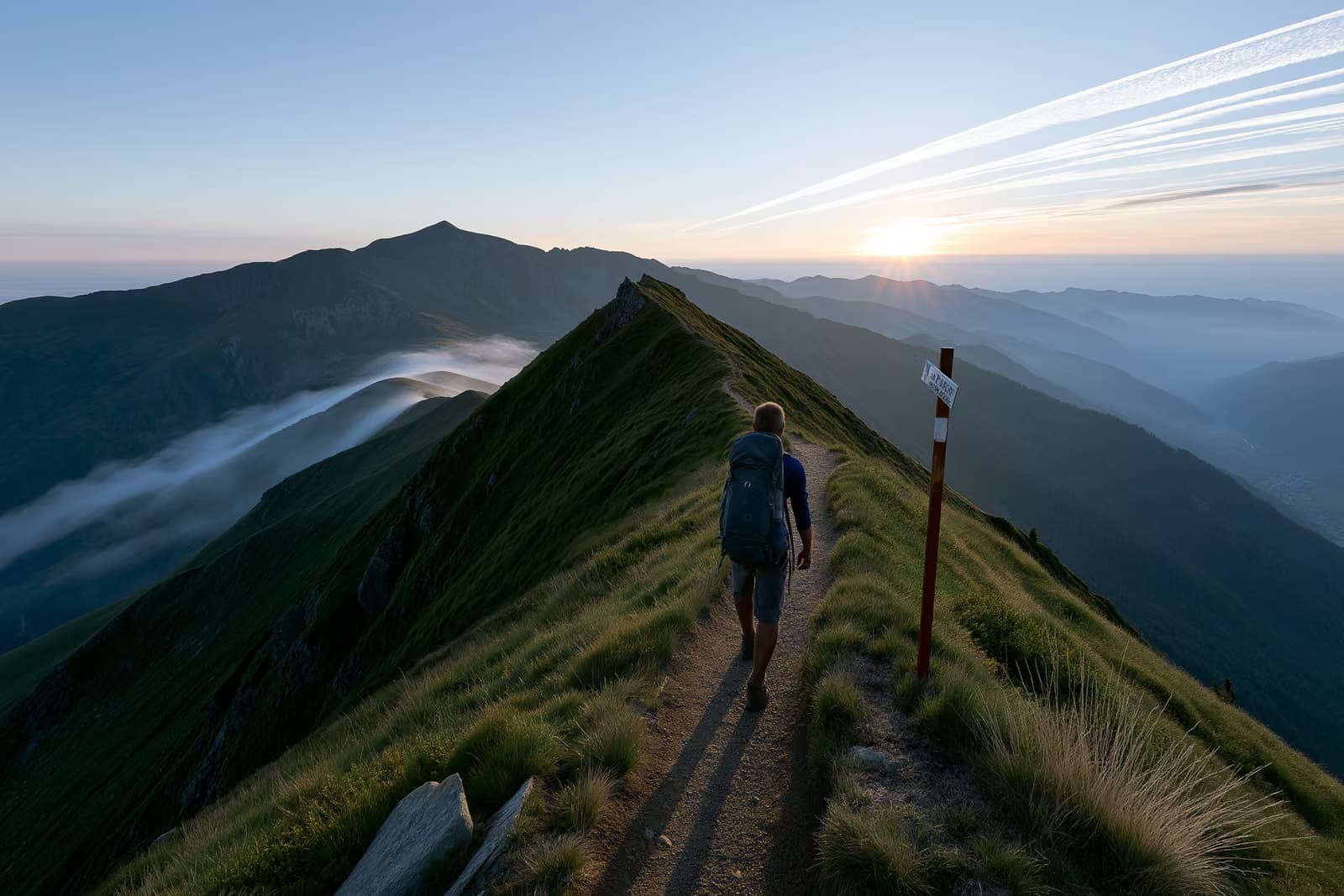
Germany is one of the best places in the world to be a hiker, and outdoor adventure here is a serious, well-organised pursuit rather than an occasional novelty. This chapter is for foreigners who want to get out into the mountains, forests and river valleys properly: it explains the culture of Wandern (hiking), points you to the great regions and long-distance trails, and walks you through the alpine-club, mountain-hut and safety systems that make ambitious hiking possible. It also covers the wider outdoor-adventure scene - climbing, trail running, camping rules - and the practical things a newcomer needs, from gear and route-planning apps to reaching a trailhead by train. For everyday green space, urban parks and the right to roam in the forest as a lifestyle, see our companion chapter on outdoor activities and parks; here we focus on hiking and outdoor adventure as an activity you can throw yourself into.
The Wandern culture, and why the trails are so good
Wandern, the German word for hiking, is close to a national pastime. On any dry weekend you will see people of every age heading for the hills in proper boots, and hiking is treated as ordinary exercise and social life rather than an extreme sport. That popularity is why the country’s trail network is so exceptionally good. Germany has one of the densest and best-marked systems of marked paths anywhere in the world, and it is looked after almost entirely by volunteers. Local hiking clubs, the Gebirgs- und Wandervereine, adopt sections of trail and send out Wegewarte (path wardens) to keep them cleared and signed, all working to nationwide standards set by the Deutscher Wanderverband, the German Hiking Federation that acts as the umbrella body for these clubs.
Finding your way relies on Wegezeichen, painted waymarks on trees, rocks and posts. A trail is identified by a simple coloured symbol - a stripe, a diamond, a cross or a shape such as a coloured “X” or a stylised letter - repeated at eye level the whole way along, with extra marks at junctions and a reassuring dab of paint soon after each turn so you know you are still on the right path. Long-distance routes carry their own dedicated logo. Once you learn to follow the symbol for the route you have chosen, you can often hike all day without a map, though you should never rely on that alone in the mountains. Many of the best routes now also carry a Qualitätsweg seal from the “Wanderbares Deutschland” quality scheme, which certifies scenery, surface and signposting.
The social side has its own traditions. Volkswandern, or Volksmärsche, are relaxed non-competitive group walks, often a fixed loop of ten or twenty kilometres, that end with food, drink and music rather than a finish-line clock. The Deutscher Wandertag is a large annual hiking festival that moves to a different region each year and draws tens of thousands of walkers. And Germans genuinely hike in all seasons and weather: the local saying that there is no bad weather, only the wrong clothing, is meant seriously, and a bit of rain or a grey November day is no reason to stay in. You can read more about that all-weather outdoor mindset, and about everyday walking and green space, in the outdoor activities and parks chapter.
One tradition worth adopting early is the Einkehr: the habit of building a hike around a stop at a Berggasthof or Hütte, a mountain inn or hut, for a warm meal and a drink. Half the pleasure of a German hiking day is arriving footsore at a rustic inn for Kaiserschmarrn, a plate of hearty food or a cold Radler (shandy) on a sunny terrace before walking back down. Many popular routes are planned deliberately to pass one, and it is a large part of why hiking here feels sociable rather than austere. It also means you rarely have to carry a full picnic on a well-travelled trail, though you should always pack more than you think you need whenever you head somewhere remote.
The great hiking regions and long-distance trails
The most dramatic hiking is in the Bavarian Alps in the far south. This is home to the Zugspitze, at 2,962 metres Germany’s highest mountain, reachable on foot by fit and experienced walkers or by cog railway and cable car for everyone else. Nearby stands the Watzmann above Berchtesgaden, one of the country’s most serious peaks, and the Berchtesgaden National Park around the fjord-like Königssee. The Alps are also where you find Germany’s Klettersteige, the German term for a via ferrata: a route protected by a fixed steel cable and iron rungs that lets you move through steep rock with a harness and clip-in set. These are exposed and demand proper equipment and a head for heights, not something to improvise.
Away from the Alps, the mid-height ranges offer superb multi-day walking. The Black Forest (Schwarzwald) in the south-west is crossed by the Westweg, one of Germany’s oldest long-distance trails, running roughly 285 kilometres north to south from Pforzheim to the Swiss border near Basel through dark firs, high moors and open summits. In the east, Saxon Switzerland (the Sächsische Schweiz) is a maze of sandstone towers and gorges known as the Elbsandsteingebirge, the Elbe Sandstone Mountains, threaded by the Malerweg or “Painters’ Way”, about 112 kilometres of some of the most photogenic terrain in the country and a magnet for rock climbers. The Harz in central Germany is built around the Brocken, at 1,141 metres the highest peak of northern Germany and often wrapped in mist; the Harzer-Hexen-Stieg, the “Witches’ Trail”, crosses the whole range for around 100 kilometres and passes near the summit.
The great rivers have their own high trails. Along the Rhine, the Rheinsteig runs some 320 kilometres from Bonn to Wiesbaden on the slopes above the water, past vineyards and castles, while the Moselsteig follows the looping Mosel for roughly 365 kilometres from the Luxembourg border at Perl to Koblenz. Further north, the Rothaarsteig traverses the wooded hills of the Rothaargebirge and Sauerland for about 154 kilometres, and the volcanic Eifel west of the Rhine offers quieter, gentler walking through crater lakes and old forests. These named routes are part of a wider web of Fernwanderwege (long-distance trails), some of which link into the European long-distance E-paths that cross the whole continent. These are only the best-known names. Central Germany has the Rennsteig, a historic ridge trail of around 170 kilometres running the length of the Thüringer Wald (Thuringian Forest) and one of the country’s oldest waymarked routes, while the far south-west corner of Bavaria holds the Allgäu Alps, a paradise of green alpine meadows and sharp peaks that ranks among the best hiking country in the whole range. Between the Alps and the lowlands lie the gentle Alpine foothills, the Voralpenland, whose moraine lakes and rolling hills give wonderful easy walking with the mountains always on the horizon. Wherever you are living in Germany, a rewarding multi-day trail is rarely more than a train ride away.
Mountains, huts and safety: the alpine system
Serious mountain hiking in Germany runs through one central institution: the Deutscher Alpenverein (DAV), the German Alpine Club. It is one of the largest mountaineering organisations in the world, with roughly 1.57 million members, and it maintains an enormous shared infrastructure - more than 320 mountain huts with over 20,000 beds and something like 30,000 kilometres of paths across the Eastern Alps. You join through a local section (a Sektion), and membership brings real benefits: reduced overnight rates in DAV and partner-club huts, reciprocal rights in the alpine clubs of Austria, Switzerland, Italy and South Tyrol, courses in navigation and mountain safety, group tours, and included alpine rescue and liability cover. For anyone who plans to hike in the mountains more than a couple of times a year, it usually pays for itself. Joining a section is also a good way to find partners and learn skills, which fits with the wider guidance in the joining sports clubs chapter.
The huts themselves (Hütten) are what make long alpine days possible: you can walk hut to hut for a week carrying only a daypack, sleeping and eating along the way. If the weather turns or you are hurt, mountain rescue is handled by the Bergwacht, the volunteer mountain-rescue service, which you reach through the general European emergency number 112. Knowing how hard a route will be before you start is essential. Alpine hiking paths are colour-graded on signs - broadly blue for easy, red for moderate and demanding, and black for difficult - and the German and Swiss alpine clubs share a well-known SAC scale that runs from T1, an easy path, up to T6, difficult alpine terrain. On maps and signs you will also see the distinction between a Bergwanderweg, a marked mountain path, and an Alpiner Weg or alpine route, which may be unmarked, exposed and require sure-footing, climbing skill or glacier experience. Match the grade honestly to your own ability.
Mountain weather is the real hazard, and it is not like the lowlands. The classic danger in summer is the afternoon Gewitter, a thunderstorm that builds over the peaks from late morning; the standard defence is to start very early and be off the summits and ridges by early afternoon. Carry proper Ausrüstung (equipment): sturdy boots with grip, warm and waterproof layers even on a sunny morning, plenty of water and food, a paper map, sun protection and a charged phone. Tell someone your route and your expected return. If you do get into trouble and need to signal for help without a phone, the international alpine distress signal is six signals of any kind - a whistle blast, a shout, a light flash - given within one minute, then a minute’s pause, then repeated; three signals per minute is the reply that says help is coming. None of this is meant to put you off. It is simply the ordinary, responsible way that experienced hikers here treat the mountains, and adopting it early makes everything that follows safer and more enjoyable.
Beyond hiking: climbing, biking and other adventures
Hiking is the gateway to a whole outdoor-adventure scene. Climbing has boomed, and almost every German city now has at least one large Kletterhalle (indoor climbing gym) where beginners can learn to boulder or rope-climb cheaply and safely year-round; for those indoor venues and how to get started, see the fitness centers and gyms chapter. Outdoors, Germany has world-class rock. The Frankenjura in northern Bavaria is one of the most famous sport-climbing areas on the planet, a landscape of hundreds of limestone crags where the modern “redpoint” style of hard climbing was largely developed. The sandstone of Saxon Switzerland is a climbing world of its own with strict traditional ethics. Mountain biking shares many of the same trails and forests; for routes, bike types and the rules of the road and trail, the bicycle culture and routes chapter goes into detail.
Lower-key pursuits are just as much part of the culture. Trail running on marked paths is increasingly popular, Nordic walking with poles is a common sight on gentler routes, and Geocaching, a GPS treasure hunt using hidden containers, is a fun way to discover corners of a region with children. Paddling a Kanu or kayak on the calmer rivers and lakes is a classic German holiday, though anything on the water - canoeing, sailing, windsurfing - is covered in the water sports and activities chapter, and everything on snow, from ski touring to cross-country, belongs to winter sports opportunities.
One thing that genuinely surprises newcomers, especially from Scandinavia, is that wild camping is not a right in Germany. Unlike the Nordic “freedom to roam”, Wildcampen - pitching a tent overnight in the open countryside, a forest or beside a lake - is generally prohibited, and the rules are set by each Bundesland. Bavaria is among the strictest; a few states such as Brandenburg and Mecklenburg-Vorpommern are a little more relaxed and tolerate a single night for hikers under some conditions. Camping in a protected nature reserve can draw fines running into the hundreds or even thousands of euros. This is not legal advice, and you should check the current rule for your state, but the safe assumption is that you camp at an official campsite. The good news is that a growing network of over 200 designated Trekkingplätze - simple, bookable back-country pitches - now offers a legal way to sleep out on a multi-day walk.
Getting started: gear, apps and your first trips
You do not need much to begin. A pair of well-fitting boots or trail shoes, a rain jacket, a small rucksack, water and a snack will take you a long way on marked lowland trails. As your ambitions grow, Germany has excellent outdoor retailers: Globetrotter is the big domestic chain of large adventure stores with knowledgeable staff, and the French chain Decathlon offers reliable gear at low prices and is ideal for a first kit. Buy boots in person, walk them in before a big day, and add layers, poles and better waterproofs as you need them rather than all at once. For planning, most hikers here use Komoot, a route-planning app founded in Potsdam that is close to the default in Germany, or Outdooractive, another strong German platform; both let you find, download and follow routes offline on your phone, which you should always back up with a paper map in the mountains. For serious alpine tours, the alpine clubs run their own app, alpenvereinaktiv, which carries detailed route descriptions, current condition reports and the official difficulty grades, and it pairs naturally with DAV membership. Whichever tool you use, download your map and route before you set off, since mobile coverage disappears in deep valleys and on remote ridges.
Reaching the trail is easy because the public-transport network runs deep into the countryside. Many trailheads sit at a village station or bus stop, and the nationwide Deutschlandticket makes regional trains and buses a flat monthly flat rate - see the Deutschlandticket chapter - so you can often reach a mountain or forest without a car and walk a linear route from one station to another. Planning point-to-point hikes this way is one of the quiet pleasures of hiking in Germany. If you would rather go with people, joining a DAV section or a local Wanderverein gives you led tours, courses and company, and hiking is one of the friendliest of the country’s many club activities described in popular sports in Germany.
Think about the seasons as you plan. Late spring and early summer bring wildflower meadows and long daylight but also lingering snow on high alpine paths, so check conditions before an ambitious mountain route. High summer is reliable for the Alps but crowded and hot in the lowlands, where forest trails stay pleasantly shaded. Autumn is many hikers’ favourite season, with clear air, golden woods and quiet paths, while winter turns lower ranges like the Harz and Black Forest into fine walking or snowshoeing country even when the high Alps are the preserve of ski-tourers. Whatever the month, start with something modest, watch the forecast, and turn back without embarrassment if the weather or your legs tell you to; the mountain will still be there next weekend.
If you stay in a mountain hut, learn the etiquette in advance. Book ahead, because popular DAV Hütten fill up in summer, and always cancel if your plans change so your bed can be released. Bring a Hüttenschlafsack, a thin sleeping-bag liner that is required for hygiene in the shared dormitories, and indoor shoes are usually provided at the door. Most huts offer Halbpension (half-board), an evening meal and breakfast, which saves you carrying food; cash is still wise as card payment can be patchy high up. Above all, hike responsibly: stay on marked paths to protect fragile ground, take all your rubbish out with you, close pasture gates, keep dogs under control near grazing animals, and leave no trace of your visit. Start with easy, well-marked day walks near where you live, build your fitness and confidence, learn to read the weather and the grades, and the whole extraordinary landscape of German hiking - from a gentle forest loop to a hut-to-hut week in the Alps - opens up in front of you.
Sources
The information in this chapter draws on the official sources and publications listed below, last reviewed in July 2026. It is general guidance for orientation, not individual legal, tax, or medical advice.