Seasonal and Holiday Celebrations
13 min read
Germany runs on a seasonal calendar of celebrations, and one of the real pleasures of living here is learning to read it. Each season brings its own events, its own smells and its own reasons to be outside with other people, and once you know what is coming you can plan your year around it. This chapter is your map to the seasonal celebrations as things that actually happen and that you can go to - the winter Christmas-market season, the spring bonfires, the long summer light, the autumn harvest. It is about experiencing the year, not decoding it. For what these days mean culturally and how Germans observe them, see our guide to German festivities and local traditions; for which of them are official days off and what closes, see public holidays and customs. Here we stay on one question: what is happening this season, and how do you take part?
Winter: The Big Season for Seasonal Celebrations
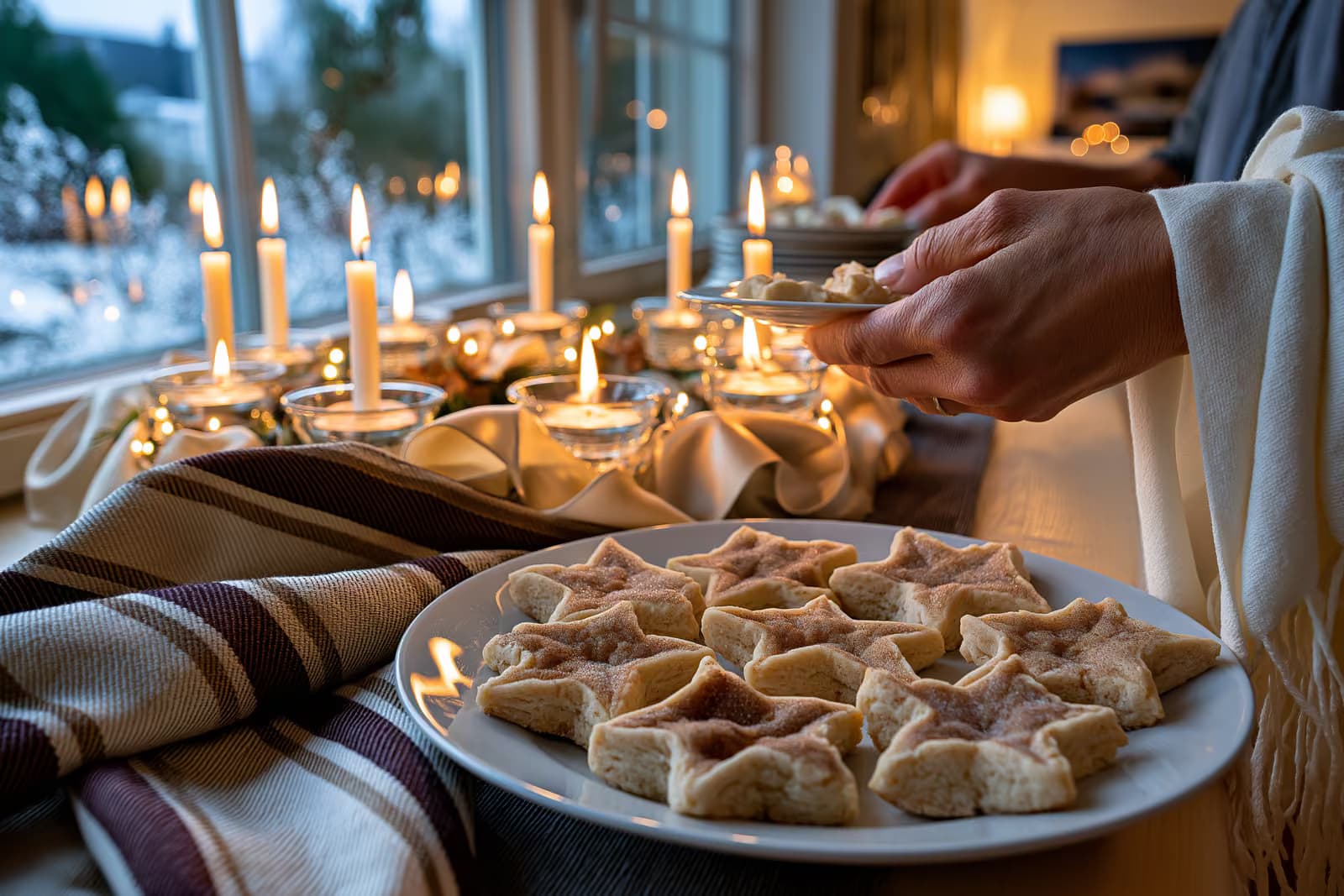
Winter is the peak of the German events calendar, and the reason is the Weihnachtsmarkt (Christmas market). From late November until the 23rd or 24th of December, almost every town of any size fills a square with wooden stalls, fairy lights and the smell of roasting almonds. This is not a single attraction you visit once; it is the season’s main event, a place people go again and again through Advent to meet friends after work, to shop slowly for handmade gifts, and above all to stand around drinking Glühwein (hot spiced mulled wine) in the cold. Larger cities run several markets with different characters - a big central one, smaller neighbourhood ones, and sometimes a medieval-themed or a purely craft-focused market - so it pays to find the ones near you rather than only the famous names.
The practical mechanics are worth knowing before your first visit. Your Glühwein comes in a real ceramic mug, and you pay a Pfand (a deposit, usually a few euros) on top of the drink; hand the mug back to reclaim it, or keep the mug as a souvenir and forfeit the deposit, which is how many people build a collection of dated market mugs over the years. Bring cash, because not every stall takes cards. Dress far warmer than you think you need to, because you will be standing still outdoors for hours. Beyond the Glühwein you will find Feuerzangenbowle (a rum-soaked sugarloaf set alight over mulled wine), Lebkuchen (spiced gingerbread), grilled sausages and regional specialities that change from region to region. The most celebrated markets - Nürnberg, Dresden, Cologne and others - draw visitors from across Europe, and we cover the standout ones and the food in more detail in major German festivals and food festivals and events. What matters for your first German winter is simpler: the Weihnachtsmarkt is where the season lives, and going often is the point.
The winter events season builds toward Silvester (New Year’s Eve), which Germany marks louder than almost any other night of the year. Cities host public celebrations, the largest being the free party at the Brandenburg Gate in Berlin, an access-controlled event with a stage programme and a fireworks display that is broadcast live on national television. Beyond the official parties, Silvester is a genuinely participatory fireworks night: private fireworks are sold in the shops for only a few days at the end of December, and at midnight ordinary people set off rockets and firecrackers from streets, balconies and squares all over the country, so the sky over any town becomes its own display. Be aware that many cities now designate restricted or firework-free zones in busy centres for safety, so check local rules if you plan to set off your own. One old custom you will hear about but should not try is Bleigießen (telling fortunes by dropping molten lead into water) - the lead version was effectively banned across the EU in 2018 under chemical-safety rules, and it survives only in a harmless wax form (Wachsgießen). And whatever else happens, German television will show Dinner for One, a black-and-white British comedy sketch broadcast every New Year’s Eve for decades, whose catchphrase “same procedure as every year” has become a national in-joke.
Winter offers more than the market and the midnight rockets. Many cities set up an outdoor Eisbahn (ice rink) or a small Winterdorf (winter village) that runs through the season, and the days right after New Year have their own events: Silvesterläufe and Neujahrsläufe (New Year’s Eve and New Year’s Day fun runs) are held in towns all over the country, and hardy swimming clubs stage a Neujahrsschwimmen, a bracing New Year’s swim in an icy lake or river that draws a crowd of spectators. In early January you may also meet the Sternsinger, groups of children dressed as the Three Kings who go from door to door collecting for charity and chalking a blessing above the doorway. None of this needs a ticket - it is simply what the season puts on around you.
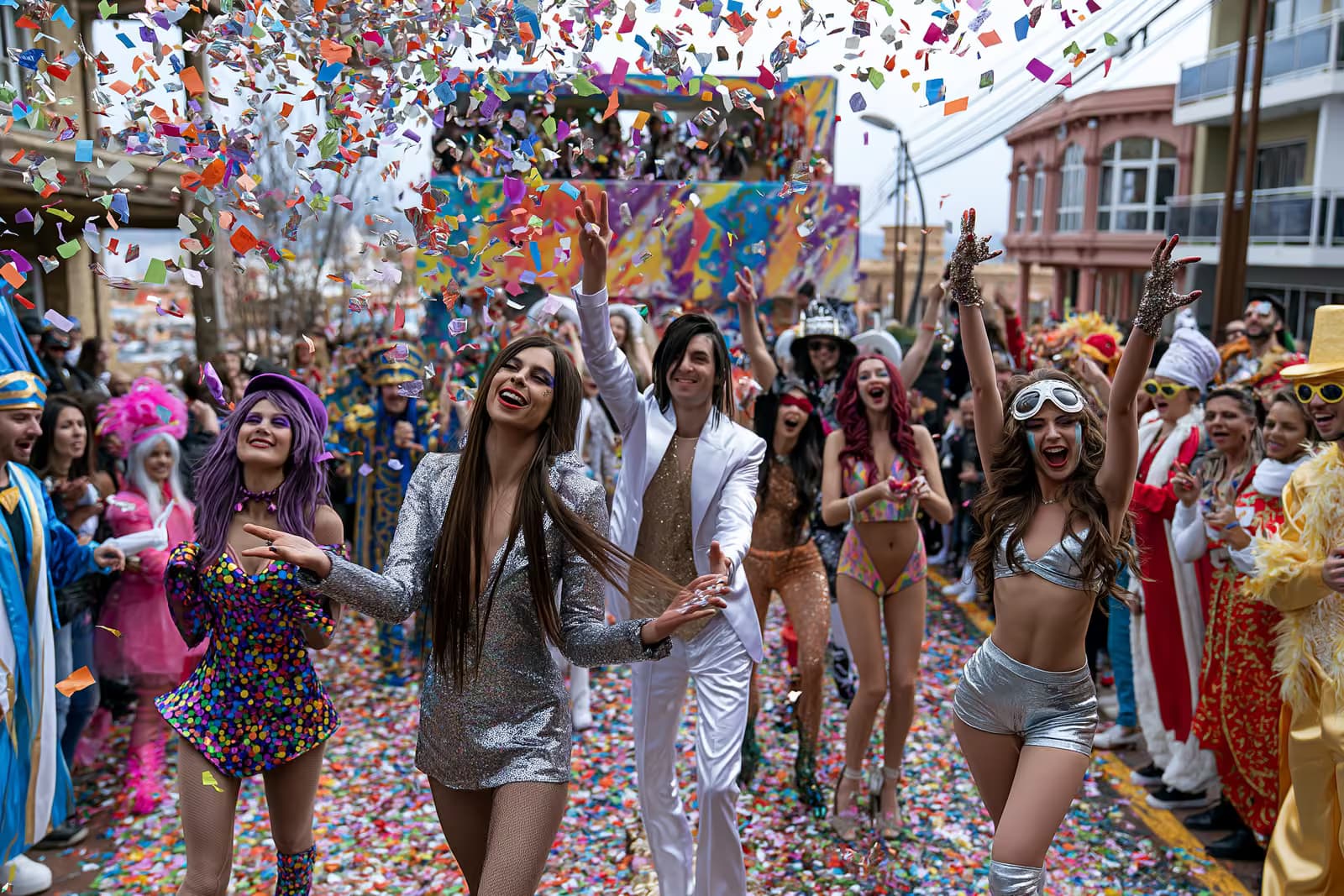
The other thing winter does is lead into carnival. In the Rhineland and the Catholic south, the “fifth season” of Fasching or Karneval officially opens in November and runs through winter to a wild peak in the days before Lent, filling the streets with costumes, parades and organised silliness. It is a whole world of its own, and we hand it in full to our chapter on street parades and carnivals. For now, just know that if you live in Cologne, Mainz, Düsseldorf or the surrounding regions, the winter events season does not end with Silvester - it is only getting started.
Spring: Bonfires, Witches’ Night and the First Warm Evenings
Spring brings the calendar back outdoors, and its events cluster around Easter and the turn into May. Ostern (Easter) is the season’s anchor, and while the family customs belong to the traditions guide, the public event to look out for is the Osterfeuer (Easter fire). Especially in northern and rural Germany, villages and clubs build large bonfires and light them on the Saturday or Sunday of the Easter weekend, drawing the whole community out into the cold spring night to stand around the flames, eat grilled sausages and drink beer. It is a genuine open-air event, often organised by the local volunteer fire brigade or a village association, and turning up is as easy as following the crowd toward the smoke. Around Easter you will also find Ostermärkte (Easter markets) selling decorated eggs and spring crafts, a smaller, sunnier cousin of the Christmas market.
The most spectacular spring event is Walpurgisnacht (Walpurgis Night) on the night of the 30th of April. Rooted in old folklore about witches gathering on the mountains, it has become a night of costumes, bonfires and street parties, and its epicentre is the Harz mountains in central Germany. Towns such as Thale, Schierke and others around the Brocken, the region’s highest peak, host large organised celebrations with music, market stalls and people dressed as witches and devils, and the events draw visitors from all over the country. If you want one genuinely distinctive German spring spectacle to travel for, this is it - and the Harz is an easy target for a weekend trip.
The same night rolls straight into the 1st of May. The evening of the 30th of April is Tanz in den Mai (dance into May), marked with parties and public dances, and in many regions communities raise a Maibaum (maypole), a tall decorated pole set up on the village square or outside the town hall with music, food and beer. The 1st of May itself is a public holiday with its own political and traditional events, and we leave the day-off status and the labour-movement side of it to public holidays and customs. From here the Frühlingsfest (spring festival) season also opens: many cities hold a spring version of the big fairground-and-beer-tent Volksfest, the same format as the autumn folk festivals but welcoming the warm weather. Those large traditional fairs are covered in our chapter on traditional folk festivals. The spring pattern is easy to remember: the fires and the witches at the end of April, then the maypoles and the fairs as the evenings finally turn warm.
Summer: Solstice Fires, Open-Air and the Long Light Evenings
Summer changes the character of the calendar completely. The events are no longer about huddling around warmth; they are about staying out late while the light lasts. The traditional marker of high summer is the Sommersonnenwende (summer solstice) around the 21st of June, and in many rural and southern areas it is celebrated with a Johannisfeuer (St John’s fire), a midsummer bonfire lit around the 24th of June to mark the longest days. Like the Osterfeuer, these are community events with music, food and drink, and they are worth seeking out for the simple pleasure of a warm night around a fire. The broader feeling of summer, though, is less about single dated events and more about the long light evenings themselves - a northern European summer keeps the sky bright until well after nine, and Germans spend those hours in beer gardens, parks and by lakes with a genuine sense of making the most of the season.
That is also when the open-air season runs at full strength. Cities and towns fill the warm months with outdoor concerts, open-air cinema (Freiluftkino), open-air theatre and festival stages, and the summer is the heart of the German music-festival year. The big camping festivals and the city concert series are covered in music and arts festivals, and the open-air cinema and theatre culture in cultural activities in Germany. Alongside the ticketed events runs the free-to-wander season of the Stadtfest and Straßenfest (town festival and street festival), when a district or a whole town closes its streets for a weekend of stages, food stalls and neighbours out in the sun. These local festivals are one of the easiest ways to feel part of where you live, and finding the ones on your doorstep is the subject of local cultural events.
Summer is also the peak of the Volksfest and Schützenfest season. The Schützenfest, a traditional marksmen’s festival with a parade, a funfair and beer tents, is a huge deal across much of northern and western Germany, and towns you have never heard of will throw one of the biggest weekends of their year. These large fairground celebrations, in both their summer and autumn forms, belong to our traditional folk festivals chapter, but the point for the seasonal calendar is that summer is when the funfair comes to town almost everywhere. Between the solstice fires, the open-air stages, the street festivals and the Volksfeste, a German summer offers something to go to nearly every weekend - the hard part is choosing.
Autumn: Harvest, Wine and Lantern Processions
Autumn is the harvest season, and its celebrations turn on the gathering-in of the year’s food and wine. The Erntedankfest (harvest thanksgiving) is the traditional marker, usually held on the first Sunday of October. It is a church and village festival rather than a public holiday, and where it is observed you will find churches decorated with sheaves of grain, fruit and vegetables, sometimes followed by a procession, a village fair or a shared meal. It is a quieter, more local event than the big fairs, but if you live in a smaller town or a rural area it is one of the warmest ways to see the community come together. Running through the same weeks is the wine-harvest season, when the wine regions along the Mosel, the Rhine and in Franconia hold their Weinfeste (wine festivals) to celebrate the new vintage with tastings, music and the crowning of a local wine queen. Those, and the food side of autumn, are covered in food festivals and events.
Autumn is of course also Oktoberfest season. Despite the name it begins in mid-to-late September in Munich, and it has spawned countless smaller Oktoberfest-style celebrations across the country. It is the single most famous German event of the year and it has a chapter to itself: see the Oktoberfest for how to actually go, what to wear and how the tents work. For the seasonal calendar, treat it as the flagship of the autumn Volksfest wave, the biggest of the many fairground-and-beer-tent festivals that fill September and October.
As the nights draw in, the season turns to lantern light. Around Martinstag (St Martin’s Day) on the 11th of November, towns and neighbourhoods hold a Laternenumzug (lantern procession), in which children walk through the streets after dark carrying paper lanterns they have often made themselves, singing traditional songs, frequently following a rider dressed as St Martin on a horse and ending at a bonfire. It is one of the most charming events in the German year and it is deeply tied to Kita and primary school, so if you have young children this is a highlight not to miss - and even if you do not, the sight of a street full of glowing lanterns is worth stepping out for. Late autumn also brings the arrival of Halloween, a relative newcomer in Germany that sits somewhat awkwardly beside these older customs but is now widely marked with pumpkins and costume parties, alongside a growing season of Kürbis (pumpkin) events and farm festivals, which we cover in food festivals and events. The end of autumn shades into the year’s quieter observances - Allerheiligen (All Saints’) and Totensonntag are days of remembrance rather than events to attend, and their meaning and their statutory status belong to the traditions guide and to public holidays and customs respectively. Then, almost immediately, the Weihnachtsmärkte reopen and the whole cycle begins again.
Living the German Year of Seasonal Celebrations
Once you have been through a full cycle, the seasonal celebrations stop feeling like a list of foreign festivals and start feeling like the shape of your own year. The practical trick is to know what each season brings so you can catch it: Christmas markets and Silvester in winter, bonfires and maypoles in spring, solstice fires and open-air everything in summer, harvest and lantern processions in autumn. You do not need to travel far. Almost every event described here has a local version, and the single best source for finding the one near you is our chapter on local cultural events, which explains how to read municipal listings, neighbourhood notices and the local press. When you do want to travel for the marquee versions - a Christmas market in another city, Walpurgisnacht in the Harz, a wine festival on the Mosel - the Deutschlandticket makes seasonal day-trips genuinely cheap on regional trains, and it turns the whole country into a weekend map of things to go and see.
Many of these celebrations are built around children, which makes them an easy way in for families. The Laternenumzug, the Easter egg hunts, the Nikolaus visits and the funfair rides are all aimed squarely at kids, and joining in through your child’s Kita or school is often how newcomers first get pulled into the local calendar. Our guide to family-friendly activities has more on making the most of that. Two pieces of practical advice apply across the whole year. First, dress for it: German celebrations are overwhelmingly outdoor and they run through cold, rain and snow regardless, so warm layers and waterproof shoes are what let you actually enjoy standing at a market or a bonfire for hours. Second, bring cash and a willingness to talk to strangers, because these events run on small stalls and shared tables, and the point of them is the company as much as the spectacle.
The best next step is simply to look up what is happening this season where you live and go to one thing. Check the two sibling guides so you go informed - German festivities and local traditions for what a celebration means and how to take part respectfully, and public holidays and customs for which days are official time off and what will be closed. Then pick the nearest Fest and turn up. Living through a full German year of celebrations, season after season, is one of the quiet joys of being here, and the only way to learn the rhythm is to start walking toward the smoke, the lights and the crowd.
Sources
The information in this chapter draws on the official sources and publications listed below, last reviewed in July 2026. It is general guidance for orientation, not individual legal, tax, or medical advice.