Learning Culture Through Volunteering in Germany
13 min read
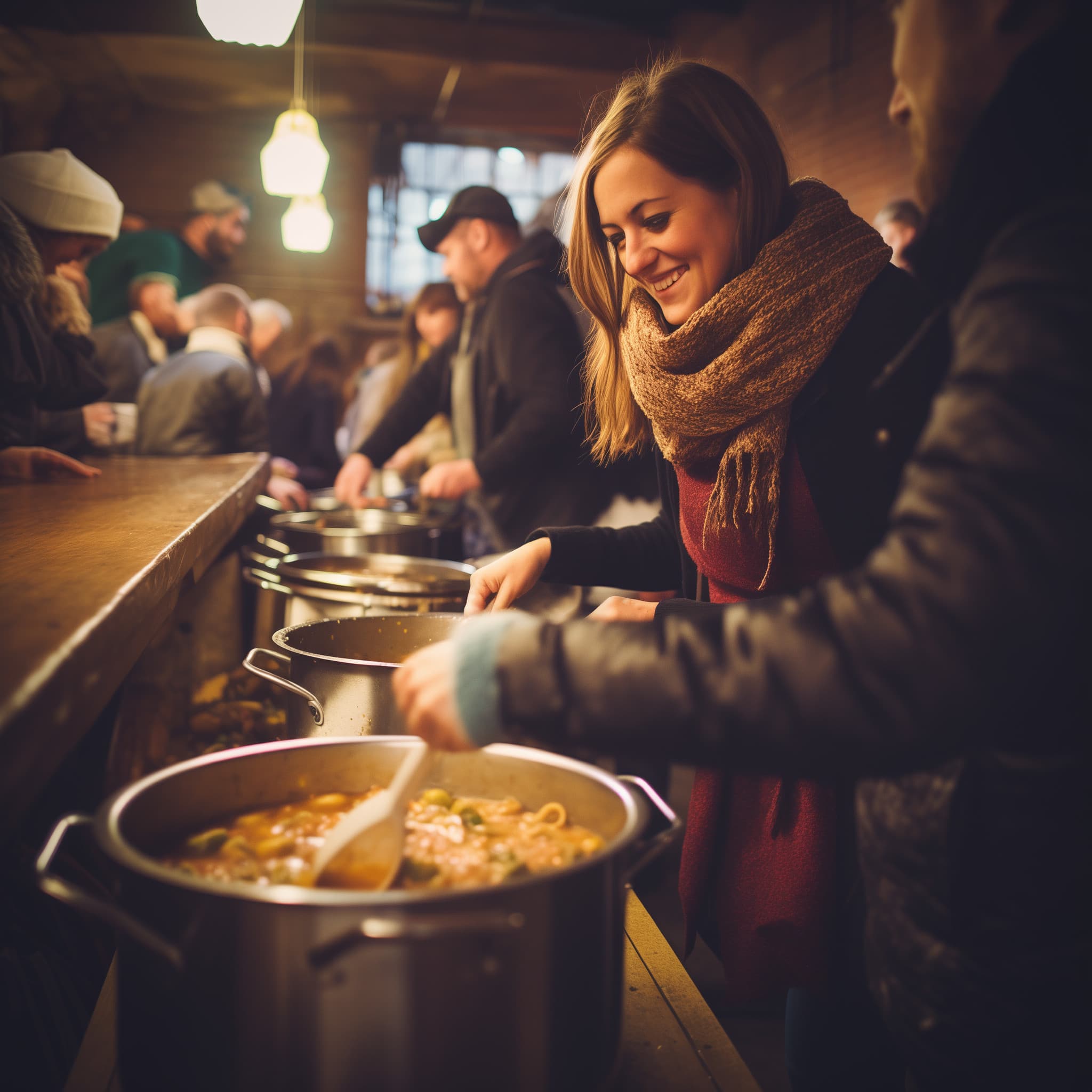
You can live in Germany for years and still feel like a guest. You do your Anmeldung, the compulsory registration of your address, you learn to sort your recycling, you nod politely to neighbours in the Treppenhaus, and yet the country stays slightly behind glass. This chapter is about one of the most reliable ways to break through that glass: volunteering. Not because Germany needs your unpaid labour, though many organisations genuinely do, but because volunteering drops you into the machinery of German community life and lets you learn the culture from the inside, by doing, rather than by reading about it. The German word for this is Ehrenamt, and understanding it is itself a first lesson in how the country thinks about belonging.
The focus here is deliberately narrow. This is not a guide to finding a volunteer role or to the legal and insurance framework around it. That is the job of our separate Volunteering and Social Impact section, which covers the types of service, how to find opportunities, and the formal Freiwilligendienste like the FSJ and BFD in detail. What this chapter does is answer a different question: why should a newcomer volunteer at all, and what does it actually teach you about German culture, language, and how to feel at home here? Volunteering is one of the strongest integration strategies available to you, and it is worth understanding why before you decide where to spend your time.
The Ehrenamt: A German Institution and a Core Value
Ehrenamt translates literally as honorary office, and that old-fashioned phrase tells you something important. In German culture, giving your time to the community is not treated as a nice extra or a line for your CV. It is treated as a form of civic honour, a normal and respected part of being a functioning adult. The word carries weight. When a German tells you they hold an Ehrenamt, they are not boasting about charity work; they are describing a role they take seriously, often for years, with the same reliability they would bring to a paid job.
The scale is genuinely striking. According to the Deutscher Freiwilligensurvey, the large recurring government survey on volunteering conducted for the Federal Ministry for Family Affairs (BMFSFJ), roughly four in ten people aged fourteen and over report doing some form of voluntary work. That is tens of millions of people giving time to sports clubs, choirs, fire brigades, welfare groups, churches, schools and local associations. Volunteering is not a niche activity for the especially virtuous. It is mainstream, woven through ordinary life, and it is one of the quiet engines that keeps German civil society running.
Much of that engine runs on the Verein, the registered association that is the basic building block of German community life, and which we cover in depth in our chapter on Vereine and Germany’s club culture. Almost every Verein, from the village football club to the local historical society, depends on volunteers to exist at all. Someone keeps the books, someone books the hall, someone trains the under-twelves, and none of them are paid. When you understand that the Ehrenamt is what makes the Verein work, and that Vereine are where an enormous amount of German social life happens, you have understood something central about the country. Learning to value the Ehrenamt is, in a real sense, learning to value what Germans value.
You can also see how seriously the culture takes this in the way the state and society reward it. Many federal states issue an Ehrenamtskarte, a volunteer card that gives regular, active volunteers small discounts and public recognition for their service. At the other end of the scale, decades of dedicated voluntary work can earn the Bundesverdienstkreuz, the Federal Cross of Merit, one of the country’s highest civilian honours. Between the modest card and the presidential medal lies a clear cultural message: giving your time to others is not invisible in Germany, and it is not taken for granted. For a newcomer, noticing how much respect attaches to the Ehrenamt is an early clue to what this society prizes in its members, which is not wealth or noise but steady, useful contribution to the common good.
Why Volunteering Is One of the Best Ways to Integrate
The hardest part of arriving in a new country is not the paperwork. It is the absence of a role. At home you were someone’s colleague, someone’s neighbour of ten years, the person who always organised the summer barbecue. In Germany you start as a blank: a name on a Mietvertrag with no history and no place in anyone’s week. Volunteering fixes this faster than almost anything else because it hands you a role immediately. The moment you are the person who sets out the chairs on Thursdays, or who helps at the food distribution on Saturday mornings, you exist in other people’s lives. You are expected, missed when absent, and thanked when there. That sense of being counted on is the beginning of belonging.
It is also the best German classroom you will ever sit in, precisely because it is not a classroom. Formal courses teach you grammar and clean sentences; volunteering teaches you the language people actually speak, with its regional colour, its filler words, its jokes and its shorthand. You learn the vocabulary of a real activity, whether that is the names of tools, the words for ingredients, or the phrases people use to reassure a frightened child. This is the immersion our chapter on incorporating German into your daily life argues for, and volunteering delivers it with a built-in reason to keep talking. You are not practising German; you are using it to get something done, which is when it finally starts to stick.
Friendship works the same way. Making friends as an adult in a new country is genuinely hard, and our chapters on building a social network and on connecting with Germans and other expats lay out the general how. Volunteering adds something those channels struggle to provide: a shared purpose. Cold socialising, walking up to strangers and hoping to click, is exhausting and slow. Standing shoulder to shoulder with people who care about the same thing you do, week after week, is how adults have always made friends. The task gives you something to talk about, the regularity gives the friendship time to grow, and the common goal quietly does the work that small talk cannot.
Then there is the crash course in how German organisations actually function, which is worth more than it sounds. Join almost any group and you will meet the Satzung, the written constitution that governs it; you will sit through a Mitgliederversammlung, the members’ meeting where decisions are formally minuted; and you will bump into a general German fondness for Ordnung, for having a clear and agreed way of doing things. To an outsider this can look like bureaucracy for its own sake. Seen up close, and from the inside, it starts to make sense: it is how a group of volunteers with no boss holds itself accountable and keeps going for decades. Learn to read that culture in a small Verein and you will read it everywhere, from your workplace to your Hausverwaltung. Volunteering also plants you in a specific place with specific concerns, the local school, the local river, the local elderly, so that you stop living in an abstract Germany and start belonging to an actual town.
What Different Kinds of Volunteering Teach You About Germany
Every kind of volunteering is a window onto a different German value, and choosing where to give your time is partly choosing what you want to understand. The point below is not how to sign up for each; our Volunteering and Social Impact section handles the practical side. The point is what each one teaches a newcomer about the country.
Work with the Tafel, the network of food banks that collects surplus groceries and passes them to people on low incomes, and you learn how Germany thinks about social solidarity. There are well over nine hundred local Tafeln across the country, staffed overwhelmingly by volunteers, and spending a morning behind the counter teaches you more about German attitudes to dignity, fairness and quiet mutual help than any textbook chapter on the welfare state. You see who asks for help, how they are treated, and the unshowy seriousness with which volunteers do the work.
Support work with refugees and migrants offers a particular lens, and a personal one, because you were once the newcomer at the counter yourself. This is where you meet Willkommenskultur, the welcoming culture that surged in Germany during the 2015 refugee arrivals, along with its real tensions and the honest national argument about how much a society can absorb. Helping someone else fill out the very forms that once baffled you is one of the most grounding experiences an integrated expat can have, and it shows you both the generosity and the strain in the German conversation about migration.
Environmental and Naturschutz work, meaning nature and conservation projects, puts you next to one of the most deeply held German values of all. Germans care about the environment with an intensity that can surprise newcomers, and you feel it up close counting frogs at a pond crossing, clearing a hedgerow, or maintaining a trail. The care for order and for the long term that runs through German culture is very visible here, applied to landscape rather than paperwork.
Perhaps the most striking institution of all is the Freiwillige Feuerwehr, the volunteer fire brigade. Most of Germany is protected not by full-time professional firefighters but by trained volunteers who leave their jobs and dinners when the pager sounds; something close to a million people serve in these brigades nationwide. In a small town the Feuerwehr is far more than an emergency service. It is a social centre, a source of local pride, and often the beating heart of village life, complete with its own festivals. To understand the Freiwillige Feuerwehr is to understand how rural and small-town Germany holds itself together.
Closer to everyday family life, sports clubs always need coaches and helpers, and coaching a youth team teaches you German ideas about fairness, teamwork and reliability from the ground up. The Förderverein, the support association attached to a Kita (daycare) or school, lets you see how German parents organise to back their children’s education, and it is one of the easiest ways for a parent to find a footing in the local community. And cultural or Heimat associations, Heimat being that hard-to-translate sense of homeland and local belonging, care for dialect, tradition, music and regional history; volunteering with one shows you how strongly local identity still matters in a country often described from the outside as simply national. Each of these is a doorway, and behind each door is a piece of the culture you cannot fully learn any other way. If any of this challenges your expectations, our chapter on cultural adjustment challenges is a useful companion.
Starting With Imperfect German and Showing Up
The single biggest reason expats hesitate is language, and it is worth saying plainly that you do not need fluent German to begin. Plenty of roles need willing hands more than perfect grammar: sorting donations, setting up events, doing practical tasks alongside people who will happily explain as you go. Many organisations positively value having non-native speakers and other languages in the mix, especially any group that works with international families. You will make mistakes, people will correct you kindly or simply understand you anyway, and your German will improve through the work rather than before it. Waiting until your German is good enough is a trap, because the volunteering is how it gets good enough.
What matters far more than skill or vocabulary is reliability. This is the deepest cultural lesson of German volunteering and worth taking to heart: showing up, on time, when you said you would, matters more than being brilliant. A volunteer who is merely competent but utterly dependable is treasured; a talented one who drifts in and out is not. If you commit to Thursday evenings, be there on Thursday evenings. Do that for a few months and you will have earned something that is genuinely hard for a newcomer to earn, which is trust. The barrier to entry is otherwise low. Most groups are short of hands and glad to welcome someone new, and a simple email or a visit at a session is usually all it takes to start.
There is a practical payoff beyond the personal one. Sustained voluntary engagement is recognised as a sign of successful integration, and it can support an application for Einbürgerung, German citizenship by naturalisation, where evidence of integration into German society is valued. Just as importantly, it changes how you feel about being here. The day you realise you are volunteering not to integrate but because you actually care about the cause and the people is the day Germany stops being a place you moved to and becomes a place you live. For the deeper how-to, the full range of opportunities, and the formal Freiwilligendienste such as the FSJ, the FÖJ and the Bundesfreiwilligendienst, along with the Ehrenamt insurance and legal framework, see our dedicated Volunteering and Social Impact section.
A Few Honest Notes Before You Begin
Volunteering is one of the best moves you can make, but it helps to know the rough edges in advance so they do not put you off. The first is formality. German organisations can feel surprisingly bureaucratic even in a small volunteer setting: there will be forms, minutes, procedures and perhaps a vote on something you assumed anyone could just decide. If this grates at first, our chapter on surviving German bureaucracy will make it feel familiar. The good news is that this formality becomes almost endearing once you accept it for what it is, which is a group of unpaid people taking their shared responsibility seriously rather than a wall put up to keep you out.
The second note is that not every group is equally open. Some Vereine and associations are warm and eager for new faces; others are long-established, tight-knit, and slower to fold in an outsider, especially one who is still finding their German. This is not usually hostility. It is the ordinary friction of joining a settled group, and it says more about the group’s history than about you. If one place feels closed, it is entirely reasonable to try another. The right fit exists, and finding it is normal rather than a failure.
The third note is language again, honestly stated. In the early weeks you may follow only half of a fast conversation, miss the joke, and go home tired from the effort of listening. That is real, and it is temporary. The very setting that exposes the gap is also what closes it, because you are hearing natural German every session with the strong motivation of wanting to keep up. Almost every integrated expat who volunteers will tell you the same thing: the language stopped being a wall at roughly the point they stopped worrying about it and started concentrating on the task.
What to Do Next
Start small and start soon. Pick one cause you already care about, whether that is nature, sport, food poverty, children, animals or your neighbourhood, because caring is what will keep you turning up once the novelty fades. Think about what you honestly have to offer: a couple of hours on a fixed evening is worth far more to an organisation than a vague promise of lots of time later. Then look close to home. The Verein in your own town, the Kita your child attends, the Tafel a tram ride away, or the local branch of a welfare organisation are all easier first steps than anything that requires a long commute or perfect German.
When you have a rough idea, turn to our Volunteering and Social Impact section for the practical machinery: how to find and vet opportunities, the different types of service, the formal programmes like the FSJ, the FÖJ and the Bundesfreiwilligendienst, and the Ehrenamt insurance and legal points, including the visa question for non-EU residents, whose permit conditions can affect what unpaid work is allowed. Read that alongside this chapter and you will have both halves: why volunteering is worth it for your integration, and how to actually do it.
Above all, give it time and give it consistency. Belonging is not delivered in a welcome pack; it is built, slowly, out of small reliable acts among the same people. Volunteering is how thousands of newcomers have quietly turned Germany from a country they were living in into a community they were part of. Do the same, and one day you will notice that you are no longer learning German culture from the outside. You are simply living it, as a participant rather than a resident, which is the whole point.
Sources
The information in this chapter draws on the official sources and publications listed below, last reviewed in July 2026. It is general guidance for orientation, not individual legal, tax, or medical advice.
- Deutscher Freiwilligensurvey (BMFSFJ)
- Freiwillige Feuerwehr / Tafel Deutschland