Sports Events and Competitions
13 min read
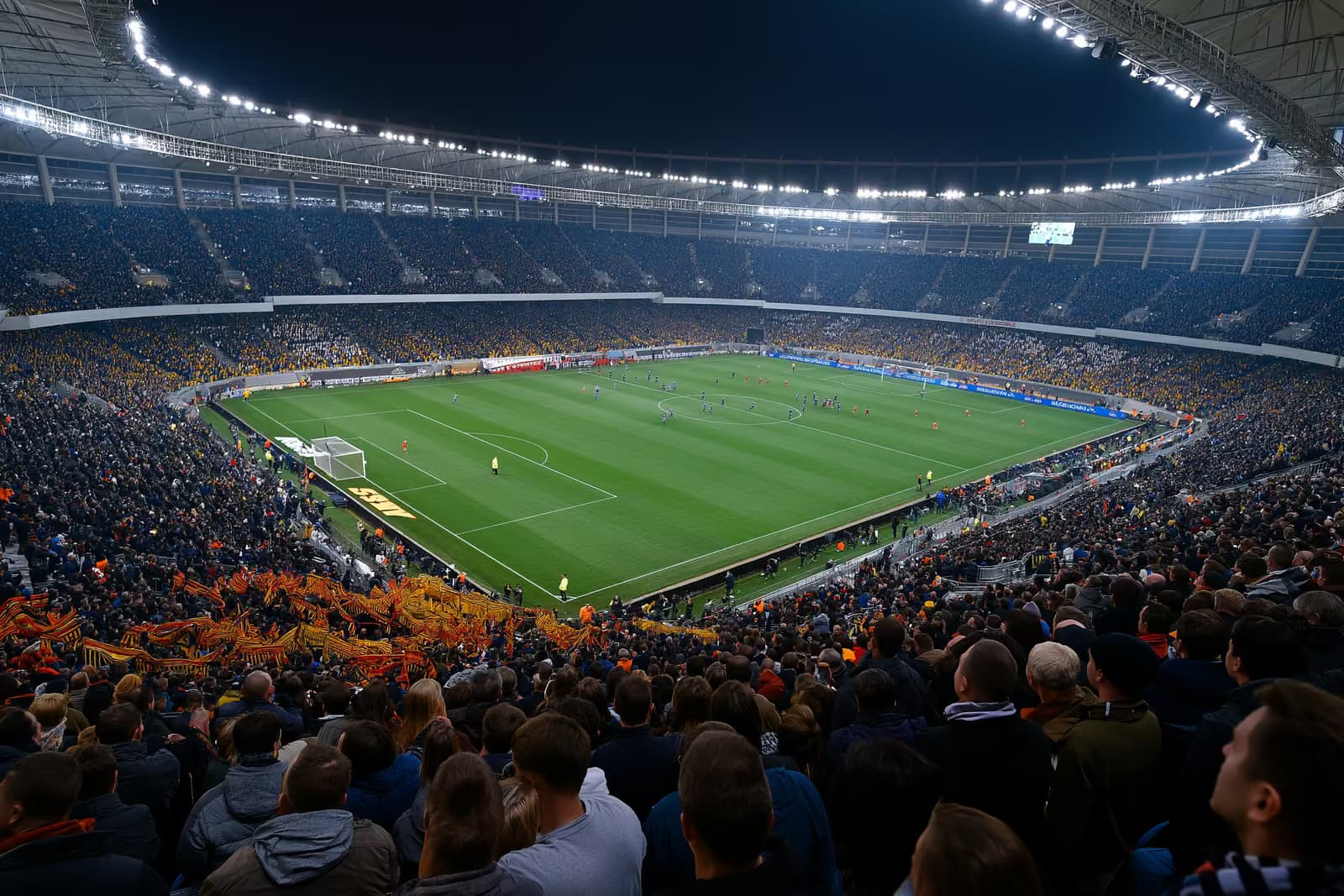
Going to a live sports event is one of the easiest ways to feel at home in Germany. You do not need to speak fluent German, you do not need to understand every rule, and once you are inside a stadium singing along with 40.000 strangers, none of that matters anyway. This chapter is a practical guide to attending sports events in Germany as a foreigner: how to actually buy a ticket, why the big football clubs are so hard to get into, what the famous standing terraces are like, and how to watch handball, ice hockey, basketball, a marathon or a motor race. The focus here is the event-going itself. For the wider picture of which sports Germans play and follow, and the free social side of watching in a pub or on a Fanmeile, see our companion guide to popular sports in Germany.
Buying a ticket to a Bundesliga match
The Bundesliga, Germany’s top football (Fußball) division, is the country’s biggest live-sport draw, and it fills its grounds better than almost any league in the world. That popularity is exactly what makes tickets hard to get. For the biggest clubs - FC Bayern München, Borussia Dortmund, and a handful of others - most matches are effectively sold out long before the season starts, because the seats go to members and to season-ticket holders first. A Dauerkarte, the season ticket, covers every home league game, and at the popular clubs it is passed down almost like a family heirloom, with waiting lists that run for years. If a club is offering season tickets freely, that usually tells you something about how the team is doing.
For a single match you are looking at the Vorverkauf, the advance sale, which each club runs through its own official website and ticket shop. This is where most clubs give priority to registered members: many people join a club as a paying Mitglied (member) partly for the earlier ticket window and the small discount. When a match does not sell out - and plenty do not, especially at mid-table and smaller clubs, or for a midweek game against less glamorous opposition - you can simply buy online, print or download the ticket, and go. Prices are far more reasonable than newcomers expect; a decent seat at a smaller top-flight club can cost less than a cinema-and-dinner evening, and a standing place costs even less.
Resale is where you need to be careful. German clubs actively fight ticket touting, and most run their own official resale platform, a Zweitmarkt, where season-ticket holders can hand back a match they cannot attend and other fans can buy it at, or near, face value. Buying through that official channel is safe. Buying from a random reseller or a general secondary site is risky: many clubs cap resale prices, tie tickets to a name, and will refuse entry or cancel a ticket that has been sold on outside their system. For the very biggest matches you may also hit personalisation rules, where the ticket carries the buyer’s name and you can be asked to show ID that matches it. Always start at the club’s own site, and treat a deal that looks too good as exactly that.
The standing terraces and the matchday feeling
The single most German thing about a football stadium is the Stehplatz, the standing place. Large sections of most German grounds are still terraces where you stand for the whole match, packed shoulder to shoulder, and these are both the cheapest tickets and the loudest part of the ground. The most famous of them is Borussia Dortmund’s Südtribüne (South Stand), known worldwide as the Gelbe Wand, the Yellow Wall: a single terrace that holds around 25.000 standing fans, the largest of its kind in Europe. When it is full and in full voice, it is one of the great sights in sport. This is worth knowing precisely because it has been lost elsewhere. England’s top divisions went all-seater after the Hillsborough disaster and the Taylor Report, so the terrace culture that Germany kept is something many foreign visitors have never experienced at home.
A word of practical warning: standing tickets put you in the middle of the atmosphere, which is wonderful, but it also means constant movement, surging when a goal goes in, and no personal space. If you are bringing children, are not steady on your feet, or just want to actually see the whole pitch calmly, buy a Sitzplatz (seat) instead. Many people go standing once for the experience and seated after that, and both are legitimate ways to enjoy the day.
The matchday itself is a ritual. People arrive well before kickoff, and the food is part of it: the Stadionwurst, a grilled sausage in a bread roll, is close to compulsory, washed down with a beer served in a reusable plastic cup. The chants and songs are organised, often led by a capo with a megaphone in front of the terrace, and you are not expected to know the words - joining in the obvious ones is enough. Underneath all of it sits a distinctive fan culture built on the so-called 50+1 rule, which keeps clubs’ members in majority control and blocks a single outside investor from simply buying a club outright. That rule remains in force, and it is a big part of why German match tickets stay relatively affordable and why the fans feel such ownership of their clubs. For more on why 50+1 and the membership model matter to German sport, see our guide to popular sports in Germany.
Lower-league, amateur and women’s football
If the big clubs are sold out, or you simply want a cheaper and more relaxed day, look down the football pyramid. Below the Bundesliga and the second division sit the 3. Liga, then the Regionalliga (regional leagues), and below that the amateur world of the Oberliga and, at the very local level, the Kreisliga, the district leagues played on the pitch around the corner from where you live. Tickets at this level are cheap, often available at the gate, and you can usually stand right next to the touchline. The football is rougher and the crowds are smaller, but the welcome is warmer, and for a newcomer it is one of the most natural ways to get to know a neighbourhood. A local club is also easy to get properly involved with, which we cover in our guide to joining sports clubs.
Women’s football is growing quickly, and the Frauen-Bundesliga is well worth a visit. Tickets are inexpensive and far easier to get than the men’s game, grounds are family-friendly, and clubs like those attached to the big Bundesliga names field strong women’s sides. Interest and attendances have risen sharply in recent years around the national team’s tournament runs, and a match is an accessible, good-value afternoon whether or not you are a committed football fan.
Beyond football: handball, ice hockey, basketball and the big one-offs
Football dominates, but it is far from the only ticket in town, and the indoor sports are often easier and cheaper to attend. Handball is a genuine German strength: the Handball-Bundesliga (HBL) is widely regarded as the strongest club league in the world, matches are played in loud, compact arenas, and the action is fast and easy to follow even if you have never watched a game. Ice hockey has a passionate following through the Deutsche Eishockey Liga (DEL), where the atmosphere, chanting and drumming rival any football ground, and tickets are usually simple to buy online right up to gameday. Basketball has risen fast, helped enormously by Germany winning the 2023 FIBA World Cup; the Basketball-Bundesliga (BBL) offers slick, well-organised arena events that are very newcomer-friendly. For how these sports sit in the wider German sporting culture, see our guide to popular sports in Germany.
Germany is also a regular host of the marquee one-off events, staged in the same big stadiums and arenas that hold the league games. The country hosted the UEFA European Championship, Euro 2024, across its major cities, and it routinely stages world and European championships in football, handball, athletics and more. These events sell out fast and go on general sale far in advance through official tournament portals rather than the clubs, so if a big championship is coming, plan and buy early.
Motorsport has deep roots here, centred on two legendary circuits: the Nürburgring in the Eifel hills, home of the fearsome Nordschleife and the annual 24-hour endurance race, and the Hockenheimring near Heidelberg. Both still host major touring-car, endurance and historic racing, and a race weekend is a huge, accessible day out with general-admission tickets. One thing to be clear about: Formula 1’s German Grand Prix is not currently on the calendar. It has come and gone over the years, and there is periodic talk of a return, but do not travel expecting an F1 race in Germany unless you have checked that one is actually scheduled. What you can reliably see is world-class sportscar and touring-car racing at the Ring and at Hockenheim.
Marathons and mass-participation events you can join
Some of Germany’s best sports events are ones you can enter yourself rather than only watch. The flagship is the Berlin Marathon, held every autumn, one of the Abbott World Marathon Majors alongside London, Boston, Chicago, New York and Tokyo. Berlin’s course is flat, fast and famous, and over the years an extraordinary number of world records have been set on it - though whether it holds the current record changes from race to race, so treat it as the fast course rather than the permanent record-holder. Entry for the marathon itself is heavily oversubscribed and usually allocated by ballot months in advance, with guaranteed places available through official charity and tour-operator packages. Even if you are not running, race day is a spectacle: hundreds of thousands of people line the streets, and it is one of the best free days out in the city.
Berlin is not the only option. Frankfurt, Hamburg, Cologne (Köln) and Munich (München) all stage large, well-run city marathons, and most have half-marathon, relay and shorter distances so you do not have to commit to the full race. Beyond the big-city marathons, Germany has a deep culture of the Volkslauf, the community fun run, staged year-round in towns everywhere over distances from five kilometres upward. These are cheap, welcoming, and open to anyone; you enter online or sometimes on the day, and nobody minds how fast you go. The same is true of the country’s mass cycling events, the Jedermann (everyman) races attached to professional cycling weekends, and the growing number of triathlons, including large open-water and city-centre events. Spectating any of these is free and easy; entering is usually just an online sign-up and a modest fee.
Watching without a ticket: public viewing, pubs and the TV maze
You do not need a stadium ticket to be part of a big sporting moment. During major tournaments Germany does public viewing on a grand scale, an event the Germans themselves call Rudelgucken, roughly watching in a pack. Cities set up giant screens in parks and squares, and Berlin’s Fanmeile, the huge fan mile running through the Tiergarten to the Brandenburg Gate, has drawn enormous crowds during World Cups and European Championships. It is free, it is friendly, and for a newcomer it is one of the fastest ways to feel the national mood. For a normal league weekend, the everyday version is the Sportsbar or the local Kneipe (pub), where a match is on the screen and a beer and the company come as standard. Our guide to popular sports in Germany covers this free, social side of watching in more detail.
Watching at home is where foreigners get tripped up, because live rights are split across several paid services and the arrangement changes every few years. As things stand, no single subscription shows every Bundesliga match live. The main live packages are divided between Sky and DAZN, with Sky holding most single matches and DAZN holding the Saturday-afternoon Konferenz (the multi-match round-up) and the Sunday games, so committed fans often end up paying for both. Free-to-air television does not show full live league games as a rule, but the public broadcaster ARD runs the long-running highlights programme Sportschau on Saturday evenings, which is free and a national institution. National-team games and big cup and tournament matches are the exception: these do appear live on free channels such as ARD, ZDF and, more recently, RTL. Before you sign up for anything, check which service currently holds the specific competition you care about, because the map is redrawn regularly. Following your own home sport is usually possible too, through that sport’s international streaming service or an expat-friendly package, though availability in Germany varies by sport.
Practical tips for actually attending
Start every ticket search at the official source: the club’s own website and online Fanshop for football, the league or team site for the indoor sports, and the tournament’s own portal for a championship. That is where prices are honest, where the official resale platform lives, and where you avoid the tout risk described earlier. Keep in mind that some high-demand matches require the ticket to carry your name and may ask for matching ID at the turnstile, so book under the details of whoever will actually attend.
Modern German stadiums have a few habits worth knowing before you arrive. Bag rules are strict; large bags and backpacks are usually banned, and there are size limits with bag drops or lockers outside, so travel light. Most grounds have gone cashless inside, and many use a prepaid stadium card that you top up and tap for food and drink rather than paying with cash or a normal card at the kiosk. Your beer or soft drink comes in a reusable cup carrying a Becherpfand, a cup deposit of a euro or two that you get back when you return the cup, or you keep the cup as a souvenir. None of this is complicated once you know it exists, but it surprises first-timers who turn up with cash and a big rucksack.
Getting there is often built into the ticket. Many clubs and events issue a Kombiticket, a combined ticket where your match ticket doubles as free travel on local public transport in the surrounding region on matchday. Check your ticket or the club’s travel page for the exact zone and times before you buy a separate fare. For everything else about trains, trams and buses, see our guide to the public transportation system. On safety: German football keeps home and away fans strictly separated, with the away supporters given their own segregated block, their own entrance and often their own transport arrangements; buy in the right end for the side you are supporting, and follow the stewards. Families are well catered for, with quieter seated family sections at many clubs and reduced-price tickets for children. Finally, remember that a big one-off event distorts a whole city: for a major final, tournament match or the Berlin Marathon weekend, hotels fill up and prices surge, so book your travel and accommodation as early as you book the ticket.
What to do next
Pick one event and start small. Look up the club or team nearest to you, open its official ticket page, and check the next home fixture that is not sold out - a mid-table football club, a DEL ice-hockey night or a handball match is a cheap, easy first outing that you can usually book this week. Buy from the official site, choose a seat rather than a terrace for your first football game, and check whether the ticket includes local transport before you plan your journey. If you would rather take part than watch, sign up for a nearby Volkslauf or enter the ballot for a city marathon well ahead of time. And if catching the sport regularly matters to you, work out which streaming service currently carries your competition before you commit to a subscription. If a live event leaves you wanting to play as well as watch, our guides to popular sports in Germany and joining sports clubs will point you to the next step.
About this information
This chapter is general orientation based on widely-published information about everyday life in Germany, last reviewed in July 2026. It is general guidance, not individual legal, tax, or medical advice. See the related WeLiveIn.de chapters linked in the text above for topic-specific detail and official sources.