Customs and Import Regulations
18 min read
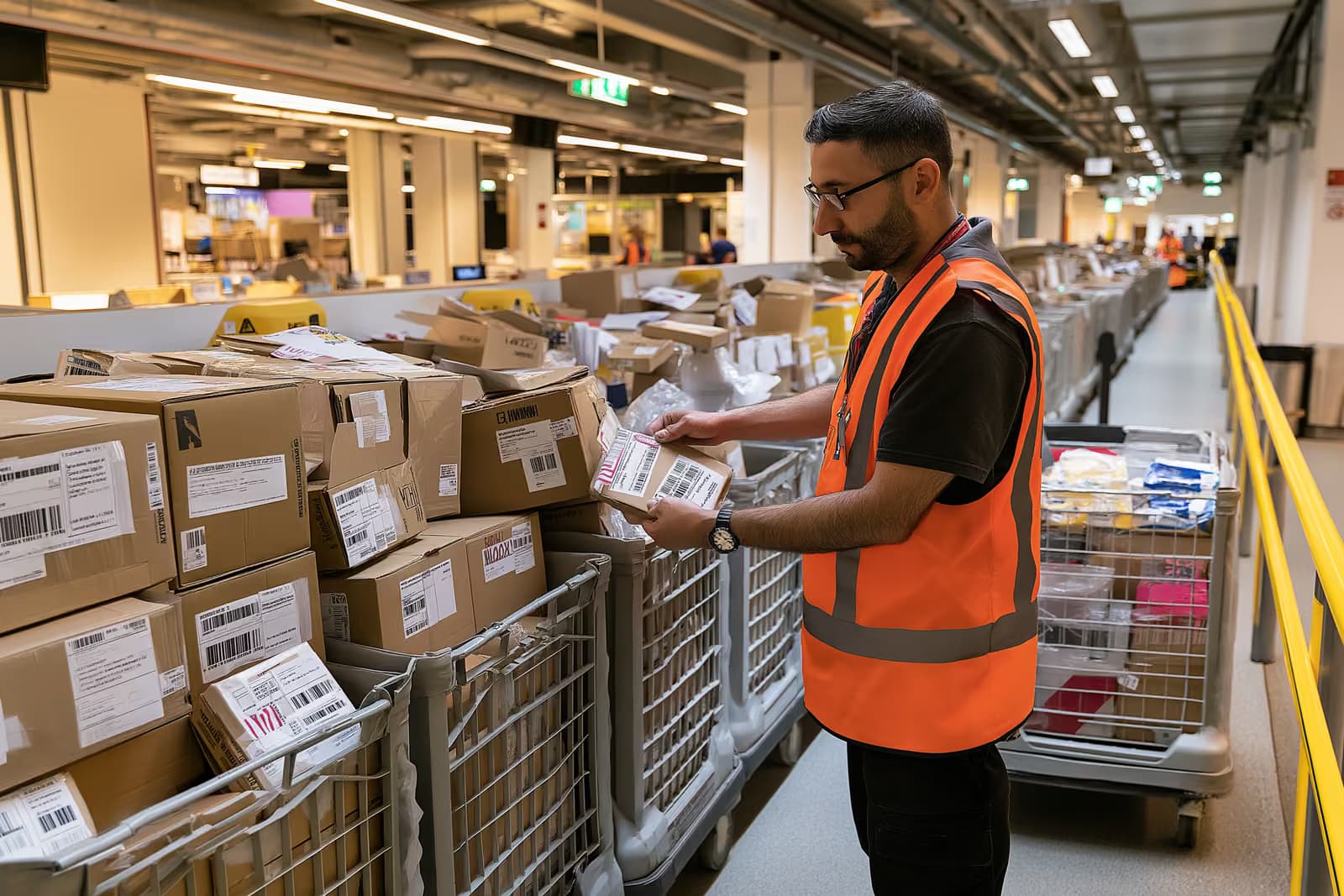
This chapter helps you do two practical things: bring your own possessions into Germany when you move here, and receive a parcel from outside the European Union without being surprised by the bill. Both are governed by customs and import regulations that changed significantly on 1 July 2026, and most of the advice still circulating online describes the system as it was before that date. What follows is the current picture, with the German terms you will meet on forms and notification slips.
One framing point saves a lot of confusion. Germany does not have its own customs border with its EU neighbours. Goods moving from France, Poland or the Netherlands are simply in free circulation and none of this applies. Everything in this chapter concerns the boundary between the EU customs territory and everywhere else, which the German authorities call a Drittland, a third country. Whether a parcel crosses that boundary depends on where it physically ships from, not on where the website is registered or what currency you paid in.
What Changed on 1 July 2026
Until 30 June 2026, goods in a consignment worth up to 150 euros came in free of customs duty. That allowance, the 150-Euro-Zollfreigrenze, is gone. The Zoll states it plainly: the duty exemption for consignments up to a total value of 150 euros ceased to apply completely from that date. If you read an article, a forum post or a seller’s help page that tells you parcels under 150 euros are duty-free, it is describing a regime that no longer exists.
In its place there is now a Pauschalzoll, a flat duty, of three euros. The single most misunderstood point about it is the unit. It is not three euros per parcel, and it is not three euros per item. It is three euros per Warenkategorie, meaning per group of goods that share a tariff classification within the same consignment. The Zoll’s own worked example makes this concrete: ten pairs of socks, two cable ties and four pairs of trousers arriving in one box are three groups, so the flat duty is nine euros. Four pairs of socks on their own are one group, so three euros. Buying more of the same thing does not increase the charge; buying a variety does.
This is where the arithmetic turns unpleasant, and the consumer finance service Biallo has made the point sharply. A typical mixed order from a platform such as Temu, Shein or AliExpress is exactly the shape that the rule punishes: a dress, a phone case, a necklace, a lipstick and a toy are five separate categories, so fifteen euros of duty before anything else is added. The flat rate applies to consignments up to 150 euros. Above that ceiling nothing has changed in structure, and the ordinary tariff rates apply as they always did.
Two further points about timing. First, the import date decides, not the order date, so goods ordered in June that cleared customs in July fall under the new rules. Second, this is an interim arrangement rather than a permanent settlement. According to the tax firm Taxdoo, which tracks the instruments closely, the flat-rate regime is meant to run until 1 July 2028, when the EU’s new customs data platform is expected to bring full tariff assessment from the first euro. A separate EU handling fee has also been announced for 1 November 2026, but as of mid-2026 its amount has not been finalised, so treat any figure you see for it as speculation.
The Layers of Cost on a Parcel
The three-euro duty is only one of four possible layers, and it is usually the smallest. Understanding the stack is what stops the bill from being a shock.
The first layer is Einfuhrumsatzsteuer, import VAT, at 19 percent or the reduced 7 percent for goods such as books and food. This is the one people get wrong most often. Import VAT has applied from the first cent since 1 July 2021. The old 22-euro exemption was abolished then and has been dead for five years, yet a remarkable number of blogs, seller FAQs and even printed guides still cite it. There is no minimum value below which import VAT does not arise. It is also calculated on more than the price tag: the Zollwert, the customs value, includes the shipping you paid to get the goods to the EU border, so a cheap item with expensive postage is taxed on the total.
The second layer is customs duty proper. Below 150 euros this is now the three-euro flat charge per category. Above 150 euros it is the real tariff rate for the goods, which varies enormously and is worth checking before you order. The Zoll publishes indicative examples and they are not intuitive: passenger cars attract about 10 percent, bicycles 14 percent plus anti-dumping duty where they come from China, textile clothing 8 to 12 percent, non-leather shoes nearly 17 percent, while laptops, tablets, mobile phones and books are at zero. The Zoll cautions that these are Anhaltspunkte, reference points only, because the exact classification of the goods governs.
The third layer is the one that most often makes the whole exercise not worth it, and it is not a tax at all. It is the Auslagenpauschale, the carrier’s flat charge for advancing the duties and clearing the parcel on your behalf. Deutsche Post and DHL charge 7,50 euros per shipment, a figure unchanged since 2018, and it is levied regardless of the value of the goods. Express couriers set their own, often higher. On a twelve-euro order, the carrier’s charge alone can exceed the duty and the import VAT combined. You can avoid it: registering with the Zoll as a Selbstverzoller means your dutiable parcels are held at your local Zollamt for you to clear and collect yourself, which costs you a trip instead of 7,50 euros. Buying from a seller who has already handled the VAT avoids it too, which brings us to the next section.
IOSS and Why a DDP Listing Matters
The Import-One-Stop-Shop, universally shortened to IOSS, is the mechanism that makes a non-EU purchase behave like a domestic one. A seller registered for IOSS charges you German VAT at checkout and remits it to the tax authorities itself, for consignments up to 150 euros. When that has happened, no further import VAT is due when the parcel arrives, and because the carrier is not advancing anything on your behalf, no Auslagenpauschale is charged either. The parcel simply turns up.
The practical test is at checkout, before you pay. If the price page shows a VAT line, or an “import charges included” total, or the seller’s confirmation carries an IOSS number, you are in the clean case. If the checkout shows a bare product price with no tax line and the goods ship from outside the EU, assume you are going to be billed at the door. Note the honest wrinkle: IOSS handles the VAT, not the new flat duty. Since 1 July 2026 the three-euro-per-category charge applies to IOSS consignments as well, but it falls on whoever makes the declaration, which is the seller or its carrier rather than you. That is one of the reasons prices on the affected platforms have been drifting upward.
Related but distinct is a listing marked DDP, Delivered Duty Paid. This is a delivery term, not a tax scheme, and it means the seller carries the import charges all the way to your door. A DDP listing at a slightly higher price is very often cheaper in reality than a DAP or “unpaid” listing that looks like a bargain and then arrives with a demand for import VAT plus 7,50 euros. When comparing two non-EU offers, compare the landed cost, not the sticker.
When the Parcel Goes to the Zollamt
Sometimes the carrier cannot clear the parcel at all, usually because the sender declared the contents vaguely, understated or omitted the value, or shipped something that needs a certificate. The consignment then goes to a Zollamt, a customs office, and this is where a great many newcomers meet German administration for the first time.
You will receive a Benachrichtigung, a written notification, from Deutsche Post telling you which office is holding the parcel and by when you must act. The storage window is short: letters are kept seven days and parcels nine. From day ten a storage fee starts, a minimum of five euros plus 50 cents a day. Missing the deadline means the consignment goes back or is disposed of, so the slip is not something to leave on the kitchen table.
When you attend, bring the Benachrichtigung, your identity document, and above all proof of value. That means the commercial invoice, or the order confirmation, or a PayPal or bank statement, and it has to show the complete purchase price including shipping. This is the step people underestimate. If you cannot produce it, the Zollamt still has to arrive at a customs value, and it will do so itself using the fallback methods in the Union Customs Code, typically by reference to comparable goods. That determination is rarely generous, and arguing with it afterwards is far more work than printing the receipt beforehand. Screenshots of an order page in an app are weak evidence; a proper invoice is strong.
You do have alternatives to the trip. The Zoll’s IPK service lets you file the declaration online and have the parcel delivered. Deutsche Post offers a paid clearance-from-home option. And you can simply refuse the consignment, which is sometimes the right answer once you have added up the layers. Whatever you choose, do it within the storage window.
Übersiedlungsgut: Moving Your Household In Duty-Free
This is the most valuable thing in the chapter for anyone relocating from outside the EU, and it is routinely missed. Your household goods can come in completely free of customs duty and free of import VAT under the rules on Übersiedlungsgut, literally “relocation goods”. The legal basis is Articles 3 to 11 of Regulation (EC) No 1186/2009, the Zollbefreiungsverordnung, with the national procedure in the Zollverordnung and the import VAT exemption following through §1(1) of the Einfuhrumsatzsteuer-Befreiungsverordnung. If your shipping container is handled correctly, you pay nothing on it. If it is handled carelessly, you can pay 19 percent of the value of everything you own.
Three conditions carry the relief, and all three must hold. Your gewöhnlicher Wohnsitz, your normal place of residence, must have been outside the EU customs territory for at least twelve months before the move. The Zoll does allow an exception where you can document that you intended to stay abroad for twelve months or longer, for example with an employment contract, even if circumstances cut the stay short. Second, the goods must belong to you and must have been used by you or your household for at least six months in the third country before the move; the Zoll may ask for invoices or purchase contracts, which is a good reason not to ship a brand-new television bought the week before departure. Third, and this is the deadline that catches people, clearance as duty-free Übersiedlungsgut is only possible within twelve months of transferring your normal residence to Germany. Miss the window and the relief is simply gone.
There is a forward-looking variant as well. You may import the goods before you actually move, provided you undertake to establish your residence in the EU within six months and provide a Sicherheitsleistung, a security deposit, which is released once you have done so.
The relief comes with a string attached, and it is a real one. For twelve months after the application is accepted, the goods may not be lent, pawned, rented out, sold or given away. If you break that, the exemption falls away, a Zollschuld arises and the duties are recovered retroactively. Selling the imported car eight months after arrival is exactly the scenario the rule is written for.
What counts is broader than people expect. The Warenkreis covers ordinary household effects, bicycles and motorcycles, a passenger car with a trailer if applicable, camping trailers, watercraft and even sports aircraft, plus the portable tools you need for a trade or independent profession. What does not count: alcoholic drinks and tobacco are excluded outright, as are commercial vehicles and equipment used for business. The overriding test is that the Art und Menge, the nature and quantity, must not suggest a commercial purpose, so twelve identical laptops will not pass as personal effects however honestly you present them. Note also that Verbrauchsteuern, excise duties, are not covered by the relief.
Procedurally, you make a Zollanmeldung using Formular 0350, “Zollanmeldung für Übersiedlungsgut”, which is published on the Formularserver of the Bundesfinanzverwaltung, and you deal with the Zollamt responsible for your new address. Supporting documents about the transfer of residence can generally be sent electronically. Start this before your container ships, not when it is sitting in Hamburg. If you are still working through arrival admin generally, the chapter on an expat’s first steps in Germany sets out the sequence that surrounds this one.
Bringing a Car
A car has two separate lives at the border: the customs question and the registration question. They are handled by different authorities and passing one does not help you with the other.
On customs, the good news is that a private car can ride in as Übersiedlungsgut on exactly the conditions above, and the Zoll will want proof that the vehicle was registered abroad in your own name. If it does not qualify, because you bought it recently, or you are not moving your residence, or the twelve-month window has closed, the ordinary rates apply. The Zoll’s indicative figure for passenger cars is around 10 percent duty, and then 19 percent Einfuhrumsatzsteuer is calculated on the vehicle value plus transport plus the duty itself. On a 30.000-euro car that is a five-figure sum, which is why the twelve-month resale ban on Übersiedlungsgut vehicles is enforced rather than nominal.
On registration, you will need the Zollamt’s confirmation that the import charges have been settled before the Zulassungsstelle will register the vehicle, and a car built to non-EU specifications will usually need an Einzelabnahme, an individual technical approval under §21 StVZO, carried out by TÜV or DEKRA, unless it has European type approval and a Certificate of Conformity. Lights, instrument units and emissions are the usual sticking points, and the conversion cost can be substantial. Budget for it before you ship, not after. The registration process itself, along with what a German Zulassung involves, is covered in the chapter on driving in Germany.
What You May Not Bring
Some rules here are prohibitions rather than allowances, and the distinction matters because travellers instinctively assume that a small quantity must be fine.
The food rule is the one foreigners break most often, usually with something a relative packed with love. Meat and milk, and any product made from them, may not be brought into the EU from a third country at all. The Bundesministerium’s wording is grundsätzlich untersagt, prohibited in principle, and the legal basis is Regulation (EU) 2019/2122. This is not a quantity limit that you can stay under. The homemade sausage, the cheese, the tin of pâté, the jerky: all of it is prohibited, and non-compliant consignments are rejected and destroyed. The exceptions are narrow and specific: infant formula and food required for medical reasons in unopened retail packaging up to 2 kg, special pet food required for medical reasons up to 2 kg, fish and fishery products up to 20 kg or a single larger fish, and honey and certain other animal products up to 2 kg. A handful of countries are outside the restriction entirely, including Switzerland, Norway, Andorra, Liechtenstein and San Marino, with separate arrangements for Iceland, the Faroe Islands and Greenland. The rule exists to keep animal disease out, which is why it is enforced without much sympathy.
Cash is the second trap. If you carry 10.000 euros or more into or out of the EU, you must declare it in writing, unprompted. This follows from Article 3 of Regulation (EU) 2018/1672, with the German procedure in the Zollverwaltungsgesetz, and the threshold is per person. Barmittel is broader than notes: it covers coins and banknotes, transferable bearer instruments such as traveller’s cheques, gold coins of at least 90 percent purity and gold bars or nuggets of at least 99,5 percent. You declare online through the Zoll-Portal or on paper forms 040000 or 040001. A second category, gleichgestellte Zahlungsmittel, which includes savings books, gemstones and other precious metals, need only be disclosed orally if an officer asks, and worked jewellery you are wearing does not count at all. Failing to declare is an Ordnungswidrigkeit carrying a fine of up to one million euros, and the sum is typically held while the matter is resolved. Declaring is free and takes minutes.
Beyond those, the familiar categories: species protected under CITES, the Washington convention, which quietly catches tourist souvenirs made from ivory, coral, reptile leather, certain shells and certain tropical woods; weapons and ammunition, and also items many countries treat as ordinary, such as certain knives and irritant sprays, which fall under the Waffengesetz; and counterfeit goods, which are seized rather than merely refused. Medication has its own regime, and the short version is that §73(2) Nr. 6 of the Arzneimittelgesetz lets you carry in a quantity appropriate to your personal needs, while controlled drugs need an Article 75 Schengen certificate arranged before you travel. That is a chapter in itself and it is written up under pharmacies and prescriptions in Germany, which you should read before flying with prescription medicine.
Allowances When You Travel In
Arriving from a third country as a traveller is governed by the Reisefreimengen, the travel allowances, and these are value limits rather than the parcel rules above. As of 2026 the figures are 430 euros for travellers arriving by air or sea, 300 euros for travellers arriving by any other route, and 175 euros for travellers under fifteen, whatever the route. Alcohol and tobacco have separate quantity allowances and do not count towards the value limit.
For travellers aged seventeen and over, the tobacco allowance is 200 cigarettes, or 100 cigarillos, or 50 cigars, or 250 grams of smoking tobacco. The alcohol allowance is one litre of spirits over 22 percent, or two litres of a product up to 22 percent, plus four litres of still wine, plus sixteen litres of beer. One detail is worth internalising: where an indivisible item exceeds the allowance, such as a watch or a leather jacket, the charges are assessed on its full value, not on the excess. A 500-euro watch carried through an airport is taxed on 500 euros, not on 70. Because these figures are adjusted from time to time, check them on zoll.de before you fly; the Zoll maintains English travel pages if you are not yet reading German comfortably.
Gifts have their own rule and it survived the July 2026 reform intact. A genuine Geschenksendung sent by one private individual to another, worth up to 45 euros, comes in free of both customs duty and import VAT, and because the new flat duty presupposes a distance sale, it does not reach true private gifts. The conditions are strict: private to private, occasional, no payment of any kind, for the recipient’s personal use, and the carrier has to claim the exemption on the paperwork. Note that 45 euros is a Freigrenze, an all-or-nothing threshold: at 46 euros the whole consignment becomes chargeable, not just the extra euro. Inside the 45 euros there are sub-limits for restricted goods, including 50 cigarettes, one litre of spirits over 22 percent, 50 grams of perfume or 0,25 litres of eau de toilette, and 500 grams of coffee. A relative writing “gift” on a parcel of things you paid for does not make it a gift, and the Zoll is well aware of the practice.
Returning Goods and Getting the Import VAT Back
If you send something back to a non-EU seller, the import charges you paid do not return automatically. There is a route, and it has conditions. The Union Customs Code, Article 118, allows repayment or remission where you reject goods because they did not conform to the contract, were defective when handed over, or were damaged before handover. Four conditions apply together: the goods were properly declared, you actually rejected them rather than accepting them, you did not use them, and they are exported or destroyed under customs supervision. That last one matters, because quietly posting the parcel back without telling the Zoll can cost you the claim.
You apply with Formular 0223, the Antrag auf Erstattung/Erlass, together with the supplementary sheet 0235, to the Hauptzollamt that assessed the duties in the first place. The deadline is one year from the notification of the charges. The application must be signed and sent by post, fax or as a scanned attachment; a plain email is not accepted. Article 118(3) excludes some cases, including where the defect was known when the price was agreed, and where you sold the goods on after discovering the defect.
Two honest caveats. First, this route is written for rejected or defective goods. A plain change of mind is a different situation, and the Zoll’s published guidance does not treat it as an Article 118 case, so ask your Hauptzollamt rather than assume. Second, whatever the Zoll refunds, the carrier’s Auslagenpauschale is a private charge for a service already performed and does not come back with it. Separately, be clear that your German statutory rights are not a given here: the fourteen-day Widerruf and the Gewährleistung regime bind traders who direct their business at the German market, and a seller in a third country may or may not be within reach. Those rights, and how far they stretch, are set out in consumer protection laws and product warranties and returns. Read them before you order something expensive from outside the EU, not after.
What To Do Next
If you are moving to Germany from outside the EU, the single highest-value action is to deal with Übersiedlungsgut properly and early. Confirm you meet the twelve-month residence and six-month ownership tests, gather the documents that prove them, download Formular 0350, and get the declaration to the Zollamt covering your new address inside the twelve-month window. Do not sell any of it for a year afterwards. If a vehicle is in the shipment, find out what an Einzelabnahme will cost you before the container leaves, because that is the number that decides whether shipping the car makes sense at all.
If you are ordering from outside the EU, do the arithmetic before you click. Add import VAT at 19 percent on the price plus shipping, add three euros for every different type of product in the box, add the carrier’s 7,50 euros, and compare that total against an EU seller. Prefer a listing that shows VAT at checkout or is marked DDP. Keep the invoice where you can print it, because the day the Benachrichtigung arrives is not the day to start hunting for it. And when something looks unclear, go to zoll.de first: it is the authority, it publishes English pages, and its guidance is current in a way that most third-party articles on this subject demonstrably are not.
One closing note on scope. This chapter explains how the rules work; it is not legal or tax advice, and customs classification in particular is a technical field where the exact nature of the goods governs the outcome. For a commercial import, a one-off high-value shipment, or anything where a mistake would be expensive, the Zoll’s own information service and a customs agent are worth the call.
Sources
The information in this chapter draws on the official sources and publications listed below, last reviewed in July 2026. It is general guidance for orientation, not individual legal, tax, or medical advice.