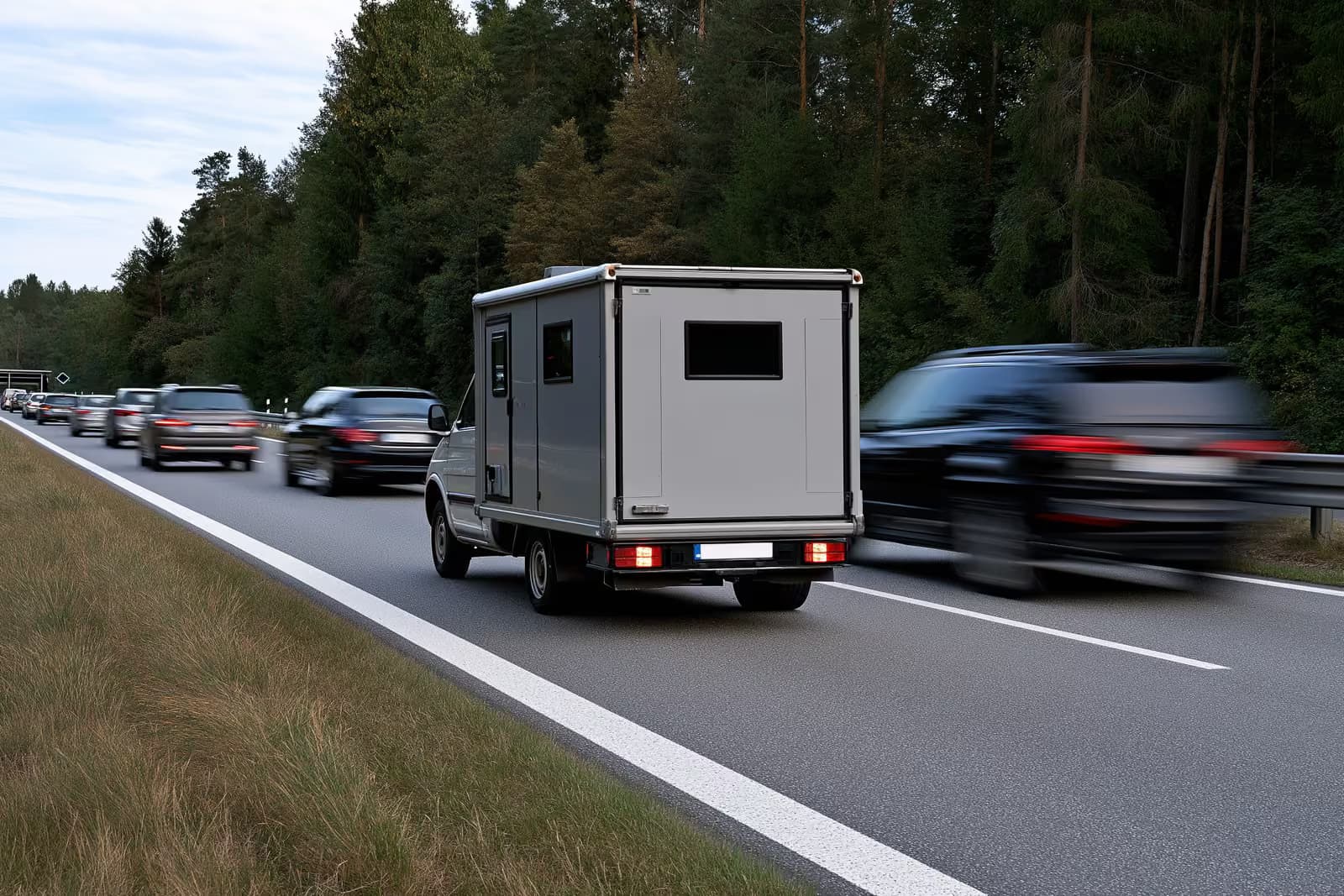
Taxi Services and Apps
12 min read

This chapter is about getting a ride you do not drive yourself: the classic German taxi, the ride-hailing apps like FreeNow, Uber and Bolt, and the legal quirks that make hailing a car here work differently from what you may be used to at home. If you arrived expecting the American or British model - open an app, a random person in their own car picks you up, the app sets whatever price the market bears - you will be surprised. Taxis in Germany are a tightly regulated public service with fixed municipal fares, and the apps are not what their global branding suggests. Once you understand the rules, the system is reliable, safe and easy to use.
For getting around without a car more broadly, see our guide to the public transportation system, which covers trains, trams, buses and night services. If you want a car you drive yourself, whether short-term or by the hour, that is covered in car sharing and rentals. This chapter stays with the case where someone else does the driving.
Why a German taxi is not an American cab
The classic German taxi is instantly recognisable: a cream-coloured (officially “hellelfenbein”, light ivory) car with an illuminated “TAXI” sign on the roof. You can find one at a Taxistand, the marked taxi rank you will see outside train stations, airports and busy squares, or you can order one by phone from a local dispatch centre (Taxizentrale). In many cities you can also flag one down on the street if its roof sign is lit, though at a rank you are expected to take the first car in line. All of this still works exactly as it always has, and for a lot of trips a phone call or a walk to the nearest rank is faster than any app.
What makes the German taxi different is the law behind it. Taxis operate under the Personenbeförderungsgesetz (PBefG), the federal Passenger Transport Act, and their fares are not set by the driver, the company or an app. They are fixed by each city or district in a local Taxiordnung (municipal taxi tariff). That tariff is built from a Grundpreis (base fare when you get in), a per-kilometre rate, a Wartezeit charge for time spent waiting or stuck in traffic, and various Zuschläge (surcharges) for things like large luggage, extra passengers or booked pickups. Because the price is regulated, a metered street taxi cannot legally undercut the tariff or negotiate a lower fare with you - and it cannot legally charge you more either. Every licensed taxi must have a Taxameter, the calibrated fare meter (since the 2021 reform this may also be a certified software-based system), and the fare on that meter is the fare you owe.
Two more rules explain a lot of taxi behaviour. First, taxis carry the Rückkehrpflicht, an obligation to return to their home base or an approved rank after each trip rather than cruising the streets hunting for app bookings like a private-hire car. Second, taxis have a Betriebspflicht and Beförderungspflicht - a duty to operate and to accept passengers - so a taxi at a rank generally cannot refuse a short local trip just because it is not lucrative. The upside for you is a genuine public service with predictable, transparent pricing. The one modern change worth knowing: since the 2021 PBefG reform, a Taxiordnung may also allow a binding Festpreis (fixed price) for a pre-booked trip, so a taxi ordered through an app can quote you a fixed fare in advance instead of running the meter. Berlin, for example, introduced app fixed prices in its taxi tariff in 2024. That is the exception; the default street taxi still runs the meter.
What Uber, Bolt and FreeNow actually are here
This is the single most important thing to understand, because it is where expat expectations go wrong. When you open Uber or Bolt in Germany and book a “ride” (not a taxi option), you are usually not getting a taxi and you are not getting an amateur driver in a private car. The 2021 reform of the PBefG, in force since 2 August 2021, created a clear legal home for app-based ride-hailing under an existing category: Mietwagenverkehr mit Fahrer, hire-car service with a driver. Uber, Bolt and FreeNow do not own cars or employ these drivers. They are brokers - technology platforms that pass your booking to licensed local hire-car firms. Every driver who accepts your trip holds a commercial passenger licence and works for a registered fleet operator with a Mietwagenkonzession (hire-car concession). There are no random members of the public earning pocket money, which is the model many people picture from home.
Because these are hire cars and not taxis, different rules apply, and they affect you as a passenger. A hire car has no Taxameter, so the price is agreed in advance in the app rather than metered - what the app quotes is what you pay. A hire car may not be hailed on the street or wait at a taxi rank for fares; it may only carry out trips that were booked in advance. And a hire car has its own version of the Rückkehrpflicht: after dropping you off it must return to its operating base unless a new booking has already come in, either at base or during the trip. That return duty is the main reason app cars can feel scarce late at night or in quieter areas - a car that has just finished a trip may legally have to drive back to base empty rather than linger nearby. The 2021 reform also let municipalities set a Mindestentgelt (minimum fare) for hire cars under Paragraph 51a PBefG, precisely so that app operators cannot undercut the regulated taxi trade into oblivion. In practice this means Uber and Bolt are not always dramatically cheaper than a taxi, and in some cities the price gap is small.
The practical takeaway: Uber and Bolt in Germany are legitimate, licensed and safe, but they are a booking layer over local hire-car companies, not the borderless service you may know. Coverage is strongly city-dependent. It is good in Berlin, Munich, Frankfurt, Hamburg, Cologne and other large cities, and thin to non-existent in smaller towns and rural areas, where a traditional taxi or a phone call is often your only real option. Do not assume the app that worked in one city will have cars in the next.
The apps you will actually use
FreeNow (formerly mytaxi) is the one most residents install first. It aggregates real licensed taxis as well as hire cars, so in most German cities you can book a genuine metered taxi through it, see the car approach in real time and pay in the app. Because it draws on the existing taxi fleet, its coverage tends to be the broadest of the app options, and choosing the taxi product means you get the regulated tariff with a licensed taxi driver. It is usually the most dependable single app to have on your phone.
Uber operates in a number of large German cities and is familiar to international users, with the same clean interface you may know from elsewhere. Just remember that here it dispatches licensed commercial hire-car drivers through fleet partners, not private individuals. Bolt takes a similar hire-car approach and is known for aggressive pricing, which can make it cheaper when cars are available, though the minimum-fare rules and the return-to-base duty mean availability varies. Both are worth having as alternatives, but neither is a guaranteed nationwide safety net.
Alongside these you will find taxi-native apps that connect you straight to the licensed trade. taxi.eu and Taxi Deutschland are cooperative apps run by and for local taxi companies, useful because they book real taxis at the municipal tariff and often reach smaller cities that the big platforms ignore. Many individual cities and regional Taxizentralen also publish their own local app or simply a phone number, which in a small town is frequently the fastest route to a car. The old-fashioned method - calling the local Taxizentrale - still works everywhere and does not depend on any app having drivers signed up in your area.
Paying, tipping and getting a receipt
Card acceptance in German taxis has improved a great deal, and in the big cities most cars now take debit and credit cards or contactless payment. Even so, it is still safest to assume a street taxi may prefer cash, especially outside the major cities, with an older driver, or on a short trip where the card fee stings. Carry enough cash to cover the fare as a fallback, and if paying by card matters to you, say so before you get in. App bookings sidestep this entirely, since the fare is charged to the payment method stored in the app.
Tipping is modest and expected but not obligatory. The usual custom is to round up to a convenient figure or add roughly five to ten percent - for a 13.40 euro fare you might simply say “fünfzehn” (fifteen) and let the driver keep the change. There is no need to overthink it; German tipping is far lighter than in the United States. For a fuller picture of when and how much to tip across everyday life, we keep that in its own place rather than repeating it here. If you are travelling for work, always ask for a Quittung (receipt). Drivers can print one from the meter or issue a written one, and it is the document your employer or your tax return will want as proof of the trip.
Special rides: airport, medical, accessible and rural
Airports are a common source of confusion. Many cities set a fixed airport tariff or specific Zuschläge for airport trips in the Taxiordnung, and some now offer a flat Festpreis to and from the airport that you can confirm before setting off. Ask the driver or check the app for the fixed price rather than guessing, and remember that late-night, luggage and booking surcharges may apply on top of the base fare.
One genuinely useful thing many newcomers never hear about is the Krankenfahrt, a medically necessary taxi or hire-car ride that your health insurer can pay for. Under Paragraph 60 of the Fifth Social Code (SGB V), if you cannot use public transport for compelling medical reasons, your Krankenkasse (statutory health insurer) can cover the cost of a taxi or hire car to and from treatment. The key document is a Verordnung einer Krankenbeförderung (a transport prescription) from your doctor. Rides to inpatient (stationär) treatment are generally covered, while rides for outpatient (ambulant) treatment usually need prior approval (Genehmigung) from your Krankenkasse before the trip - though that approval is waived in defined cases, such as holders of a Schwerbehindertenausweis with certain Merkzeichen (like aG, Bl or H) or people with a high Pflegegrad (care level). Even when covered, you pay a Zuzahlung (co-payment) of ten percent of the fare, with a minimum of five euros and a maximum of ten euros per ride. Sort the prescription and any approval out in advance; do not book the ride and hope to claim it back afterwards. For how statutory and private cover differ, see our guide to public vs. private health insurance in Germany.
If you use a wheelchair, look for an Inklusionstaxi or rollstuhlgerechtes Taxi - a wheelchair-accessible taxi with a ramp or lift that carries you seated in your chair. These are funded and rolled out in cities such as Berlin, Munich, Stuttgart and Mannheim, though numbers are still limited, so book ahead through the local Taxizentrale rather than expecting one at a rank. More on accessible mobility and entitlements is in our guide to disability support services. Some cities also run a Frauennachttaxi scheme, offering women and sometimes girls a subsidised or safer taxi ride home at night; whether one exists, and on what terms, depends entirely on the municipality, so check your city’s website. Finally, in rural areas you may meet the Anruf-Sammel-Taxi (AST) or Rufbus, a call-and-ride shared taxi that plugs gaps in the bus timetable. You book it by phone typically at least 30 minutes ahead, it runs on public-transport tickets and fares rather than the taxi meter, and it is really part of the public transport network - covered in our public transportation system guide, which also explains the Nachtverkehr (night services) and the Verbund Mobilitätsgarantie that in some regions reimburses a taxi after a badly missed connection.
Safety, licensing and complaints
A licensed German taxi is a safe and accountable way to travel. Every professional driver, whether in a taxi or an app hire car, must hold a Personenbeförderungsschein (the P-Schein), a special driving permit for carrying passengers commercially that requires a medical check, a clean driving and criminal record and a minimum age and licence history. The old Ortskundeprüfung, the local-knowledge exam taxi drivers once had to pass, has largely been abolished since the 2021 reform - drivers now rely on an up-to-date navigation device instead, so do not be alarmed if your driver uses a satnav. The car itself must be licensed, insured for passenger transport and regularly inspected, and the taxi’s licence number is displayed inside.
If something goes wrong - an inflated fare, a refused short trip, a driver who will not run the meter, or plain rude treatment - you have somewhere to turn. Note the car’s number and the time and route, and complain to the licensing authority that issued the concession, which is usually the local Ordnungsamt (public order office) or the city’s Konzessionsbehörde. For app hire cars, complain both to the platform in the app and, for a licensing breach, to that same municipal authority. Keep your receipt, since it identifies the operator. If you leave something behind, contact the Taxizentrale or the app’s lost-property function quickly; taxis log their trips and drivers routinely hand in Fundsachen (lost items), so recovery rates are good if you act fast.
What to do next
For everyday trips, install FreeNow as your default, keep your local Taxizentrale number saved for when apps run dry, and carry enough cash to cover a fare in case a card reader is missing. Before an airport run, ask whether a fixed price applies. If a doctor tells you that you need transport to treatment, ask for a Verordnung einer Krankenbeförderung and check with your Krankenkasse about approval before you travel, so the ride is covered rather than an out-of-pocket surprise. And keep the core distinction in mind: a metered street taxi charges the fixed municipal tariff and cannot bargain, while an Uber or Bolt “ride” is a pre-booked hire car quoting a fixed price in advance.
From here, the natural next steps are the guides that own the neighbouring topics. If you would rather drive yourself, see car sharing and rentals; if you plan to get behind the wheel of your own car, the rules of the road are in driving in Germany, though as a taxi or app passenger you will not need any of that. For the backbone of getting around without a car - trains, trams, buses, tickets and night services - return to the public transportation system guide.
This chapter helps you decide how to get where you are going; it is general information for living in Germany, not legal advice. Fares, tariffs and local schemes are set city by city and change, so confirm the current rules with your municipality, your Krankenkasse or the operator when a decision turns on the detail.
About this information
This chapter is general orientation based on widely-published information about everyday life in Germany, last reviewed in July 2026. It is general guidance, not individual legal, tax, or medical advice. See the related WeLiveIn.de chapters linked in the text above for topic-specific detail and official sources.