Religious and Spiritual Communities
14 min read
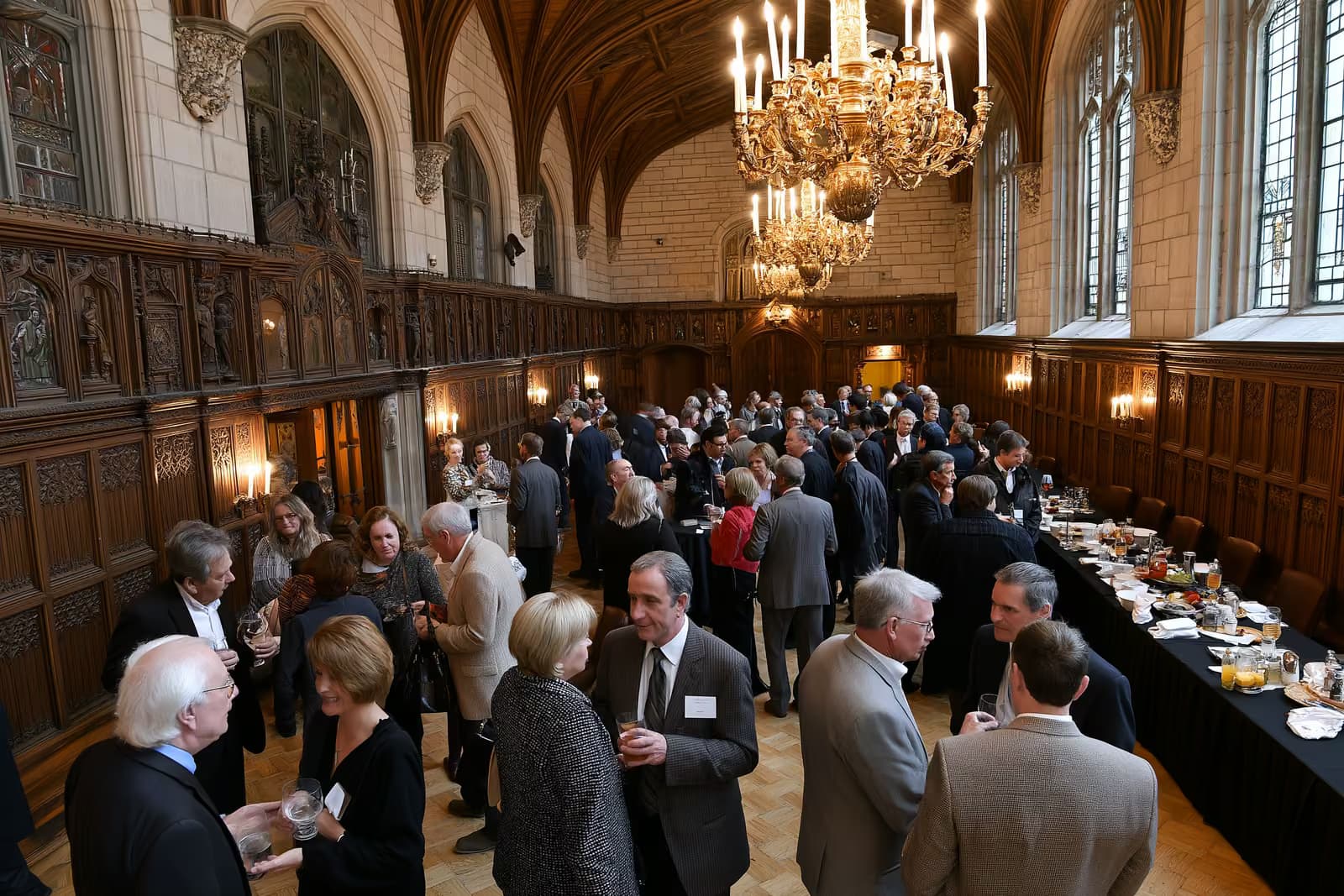
Moving to a new country can leave you without the ready-made network you had at home, and for many newcomers a faith or spiritual community is one of the fastest ways to find people who will welcome you. This chapter helps you do two things at once: understand how religious communities in Germany actually work in practice, and use them as a route to belonging, whether you are devout, quietly searching, or simply looking for a warm room full of people who share your values. It is written to be useful to every reader, including the large number of people in Germany who follow no religion at all.
We cover the one thing that surprises almost every foreigner first - the German church tax, or Kirchensteuer - and then walk through the main faith communities you will find here: the Catholic and Protestant churches, Islam, Judaism, and the many smaller religious and spiritual groups. Along the way we point to the English-speaking and international congregations that exist in most larger cities, and we keep returning to the practical question that matters most when you have just arrived: how do you find your community, and how do you get in the door? None of this is legal or tax advice; it is a plain-language orientation so you know what to expect and where to ask.
Kirchensteuer: the church tax that surprises every newcomer
The single most important thing to understand about religion in Germany is financial, and it catches people out constantly. Germany levies a Kirchensteuer, a church tax, on the registered members of certain religious bodies. If you are officially a member of a tax-collecting religious community - the Roman Catholic Church (katholisch), the Protestant regional churches under the umbrella of the EKD (evangelisch), the Jewish communities, and a few smaller bodies - the tax office (Finanzamt) automatically adds a surcharge on top of your income tax. The rate is 8 percent of your income tax in Bavaria (Bayern) and Baden-Württemberg, and 9 percent in every other federal state. Note that this is a percentage of the tax you already owe, not 8 or 9 percent of your salary, but on a normal professional income it still runs to several hundred euros a year, and it is deducted automatically from your pay alongside your other taxes.
Here is where newcomers get caught. When you complete your Anmeldung, the compulsory registration of your address at the local Bürgeramt, the form includes a field for your religion (Religion or Konfession). If you write in a tax-collecting denomination there - many people fill it in honestly, thinking it is a harmless census question - you are registering as a paying member, and the church tax switches on automatically. Plenty of expats only discover this when their first German payslip shows a Kirchensteuer line they never knowingly agreed to. If you do not want to pay it, the answer is simple: leave the religion field blank, or write “keine” (none). Declining to register a religion has no effect on your ability to attend services, celebrate festivals, or take part in community life - it only affects whether the state collects tax on the church’s behalf.
If you have already been registered and the tax is being deducted, or if you want to stop paying, the formal step is called Kirchenaustritt - a legal declaration that you are leaving the church for tax and civil purposes. You make it in person, and where you go depends on the federal state: in most states it is the Standesamt (civil registry office), in others the local Amtsgericht (district court). You bring your ID and usually your marriage certificate if relevant, and you pay a small administrative fee, which varies by state from nothing at all (Bremen and Brandenburg charge no fee) to roughly 30 to 35 euros elsewhere. The declaration has genuine civil effect: the Finanzamt stops levying the Kirchensteuer, normally from the end of the month in which you declare, or shortly after. It is a bureaucratic act, not a statement about your personal faith - many people who still consider themselves believers formally leave to stop paying, and many who never practise stay registered without thinking about it. The one practical consequence to weigh is that some churches link membership to services like a church wedding, godparent roles, or a religious funeral, so it is worth understanding what your own community expects before you file.
Because the paperwork differs by state and trips people up, the Kirchenaustritt-Helper on Werkzeu.ge walks you through the specific declaration and appointment steps for your Bundesland and helps you prepare the request; it prepares and generates the document but never files it for you, so you still make the declaration in person. Werkzeu.ge is a browser-based toolbox built by Cryon UG, the company behind WeLiveIn.de; the Kirchenaustritt-Helper is a paid (Plus) tool, and you can check what is included on the current pricing page. For how the church tax fits into your overall tax bill - the actual math, your tax class, and how the surcharge is calculated - our chapter on understanding German taxes is the place to go; this chapter deliberately stops at what the tax means for you as a member, and leaves the mechanics to the tax guides.
The Christian churches: Catholic, Protestant, and the Free Churches
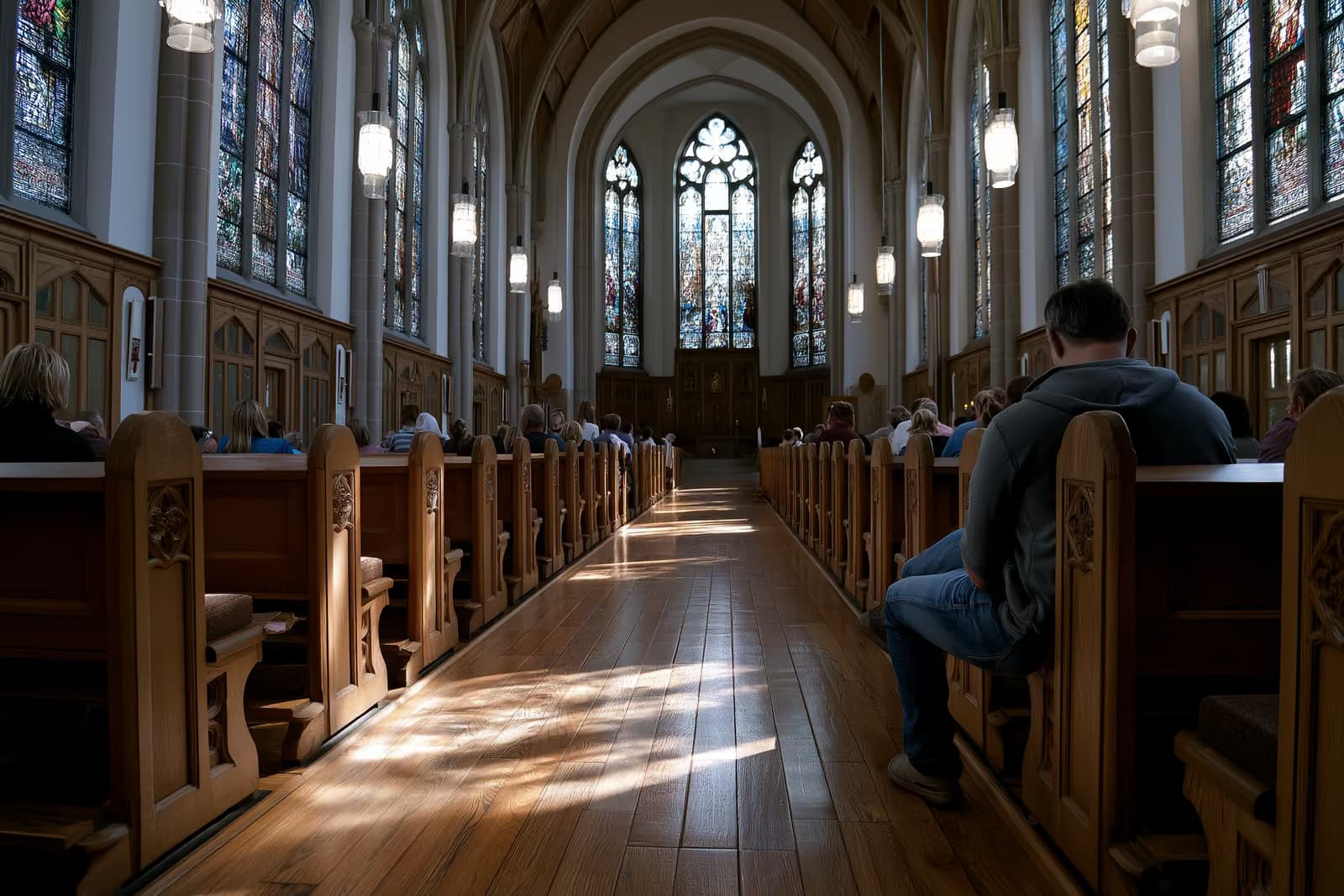
Christianity is still the largest religious grouping in Germany, split mainly between the Roman Catholic Church (katholisch) and the Protestant churches (evangelisch) organised under the Evangelische Kirche in Deutschland, the EKD. Roughly speaking, Catholicism is stronger in the south and west - Bavaria, the Rhineland - while the Protestant tradition is more visible in the north and centre, though every large city has both. The local unit you will hear about is the Gemeinde, the parish or congregation attached to a particular church building. Finding yours is as simple as searching for the nearest katholische or evangelische Gemeinde in your district; parish websites list service times (Gottesdienst), and most welcome newcomers without any formality. You do not need to be a registered, tax-paying member to attend, to join a choir, or to bring your children to activities.
For English speakers, the good news is that most larger cities and university towns have congregations that worship partly or wholly in English. The Church of England maintains Anglican chaplaincies in cities such as Berlin, Hamburg, Frankfurt, Munich, Cologne, and Bonn, often very used to a transient international crowd. The Catholic Church runs international or “muttersprachliche” parishes serving English, Spanish, Polish, Italian, and other language communities in the bigger cities. There are American and international Protestant churches, and a growing scene of free evangelical and charismatic international churches - the International Christian Fellowship (ICF) network and various Freikirchen among them - that deliberately gear their services to newcomers and young professionals. These congregations are often the single easiest place for an arriving Christian to land, precisely because everyone else in the room also moved here from somewhere.
The Freikirchen, or Free Churches, are the Protestant congregations outside the EKD structure - Baptists (Baptisten), Methodists, Pentecostals, the Evangelical Free Church and others. They are generally self-funded and independent of the church-tax system, tend to run tight-knit and active community life, and are frequently multilingual. Beyond Sunday worship, the churches are also woven into Germany’s social fabric through their welfare arms: Caritas, the Catholic charity, and Diakonie, its Protestant counterpart, are among the largest social-service employers in the country, running kindergartens, care homes, counselling services, migration advice centres, and food banks that serve everyone regardless of faith. And the rhythm of the year is still shaped by Christian festivals - Weihnachten (Christmas), with its beloved Christmas markets, and Ostern (Easter) - which double as some of the warmest points of communal life, open to believer and non-believer alike.
Islam: mosques and Muslim community life
Islam is the second-largest faith in Germany, with a Muslim population usually estimated in the range of five to six percent of the country - several million people. Much of that community traces back to the Turkish-German families who arrived from the 1960s onward as so-called Gastarbeiter (guest workers) and stayed to build lives and generations here, alongside more recent arrivals from the Arab world, the Balkans, Iran, and elsewhere. The result is a large, established, and internally diverse Muslim presence, most visible in the mosques (Moschee, plural Moscheen) and Islamic cultural centres that anchor community life in almost every German city.
Mosques here range from modest prayer rooms in converted buildings to large purpose-built complexes with domes and minarets. Many are affiliated with umbrella associations, the largest being DITIB (the Turkish-Islamic Union for Religious Affairs), which operates a substantial share of the country’s mosques; others fall under associations such as the Islamrat, the Zentralrat der Muslime, or independent and Arabic-speaking congregations. Friday midday prayer (Freitagsgebet, or Jumu’ah) is the main weekly gathering, and mosques typically also host Quran classes, language courses, youth groups, and social events, making them community hubs as much as places of worship. During Ramadan and the Eid festivals, that community life becomes especially visible, with communal meals after sunset and celebrations that often reach well beyond the mosque itself.
For a newly arrived Muslim - or a curious visitor - the practical route in is to look for the nearest Moschee or Islamisches Zentrum and simply make contact; most welcome newcomers, and larger cities including Berlin, Frankfurt, Munich, and Cologne have congregations and student-oriented Islamic societies that operate in English or Arabic as well as German and Turkish. University towns often have a Muslim students’ association that is particularly used to helping internationals settle in. As with the churches, you do not need to formally register anywhere to attend, take part, or bring your family into community life.
Judaism: Jewish community life in Germany
Jewish life in Germany carries a weight of history that no honest guide can skip, and its present is a story of careful rebuilding. After the Shoah all but destroyed a once-thriving community, Jewish life has grown again over the past three decades, substantially through immigration from the former Soviet Union in the 1990s, and today the community numbers roughly a hundred thousand or so registered members, with the largest concentrations in Berlin, Munich, and Frankfurt. The local body you will encounter is the Jüdische Gemeinde, the Jewish community organisation of a city, which usually runs the synagogue, cultural and educational programmes, and social services for its members. The communities span the religious spectrum, from Orthodox to liberal and Reform congregations, and larger cities often have more than one.
Above the local level, the Zentralrat der Juden in Deutschland is the main national representative body, and the Zentralwohlfahrtsstelle der Juden in Deutschland (ZWST) is the community’s welfare organisation, running social work, youth programmes, and integration support - especially valuable for Jewish newcomers finding their feet. It is also honest to acknowledge the security reality: synagogues and Jewish institutions in Germany operate under police protection, and visitors are usually asked to register in advance and bring identification. This is a practical fact of Jewish communal life here rather than a reason to stay away, and communities are generally glad to welcome newcomers who make contact ahead of a visit. If you are Jewish and moving to Germany, reaching out to the local Jüdische Gemeinde before you arrive is the surest way to connect with community, services, and, where relevant, kosher provisions and religious life.
Other faiths and the large secular majority
Beyond the three largest traditions, Germany hosts a full spread of smaller religious communities, concentrated in the bigger cities where their numbers reach critical mass. There are Buddhist centres and monasteries across the country, spanning Tibetan, Zen, Theravada and Western convert traditions, many of which run open meditation evenings that welcome complete beginners. Hindu temples serve the Indian, Sri Lankan Tamil, and wider South Asian communities, with the Sri Kamadchi Ampal temple in Hamm being one of the largest in Europe. Sikh Gurdwaras operate in Frankfurt, Cologne, Stuttgart and other cities, traditionally offering a shared meal (langar) to any visitor. There are Bahá’í communities, Alevi associations, and others - the pattern is that if a diaspora is present in a city, its place of worship is usually the easiest place to meet others from home.
At the same time, it is essential for a newcomer to understand that Germany is, in daily life, a largely secular society, and being non-religious is completely normal and widespread. This is especially true in the former East Germany, where decades under a secular state left a majority of people with no religious affiliation at all - in some eastern regions the unaffiliated are a clear majority. Nationwide, the share of people who belong to no church or religious body has been rising steadily and is now roughly half the population. Nobody will pressure you to declare a faith, and there is a growing organised secular and humanist scene for those who want community without religion: the Humanistischer Verband Deutschlands (the Humanist Association) offers secular ceremonies, ethics education, youth groups, and a sense of belonging built around shared values rather than shared belief. In short, whichever way you lean - devout, undecided, or firmly secular - you are in good company here and under no obligation either way.
There is also a broad “spiritual but not religious” landscape that many newcomers find approachable precisely because it asks for no commitment and no paperwork. Meditation groups, yoga studios, mindfulness circles, and philosophical or contemplative societies exist in every city and are often where people who would never join a church still find quiet community. Many run in English, drop-in style, and they can be an unintimidating first step into a room full of new faces.
Faith communities as a fast route to belonging
Set the theology aside for a moment and look at faith communities purely as a newcomer’s tool for building a life, and they are one of the most effective options available. A congregation is, by design, a ready-made welcoming community: it meets on a regular schedule, it expects newcomers, and it is organised around shared values and mutual help rather than networking in the transactional sense. For someone who has just moved to a strange city and knows nobody, that combination - a fixed weekly gathering, people primed to say hello, and often a shared culture or language - is hard to beat. Many international congregations exist specifically because their founders remembered how isolating the first months in a new country can be.
The practical benefits stack up quickly. Faith communities tend to run a full calendar of social life beyond worship - shared meals, family and youth groups, seasonal festivals, discussion circles, choirs and music - which gives you natural, low-pressure ways to see the same people repeatedly, which is how friendships actually form. They are frequently multilingual or international, so they can be a soft landing while your German finds its feet. And they are a strong entry point into volunteering: the churches’ welfare arms and many mosque and synagogue communities organise food drives, refugee support, visiting programmes for the elderly, and neighbourhood projects, all of which put you shoulder to shoulder with locals doing something useful. Our chapter on learning culture through volunteering goes deeper on how giving your time becomes a route into German society.
None of this requires you to be devout. Interfaith initiatives, expat-friendly congregations, and open community events are genuinely open, and plenty of people attend for the community and the volunteering as much as for the belief. The balanced view is that a faith or spiritual community can be valuable whether you arrive with deep conviction or simply with the ordinary human need to belong somewhere - and there is no dishonesty in showing up for the community alone.
Finding your community and what to do next
Start with the practical decision that has real money attached: when you fill in your Anmeldung, decide deliberately what to put in the religion field. If you do not want to pay the Kirchensteuer, leave it blank or write “keine”, and remember you can still attend and belong to any community you like. If you are already paying and want to stop, plan your Kirchenaustritt at the Standesamt or Amtsgericht for your state, budget a small fee, and check first whether your church links membership to any service you care about. For the tax detail, lean on the finance chapters rather than guessing; for the paperwork, the Kirchenaustritt-Helper can prepare the declaration, though you will still make it in person.
To actually find people, search for the specific Gemeinde, Moschee, Jüdische Gemeinde, temple, or meditation group in your district, and look for the word “international” or “English” if you want a congregation used to newcomers - most cities have at least one. Send a short message or simply turn up to an open service or event; these communities are, almost by definition, in the business of welcoming strangers. If a faith community is not for you, the same instinct - finding a regular gathering built around shared values - carries over to secular and civic life. Our guides to expat groups and clubs and local community engagement cover the non-religious routes into a social circle, and between them and this chapter you should be able to find a room where you feel at home, whatever you believe. This chapter is orientation, not legal, tax, or religious advice - for anything binding, confirm the current rules with the relevant office or your own community.
About this information
This chapter is general orientation based on widely-published information about everyday life in Germany, last reviewed in July 2026. It is general guidance, not individual legal, tax, or medical advice. See the related WeLiveIn.de chapters linked in the text above for topic-specific detail and official sources.