Cooking Classes and Recipes
13 min read
Learning to cook the food of the country you live in is one of the friendliest ways to feel at home in it. This chapter is a practical guide to doing exactly that in Germany: where to take a cooking class, how to teach yourself the classic German dishes, which recipe websites Germans actually use, and how to get past the small differences - flour numbers, kitchen scales, unfamiliar dairy products - that trip up newcomers in a German kitchen. If you want to know about the dishes themselves, our chapters on traditional German dishes and regional specialties cover them in detail. Here the focus is on the cooking: taking a class, following a recipe, and stocking a kitchen so you can make these things yourself.
None of this requires fluent German or a professional kitchen. A single evening class, a reliable recipe site and a decent kitchen scale will get you a long way, and the payoff is real. Cooking a German meal for German friends, or bringing a homemade cake to a gathering, tends to land better than almost anything else you can do to show you have settled in.
Where to Take a Cooking Class in Germany
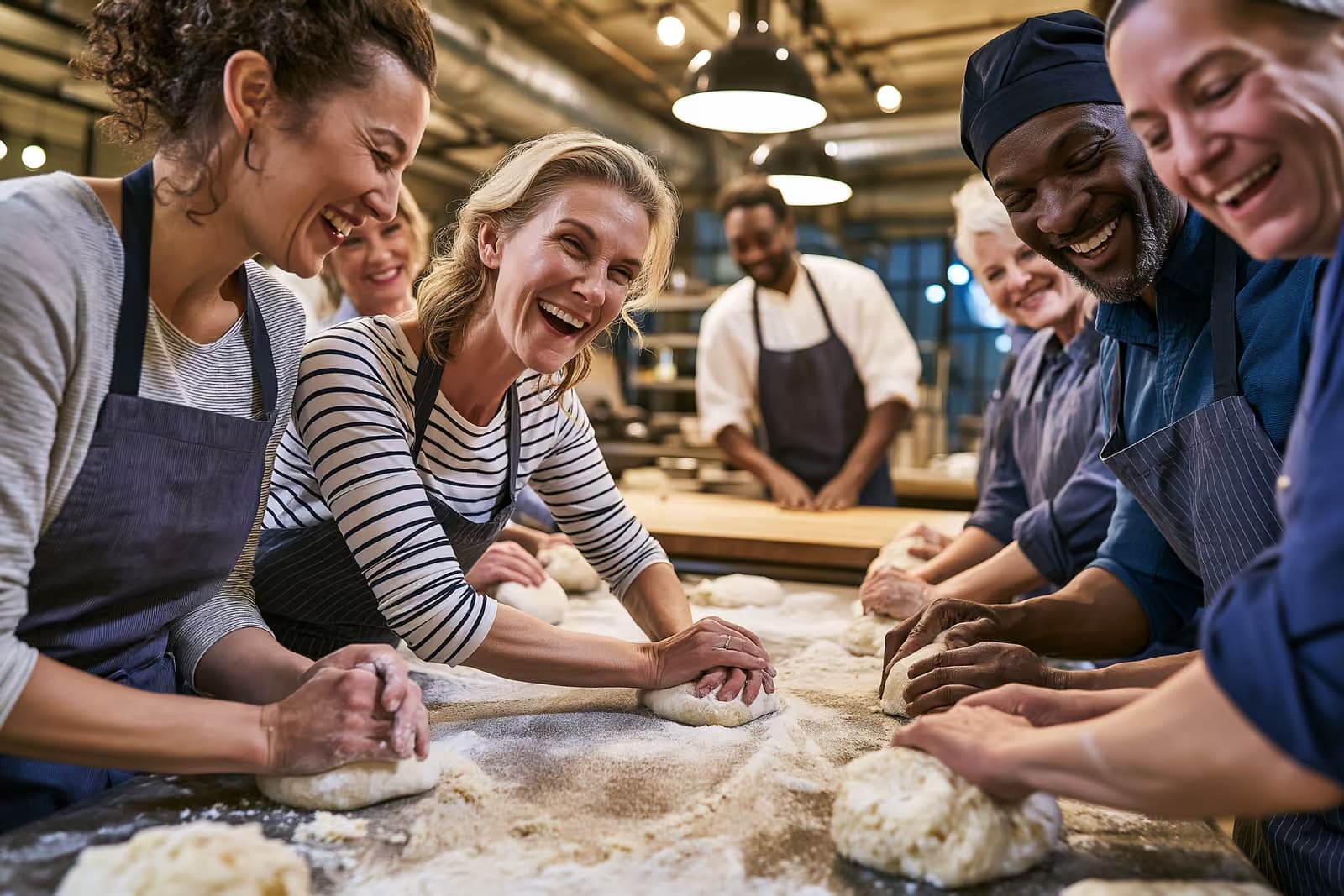
A cooking class in German is a Kochkurs (plural Kochkurse), and Germany offers them at every price point and level. The most affordable and widely available starting point is the Volkshochschule, usually shortened to VHS. The Volkshochschule is the public adult-education centre that exists in essentially every town and city, funded in part by the municipality, and its programme almost always includes cooking courses. Because the VHS is subsidised, its Kochkurse are among the cheapest you will find - often a modest fee for an evening course, sometimes plus a small ingredients contribution paid to the instructor. VHS courses also tend to be relaxed and beginner-friendly, and they are a good way to meet locals, since most participants are Germans doing the course for fun.
Above the VHS sit the private cooking schools, known as Kochschulen. Nearly every German city of any size has at least one, and the larger cities have many. A Kochschule is a purpose-built teaching kitchen that runs a rotating calendar of themed evenings, and this is where the variety really opens up. Prices are higher than at the VHS - private courses commonly run from the mid double digits to well over a hundred euros per person, depending on the length of the evening, the ingredients and whether wine is included - but you get a professional teaching kitchen, smaller groups and a more polished experience. Because the market is large and local, it is worth searching for the Kochschulen in your own city and reading recent reviews rather than relying on any single name; the good ones book up, especially for weekend and evening slots.
The themed courses are the real draw. You will find evenings built around German regional cooking, bread-baking, Christmas baking (Weihnachtsbäckerei), pasta and Spätzle, international cuisines, knife skills, and specific techniques like sous-vide or grilling. There are couples’ courses designed as a date night, and team events (Teamevents) that companies book for their staff - cooking together is a popular office outing in Germany. Many restaurants and some well-known chefs also run occasional masterclasses in their own kitchens, where you cook a menu under a working chef and then eat it; these are pricier and more of an event than a lesson, but memorable. Finally, online cooking classes - live video sessions where an instructor guides a group through a menu you cook in your own kitchen, or self-paced recorded courses - became common after 2020 and remain a good option if you cannot get to a physical class or prefer to learn at home.
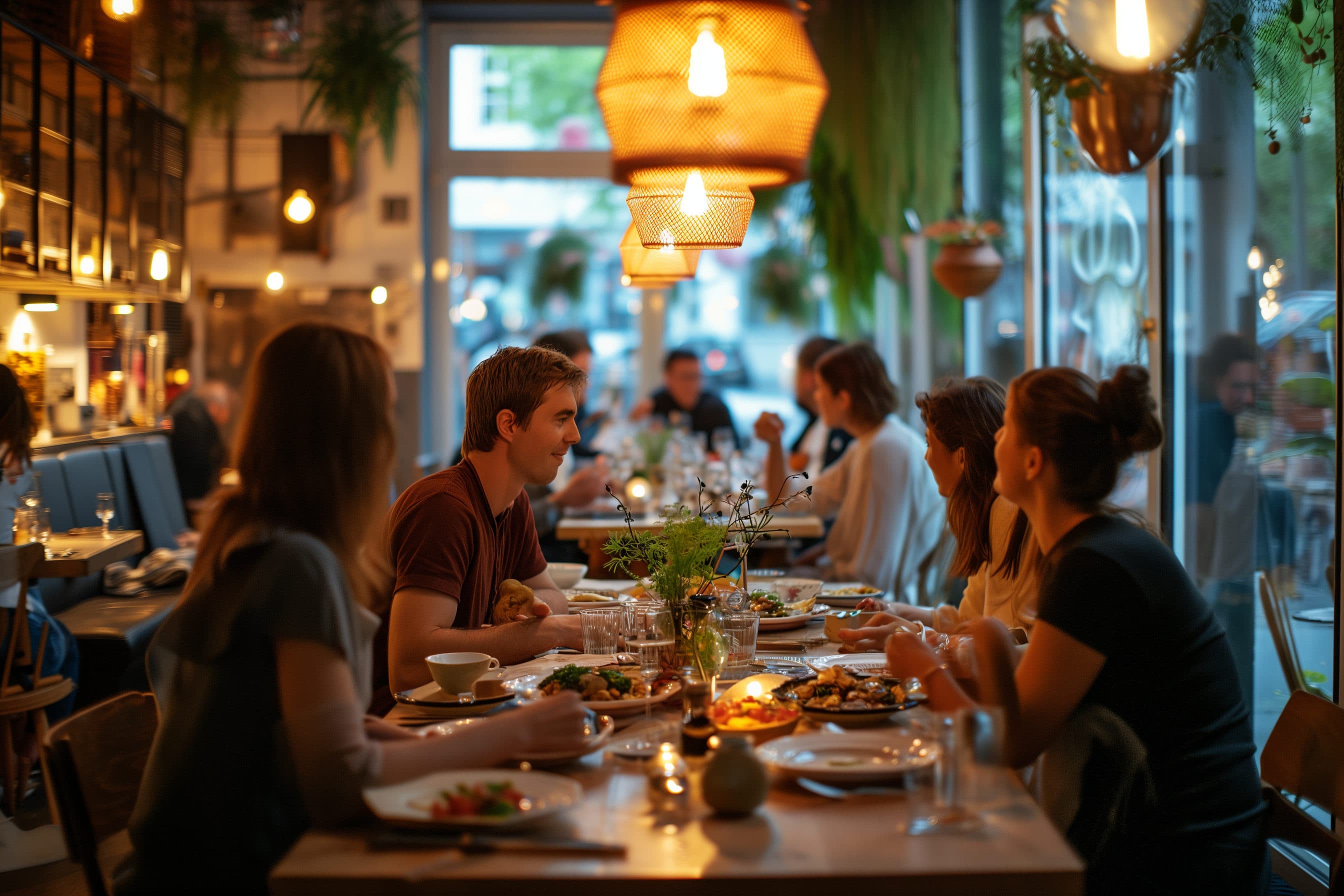
It is worth treating a Kochkurs as a social activity as much as a lesson. Cooking in a group, then sitting down to eat what you made together, is a low-pressure and genuinely enjoyable way to meet people - which matters a lot when you are new. If building a circle of friends is on your mind, a recurring cooking course pairs well with the other ideas in our guide to building a social network in Germany. You do not need much German to follow along in a kitchen, and shared food breaks the ice faster than small talk. A cooking course also makes a popular gift in Germany: many Kochschulen and VHS sell vouchers (Gutscheine) for their courses, which is a common present for someone who has just moved into a new home.
Learning to Cook German Food at Home
You do not need a class to start cooking German food. A handful of dishes will take you most of the way into everyday German home cooking, and none of them is difficult. A Schnitzel - a thin escalope of pork or veal, breaded and pan-fried - is mostly a matter of pounding the meat thin and getting the flour, egg and breadcrumb coating right. Kartoffelsalat (potato salad) is a national institution with strong regional camps: the north tends toward a mayonnaise-based version, the south toward a warmer dressing of broth, oil and vinegar, and every family swears its own is correct. Spätzle - soft egg noodles scraped or pressed into boiling water - are a Swabian staple that reward a little practice. A Sunday roast (Sonntagsbraten), often pork or beef with gravy, dumplings and red cabbage, is the classic weekend meal to build up to. For the dishes themselves and their regional variations, our chapters on traditional German dishes and regional specialties are the place to look; here the point is simply that these are approachable first projects.
Baking deserves its own paragraph, because German home baking is serious in a way that surprises many newcomers. The Kuchen and Torte tradition - Kuchen being the everyday cake, Torte the taller, layered, filled affair - is deeply woven into home life, and a great many Germans bake their own rather than buying from a shop. Bread-baking at home has also had a strong revival, with sourdough (Sauerteig) and no-knead loaves popular, and dedicated home bakers keeping their own starter. The most beloved ritual of all is Christmas baking: making Plätzchen (small Christmas cookies) with the family in Advent, in dozens of shapes and varieties, is a cherished tradition that turns the kitchen into the centre of the household for a few weeks each December. It is one of the warmest points of entry into German family culture, and it connects to the wider calendar of celebrations covered in our guide to German festivities and local traditions.
The German kitchen itself has a few features worth knowing. Ovens (Backöfen) very often use fan-assisted heat - Umluft - which typically runs cooler than conventional top-and-bottom heat, so German recipes may give a lower temperature than you expect; the classic advice is to reduce a conventional temperature by around twenty degrees when using Umluft. The bigger cultural phenomenon, though, is the Thermomix. Made by the German company Vorwerk and sold largely through in-home demonstrations by representatives, the Thermomix is an all-in-one cooking machine that weighs, chops, heats, blends and cooks to guided recipes, and it is genuinely a mass phenomenon in German kitchens - expensive, almost cult-like in its following, and supported by huge libraries of guided recipes. You certainly do not need one, but you will hear it mentioned constantly, and it is part of a broader German enthusiasm for good kitchen equipment: quality knives, sturdy pots, and above all the kitchen scale, which the next section explains.
Recipe Resources and the Measurement Gap
When Germans look up a recipe, most of them go to Chefkoch.de. It is by a wide margin the dominant German-language recipe community - a vast, searchable database of several hundred thousand user-submitted recipes with ratings, photos and comments - and it is the single most useful bookmark for anyone learning to cook here. Because the recipes are community-generated, quality varies, so lean on the star ratings and the number of reviews, and read the comments, where cooks note what they changed. Alongside Chefkoch you will find the recipe sections of established food brands and magazines: Essen und Trinken, a long-running German food magazine, publishes well-tested recipes online, and Dr. Oetker, the household baking company, has been a fixture of German home baking for over a century - its cookbooks and baking recipes are a standard reference in many German households, and a printed German cookbook (Kochbuch) or baking book (Backbuch) remains a common wedding or housewarming gift. If you like learning from a book, a single well-reviewed German basics cookbook, worked through dish by dish, teaches the staples and the vocabulary at the same time. For English speakers, a growing number of expat food bloggers translate and explain German dishes, which can bridge the gap while your German improves.
The bigger adjustment for many newcomers is not the language of the recipes but the measurements. German recipes are written in grams and millilitres, by weight, not in cups and spoons by volume. This is not a minor stylistic difference - it is why the kitchen scale (Küchenwaage) is essential equipment in a German kitchen rather than optional. Weighing ingredients is more accurate than measuring by volume, especially for baking, and once you get used to setting a bowl on the scale and adding ingredients by weight you may not want to go back. A digital scale with a tare function costs very little and is the first thing to buy. Oven temperatures are in Celsius, and quantities of liquid in millilitres and litres, so a cheap conversion chart or a phone app is handy for your first months if you think in Fahrenheit and cups.
Ingredient names are the other hurdle, and a few German staples have no clean English equivalent. Quark is a fresh, soft, unaged dairy product - somewhere between yoghurt and cream cheese - that appears in countless German recipes, sweet and savoury, and there is no exact substitute. Schmand is a thick soured cream, richer than the crème fraîche it most resembles. Speisestärke is cornstarch or potato starch used as a thickener. Sahne is cream, Schlagsahne the whippable kind, and Puderzucker is icing or powdered sugar. And then there is flour. German flour is sold by Type number, printed on the bag, and the number reflects the mineral (ash) content of the flour: the lower the number, the whiter, finer and more refined the flour; the higher the number, the darker and more wholemeal it is. Type 405 is the standard fine white wheat flour, good for cakes and general baking and the closest thing to a default. Type 550 has a little more protein and is preferred for yeast doughs, bread and pizza; it is the rough counterpart to American all-purpose or British plain flour. Type 1050 is darker, with more of the grain retained, and is used for heartier breads. Whole wheat flour is labelled Vollkorn. Knowing just those three numbers - 405, 550, 1050 - clears up most of the confusion at the flour shelf.
If you prefer to keep cooking your own cuisine in English, the main challenge is translating quantities and finding substitutes for ingredients that are labelled or formulated differently here. That crossover - cooking non-German food from what German shops stock - is covered in our chapter on international cuisine in Germany, which goes deeper into sourcing the ingredients of your home kitchen. For learning German cooking specifically, though, embracing grams, Celsius and the Type numbers is the shortcut, because every German recipe assumes them.
Stocking a German Kitchen
Cooking German food is easier when you shop the way Germans cook: fresh, seasonal and regional. German home cooking still follows the calendar closely. White asparagus season - Spargelzeit - is a genuine national event in spring, strawberries and stone fruit mark early summer, wild garlic (Bärlauch), pumpkins and game arrive in their turn, and markets and supermarkets alike signal what is in season. Cooking with what is in season is cheaper, tastes better, and is simply how many German recipes are built. Weekly farmers’ markets (Wochenmärkte) in most towns are the pleasant way to shop this way, though the supermarkets and discounters carry seasonal produce too. For the practical side of where to buy what, and how German grocery stores work, see our chapter on grocery shopping tips.
Finding specific ingredients is usually straightforward for German dishes, since supermarkets stock everything a German recipe calls for. The staples above - Quark, Schmand, the various flour Types, Speisestärke - are all standard supermarket items once you know the names to look for. Harder-to-find ingredients tend to be the ones for non-German cooking, which is where international grocers, Turkish and Asian supermarkets and online shops come in; again, our chapters on grocery shopping and international cuisine cover that ground.
One structural quirk of German kitchens is worth flagging, because it catches new arrivals off guard: many rented flats come with no kitchen at all. In Germany a fitted kitchen (Einbauküche) is frequently something the previous tenant bought and either takes with them or sells to you, so you may move into an empty room with only water and drain connections. This is a housing and budgeting matter as much as a cooking one, but it shapes how you set up to cook, and it is worth knowing before you sign a lease. Beyond that, German home cooks tend to invest in a few good tools rather than a drawer full of gadgets: a decent knife, a heavy pot or two, a hand blender, and of course the scale.
The most sociable German kitchen tradition of all is Kaffee und Kuchen - coffee and cake - the afternoon custom, especially on weekends, of sitting down with a homemade cake and a pot of coffee, often with visitors. Baking a cake for Sunday afternoon is a small but real part of German home life, and being invited to Kaffee und Kuchen, or hosting it yourself, is a warm social ritual. It connects to the wider set of table manners and hospitality norms in our chapter on dining etiquette and customs, and it is one of the easiest German traditions to adopt: bake something, put on coffee, and invite someone over.
Getting Started: What to Do Next
If you want to take a class, start with your local Volkshochschule. Search for “VHS” plus the name of your city, open the current course catalogue (Kursprogramm) and look under cooking (Kochen) - it is the cheapest and most beginner-friendly option, and courses run in seasonal terms, so book early because the good slots fill. For something more specialised or polished, search for “Kochschule” plus your city, compare a few by their themed calendars and recent reviews, and book directly on their sites. Online courses are worth a look if you would rather cook along from your own kitchen.
Classes taught in English do exist, particularly in the bigger and more international cities such as Berlin, Munich, Frankfurt and Hamburg, where some Kochschulen and independent instructors run English-language evenings aimed at expats and visitors. Search for “cooking class English” plus your city. In smaller towns you may not find one, but a cooking class is one of the settings where limited German matters least - you can follow the steps by watching, and the other participants are usually happy to help.
To teach yourself at home, bookmark Chefkoch.de and pick one dish to start with - a Schnitzel, a Kartoffelsalat, a simple Kuchen. Buy a digital kitchen scale before anything else, keep a short crib note for the essentials until they stick (grams and millilitres not cups, Celsius not Fahrenheit, and flour Type 405 for cakes, 550 for bread), and learn the few ingredient names that have no English twin - Quark, Schmand, Speisestärke. From there it is just practice.
Learning to cook German food is also one of the most natural routes into German life. A dish you can make and share, a cake brought to an afternoon gathering, an invitation to Kaffee und Kuchen at your place - these do more for a sense of belonging than almost anything else, and they turn a foreign kitchen into your own. If hosting and sharing food is part of how you want to settle in, our chapter on building a social network in Germany takes it from there. Start with one class or one recipe, and build from the meal up.
Sources
The information in this chapter draws on the official sources and publications listed below, last reviewed in July 2026. It is general guidance for orientation, not individual legal, tax, or medical advice.
- Chefkoch.de