Expat Groups and Clubs
13 min read
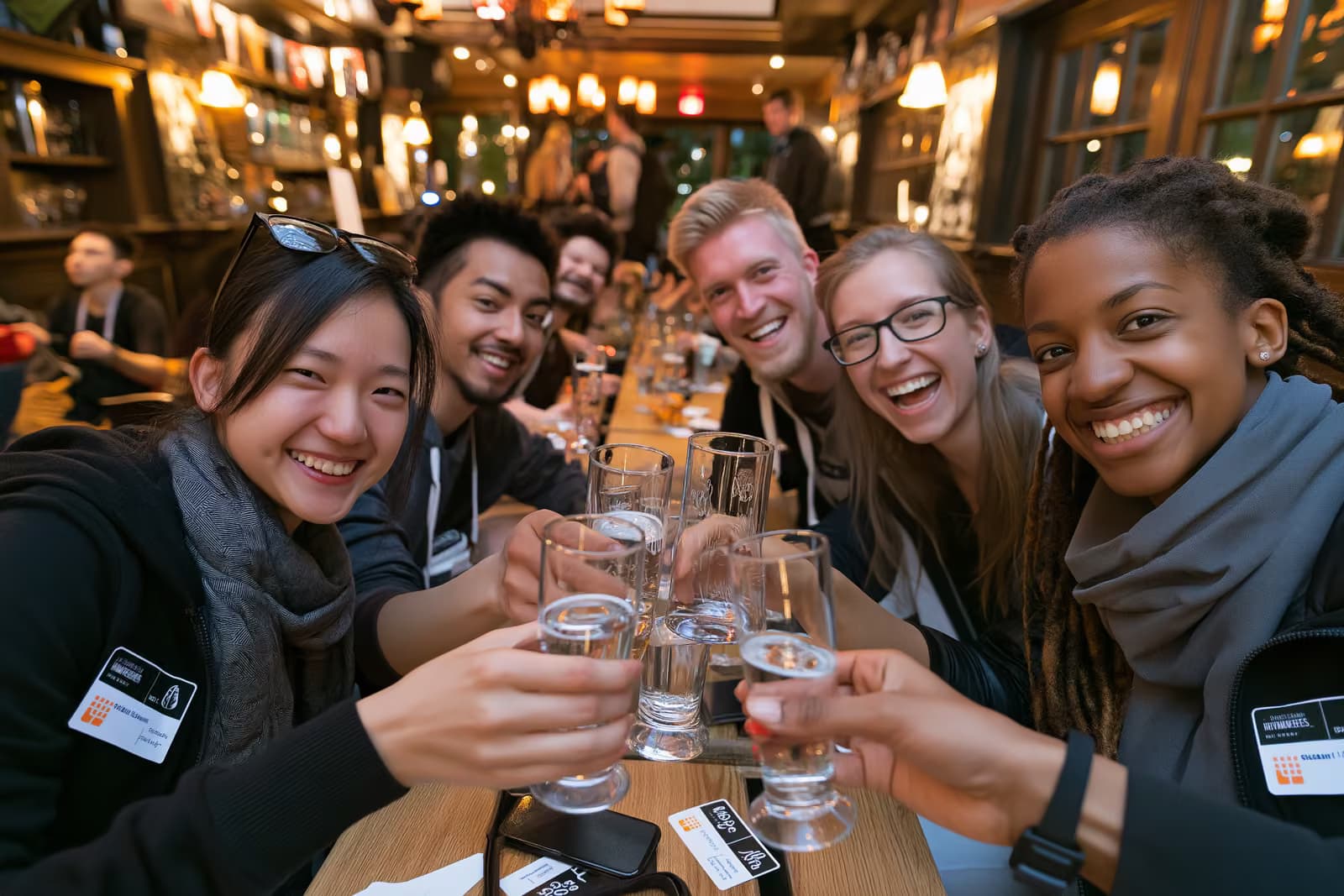
When you move to Germany, one of the fastest ways to stop feeling like a stranger is to plug into an organised expat group. This chapter is a practical map of that landscape: the actual organisations, clubs and communities that already exist, what each kind is good for, how to find and join them, and how to use them without letting them quietly wall you off from German life. If you want the general psychology of making friends here, that lives in our chapter on building a social network; this chapter owns the question of which organised groups exist and how you get into them.
The Expat-Group Landscape in Germany
The single best-known entry point is InterNations, a global expat network founded in Munich. It runs regular official events and smaller interest-based activities in every large German city, and its model is worth understanding before you sign up. A free Basic account lets you see the community and attend some events, usually for an entry fee at the door. The paid premium tier, called Albatross membership, is an annual subscription that adds free or reduced event entry, priority admission and full access to the network’s guides and groups. Whether the paid tier is worth it depends entirely on how often you actually attend, so try a couple of free events first before you commit any money. InterNations skews toward professionals and a slightly polished, name-tag-and-networking atmosphere, which some people love and others find transactional.
Meetup is the other pillar, and for many people the more natural one. It is not expat-specific, but in Berlin, Munich, Frankfurt, Hamburg, Cologne and Stuttgart you will find dozens of active groups aimed at internationals: general “expats in [city]” meetups, language tandems, hiking and board-game groups, tech and startup circles, and hobby groups of every kind. Meetup’s strength is that it is organised around doing a thing rather than around being a foreigner, so the connections often feel less forced. Most groups are free to join and you simply RSVP to individual events. Facebook plays a similar role: nearly every German city has large “Expats in [city]”, “English speakers in [city]” and nationality-specific groups where people post events, ask questions and arrange meetups, and these are often where the day-to-day chatter and last-minute gatherings actually happen.
Alongside these broad platforms sit the nationality associations and clubs, many of them long-established registered associations (eingetragene Vereine, or e.V.). These range from embassy- and consulate-linked community lists to independent American, British, Commonwealth, Indian, and other national clubs that organise holiday celebrations, family events and regular socials. A particularly active strand is the international women’s clubs. The American Women’s Clubs in Germany - in Berlin, Hamburg, Cologne, Düsseldorf and Frankfurt - are members of FAWCO (the Federation of American Women’s Clubs Overseas), and despite the name most of them welcome women of all nationalities. They tend to run charity work, cultural outings, newcomer coffees and interest groups, and they are a genuine soft landing for trailing spouses and partners who arrive without a ready-made workplace network.
Finally, there is the informal end of the spectrum: the city-specific English-speaking groups and the expat Stammtisch. A Stammtisch is a German institution - literally the “regulars’ table”, a standing informal meetup where the same loose group gathers at the same pub or cafe on a recurring evening. Expat and international Stammtische exist in most cities, advertised through Meetup, Facebook or a local forum, and they are the lowest-pressure way to show up: no membership, no fee, just a table you can join. Between InterNations, Meetup, the nationality clubs, the women’s clubs and the Stammtische, even a mid-sized German city usually has more going on than one person can attend.
It is worth knowing that a second layer of more structured English-speaking clubs sits underneath the big platforms, because these are easy to miss and often the most rewarding. Toastmasters runs English-language public-speaking clubs in most German cities, and they are a well-kept secret for meeting a committed, regular crowd rather than a rotating cast. Politically minded Americans have Democrats Abroad and Republicans Abroad chapters in Germany; many nationalities have their own community associations - Indian, Chinese, Turkish, Latin American, Nigerian and more - that organise festivals, film nights and family events. University alumni networks frequently have German or city chapters, and international churches and other faith communities run some of the most active social calendars of all. On the professional side, the bilateral chambers of commerce, such as the American Chamber of Commerce in Germany, host mixers and talks; those belong more to the professional-networking world, but they are part of the same landscape. The point is that “expat groups” is not one thing but a dozen overlapping scenes, and it pays to look past the first two websites you find.
How to Find and Join Them
Finding groups is mostly a matter of searching a few reliable places rather than hoping to stumble across them. Start with Meetup and search your city plus a keyword - “expats”, “international”, “language”, or whatever hobby you already have. On InterNations, create a free profile and browse the events calendar for your city. On Facebook, search for your city’s name combined with “expats”, “English speakers” or your nationality, and join two or three of the biggest groups. Add to that the city’s own expat website or forum. Toytown Germany was for years the main English-language forum for the whole country; it has had a bumpy history and its role has shrunk as activity moved to Facebook and Reddit, so treat it as one source among several rather than the hub it once was. Many cities also have their own subreddit and their own local English-language blog or newsletter that lists events. Your embassy or consulate often keeps a community list of national associations, and the welivein.de community itself is a place to ask where other readers have found their people.
It helps to understand the free-versus-paid line before you spend anything. The large majority of what is out there - Meetup groups, Facebook groups, Stammtische, most nationality-club open events - is free to attend, sometimes with a small charge at the door to cover the venue. Paid membership is the exception, and it usually buys you either discounted event entry (InterNations Albatross) or the fuller programme and voting rights of a registered club (the women’s clubs and national associations typically charge a modest annual fee). The honest rule is simple: never pay before you have been to a free or low-cost event and decided you actually like the crowd. A subscription to a network whose events you attend twice a year is money wasted.
It also helps to read a group a little before you commit your evenings to it. The platforms differ in character: InterNations tends to be more polished and professional, Meetup more casual and activity-led, Facebook groups more chaotic but more current, and the registered clubs more structured and continuous. Before an event, look at how recently the group posted, how many people usually turn up, and what the tone of the comments is - an active group with photos of real gatherings is a very different prospect from a page that last posted a year ago. When you do go, remember that the organiser is almost always a volunteer doing this in their spare time, so a friendly message beforehand and a bit of help on the night go a long way, and they are often the fastest route to being introduced around. If a group turns out not to fit you, there is no obligation and no drama in simply not going back; with this many options, finding your particular people is mostly a numbers game.
Most of this scene runs on a drop-in culture, which is a relief if you are shy about “joining” anything. You do not need an introduction or a waiting period; you RSVP, you turn up, and you are in. The harder part is not finding the event but converting it into real contacts. That skill - how to actually talk to people, when to suggest meeting again, how to turn a friendly evening into a standing arrangement - is covered in depth in our chapter on building a social network. This chapter owns the where; that one owns the how. In short, though: go to the same group more than once so people start to recognise you, be the one who suggests a coffee or a second meetup rather than waiting to be invited, and remember that in a transient expat scene the people who follow up are the ones who build a circle.
What Each Kind of Group Is Good For
Different groups solve different problems, and it is worth matching the group to what you actually need at that moment. The broad expat networks - InterNations, the big city Facebook groups, general “internationals” meetups - are best in your first weeks for instant soft-landing belonging and for practical tips from people who have already done what you are about to do. This is where you get honest, current answers on finding an apartment, on surviving German bureaucracy and the paperwork that comes with it, and on finding English-speaking work. A five-minute question in the right group can save you a week of guesswork, and a lot of the value of an expat community is simply this shared, lived-in local knowledge. If you are brand new to the country, our chapter on an expat’s first steps pairs naturally with these groups.
The nationality clubs and national associations are best for something more emotional: homesickness, holidays and family life. They are where you celebrate your own festivals, mark the holidays that Germany does not, find familiar food and traditions, and - if you have children - give them a connection to your home culture and a peer group who share it. The international women’s clubs in particular are strong on newcomer support, structured activities and charitable involvement, and they can be a lifeline for a partner who has followed a spouse’s job and needs a community of their own.
Hobby and interest groups do a different job again. Because they are built around an activity - climbing, choir, board games, photography, football - the connection tends to form organically and to last, since you keep seeing the same people around a shared purpose rather than around small talk. These groups are also the natural bridge toward German life, because they are the format most likely to include Germans as well as internationals. Professional and business groups are the last category, and they deserve their own treatment: for job-hunting, industry contacts and career events, hand yourself over to our chapter on professional networking events, and if you are starting or running a business, to the chapter on networking for entrepreneurs. Online communities and forums, where a lot of the asking and answering now happens, are covered in our chapter on social media and online forums.
A useful way to think about all of this is that your needs change as you settle, and the right group changes with them. In your first month you want breadth and information, so the big open networks and the busiest Facebook groups earn their keep. Over the next few months, as the paperwork calms down, the activity-based hobby groups become more valuable, because they are where casual acquaintances slowly turn into real friends. And once you are established, the balance should tilt toward the more rooted connections - a Verein, a volunteering role, colleagues, neighbours - with the expat scene remaining a warm and familiar part of your life rather than the whole of it. You do not have to plan this consciously, but it helps to notice when a group has done its job for you and it is time to add a new kind.
The Honest Bubble Trade-off
Here is the tension no honest guide to expat groups can skip. The same feature that makes these groups so valuable - that they let you build a full social life entirely in English, among people who understand exactly what you are going through - is also the easiest way to live in Germany for years and never really arrive. An all-expat circle can become a comfortable bubble in which you never need German, never make a German friend, and never see the country from the inside. This is not a reason to avoid expat groups; it is a reason to use them deliberately. The deeper analysis of how German and expat friendships actually differ, and why the expat social world can feel both welcoming and strangely temporary, lives in our chapter on connecting with Germans and other expats, which owns that whole subject.
The transience is worth naming on its own. Expat communities have a high turnover - people’s contracts end, assignments rotate, partners get posted elsewhere - so the friend you made in spring may be gone by autumn. That churn is real and it can be wearing, but it is also part of what makes these groups so quick to welcome a newcomer: everyone remembers arriving. The practical response is not to avoid expat friendships but to build alongside them a second layer of connection that is more rooted in the place itself.
The healthy pattern, then, is to treat expat groups as a landing pad and a permanent-but-not-only community, and to keep reaching outward into German life at the same time. The most reliable routes outward are the ones this section of the guide covers in full. A German association, or Verein, is the classic long-term integration path, and small-town life especially runs on them; see our chapter on Vereine, Germany’s club culture. Volunteering puts you shoulder to shoulder with locals around a shared cause - see learning culture through volunteering. And a language tandem or exchange group does double duty as social life and language practice; our chapter on language exchange meetups covers those, as our chapters on German language-learning methods cover the wider effort. None of this means dropping your expat friends. It means making sure they are not your only door into the country.
Groups for Specific Situations, and Where to Start
Whatever your particular situation, there is almost certainly a group shaped around it. Trailing spouses and accompanying partners will find the international women’s clubs and the newcomer-focused expat networks especially welcoming, precisely because so many members arrived the same way. Parents can look for international-family playgroups, school parent networks and the family strands within the nationality clubs, which are good for both the children and the adults. Students have their university’s Erasmus and international-student networks, which run a busy social calendar. Retirees and older arrivals will find quieter interest-based clubs and the national associations a better fit than the after-work networking crowd. There are active LGBTQ+ international groups in the larger cities, and faith communities of every kind - churches, synagogues, mosques, temples - many of which run services and social life in English or in your own language and function as tight support networks. Faith, alumni and profession-specific groups all follow the same discovery playbook described above.
Two practical cautions. First, geography matters. The organised expat scene is enormous in Berlin, Munich, Frankfurt and Hamburg, solid in the other big cities, and much thinner in small towns and rural areas - where, if you are honest with yourself, the German Verein is often the only real community on offer and learning the language stops being optional. If you are heading somewhere small, read the Vereine chapter early. Second, open groups attract the occasional scammer. In large public Facebook and forum groups, be wary of anyone who pushes you into a private chat with a too-good housing offer, a “friend” who quickly needs money, or a job that asks for a fee up front. Meet new contacts first in public places, keep money out of new online friendships, and trust the same instincts you would use anywhere.
To get started this week: pick your city on Meetup and RSVP to one event that is about a hobby rather than about being an expat; make a free InterNations profile and note the next open event; join two of your city’s biggest Facebook groups and read for a few days before you post; and if a nationality or women’s club fits you, email them and ask to come to a newcomer coffee. Go to at least two things before you judge any of them, because the first event of anything is always the most awkward. Then, once you have a foothold, use it as a base to reach outward - a Verein, a volunteering role, a language tandem - so that a year from now your life in Germany rests on more than one community. That balance, more than any single group, is what turns a posting into a home.
Sources
The information in this chapter draws on the official sources and publications listed below, last reviewed in July 2026. It is general guidance for orientation, not individual legal, tax, or medical advice.
- InterNations
- FAWCO / American Women's Clubs
- Toytown Germany