Professional Networking Events
13 min read
Germany runs on professional networks, but it builds them differently from the countries most newcomers arrive from. This chapter is about the practical work of building a professional network here as a foreigner: the events and communities worth your time, the online platforms Germans actually use, and how to turn a first handshake into a working relationship without stepping on the cultural conventions that quietly shape every professional room. It is written for people who are already in the country, or soon will be, and who want their career and their industry contacts to grow rather than stall. If your goal right now is specifically to land a job, the sister chapter on effective networking in Germany covers using contacts to get hired; this chapter is about the longer game of building and keeping a professional presence, whether or not you are job-hunting.
How German professional networking really works
The first thing to unlearn is the fast, warm, transactional style of networking that works in the United States and much of the English-speaking world. In Germany the register is more formal, the pace is slower, and the trust that makes a contact useful is earned rather than charmed into existence. Germans build professional relationships on demonstrated competence and reliability. Being personable helps, but it does not substitute for knowing your subject and doing what you said you would do. Someone who is quietly excellent and follows through will out-network someone who is merely enthusiastic, and the enthusiastic newcomer who oversells often reads as slightly untrustworthy rather than impressive.
The language of the professional room reflects this. At a Fachkonferenz (a specialist industry conference), an IHK event or a Business-Stammtisch (a regular informal business get-together), you address people you have just met with the formal Sie, not the informal du, and you use titles and surnames until you are invited to do otherwise. In some traditional and academic settings a Doktor- or Professor-title genuinely matters and is used. The business card, the Visitenkarte, is still a normal and expected part of a first meeting; carrying a small stack is not old-fashioned here, it is simply correct. Handing someone your CV at a party, or pitching hard for a favour on first contact, is the kind of move that lands badly. What works is showing genuine expertise, asking informed questions and letting the relationship establish itself.
Germans also separate professional and private life more sharply than many cultures do. A friendly, productive work contact can remain exactly that for a long time without ever becoming a private friend, and this is not coldness, it is the normal boundary. A colleague who is warm and open in the office may not expect to see you at the weekend, and that is fine. The upside is that once a professional relationship does deepen into something more personal it tends to be durable and sincere. If you want to understand the reserved-but-loyal arc of German relationships and why a work contact becomes a friend slowly, the chapter on connecting with Germans and other expats goes into it properly. For networking purposes the practical takeaway is simple: aim to be a respected professional contact, do not push for friendship, and let anything more grow on its own timeline.
LinkedIn and Xing: the current German picture
For years the received wisdom was that Germany had its own professional network, Xing, and that expats should be on it. That advice is now out of date, and it is worth being precise about why. LinkedIn has clearly overtaken Xing across the German-speaking market. LinkedIn reports well over 25 million members in the German-speaking region and, more importantly, far higher engagement: surveys through 2026 show roughly twice as many people in Germany using LinkedIn as Xing, and LinkedIn users open the platform far more often. Xing still has millions of registered members, but its owner, New Work SE, deliberately repositioned it. It dropped its Groups feature and wound down its content feed around 2023 and steered the product away from being a social network toward being a job and recruiting portal. In practice that means LinkedIn is now where professional conversation, industry content and active networking happen, while Xing has become more of a place where German-speaking candidates keep a profile and recruiters search.
So for most international professionals, and especially in tech, startups, science, marketing, consulting and anything with an English-speaking dimension, LinkedIn is the one to invest in. Xing still has a real, if narrower, role: parts of the traditional German Mittelstand, some HR and recruiting workflows, and certain German-speaking regional and public-sector contexts still take it seriously, and a small, tidy Xing profile costs you little to keep as a second front door. If you are aiming squarely at German-speaking SMEs or applying through German recruiters, having both is sensible; if you are in an international or tech field, LinkedIn alone is usually enough.
Optimising a profile for the German market is worth a deliberate hour. Write it in the language your target contacts work in: if you are pursuing German-speaking employers, a German-language profile (or a bilingual one) signals commitment and helps you appear in German searches. Be accurate and concrete rather than boastful, because the German professional reader is more persuaded by verifiable substance, clear job titles, real qualifications and recognisable employers, than by superlatives. List your Ausbildung or degree properly, German readers pay attention to formal qualifications. When you send a connection request, a Kontaktanfrage, add a short, polite personal note explaining who you are and why you are reaching out, ideally with the Sie register if the person is German and you have never met. A blank, context-free request is easy to ignore and mildly rude; two courteous sentences turn it into the start of a conversation.
A profile is only the shopfront. What actually builds a professional presence over time is being visibly active in your field: sharing the occasional thoughtful post, commenting usefully on what people in your industry publish, congratulating a former colleague on a new role, and generally showing up in the feed as someone who knows their subject. This is the part of networking that is genuinely yours to own year-round, independent of whether you are looking for a job. A handful of substantive comments a month keeps you in people’s awareness far more effectively than a static CV, and because German professional readers reward substance, one well-argued observation about your industry is worth more than a dozen reshared motivational posts. Done steadily, this quiet visibility is what turns a list of connections into an actual network that thinks of you when something relevant comes up.
Where the professional events are
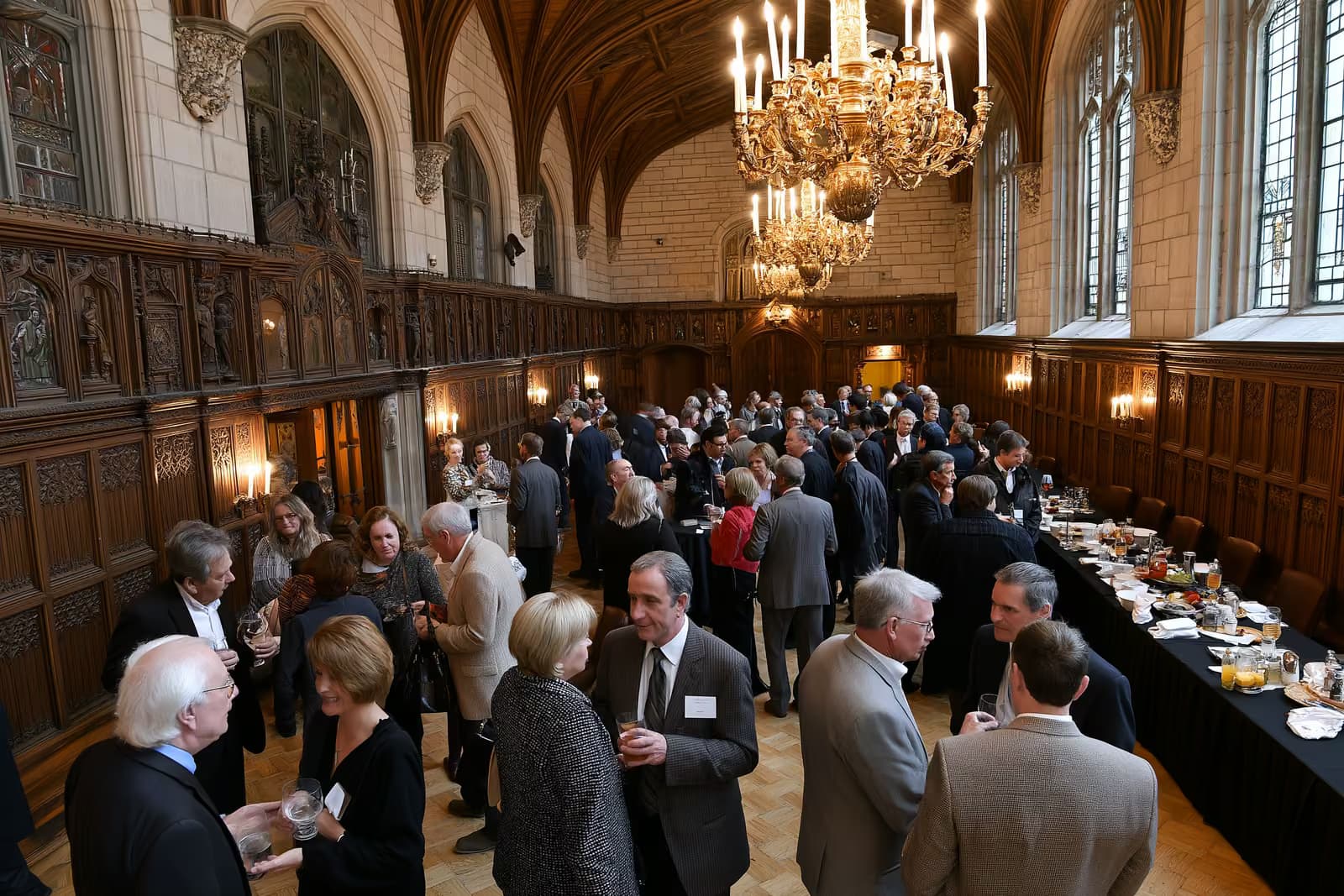
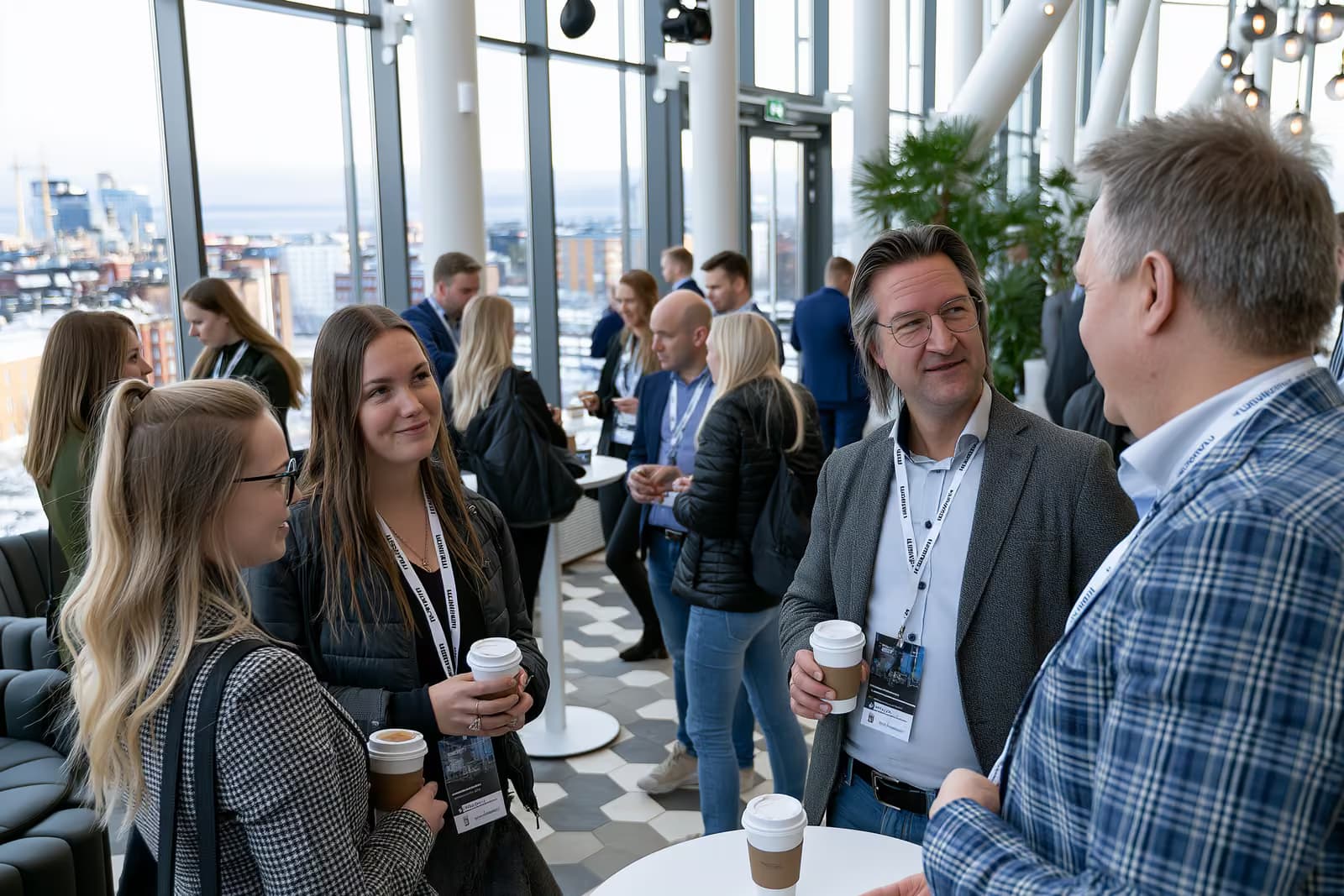
Germany offers a dense and slightly bewildering range of professional gatherings, and knowing the main categories saves you a lot of aimless searching. At the informal end are industry Meetups, evening events organised around a specific field or technology, and the Business-Stammtisch, a recurring casual meet-up where local professionals gather over a drink to talk shop. These are low-pressure, often free, and a good place to start because you can go once, see the tone, and come back if it fits. A step up in formality are Fachkonferenzen, the specialist industry conferences, and workshops and seminars, which draw the people actively working in a field and combine learning with the chance to meet speakers and peers.
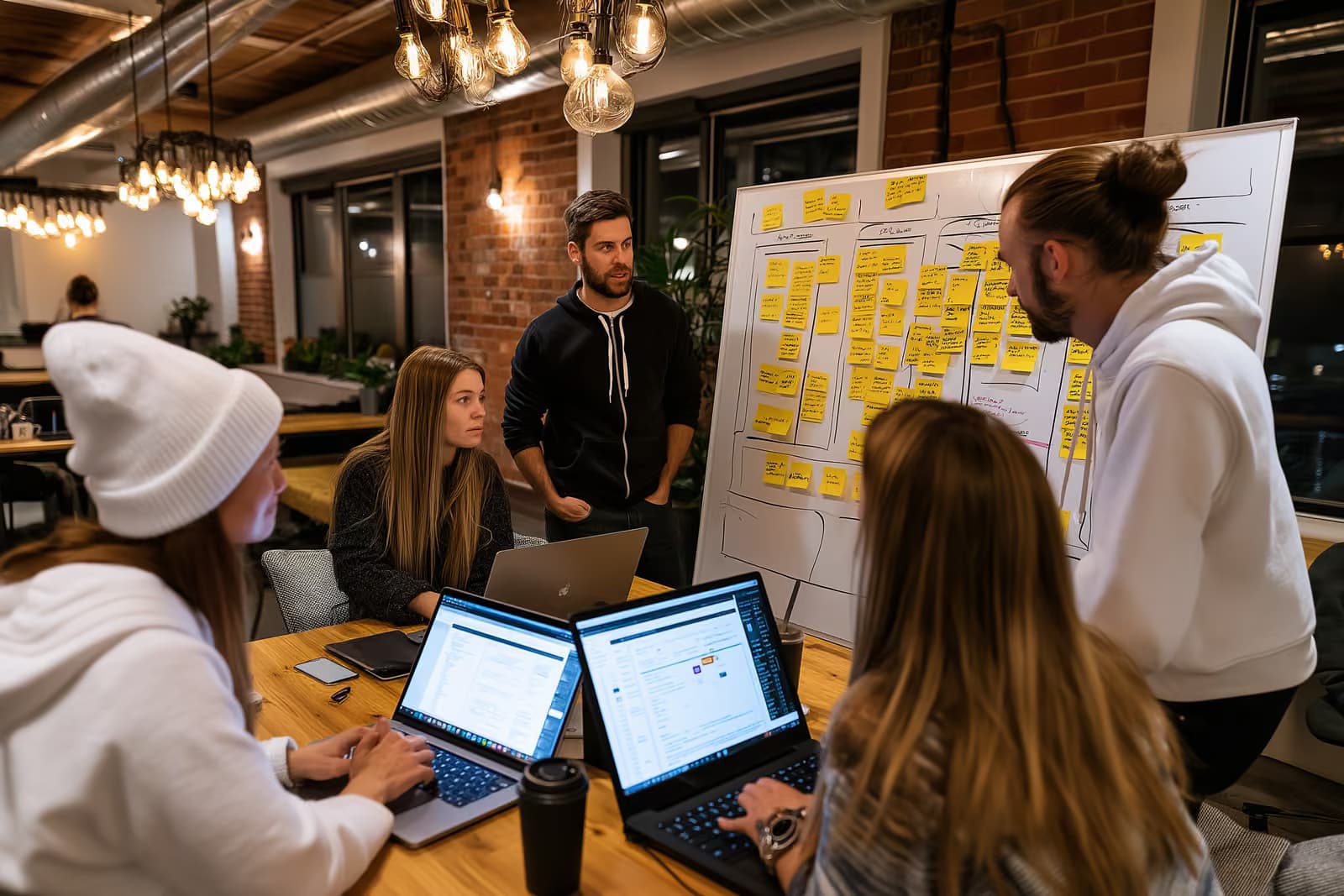
The institution that surprises many newcomers is the IHK, the Industrie- und Handelskammer, the regional Chamber of Industry and Commerce. Almost every business in Germany is a member of its local IHK by law, which makes the Chambers unusually central. They run a steady calendar of networking evenings, information events, training and industry roundtables, and their events are a reliable, credible way to meet established local businesspeople, particularly outside the big-city startup bubble. For the trades and crafts there is the parallel Handwerkskammer (HWK). Alongside these sit the professional associations, the Berufsverbände and Fachverbände, which organise your specific profession or industry and often run the most substantive events in a given field, and the coworking spaces, which have become genuine hubs for the startup and freelancer scene and host talks, demo evenings and community events that are easy to walk into.
There are also networks built around who you are as well as what you do. Women-in-business networks are active in most cities and range from broad professional groups to sector-specific ones. Alumni networks, the Absolventennetzwerke of your university or business school, are one of the most underused professional assets in Germany and often reach right into senior industry roles; because they deserve their own treatment, the chapter on alumni associations and groups covers how to find and use them. Expat-oriented professional groups matter too: InterNations and similar organisations run business and career events aimed at internationals, which can be an easier first rung when your German is still developing, and the general landscape of expat groups and clubs is mapped in the expat groups and clubs chapter, which owns the social side. Use those for a soft landing, but do not stop there, because the deeper professional contacts are usually in the German-run, industry-specific rooms.
Finally, Germany is the trade-fair capital of the world, and the Messe deserves a mention as a networking venue in its own right. The country hosts many of the leading global industry fairs, the Leitmessen, from the Hannover Messe in industry and engineering to major fairs in medicine, IT, food, books and almost every sector. These are enormous, and while they are ostensibly about exhibitors and products, the real value for a networker is the concentration of the entire industry in one place for a few days, plus the receptions, side events and stand conversations around the main floor. If your field has a flagship Messe, going once, even just to walk the halls and attend the fringe events, puts you in front of more relevant people than months of smaller meet-ups.
One practical caveat before you plan your calendar: where you live changes what is realistic. Event density is heavily concentrated in the big cities. Berlin, Munich, Hamburg, Frankfurt, Cologne and the larger university towns have something on almost every week, often in English, across many industries. In smaller towns and rural areas the picture is thinner and more German, and the network runs through the local IHK, the professional associations and, quite often, the Vereine, the registered clubs and associations that organise a great deal of German social and professional life. If you are outside a metro area, weight your effort toward those local institutions and toward online communities and LinkedIn, and accept that the occasional trip to a nearby city for a flagship event or Messe is part of the cost of staying connected in your field.
Networking effectively as a foreigner
The honest first question is language. Many professional events in Germany run in German, and pretending otherwise sets you up for a frustrating evening. In international and tech-heavy scenes, especially in Berlin and Munich, plenty of Meetups and conferences run in English, and you can build a serious network without fluent German. In most other fields, and almost everywhere outside the big cities, German is the working language of the room, and even where people can switch to English they will warm to you faster if you make the effort in German. You do not need to be perfect. Being able to introduce yourself, explain what you do and follow a conversation is enough to change how you are received, and every event you attend improves it.
It is worth preparing a short Elevator Pitch auf Deutsch, a two or three sentence introduction of who you are, what you do and what you are looking for, and practising it until it comes out naturally. Keep it factual and concrete rather than salesy, which suits both the language and the culture. When a conversation goes somewhere, the German instinct is to move at a measured pace: exchange Visitenkarten, and treat the card as a starting point rather than a trophy. The follow-up is where most networking is won or lost. Within a day or two, send a short, professional email or a LinkedIn or Xing connection request that references your actual conversation, so the person remembers you. Prompt, specific follow-up reads as reliable, which is exactly the trait German professionals value, whereas letting a week slide by quietly cancels the momentum.
The other principle that travels well here is to give before you take. Offer a useful contact, a relevant article, an answer to a question someone raised, and do it without immediately asking for anything back. In a culture that is wary of the hard sell, being visibly useful and low-pressure is what earns you a place in someone’s mental network. Expect the relationship to stay reserved for a while, and do not read that reserve as rejection. A German professional contact who is polite, businesslike and a little distant is behaving completely normally, and the same person, once you have proven reliable over a few interactions, can become a genuinely committed part of your network. The reserve is the front door, not the whole house.
Sector realities: where English works and where German is non-negotiable
Which of these rules bites hardest depends heavily on your field, and it helps to be clear-eyed about it before you invest your evenings. The tech and startup world is the most forgiving. In Berlin above all, and to a large degree in Munich, Hamburg and other startup hubs, the working language of the scene is often English, the events are numerous and informal, and you can build a strong professional network with limited German. This is the environment the coworking spaces, developer Meetups and startup events are built for, and it is where a newcomer can get traction fastest.
The traditional Mittelstand and classic industry are the opposite. These are the small and medium-sized, often family-owned firms that form the backbone of the German economy, and their world is German-first, relationship-heavy and strongly regional. Networking here happens through the local IHK, industry associations and long-standing personal relationships, it rewards patience and demonstrated reliability, and it effectively requires working German. If your career lies in engineering, manufacturing, logistics or the many specialised Mittelstand niches, treat German as non-negotiable and expect the network to build slowly and locally. Academia and research sit somewhere in between: universities and research institutes are international and conduct much of their work in English, conferences are often English-language, yet the administrative and funding side, and permanent positions, still run in German, so both languages pay off. Finance is its own world, concentrated heavily in Frankfurt, more formal and more conservative than tech, with English common in the international banks but German still valuable for the domestic and regulatory side.
What to do next
Start by picking your channels rather than trying everything. For finding events, the practical tools are Meetup and Eventbrite for the informal and startup end, the events calendar of your local IHK for credible business gatherings, LinkedIn and Xing events for professional and industry meet-ups, and the websites of the Berufsverbände in your field and the coworking spaces near you. Choose one or two that fit your sector and language level and put a recurring event in your calendar, because consistency beats intensity: showing up to the same Stammtisch or Meetup three times does far more than attending three different events once. Most of these are free; some conferences and association memberships cost money, and a paid Fachkonferenz can be worth it once you know the field is right for you.
If you find the whole idea draining, you are far from alone, and networking here actually suits a quieter temperament better than the hard-sell version does. You do not have to work a room. Arriving early when the group is small, talking properly to two or three people, offering something useful and following up well the next day is a complete and effective strategy. The German preference for substance over performance means a calm, well-prepared introvert often does better than a loud operator. Build the network before you need it: the time to have a warm professional circle is not the week you start a job search, and a network you have quietly maintained for a year is what makes the next move easy. When that next move is a job hunt specifically, hand yourself over to the chapter on effective networking in Germany, which covers using contacts to actually get hired.
Two more hand-offs will save you time. If you are building a company rather than a career, founder and startup networking has its own ecosystem of accelerators, investor events and founder communities, covered in the chapter on networking for entrepreneurs. If you are freelancing or self-employed and your networking is really about finding clients and building a book of business, the chapter on freelancing and self-employment in Germany is the right home for that. For everyone else, the plan is unglamorous and it works: get on LinkedIn properly, find the one or two rooms where your industry actually meets, show up more than once, be useful, follow up promptly, and let the reserved, competence-based German professional relationship do what it reliably does over time.
Sources
The information in this chapter draws on the official sources and publications listed below, last reviewed in July 2026. It is general guidance for orientation, not individual legal, tax, or medical advice.
- YouGov Feb 2026 / New Work SE reporting