Wellness and Spas
13 min read
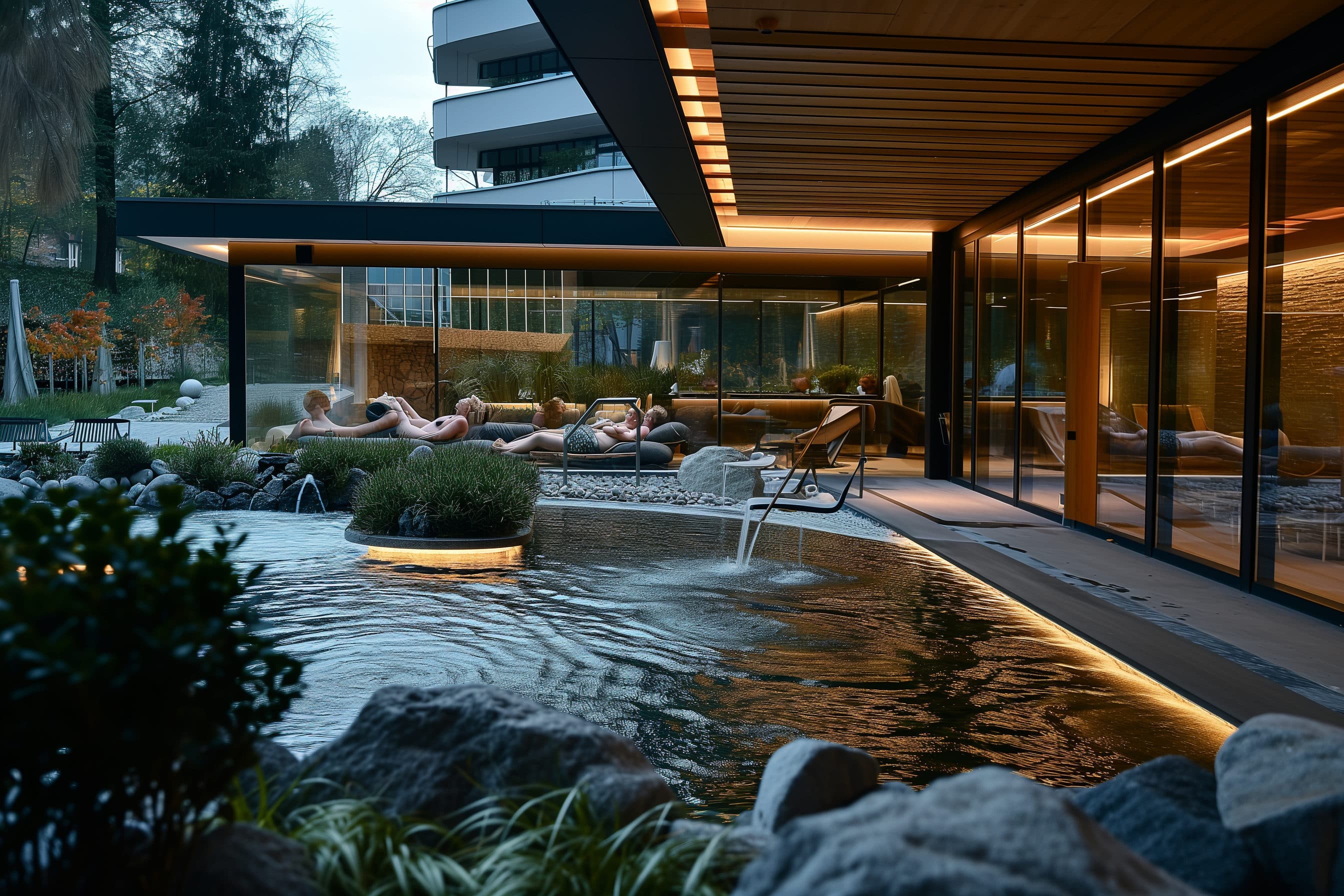
Germany takes rest seriously. Alongside the work and the paperwork sits a long, well-funded culture of Wellness (the German loanword for spa and relaxation) and Erholung (recuperation), built around warm water, hot rooms and the simple idea that looking after your body is not a luxury but maintenance. For a newcomer this can be one of the most pleasant things to discover, and one of the easiest to get slightly wrong. This chapter is a practical guide to wellness and spas in Germany - where you go, what you will find when you get there, what it costs and how to behave, so that your first visit to a German Therme or spa feels relaxing rather than confusing.
The Therme: Germany’s Spa-Bath Culture
The heart of everyday German wellness is the Therme, a thermal bath and wellness complex built around naturally warm or heated mineral water. A Therme is not a swimming pool in the sporty sense and it is not a small hotel treatment room. It is a large day destination, often the size of a leisure park, where you spend three, four or a whole day moving between warm indoor and outdoor pools, bubbling loungers, current channels, steam rooms, salt grottos and a dedicated sauna world. The water is the anchor: many Thermen sit on genuine thermal or brine springs, and the mineral content is part of the appeal, believed to ease aching joints, muscles and skin.
The best-known example is Therme Erding, about thirty minutes northeast of Munich, which bills itself as the largest thermal spa in the world. It is enormous, with dozens of pools and water basins, a wave pool, a long row of water slides for families and a separate sauna landscape with more than thirty saunas and steam baths, some of them themed. It is the extreme end of the scale, but it shows the German model clearly: bathing, saunas and family entertainment gathered under one roof so that a whole family can spend the day, each person doing their own thing. Most cities and regions have their own more modest Therme, and you rarely need to travel far to find one.
A typical visit follows a rhythm. You arrive, pay for a block of time, change, and then drift. You might start in the warm indoor pool, swim out through a hatch into the heated outdoor water while steam rises in the cold air, sit under a massage jet for a while, then dry off and read on a lounger in a quiet relaxation room. Later you move into the Saunalandschaft, the sauna world, for a cycle of heat and cooling, and finish with a long rest. There is no schedule and no pressure. The point is Entspannung, unhurried relaxation, and Germans are unembarrassed about spending hours doing very little.
Pricing is usually straightforward and, by international standards, affordable. Entry is sold by time: a two-hour, three-hour, four-hour or day ticket, with the clock starting when you enter and a surcharge if you overstay. Access to the sauna area normally costs a little more than the pools alone, so you choose a pool ticket or a combined pool-and-sauna ticket when you pay. A few euros more buys a bathrobe or towel rental if you did not bring your own. Expect to pay somewhere in the region of a cinema-and-dinner outing for a half-day, less at a small municipal Therme, more at a flagship like Erding, especially at weekends.
Bring your own kit and you save money and hassle. The standard packing list is a Badetuch or two (bath towels, one to sit on and one to dry with), a Bademantel (bathrobe) for walking between areas and resting, Badeschuhe or flip-flops for the wet floors, and your swimwear for the pool areas. Most Thermen rent robes and sell towels and slippers on site if you forget, but at a markup. One warning that surprises many newcomers: the swimwear stays on in the pools, but it comes off in the sauna area, which is nude and usually mixed. More on that below.
Sauna Culture and the Health Tradition
For many Germans the sauna is the real reason to visit a Therme, and it is treated as a health practice rather than a novelty. The tradition arrived from Finland and settled deeply: the standard Finnische Sauna is a hot, dry wooden room, usually between 80 and 100 degrees Celsius, where you sit or lie on a towel and let the heat work. Around it you will find gentler variants, a Biosauna or Sanarium at a lower temperature and higher humidity that beginners find easier, a Dampfbad (steam bath) that is cooler and wet, and often an Infrarotkabine (infrared cabin) that warms the body directly. The idea is a cycle: heat the body thoroughly, then cool it sharply, then rest completely, and repeat two or three times.
The cooling is not an afterthought, it is the point. Next to the saunas you will find a Tauchbecken, a cold plunge pool kept close to freezing, along with cold showers and often a bucket you tip over your own head. Plunging into cold water after the heat is believed to train the circulation and the immune system, and it is the moment that makes the whole ritual feel worth it. This is also where you meet the Kneipp tradition, named after the nineteenth-century priest Sebastian Kneipp, who built a whole system of healing around cold water, movement, herbs and nutrition. His Wassertreten, wading slowly through knee-deep cold water, is a fixture in spa parks across the country, and Kneipp therapy is recognised by UNESCO as intangible cultural heritage. You do not need a prescription to try it; many Kurparks have a free public treading pool.
The highlight of the sauna world is the Aufguss, an infusion ritual run to a timetable by a staff member, the Saunameister, who pours scented water over the hot stones and then wafts the steam around the room with a towel in a piece of choreographed showmanship. It is the social centrepiece of a sauna visit and worth planning your afternoon around. Because the Aufguss and the finer points of sauna behaviour deserve proper treatment, and because they are bound up with Germany’s nudity norms, we cover the ritual and its etiquette in detail in our chapter on Freikörperkultur (FKK).
The single most important thing to know before your first German sauna is that it is textilfrei, free of textiles, and normally gemischt, mixed men and women. Swimwear is not worn in the sauna, both for hygiene and by firm convention, and a bathing suit will mark you out far more than bare skin does. You sit on your own towel so that no sweat touches the wood, you keep your voice down, and nobody stares, because the whole culture rests on treating nudity as ordinary and unremarkable. This surprises almost every newcomer, so read it before you go rather than at the door. The full etiquette, including how mixed nudity actually works in practice and why it is nothing to be anxious about, is set out in the FKK chapter. If you would prefer to ease in, many larger spas run women-only sauna hours or areas, and a few keep a swimwear-friendly pool zone entirely separate from the nude sauna world.
Baden-Baden and the Historic Spa Towns
Germany has a whole class of towns built entirely around taking the waters, and you can spot them on the map by their names. A town whose name begins with Bad, the German word for bath, has been officially recognised as a spa town: Bad Homburg, Bad Kissingen, Bad Wörishofen, Bad Reichenhall and dozens more. The prefix is a legal title tied to a proven healing resource, whether thermal springs, brine, mud or a therapeutic climate. Wiesbaden, one of the oldest, keeps the older spelling without the space. At the centre of each of these towns you will usually find a Kurhaus, a grand spa house often housing a concert hall or casino, and a Kurpark, a landscaped park laid out for gentle strolling as part of the treatment.
The most famous of them all is Baden-Baden, in the Black Forest, long a resort of European high society and now recognised as one of the UNESCO Great Spa Towns of Europe alongside Bad Ems and Bad Kissingen. Baden-Baden gives you the two faces of German bathing side by side, a few steps apart. The Friedrichsbad, a richly tiled palace of a bathhouse opened in 1877, offers the Roman-Irish bath, a fixed sequence of showers, warm-air rooms, hot-air rooms, steam, thermal pools and cold plunges that you move through in a set order over a couple of hours, traditionally without clothes and, on most days, mixed. Next door the modern Caracalla Therme is a contemporary thermal spa with indoor and outdoor pools and saunas where swimwear is worn in the pool areas. One is a historic ritual, the other an easygoing day out, and both draw on the same hot mineral springs beneath the town.
It helps to understand the difference between a relaxing spa day and a traditional Kur. The word Kur means a course of medically supervised treatment, historically several weeks in a spa town under a doctor’s direction, with prescribed baths, mineral-water drinking cures, mud packs, inhalations and rest. This medical dimension still exists in the modern German health system as a prescribed and sometimes partly funded Vorsorge or Rehabilitation stay, and it is quite separate from turning up at a Therme for the afternoon. If you are interested in the medical side, the eligibility rules and how prevention fits into German healthcare, that is covered in our chapter on preventive healthcare and wellness in Germany. For a visitor, the good news is that you can enjoy the spa-town heritage, the historic bathhouses and the Kurparks purely as a leisure trip, no prescription required.
The Broader Wellness Scene
Beyond the big Thermen and the historic Kurorte, German cities are full of smaller ways to relax. Urban day spas have grown into a genre of their own, designed for a few hours of calm rather than a whole holiday. Vabali Spa, with branches in Berlin, Düsseldorf and Munich, is a good example: a Balinese-themed garden of saunas, steam rooms, pools and quiet lounges built as a green escape in the middle of the city, with two-hour tickets that start at very reasonable prices on weekdays. Like most serious sauna venues it is textilfrei, so the nudity note above applies. Many hotels, especially in spa regions and the mountains, also open their Wellnessbereich (wellness area) to non-guests for a day rate, which is an easy way to try a spa without committing to an overnight stay.
Massage and treatments are widely available and generally sensible in price. A Wellness-Massage at a spa is a relaxation treatment rather than a medical one, and you will see classic options like a hot-stone massage, an aromatic oil massage, or Ayurvedic and Asian styles at the larger centres. These are booked as add-ons to your spa visit and are worth reserving in advance at busy times. Keep in mind a distinction that German wellness draws firmly: a spa massage for relaxation is not the same as a medizinische Massage or physiotherapy prescribed by a doctor and billed to your health insurance. If you have a genuine complaint, see a physician; a spa is for Erholung, not treatment.
Then there is the water-and-sound end of the scene, which Germany does unusually well. Floating spas let you lie back in dense, body-warm brine so salty that you cannot sink, in the manner of the Dead Sea. The Liquidrom in Berlin, near the old Anhalter Bahnhof, is the best-known: a darkened dome with a warm saltwater pool, coloured light and music played through underwater speakers so that you hear it with your whole body while you float. The same Liquid Sound idea was invented at the Toskana Therme in Bad Sulza in Thuringia, which still runs it, with a sister site at Bad Orb. It is a genuinely unusual sensory experience and a good introduction to how far the German wellness world reaches beyond a simple hot pool.
You will also come across two things worth naming. The first is salt, which runs through German wellness in several forms: a Solebad is a brine pool you float in more easily than plain water, an Inhalatorium or graduation works (Gradierwerk) lets you breathe salty air said to help the airways, and a Salzgrotte is a small room lined with salt where you simply sit and breathe. The second is the marketing label Medical Wellness, used by hotels and clinics for stays that pair spa comforts with health checks, nutrition advice and supervised exercise. It sits somewhere between a pure relaxation break and a prescribed medical Kur, and it is sold privately rather than covered by insurance, so read what is actually included before you book.
Yoga, meditation and mindfulness sit comfortably inside this culture too, and most towns have studios offering classes for every level, often in English in the bigger cities. Dedicated retreats combine the two worlds, pairing yoga and meditation with sauna and spa time in a rural setting. If that appeals, we have a separate chapter on yoga and wellness retreats. Underlying all of it is a cultural attitude worth absorbing: Germans value Entspannung and self-care openly, they will happily block out an afternoon for it, and there is no guilt attached to resting. The old tradition of taking the waters and the modern habit of a Sunday at the Therme are really the same instinct, that recovery is part of a healthy life rather than time stolen from it.
Planning Your First Visit
Start with what to bring. Pack swimwear for the pools, at least one and ideally two large towels, flip-flops or Badeschuhe for the wet floors, and a bathrobe if you have one, since you will want it for walking between areas and resting. Almost every Therme will rent you a robe and sell towels and slippers if you arrive empty-handed, so a forgotten towel is not a disaster, just an avoidable expense. Bring a padlock too if the venue uses lockers that need one, though most modern places use an electronic system instead.
That system is the Chip, a waterproof wristband you receive at the entrance. It unlocks your locker, and at many venues it also acts as your wallet: anything you buy inside, a drink, a snack, a massage, a longer stay, is charged to the Chip and settled at a machine or desk on the way out. So you do not carry cash or cards around the pools, you just tap the band. Keep an eye on your entry time, because the time-based pricing means an overstay adds a surcharge when you check out.
Give a thought to who is coming with you. Large family Thermen like Erding deliberately separate the worlds: a lively, swimwear-only zone of wave pools, slides and warm water where children are welcome, and a calmer, adults-only Saunalandschaft that is nude, quiet and off-limits to under-sixteens. This is the norm and it works well, letting families and sauna-goers share a building without friction. Check the venue’s rules before you go, because the smaller, purely sauna-focused spas may be adults-only throughout, while the big leisure Thermen are built for a day out with kids.
On timing and cost, a Therme day remains one of the better-value pleasures in Germany, cheaper than most other paid leisure outings for the hours you get. Weekends, public holidays and cold winter afternoons are the busy times, so a weekday morning is calmer and sometimes cheaper. Popular spas let you buy tickets online in advance, which is worth doing on peak days to skip the queue, and treatments like massages should be booked ahead. If nature is part of what you are after, many spa towns sit in beautiful surroundings and pair perfectly with a walk, which you can plan alongside our chapter on outdoor activities and parks.
Above all, go in relaxed. The one thing that catches newcomers off guard is the nudity in the sauna, so read up on it beforehand and you will find the rest is gentle, welcoming and genuinely restorative. Pick a Therme near you, block out an afternoon, leave your phone in the locker, and let yourself do the very German thing of switching off completely. It is one of the easiest and most affordable ways to feel at home in the rhythm of life here.
Sources
The information in this chapter draws on the official sources and publications listed below, last reviewed in July 2026. It is general guidance for orientation, not individual legal, tax, or medical advice.