Water Sports and Activities
13 min read
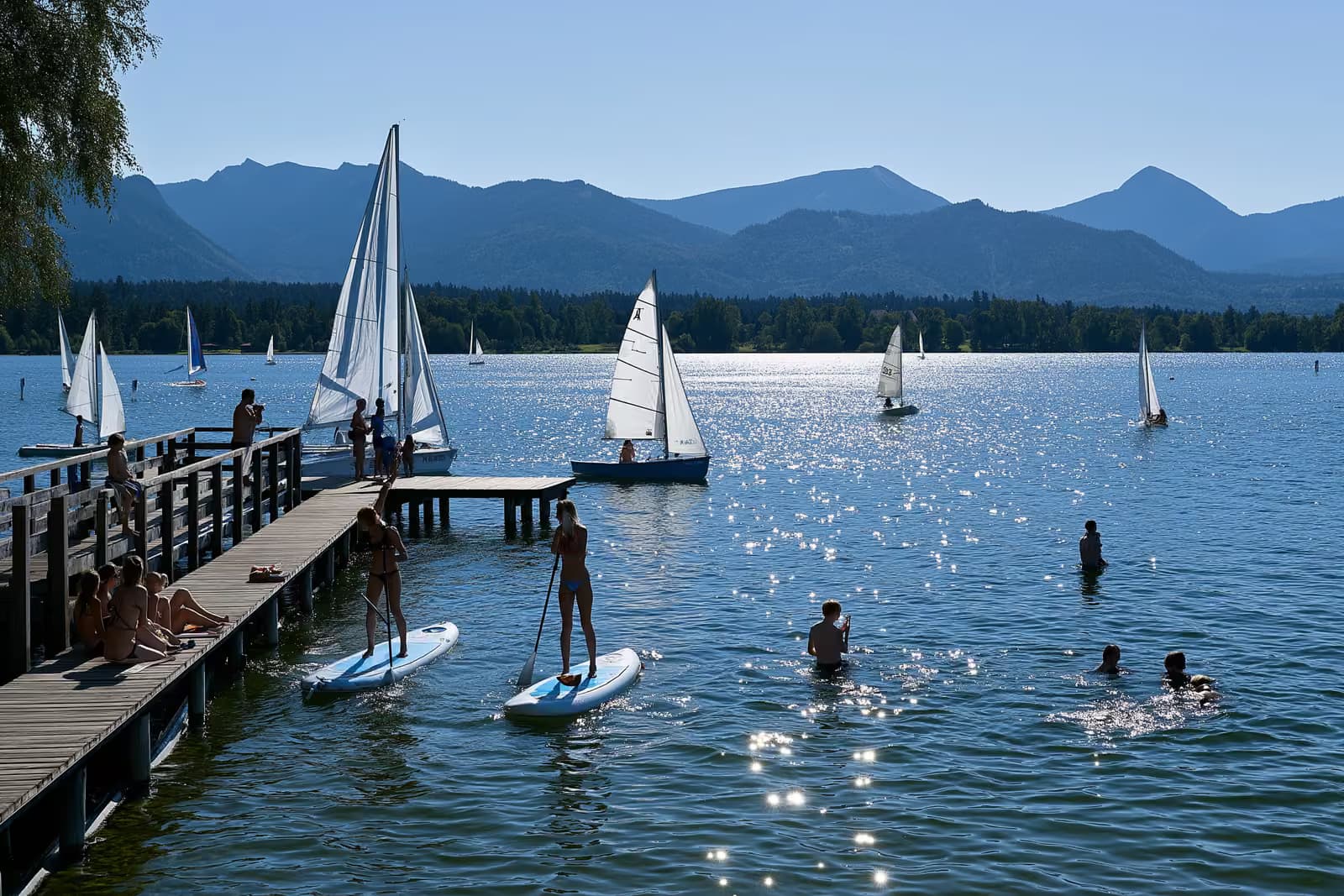
Germany is a country full of water, and it takes that water seriously. There are thousands of lakes, long stretches of Baltic and North Sea coast, slow rivers made for paddling and a swimming culture that treats knowing how to swim as a basic life skill rather than a hobby. This chapter is a practical guide to water sports for foreigners: swimming as a trained sport, sailing, kayaking and canoeing, stand-up paddling, rowing, diving and surfing, along with the licences you may need and the safety rules that keep you out of trouble. If you are more interested in a relaxed afternoon at a lake or an open-air pool, that everyday leisure side is covered in our guide to outdoor activities and parks; here the focus is on doing something on or in the water with a bit of skill behind it.
Swimming as a Sport and the Schwimmabzeichen Culture
Swimming (Schwimmen) is where German water culture begins, and it is more organised than many newcomers expect. Most towns have an indoor pool (Hallenbad) open through the winter and an outdoor pool (Freibad) for the summer, and serious swimmers use them for lap swimming (Bahnenschwimmen) rather than just splashing about. Many pools reserve early-morning or evening lanes for Frühschwimmer and fitness swimmers, and larger cities have 50-metre competition pools. If you want structure, join a swimming club (Schwimmverein): clubs run coached training, masters groups for adults, and competitions, and they are one of the easiest ways to swim regularly and meet people. For the wider club system - how membership, fees and Vereine work in Germany - see our guide to joining sports clubs.
It is never too late to learn. Pools run beginner courses (Anfängerschwimmkurs) for adults as well as children, and many foreigners who grew up without lessons use them to gain confidence in a calm, structured setting. German pool etiquette is worth knowing before your first visit. You shower before entering the water, the lanes in the swimming area are usually sorted by speed - slow, medium and fast - and you keep to the right and let quicker swimmers pass, much as you would on a road. Bring a one- or two-euro coin for the lockers, wear proper swimwear rather than long shorts, and check the pool’s opening plan (Schwimmzeiten), since many pools split the day between public swimming, club training, school groups and Aquafitness classes.
What surprises most foreigners is the German swimming-badge system (Schwimmabzeichen), a ladder of proficiency awards that runs from childhood into adulthood. The first one, the Seepferdchen (“seahorse”), is what small children earn after their first lessons. It is worth understanding clearly: the Seepferdchen is a beginner’s certificate, not proof that someone can swim safely. A child who has only the Seepferdchen still needs close supervision in the water. Real proof of safe swimming comes with the graded badges Bronze, Silber and Gold, awarded by the German lifesaving organisation DLRG and the German swimming federation (Deutscher Schwimm-Verband, DSV). The Bronze badge alone requires swimming for 15 minutes and covering at least 200 metres, changing position, diving to retrieve an object and doing a jump from the side - so it is a genuine test of stamina and control, not a formality.
Behind all of this stands the DLRG (Deutsche Lebens-Rettungs-Gesellschaft), the volunteer lifesaving society that guards many public swimming spots and beaches. With more than 1.9 million members and supporters, it is the largest voluntary water-rescue organisation in the world, and it teaches a large share of the country’s swimming lessons. That scale explains the national seriousness about swimming ability: being able to swim well is treated as a matter of safety, not sport alone. If you have children, the swim-badge path is also part of everyday family and school life, which we cover in our guide to family-friendly activities. One cultural note worth knowing: swimming and nude bathing overlap more openly here than in many countries, and some lakes and pool sessions are designated FKK (Freikörperkultur, “free body culture”); if that is unfamiliar, our chapter on Freikörperkultur (FKK) explains how it works and where the etiquette lies.
Germany’s Lakes, Rivers and Coasts
The reason water sports are so accessible here is simple geography: wherever you live in Germany, water is rarely far away. The south is lake country. In Bavaria the Chiemsee, often called the “Bavarian Sea”, and the Starnberger See near Munich are busy sailing and windsurfing waters within easy reach of the city, and the Bodensee (Lake Constance) on the Swiss and Austrian border is a large inland sea for sailing and diving. In the north-east lies the Mecklenburgische Seenplatte, the Mecklenburg Lake District, one of the largest connected lake networks in Central Europe. Its centrepiece, the Müritz, is the biggest lake lying entirely within Germany, and the whole area is laced with connected waterways that let you paddle or sail for days from lake to lake - a paradise for canoeing and quiet cruising.
For moving water, Germany’s rivers offer some of the best beginner-friendly paddling in Europe. The Altmühl in Bavaria, running through the Altmühltal nature park, is a classic gentle canoe river that beginners can manage over a multi-day tour. The Lahn, between Hesse and Rhineland-Palatinate, is another popular, easygoing paddling river with plenty of rental and campsite infrastructure. Near Berlin, the Spree and the maze of channels in the Spreewald - a UNESCO biosphere reserve - are famous for flat, sheltered canoeing. Add the many reservoirs (Talsperren), such as those in the Sauerland and the Harz, which are used for sailing, rowing and diving, and you have paddling and boating water in every region.
Cities matter here too, because a lot of German water sport happens inside them. In Hamburg the Außenalster, a lake formed by damming the Alster right in the centre, is one of Europe’s great urban sailing and rowing waters, ringed by clubs and busy with dinghies on any breezy evening. In Berlin the big lakes on the edge of the city - the Wannsee, the Müggelsee and the Tegeler See - together with the Havel and the Spree give the capital an enormous amount of sailable and paddleable water reachable by S-Bahn. Munich has the fast, cold Isar running through it, popular for rafting and, on its calmer stretches, paddling. Wherever you land, it is worth finding out which club or lake is nearest before assuming you have to travel far.
Then there are the two coasts. The Baltic Sea (Ostsee) in the north-east is the heart of German sailing, with the harbours around Kiel and Flensburg forming one of the most active sailing scenes in the country; its steadier, shallower water suits sailing, windsurfing and kitesurfing. The North Sea (Nordsee) is wilder and tidal, and it is home to one of Germany’s most distinctive activities: the Wattwanderung, a guided walk out across the Wattenmeer, the tidal mudflats that form a UNESCO World Natural Heritage site. At low tide you can walk for kilometres over the exposed seabed to observe the marine life, but the tide returns fast and the flats are genuinely dangerous without a certified guide (Wattführer) - more on that in the safety section below.
The Sports Themselves
Sailing (Segeln) has a long and strong tradition in Germany, especially in the north. You can learn at a sailing school (Segelschule) or through a sailing club (Segelverein), and for most keelboats and yachts you will eventually want a sailing licence (Segelschein) - the recreational qualifications are the Sportbootführerschein and, for coastal and offshore trips, further certificates like the Sportküstenschifferschein. The high point of the sailing calendar is the Kieler Woche in Kiel, held each June: it is the largest sailing event in the world, drawing around 4,000 sailors from roughly 50 nations since it began in 1882, wrapped inside a huge public festival. If you want to watch top-level regattas rather than compete, our guide to sports events and competitions covers events like this.
For wind-driven boardsports, the Baltic coast and the larger lakes are the places to go. Windsurfing has a devoted following, and kitesurfing has grown fast at exposed spots along the Ostsee and on the North Sea islands, where steady wind and shallow water make good learning conditions. Stand-up paddling (Stand-Up-Paddling, usually just “SUP”) has boomed over the past decade and is now the easiest way for a newcomer to get onto the water: boards are cheap to rent, the basics take an afternoon, and calm lakes and slow rivers everywhere are full of paddlers in summer. Kayaking and canoeing (Kanu) are organised around a dense network of clubs (Kanuverein); clubs run river tours, store your boat and teach technique, and paddling on Germany’s calmer rivers and lakes is largely licence-free, which makes it one of the most open water sports to try.
A word on where you may paddle: most German lakes and gentler rivers are open to canoes, kayaks and SUP boards without any licence, which is a large part of the appeal. Some waters are restricted, though - stretches used by commercial shipping, certain protected nature reserves that close seasonally to shield breeding birds, and a few lakes with local permit rules. Clubs know these local rules inside out, which is another reason to start through a Kanuverein rather than guessing. Learn-to-row works the same way: you cannot simply hire a racing shell, so a Ruderverein’s beginner course is the normal way in, and most run introductory sessions in spring.
Rowing (Rudern) is the classic club and university sport, practised through rowing clubs (Ruderverein) on rivers and lakes across the country, with a strong tradition at the older universities. Diving (Tauchen) is more popular than the climate might suggest: alongside the Baltic wrecks, Germany has many clear lakes and flooded former quarries (Baggerseen and quarry lakes) that serve as inland dive sites, and you will need a recognised diving certificate such as those from PADI, SSI or the German federation VDST to dive or fill tanks. Finally, there is river surfing. In the middle of Munich, the Eisbach - a fast artificial channel in the Englischer Garten - throws up a permanent standing wave that surfers ride year-round. It is one of the most famous urban surf spots in the world, officially permitted since 2010, but it is strictly for experienced surfers: the water is cold and shallow, a safety leash is required and beginners should watch, not paddle out. The Eisbach and the park around it also feature in our guide to outdoor activities and parks.
Rules and Water Safety
Germany regulates boating and swimming through clear rules, and it helps to know them before you start. For motorboats, a boat licence (Bootsführerschein, formally the Sportbootführerschein) is generally required once the engine produces more than 15 horsepower, which is about 11 kilowatts, on most inland waterways and on coastal waters - there are separate certificates for inland (Binnen) and sea (See) waters. Below that power you can usually operate a small motorboat without a licence, and pure paddling and most sailing dinghies need no motor licence at all, though some regions and specific waters have stricter local rules (the Rhine, for example, is more restrictive). These thresholds are a rough guide, not legal advice, so check the rules for the specific water and boat before you set out.
For swimming, the country runs on the Baderegeln, a well-known set of swim-safety rules taught to every child: never swim overheated or after alcohol, do not dive into water you cannot see into, get out when you feel cold, and never overestimate your ability. Many popular lakes and all patrolled beaches are guarded by DLRG or water-watch lifeguards, and they use a flag system you should learn: a red flag means swimming is forbidden, a yellow flag means conditions are dangerous and only strong swimmers should enter, and no flag or an absent lifeguard means you are swimming at your own risk. A great many of Germany’s lakes and river spots are simply unguarded, so treat “no lifeguard” as the normal case and act accordingly.
Two natural dangers deserve special attention. First, cold water and currents: German lakes and rivers can be far colder below the surface than the air suggests, especially in spring and early summer, and cold-water shock and hidden currents cause drownings every year even among confident swimmers. Rivers with commercial traffic or weirs are particularly hazardous. Second, and most seriously, the tides on the North Sea coast. The Wattenmeer mudflats look like a harmless beach at low tide, but the flood tide returns quickly, fog rolls in without warning and channels fill behind you - which is exactly why a Wattwanderung should only ever be done with a certified Wattführer, in good weather and daylight. Walking out alone is genuinely life-threatening, and people die doing it. None of this is meant to discourage you; it is simply the knowledge that lets you enjoy the water the way experienced locals do.
Getting Started as a Foreigner
The single best way into water sports in Germany is to join a club (Verein) or book a course at a school. A Segelschule, a Kanuverein or a Schwimmverein gives you coaching, cheap access to boats and gear you would otherwise have to buy, and a ready-made group of people to go out with - and club membership fees are modest by international standards. If you would rather stay independent, rental (Verleih) is widely available: SUP boards, kayaks and canoes can be hired by the hour at almost any busy lake in summer, and sailing schools rent dinghies once you have shown basic competence. Think about licences early: paddling and small sailing dinghies need none, most motorboats over 15 horsepower need a Sportbootführerschein, and diving needs a recognised certificate. Match the licence to the activity so you are not surprised at the water’s edge.
On gear, the golden rule is to rent or borrow before you buy. A wetsuit (Neoprenanzug) makes a real difference in Germany’s cool water and extends your season at both ends, and a buoyancy aid or life jacket is standard on open water for paddling and sailing. Clubs often lend equipment to members, and the second-hand market - flea markets, club noticeboards and the classifieds on Kleinanzeigen - is full of used boards, boats and sails once you know you are committed.
Reaching the water is easier than you might think without a car. Many lakes, coastal towns and paddling rivers sit on the regional rail and bus network, and the nationwide Deutschlandticket makes weekend trips to the water cheap and simple - our guide to the Deutschlandticket explains how it works. Season matters too. The main water-sports season runs from late spring through early autumn, when lakes warm up and rental stations are open. In winter the water empties, with one growing exception: cold-water swimming and ice bathing (Eisbaden) have become genuinely popular, with organised groups meeting to take a brief, bracing dip in near-freezing lakes. It can be done safely, but only briefly and ideally in company, never alone and never after alcohol; if the cold-plunge and recovery side appeals, it also connects to the sauna and bathing culture in our guide to wellness and spas.
If you have children, the water is part of growing up here. School swimming lessons and the Seepferdchen-to-Gold badge path give kids a structured, well-supervised route to becoming safe swimmers, and getting them into a Schwimmverein early is one of the most useful things a family can do. Remember that Germany also handed you the paddling side of the outdoors from the hiking world - our chapter on outdoor adventures and hiking is a natural next step if you like combining a river tour with time on land. So start small: rent a SUP board on a calm lake, sign up for a beginner’s sailing weekend, or walk into the local club and ask. The national federations - the Deutscher Kanu-Verband for paddling, the Deutscher Segler-Verband for sailing and the DLRG for swimming and lifesaving - publish club and course directories that help you find the nearest option. Respect the cold, the currents and the tides, learn the flags and the Baderegeln, and Germany’s lakes, rivers and coasts will give you a lifetime of things to do on the water.
Sources
The information in this chapter draws on the official sources and publications listed below, last reviewed in July 2026. It is general guidance for orientation, not individual legal, tax, or medical advice.