Winter Sports Opportunities
13 min read
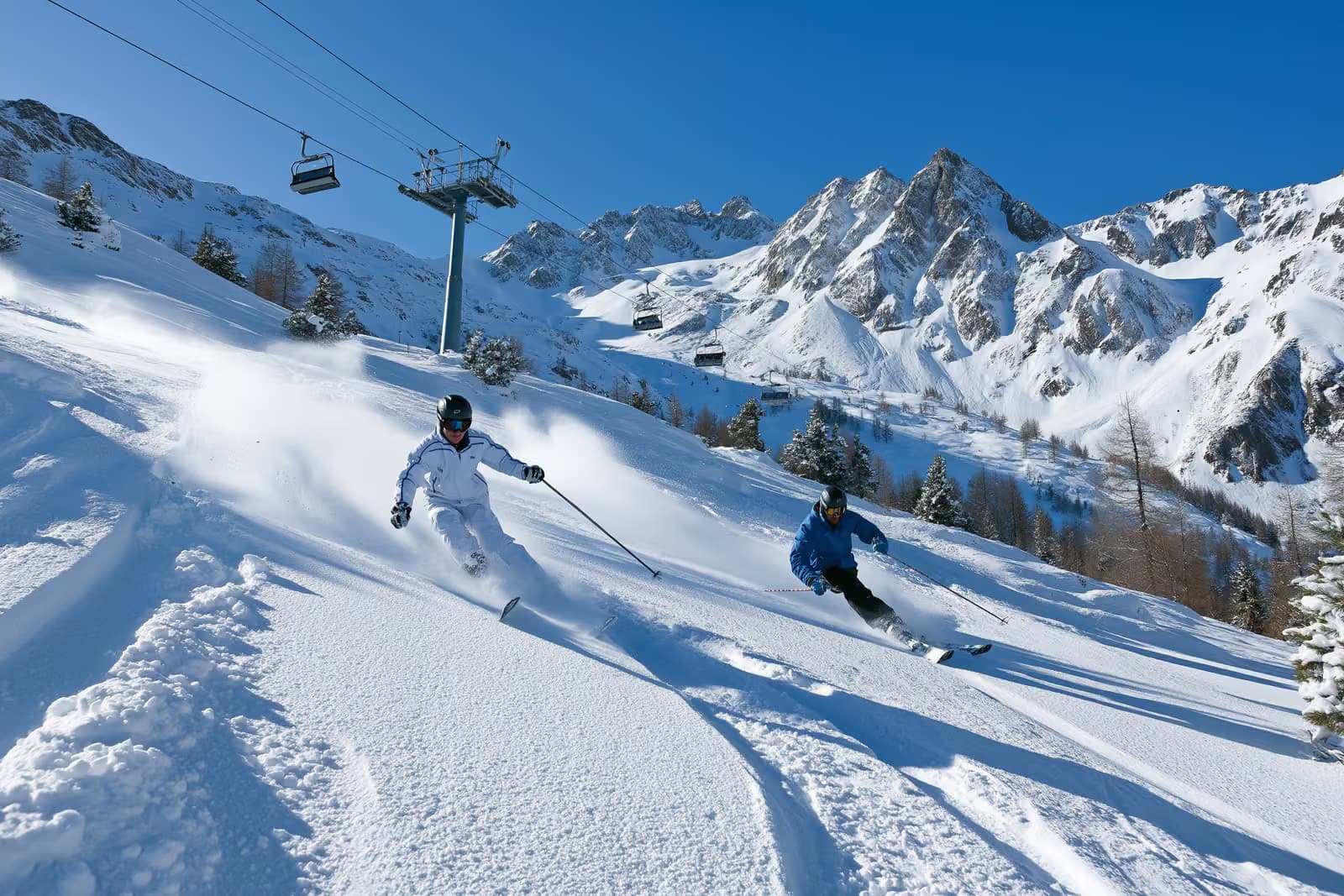
This chapter is a practical guide to doing winter sports while you live in Germany - putting on skis or a snowboard, gliding down a cross-country track, pulling a sledge up a hill, or lacing up ice skates. It is meant to be honest rather than a tourist brochure. Germany does have real winter sport, and a lot of it is genuinely accessible to a resident on an ordinary budget, but the country is not the Alps of the postcard, and knowing where it shines and where it disappoints will save you money and a wasted weekend. If you are more interested in watching the professionals - biathlon, ski jumping, the New Year ski-jump broadcast - that is a spectator subject covered in our chapter on popular sports in Germany. Here the focus is on you, on the snow.
The honest reality of skiing in Germany
The first thing to understand is that Germany is a modest skiing country. It has genuine Alpine terrain, but only along a thin strip of the far south - the Bavarian Alps (the Bayerische Alpen), which form the border with Austria. Everything else is Mittelgebirge, the low and medium mountains of the interior, where the peaks top out well below where reliable snow used to sit. Compared with Austria, Switzerland, Italy or France, German resorts are smaller, lower and fewer, with shorter runs and less altitude to hold the snow. Germany’s highest mountain, the Zugspitze, reaches 2.962 metres; a mid-sized Austrian resort an hour further south will often start where the Zugspitze ends. This is simply the geography, and it is worth accepting before you plan your winter.
The second thing is snow reliability, and here the news has been getting steadily worse. Warming winters hit low resorts first and hardest, and most German resorts are low. The Mittelgebirge hills in the Sauerland, the Harz and the Black Forest increasingly go through whole stretches of winter with bare brown slopes, leaning heavily on artificial snowmaking to open at all, and even that fails when the nights are too warm to blow snow. The higher Bavarian areas and the Zugspitze glacier are far more dependable, but the trend line for the country as a whole points one way. If you read that a nearby hill is “open”, check the actual snow report and the webcam before you drive, because “open” can mean a single machine-made ribbon of white through the mud.
The honest conclusion that most keen skiers in Germany reach is this: for a proper Alpine skiing weekend, they drive to Austria. It is closer than you might think. From Munich you can be in the Tyrolean or Salzburg ski areas in about two hours, and the Austrian, Italian and Swiss Alps sit right on Germany’s doorstep. That does not make German skiing pointless - a local hill is perfect for an afternoon, for learning, for the kids, and for cross-country, which is a different and better story. But be realistic about what a German resort is for. For planning a trip across the border, see our chapters on domestic travel tips and the Deutschlandticket, both of which help with reaching the mountains.
Germany’s Alpine ski areas
The heart of German downhill skiing is Garmisch-Partenkirchen, the Bavarian resort town below the Zugspitze. There are really two linked areas here. The Garmisch-Classic area holds the famous Kandahar run, a World Cup downhill course first opened in 1936 and one of the steepest and most demanding on the racing circuit - the men’s and women’s World Cup stops here most winters, and it is a serious slope, not a beginner’s hill. Above it, reached by cog railway and cable car, is the Zugspitze glacier, Germany’s highest ski area and its only glacier skiing, with runs between roughly 2.000 and 2.700 metres. Because of that altitude the Zugspitze is the country’s most snow-sure skiing and usually the last to close in spring, which is exactly why it matters in a warming climate.
The other major Bavarian centre is Oberstdorf, at the southern tip of the Allgäu. Two ski areas sit above the town: the Nebelhorn, the highest in the Allgäu at 2.224 metres and home to the longest single descent in Germany at around 7,5 kilometres, and the Fellhorn-Kanzelwand, a larger, well-groomed area that straddles the border into Austria’s Kleinwalsertal. Oberstdorf is also the ski-jumping town: the Schattenbergschanze here hosts the opening competition of the Vierschanzentournee (the Four Hills Tournament), the ski-jumping series held across Germany and Austria every year around New Year. You can ski the resort and, in the same trip, stand at the foot of a world-class jump. Further east, near the Austrian border by the Königssee, Berchtesgaden offers a handful of smaller areas, the best known being the Jenner above the lake - scenic and pleasant, though modest in size.
Beyond these, the Bavarian Alps are dotted with small, mostly family-scale resorts - the Brauneck above Lenggries, Spitzingsee and Sudelfeld south of Munich, Garmisch’s smaller neighbours - which are excellent for a day out from the city but should not be mistaken for a week’s ski holiday. They are close, cheap by Alpine standards, and easily reached, and on a good snow year they are a genuine pleasure. Just set your expectations to “a good local day on the slopes” rather than “an Alpine expedition”, and you will rarely be disappointed.
The lowland slopes: the Mittelgebirge
Most Germans do not live near the Alps, and for them the winter-sports hills are in the Mittelgebirge, the belt of low mountains that runs across the middle of the country. The largest downhill area north of the Alps is the Skiliftkarussell Winterberg in the Sauerland region of North Rhine-Westphalia, with around 27 kilometres of pistes, night skiing several evenings a week, and the steepest slope north of the Alps. It is the go-to for the huge population of the Rhine and Ruhr cities, so it can be crowded on a good snow weekend, and it depends heavily on snowmaking to open. For millions of people, though, it is by far the nearest real slope, and for learning or a quick day it does the job.
Further north, in the Harz mountains straddling Lower Saxony and Saxony-Anhalt, the main area is the Wurmberg above the resort town of Braunlage. At 971 metres it is the highest in the Harz and the largest ski area in northern Germany, and its longest run - dropping about 405 metres over 4,3 kilometres down to Braunlage - is Germany’s longest piste north of the Alps. In the southwest, the Black Forest (der Schwarzwald) is built around the Feldberg, which at 1.493 metres is the highest German peak outside the Alps and the most snow-sure of the low mountains, with a linked network of lifts around the Seebuck and Grafenmatt. It reliably opens from late November into early April in a normal year, making it the best bet for downhill skiing in the western half of the country.
In the east, the Erzgebirge (the Ore Mountains) along the Czech border has its own downhill hill at Oberwiesenthal on the Fichtelberg, Saxony’s highest mountain and the highest town in Germany. The downhill area is small but respectable, and it links across the border to the larger Czech resort of Klínovec. But the Erzgebirge’s real strength is not downhill at all - it is cross-country, which is where Germany genuinely competes with anyone, and which deserves its own section.
Cross-country skiing: where Germany shines
If there is one winter sport where Germany is genuinely first-rate and where being a resident really pays off, it is cross-country skiing, known in German as Langlauf. Instead of a lift carrying you up a steep mountain, you propel yourself along groomed tracks called Loipen (singular Loipe) that wind through forest and over gentle hills. Because it does not need a big vertical drop, Langlauf works beautifully in exactly the low, rolling terrain that Germany has in abundance, and the country’s Loipe networks are extensive, well signposted and lovingly maintained.
The classic Langlauf regions are the Erzgebirge around Oberwiesenthal and the Fichtelberg, with dozens of kilometres of high, snow-sure trails; the Bavarian Forest (der Bayerische Wald) along the Czech border; the Black Forest, which has hundreds of kilometres of Loipen; and the Rhön, the upland on the borders of Bavaria, Hesse and Thuringia. Nearby Oberhof, in the Thüringer Wald, is Germany’s national training centre for cross-country and biathlon, and its trails are open to the public. Because Langlauf sits on flatter, shaded forest ground, it often holds snow when the downhill pistes nearby are struggling, and a thinner cover is enough - so in a marginal winter, cross-country is frequently the sport that is actually possible.
There are two techniques, and it helps to know the difference before you rent gear. The classic style (klassisch) keeps your skis parallel in two pre-cut grooves and is the natural way to start - it feels like a gliding walk and most beginners pick up the basics in an afternoon. The skating style (Skating), done on a smooth groomed lane with a skating motion like an ice skater, is faster and more athletic but harder to learn. Both are far cheaper than downhill: there is no expensive lift pass, many Loipen are free or ask only a small daily or seasonal Loipengebühr (trail fee) that goes toward grooming, the equipment is light and inexpensive to rent, and you can start practically from the car park. For a resident who wants regular winter exercise without the cost and crowds of an Alpine day, Langlauf is very often the smarter choice.
Sledding, skating and the other winter activities
Skiing is only part of a German winter. Rodeln - sledding or tobogganing - is a family staple, and most ski areas and many ordinary hills have a marked Rodelbahn (toboggan run) where you can hire a wooden sledge (a Schlitten or Rodel) or bring your own. Some Bavarian runs are long, groomed descents that you climb or ride a lift to reach; others are just the local hill with children and adults sliding down all afternoon. It is cheap, needs no skill, and is where a lot of newcomers have their first happy day in the snow. Treat the marked runs with respect, though - a fast toboggan hill can cause real injuries, and you steer and brake with your feet.
Ice skating (Schlittschuhlaufen) comes in two forms. There is the reliable indoor or covered artificial rink, the Eisstadion or Eisbahn, found in most mid-sized towns and open all winter regardless of weather, where you can skate cheaply and rent skates at the door. And there is the romantic but conditional version: skating on a frozen natural lake, a Natureisbahn. This depends on a long hard freeze, which is now rare in much of Germany, and it carries a genuine drowning risk. Never assume a frozen lake is safe. Local authorities issue an official Eisfreigabe (ice release) only when the ice has been measured and declared thick enough; if there is no Eisfreigabe, stay off. A related and very Bavarian pastime is Eisstockschießen, a curling-like game where players slide heavy wooden or plastic “stocks” toward a target across the ice - clubs and beer gardens run it socially all winter and it is easy to try as a beginner.
Beyond the classics, two quieter activities have boomed in recent years. Schneeschuhwandern (snowshoe hiking) lets you walk over deep snow on wide frames strapped to normal boots - it needs no technique, just fitness, and opens up silent winter forest that would otherwise be impassable. Skitouren (ski touring), climbing uphill on skis fitted with grippy skins and then skiing back down away from the pistes, has grown hugely popular, but it takes you into unsecured terrain. That means avalanche danger, and it is not something to improvise: learn the basics, carry a transceiver, shovel and probe, check the avalanche report, and ideally go first with a guide or a club. The same caution applies to any off-piste or winter mountain walking; our chapter on outdoor adventures and hiking covers mountain and backcountry safety in more depth. Plain winter Wandern (hiking) on cleared valley trails, by contrast, asks only warm layers and good boots.
The practical side: cost, gear, lessons and getting there
Money first. A day lift pass (a Skipass or Tageskarte) at a German Alpine resort typically runs somewhere in the region of 40 to 60 euros for an adult, with the bigger Bavarian areas at the top of that range and the small Mittelgebirge hills well below it; children and teenagers pay substantially less. Prices change every season, so check the resort’s own website rather than trusting an old figure. Cross-country is dramatically cheaper, often just a small trail fee or nothing at all. If you are only going a few times, renting is the sensible choice: a Skiverleih (ski-rental shop) at or near every resort will fit you with skis or a board, boots and poles for a modest daily rate, and renting spares you storing and transporting bulky gear you use twice a year. Buy your own only once you know you will ski regularly, and even then good second-hand equipment is easy to find.
If you have never skied, do not teach yourself on a mountain. Every resort has a Skischule (ski school) offering lessons for adults as well as children, in groups or privately, and learning properly in a few structured sessions is far safer, faster and less frightening than flailing down a slope. Adults learn perfectly well; you are not too old. A cheaper and very German route into the sport is a Skiverein, a ski club - clubs organise low-cost group trips, sometimes with transport and instruction bundled in, and they are one of the best ways for a newcomer to get onto the snow affordably and meet people. Our chapter on joining sports clubs explains how the Verein system works and how to join one.
Getting to the slopes without a car is easier than in many countries. The Bavarian Alpine towns - Garmisch-Partenkirchen, Oberstdorf, and the smaller resorts on the Munich commuter lines - are reachable by regional train, and many ski areas run a Skibus shuttle from the station to the lifts. The nationwide Deutschlandticket covers regional trains and local buses, so it can carry you from a Bavarian city to the mountains for the price of your monthly pass; see our Deutschlandticket chapter for how it works and where it is valid. One cultural note worth knowing if you have school-age children: the Skifreizeit or Schullandheim ski trip, a week away on the snow with the class, is a rite of passage for German schoolchildren, and it is often where a child learns to ski cheaply and well - our chapter on German family life and parenting gives more background on how school trips work.
Finally, respect the weather and the mountain. Alpine conditions turn quickly, cold and altitude are real, and avalanche risk exists wherever there is steep snow off the secured pistes. Check the forecast and the local avalanche bulletin, stay on marked and open runs unless you are properly equipped and trained, tell someone your plan, and keep your phone charged. None of this is meant as legal or safety advice for a specific outing - it is the ordinary common sense that keeps a good day from turning into a bad one.
Where to start this winter
If you are new to winter sports in Germany, start small and local. Book a half-day or a couple of lessons at a Skischule at the nearest hill, rent your gear rather than buying, and see whether you enjoy it before you spend real money. If downhill skiing feels intimidating or expensive, try cross-country instead - it is cheaper, gentler on the knees, easier to reach, and the sport in which Germany truly excels. A frozen afternoon of Rodeln with a rented sledge, or an evening skating at the town Eisstadion, costs almost nothing and is a good way to test the water.
And keep the honest picture in mind. German resorts are fine for learning, for a day out and for the family, and the Mittelgebirge and the Loipen networks reward a resident who explores them. But for a full Alpine skiing weekend on big, snow-sure mountains, the plain truth is that a couple of hours’ drive south into Austria will often give you far more skiing for your time and money than the local hill can. Use the German slopes for what they are good at, cross the border for the rest, and check the snow report before every trip - because in a warming winter, the single most useful habit is to look at the mountain before you go.
Sources
The information in this chapter draws on the official sources and publications listed below, last reviewed in July 2026. It is general guidance for orientation, not individual legal, tax, or medical advice.