




 Turkish
 Italian
 Spanish
 Portuguese
 Romanian
 Albanian
 Lithuanian
 Latvian
 Bulgarian
 Greek
Greek Hungarian
 French
 Croatian
 Czech
Czech
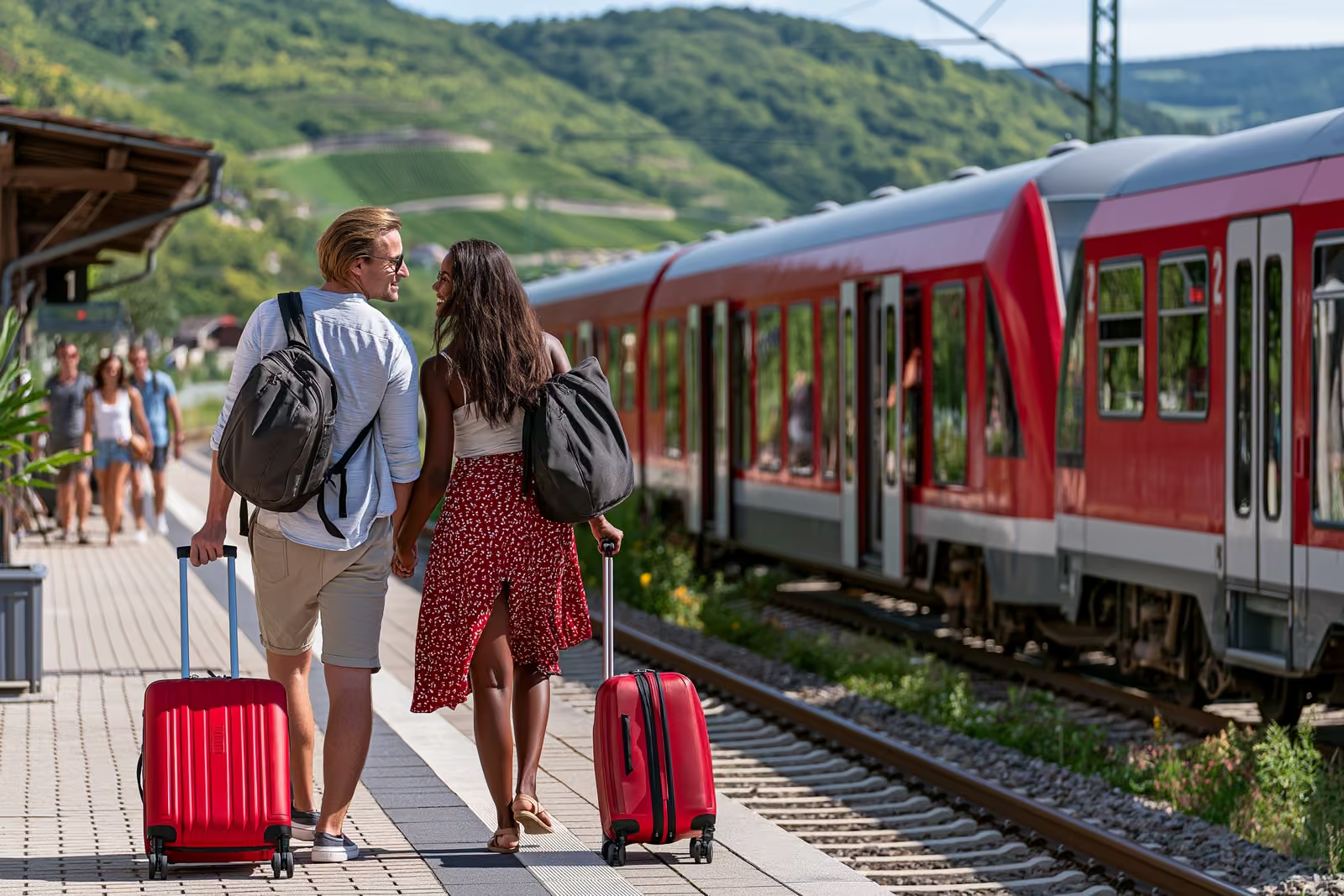
Germany’s greatest travel advantage is not any single destination but its position. You can sit at a station in almost any German city on a Friday evening and be at the seaside, in the mountains, in a medieval old town, or in another country’s capital by Saturday morning. This chapter is about weekend getaways: the two or three day short break you can plan on a Tuesday and take that weekend, without booking leave or spending a fortune. It focuses on where to go and how to make a weekend feel like a proper escape rather than a rushed errand. For the mechanics of cheap fares and booking, and for the bigger picture of exploring Germany and Europe over months rather than days, you will be pointed to two companion chapters that own those subjects in detail.
Think of a weekend getaway – in German often an Ausflug (a short excursion) or a Kurzreise (a short trip) – as a category of its own. It rewards a different kind of planning than a long holiday: you pick one place, you travel light, and you accept that you will not see everything. Done well, a single weekend in Hamburg or on the Baltic coast can reset your whole month. The ideas below are grouped so you can match a trip to your mood: a city with culture and nightlife, quiet nature, a border crossing into somewhere new, or a seasonal experience tied to the time of year.
The weekend city break within Germany
A German city break, or Städtetrip, is the easiest getaway to organise because the country’s big cities are close together and well connected by fast trains, and each has a distinct character that a weekend is just long enough to taste. Berlin is the obvious first choice: two days barely scratch it, but a Friday-to-Sunday visit built around one neighbourhood – Kreuzberg for food and markets, Prenzlauer Berg for cafes, Mitte for the Museum Island and the historic core – gives you history, art and a legendary nightlife that genuinely runs until Sunday. Hamburg is the northern counterweight, a maritime city where a weekend means a walk around the harbour and the HafenCity, a boat trip on the Elbe, and a night out on the Reeperbahn, the famous entertainment strip in St. Pauli. It feels more open and watery than any other German metropolis, and the fish market on Sunday morning is a ritual worth setting an alarm for.
In the south, Munich works beautifully as a weekend base because it combines a grand, walkable centre – the Marienplatz, the beer halls, the Englischer Garten where locals surf a standing river wave – with easy access to the Alps for a single day trip. You can spend Saturday in the city and Sunday at a mountain or a lake within an hour or two by regional train. Cologne is the friendly, unpretentious Rhineland option, organised around its vast Gothic cathedral, a warren of old-town brewpubs serving the local Kölsch beer, and a river promenade made for aimless wandering. Each of these cities deserves its own deep dive, which is why what to actually do once you arrive – the museums, the bars, the concerts – is covered across the culture and nightlife chapters rather than repeated here.
Eastern Germany holds some of the most rewarding weekend cities. Dresden, rebuilt after wartime destruction, is a baroque showpiece on the Elbe, its restored Frauenkirche and Zwinger palace best seen from the riverside terrace known as the Brühlsche Terrasse. Nearby Leipzig has become the country’s coolest mid-sized city, with a music and art scene built into former industrial halls and a compact, sociable centre. For something smaller and older, Heidelberg offers a romantic castle above the Neckar river and a student-town atmosphere that fills a weekend without ever feeling hurried. And in the north, the Hanseatic towns of Lübeck and Bremen – once powerful trading ports – reward a slower weekend of brick-Gothic gables, marzipan shops and harbour-side beer, a gentler alternative to the big-city rush. Whichever you pick, the trick with a German city break is restraint: choose one city, one or two districts, and let yourself linger.
Nature and regional weekends
When the city is exactly what you want to escape, Germany’s coasts, forests and mountains are close enough for a two-day reset. The two seas in the north offer very different weekends. On the Ostsee, the Baltic coast, the island of Rügen is the classic choice, known for the white chalk cliffs of the Jasmund National Park and the elegant seaside resort of Binz with its long promenade and grand villas. Its neighbour Usedom, shared with Poland, catches so much sunshine that it is nicknamed the Sonneninsel, the sun island, and its imperial-era spa towns like Ahlbeck are made for slow strolls. On the Nordsee, the North Sea, the island of Sylt is the chic, windswept option, all dunes and seafood, while the surrounding Wattenmeer – the tidal mudflats that are a UNESCO World Heritage site – can be walked at low tide on a guided Wattwanderung. A weekend an der Küste, at the coast, is less about doing and more about wind, horizon and long beach walks.
Inland, the mountains and forests carry the weight. The Schwarzwald, the Black Forest in the south-west, is a landscape of dark wooded hills, cuckoo clocks, waterfalls and cake, easily reached from Freiburg or Stuttgart and ideal for a mix of gentle hiking and cosy village stops. The Bayerische Alpen, the Bavarian Alps, are the grander option: a base like Garmisch-Partenkirchen puts you within reach of Germany’s highest peak and, a little further east near Berchtesgaden, the Königssee – a deep, fjord-like lake ringed by cliffs, crossed by quiet electric boats. Between Dresden and the Czech border lies the Sächsische Schweiz, Saxon Switzerland, a national park of dramatic sandstone towers and gorges whose Bastei bridge is one of the country’s most photographed views. All of these are wonderful for walking, and if you want to plan a serious multi-day trek rather than a weekend ramble, the outdoor-adventures-and-hiking chapter in the Sports section goes into the routes and gear in depth: outdoor adventures and hiking.
For a wine-scented weekend, the river valleys of the Mosel and the Rhein string together steep vineyards, half-timbered villages and a remarkable density of castles – Burg Eltz above the Mosel and the fortresses of the Rhine gorge among them – all easily seen on foot, by bike or from a river boat. The wine culture itself, from the Riesling of these valleys to how a German wine list works, has its own chapter: wine and beer culture. Further north, the Harz is a compact low-mountain range with steam railways, witch legends and the Brocken summit, good for a misty, atmospheric weekend. And just south-east of Berlin, the Spreewald offers something genuinely unusual: a maze of small canals through the forest, home to the Sorbian minority, where you explore by paddling a canoe or riding a flat wooden punt. If your ideal weekend is warm water and quiet rather than trails, a spa town delivers it – the thermal-bath weekend has its own chapter, so turn to wellness and spas for the Kurort, the German spa town, and how the baths and saunas actually work.
Cross-border weekends: Germany’s superpower
Living in Germany means nine neighbouring countries are on your doorstep, and this is where the weekend getaway becomes something no islander or edge-of-continent resident can match. From the west of the country, Amsterdam is a direct train ride from Cologne, and Brussels and Paris are only a few hours away on the high-speed lines through Cologne and Frankfurt – close enough that a Friday-evening departure can put you at breakfast in a French cafe. Strasbourg and the wider Alsace region sit right across the Rhine from Baden; from cities like Offenburg or Freiburg it is barely a hop, and the half-timbered towns and wine villages feel both foreign and familiar. Basel, on the Swiss corner where three countries meet, is a border station in its own right, opening the door to a Switzerland weekend.
Head south or east and the options multiply. Munich sits within easy reach of Vienna by fast train and of Salzburg even closer, making an Austrian city break a comfortable weekend. From Dresden or Berlin, Prague is one of Europe’s great short-break cities and genuinely close – a few scenic hours by train down the Elbe valley. Hamburg has a direct rail link north to Copenhagen for a Scandinavian weekend, and from eastern Germany the Polish cities of Krakow and Wroclaw are within reach by train or a short, cheap flight. I have kept these descriptions to rough reachability on purpose: exact journey times shift with timetables and engineering works, so check a live connection before you commit. The point stands regardless – a huge slice of Europe is a weekend, not a holiday, away.
There is one piece of paperwork worth understanding before you cross a border, and it matters most to third-country nationals – that is, anyone who is not an EU, EEA or Swiss citizen. If you hold a German residence permit, you can travel within the Schengen area without a visa, but only within limits, and you must carry the right documents. Rather than restate the rule imperfectly here, use the chapter that owns it in full: the travel and exploration chapter sets out the Schengen ninety-days-in-one-hundred-and-eighty rolling rule for residence-permit holders and exactly what to carry, and it is the authoritative version to rely on. For a weekend trip this is rarely a constraint, but it is the difference between a smooth border and an awkward one, so read it once before your first cross-border getaway and you can then travel with confidence.
How to do a weekend well
A good short break has a rhythm. The classic version runs from Friday evening to Sunday: leave straight after work, treat Friday night as travel and arrival, give Saturday to the place itself, and keep Sunday gentle – a slow morning, one last walk, and a train home in the afternoon. Two nights is the sweet spot; a single night rarely justifies the packing and the fares. If you want to stretch a weekend into three or four days without spending holiday allowance, the trick is the Brückentag, the bridge day: a single day of leave taken next to a public holiday that falls on a Thursday or Tuesday, turning it into a long weekend. The mechanism, and why which holidays exist depends on your Bundesland, is explained in the travel and exploration chapter, so plan your bridge days there and use them for these getaways.
Booking ahead or going spontaneously is a real trade-off. Booking early locks in the cheapest long-distance train fares and the best-placed accommodation, which matters for popular spots and peak weekends. Going spontaneous keeps you flexible and lets you chase the weather, which is often the smarter play for a nearby nature trip. Either way, this chapter deliberately does not explain the fares themselves – the savings on Deutsche Bahn tickets, the BahnCard discount card, the FlixTrain and FlixBus alternatives, and your rights when a train is delayed all live in the domestic travel tips chapter, which is the place to work out how to travel cheaply. For regional trips especially, the flat-rate Deutschlandticket monthly pass can make a nearby weekend almost free on local and regional trains, so check whether your destination is reachable on it before you buy a long-distance ticket.
Pack for the train, not the car. A single small backpack or a soft weekend bag that fits an overhead rack turns changing platforms into a non-event and means you never wait for luggage. Layers, comfortable shoes and a rain jacket cover most German weather; leave the rest at home. For where to sleep, you have more options than a standard hotel. A Pension is a small, family-run guesthouse, often cheaper and warmer in feel than a hotel; a Ferienwohnung is a self-catering holiday apartment, ideal if you want a kitchen or more space; and hostels in Germany are clean, well run and not just for the young. If you are travelling with children, the family-friendly activities chapter helps you pick destinations that keep everyone happy, and note that on Deutsche Bahn children under a certain age travel free with a parent – a detail the domestic travel tips chapter covers. Dogs are welcome on most German trains and in many hotels and holiday flats, usually for a small fare or fee, which makes a dog-friendly weekend genuinely easy to arrange.
One local rule catches out newcomers on their first weekend: in Germany, almost all shops and supermarkets are closed on Sundays. On a getaway this shapes your Saturday – buy any snacks, drinks or supplies you will want before the shops shut, because on Sunday only bakeries, petrol stations, kiosks and shops in main railway stations stay open. It also, happily, sets the tone for a proper weekend: Sunday is a quiet day made for a walk, a long lunch, a museum or a park rather than errands, and leaning into that rhythm is part of why a German weekend away feels restful. Restaurants and cafes stay open, so you will not go hungry – you simply plan the shopping around the Ruhetag, the day of rest.
Seasonal weekend getaway ideas
Half the pleasure of living in Germany is that the same destination offers a completely different weekend depending on the season, and some of the best short breaks are tied to a time of year. In late November and December, the Weihnachtsmarkt, the Christmas market, turns almost every old town into a reason to travel: mulled Glühwein, wooden stalls, roasted almonds and lit-up squares. Nuremberg, Dresden, Cologne and dozens of smaller towns each run famous markets, and a market weekend pairs perfectly with a city break. The festivities and their customs are covered in the guide to German festivities and local traditions, which is the place to understand what you are looking at.
Summer flips the map toward water. Germany is full of clean, swimmable lakes – the Bavarian and Brandenburg lakes especially – and a summer weekend built around a Badesee, a bathing lake, with a beer garden nearby is one of the country’s simplest joys. Autumn belongs to wine. Along the Mosel, the Rhine, and in regions like the Pfalz and Rheinhessen, the grape harvest brings the Weinfest, the wine festival, where villages pour their new vintage and the vineyards turn gold – an ideal wine-harvest weekend, with more on the wine itself in the wine and beer culture chapter linked earlier. Winter adds skiing and snowboarding in the Bavarian Alps and, in a good year, even the higher Black Forest and Harz; for the resorts, passes and conditions, the winter sports opportunities chapter in the Sports section is the one to read. And in spring and autumn, a Wandern weekend – Wandern is the German word for hiking, close to a national pastime – through the Saxon Switzerland or the Black Forest is hard to beat; serious multi-day routes belong to the hiking chapter linked above, but a marked day-hike from a village guesthouse is the perfect low-effort weekend.
Planning your first weekend getaway
The best way to start is small and soon. Pick one destination from this chapter that matches your mood – a city if you want energy, the coast or a forest if you want quiet, a border crossing if you want the thrill of somewhere new – and give it a single weekend rather than trying to combine three places. Check the connection on a live timetable, decide whether you are booking a cheap fare in advance or keeping it flexible, and pack one small bag. If the trip is regional, see first whether your Deutschlandticket already covers it; if it is long-distance or cross-border, read the domestic travel tips chapter to get the fare right.
From there, the habit builds itself. Keep a short list of getaways you fancy, watch for a free Friday or a Brückentag long weekend, and book when the weather or a cheap fare lines up. If you are a third-country national, read the Schengen section of the travel and exploration chapter once so cross-border trips never catch you out. Germany rewards the traveller who goes often and light far more than the one who waits for the perfect big holiday – and with a weekend, the whole country and half a continent are genuinely within reach.
About this information
This chapter is general orientation based on widely-published information about everyday life in Germany, last reviewed in July 2026. It is general guidance, not individual legal, tax, or medical advice. See the related WeLiveIn.de chapters linked in the text above for topic-specific detail and official sources.

