





 Turkish
 Italian
 Spanish
 Portuguese
 Romanian
 Albanian
 Lithuanian
 Latvian
 Bulgarian
 Greek
Greek Hungarian
 French
 Croatian
 Czech
Czech
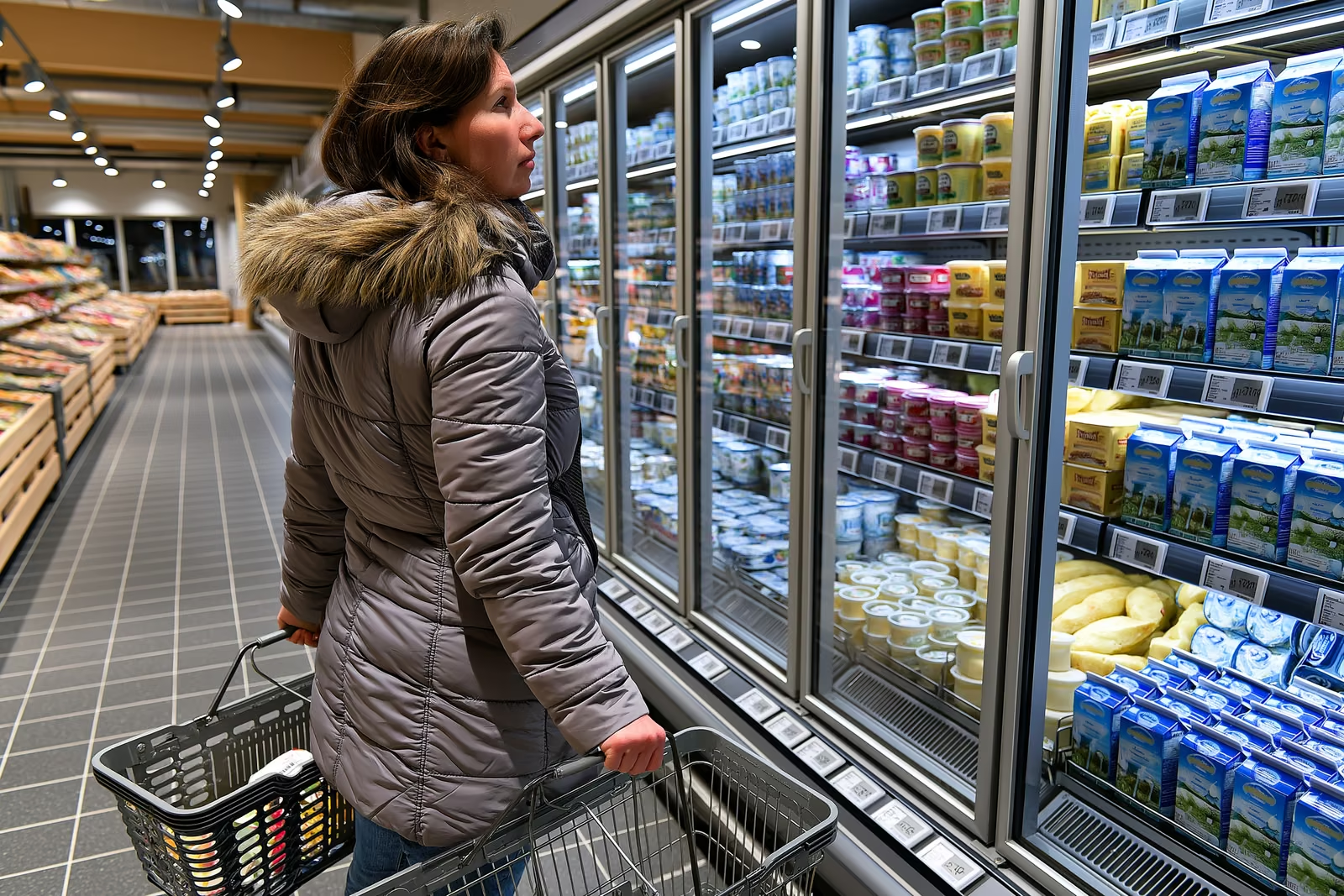
Anyone who feels that the weekly shop in Germany costs far more than it did a few years ago now has official confirmation. Food prices rose by an average of 36.3 percent between early 2020 and mid-2025, according to a written answer from the Federal Agriculture Ministry to a parliamentary inquiry submitted by the Left party (Die Linke). Over the same period, general consumer prices increased by 22 percent, so groceries became expensive considerably faster than almost everything else.
The figures were first reported by the Rheinische Post newspaper on July 15 and were quickly picked up across German media. They put hard numbers on an everyday experience that affects every household in the country, and they have restarted a political debate about whether the state should step in to control what supermarkets charge.
What the Government Answer Reveals
The data comes from the Bundesministerium für Landwirtschaft, Ernährung und Heimat, the federal ministry responsible for agriculture and food. It compiled the numbers in response to a so-called Kleine Anfrage, a formal written question that parliamentary groups can use to force the government to publish information. In this case, the Left party asked how food prices had developed since the start of 2020.
The answer shows a clear pattern. While the general cost of living rose by roughly a fifth in five and a half years, the cost of feeding a household rose by more than a third. The gap of over 14 percentage points explains why official inflation statistics often feel disconnected from what people see on supermarket receipts. Germany’s headline inflation rate has actually cooled recently, as we covered when German inflation eased to 2.3 percent, but past price increases have not been reversed. The higher level is here to stay.
Which Food Prices Rose the Most
The ministry’s answer also breaks down which products became expensive fastest. The steepest increases hit poultry, many dairy products, eggs, cooking fats and cooking oils, and sugar. These are exactly the basic ingredients that appear in almost every kitchen, which is why the overall increase is so hard to avoid, even for careful shoppers.
At the other end of the scale, some categories rose much less than the average. Fruit, fish and beverages recorded the smallest increases, and according to t-online, ready-made meals also stayed comparatively moderate. The Berliner Zeitung noted that the numbers describe average developments across Germany, so individual stores and regions can differ. Still, the direction is the same everywhere: staple foods have led the surge.
The Left Party Demands Price Controls
For the Left party, the numbers are proof that the food market is not working for consumers. Ina Latendorf, the party’s spokesperson for food policy who initiated the inquiry, is calling for a state price monitoring office that would track what happens between farm, factory and shelf. She also wants a legal cap on the profit margins of large food corporations and the complete removal of value added tax on basic foodstuffs, which is currently 7 percent on most groceries.
Latendorf accuses the federal government of refusing to confront the market power of the four large supermarket groups that dominate German food retail, and she warned against what she called a new price spiral, according to t-online. The government has so far shown no intention of introducing price caps or margin controls. Whether any of the demands become policy is therefore open, but the debate about supermarket power is unlikely to disappear while prices remain this high.
Why Food Prices Outpaced Inflation
The ministry’s answer documents the increase rather than explaining it in full, but the period in question contained several shocks that hit food production particularly hard. The pandemic disrupted supply chains from 2020 onward, and Russia’s invasion of Ukraine in 2022 pushed up the cost of energy, fertilizer and grain at the same time. Food processing and transport are energy intensive, so those costs fed through to shelf prices with force.
Critics argue that this is not the whole story, because prices for some products kept climbing even after energy and raw material costs eased. That suspicion is precisely what fuels the Left party’s call for a monitoring office: without transparent data on margins, it is difficult to say how much of the increase reflects real costs and how much reflects pricing power in a highly concentrated retail market.
How Expats Can Soften the Blow
For internationals in Germany, the practical question is how to keep a food budget under control when staples have jumped by more than a third. The classic German toolkit still works: discounters such as Aldi, Lidl, Penny and Netto remain noticeably cheaper than full-range supermarkets for everyday items, store-brand products (Eigenmarken) usually undercut branded goods by a wide margin, and weekly offer leaflets and apps make it easy to plan purchases around promotions. Our guide to grocery shopping in Germany walks through these strategies in detail.
It also pays to shop around the categories that rose least. Seasonal fruit, fish and simple unprocessed ingredients have become relatively better value compared with heavily processed products, eggs and dairy. Since food prices are politically contested right now, expats should also watch the VAT debate: if a future government did cut the 7 percent rate on staples, everyday shopping would become cheaper overnight. Until then, comparing stores and buying strategically remains the most reliable way to fight a 36 percent increase.

