




 Turkish
 Italian
 Spanish
 Portuguese
 Romanian
 Albanian
 Lithuanian
 Latvian
 Bulgarian
 Greek
Greek Hungarian
 French
 Croatian
 Czech
Czech
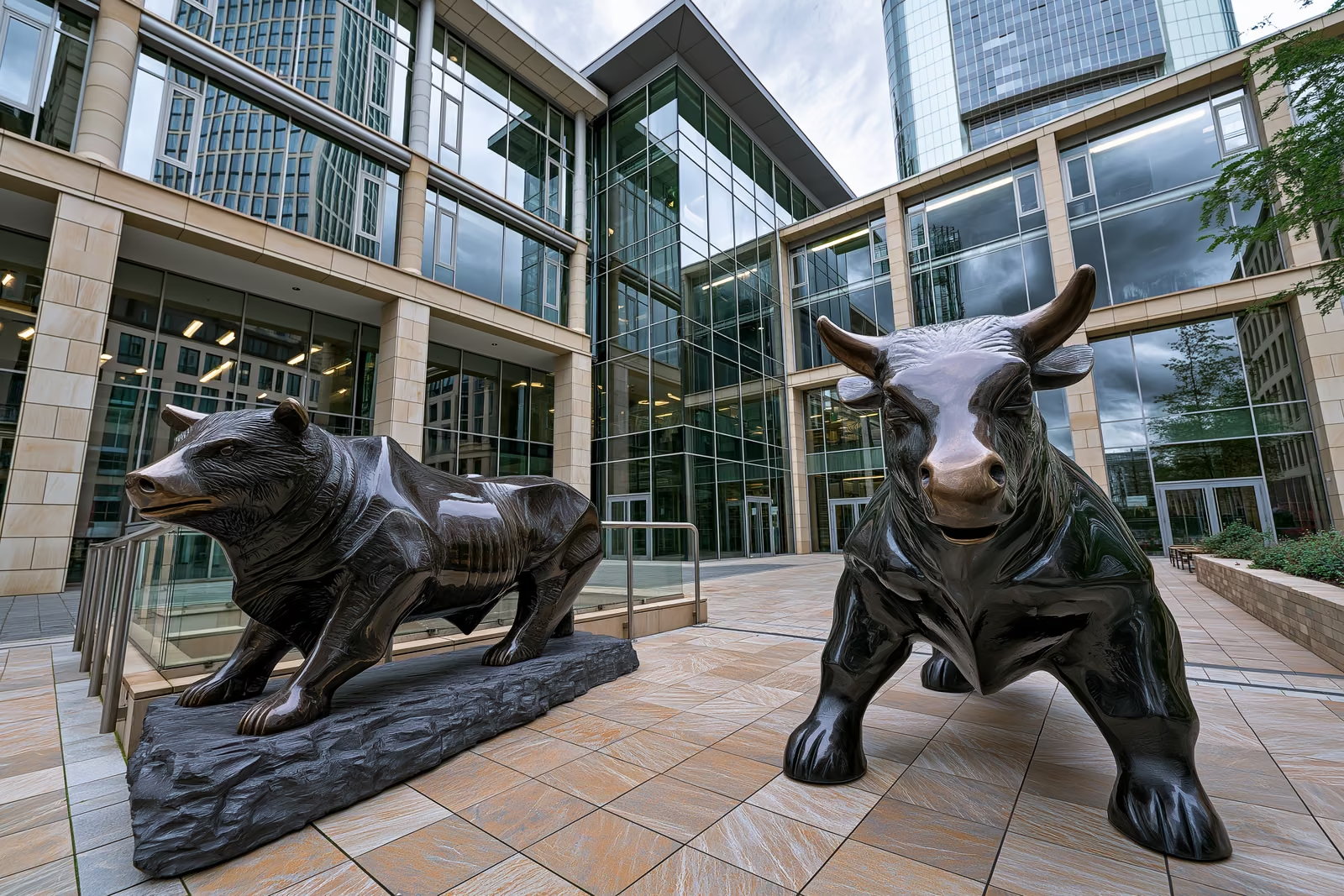
Germany’s leading share index has lost its shine. The DAX closed at 24,830.98 points on Friday, July 17, down 0.34 percent on the day, and ended the week roughly 1 percent lower. That keeps the DAX below 25,000 and about 4 percent under the record of around 25,900 points it set at the start of the previous week. What looked like an unstoppable rally in early July has turned into a correction driven by geopolitics, oil and interest rate worries.
For the many internationals in Germany who invest through ETF savings plans or hold shares of their employer, the question is what this pullback means in practice. The short answer: the drivers are real, but a 4 percent dip after a record is not a crash.
A Week of Losses on the Frankfurt Exchange
Friday capped a nervous week in Frankfurt. Alongside the DAX, the MDax index of medium-sized companies fell 0.55 percent to 31,864.73 points, and the eurozone-wide EuroStoxx 50 dropped 0.84 percent, according to the dpa-AFX market report. Wall Street offered no support, with the tech-heavy Nasdaq 100 down 1.4 percent around the European close.
Not every stock fell. Salzgitter gained 3.9 percent after raising its annual guidance, construction equipment maker Wacker Neuson jumped 6.3 percent on strong quarterly results, and SMA Solar climbed 5.8 percent after lifting its targets. The losses were concentrated where the gains of the past year had been largest: technology.
DAX Below 25,000: What Drove the Slide
The dominant factor is the renewed military confrontation between the United States and Iran, which continued to exchange attacks in the Middle East through the week. The fighting has disrupted shipping around the Strait of Hormuz, the narrow waterway through which a large share of the world’s oil is transported, and pushed oil prices higher. Finanzmarktwelt described the Iran escalation as the shock that first knocked the index below the 25,000 mark.

Expensive oil creates a second problem: inflation. Markets now worry that persistently higher energy prices will force central banks to keep interest rates higher for longer, and rising bond yield expectations weigh most heavily on growth and technology stocks. On top of that came profit-taking in an already stretched tech sector, amplified by the launch of a new Chinese AI model, Kimi K3 from Alibaba-backed Moonshot AI, which dpa-AFX reported revived fears of Chinese competition similar to the DeepSeek shock of 2025.
Chip Stocks Lead the Losses
German semiconductor and chip equipment companies were hit hardest. Index heavyweight Infineon lost 1.6 percent, laser specialist LPKF slumped 6.8 percent, and Aixtron, Suss MicroTec and Siltronic fell by up to 4.6 percent. These stocks had been among the biggest winners of the artificial intelligence boom, so they are the first to suffer when investors reduce risk.
Analysts quoted in the dpa-AFX report warned that investors increasingly fear collateral damage beyond technology if the AI correction spreads to the broader market. That has not happened so far: the losses remain concentrated, and companies with solid earnings news were still rewarded, as the gains at Salzgitter and Wacker Neuson show.
The ECB Meets on July 23
The next fixed point for markets is the European Central Bank’s rate decision on Thursday, July 23. No change is expected, but the tone will matter. Observers are watching whether ECB President Christine Lagarde confirms market expectations of a rate step later in the year or keeps her options open, balancing inflation risks from oil against Europe’s fragile growth.
One analyst cited in the dpa-AFX weekly outlook even sees a second rate increase this year if oil prices keep climbing, though he expects them to stabilize. For borrowers and savers in Germany, the message is the same: the era of falling rates is on pause as long as the Middle East conflict keeps energy prices elevated.
What a DAX Below 25,000 Means for ETF Savers
For expats with a monthly ETF savings plan on the DAX or MSCI World, a correction is not a reason to stop. Regular contributions buy more shares when prices are lower, which is exactly how a Sparplan, the automated savings plan offered by German brokers, is designed to work. Selling after a 4 percent dip locks in losses and forfeits the recovery; the index reached its record only two weeks ago, as we reported when the DAX hit its record high in July 2026.
Employees who hold company shares through stock programs should think about concentration rather than timing. If your salary and your savings depend on the same employer, especially in the hard-hit chip sector, a downturn hits twice, so diversifying across an index makes sense. And remember the tax side: capital gains in Germany are subject to the 25 percent Abgeltungsteuer, the flat withholding tax on investment income, with an annual tax-free allowance of 1,000 euros per person. Our guide to understanding German taxes explains how investment income is treated. Volatile weeks like this one are uncomfortable, but for long-term savers they are part of the normal rhythm of the market.

