Rhine Low Water Near Record, Costs Rise
4 min read
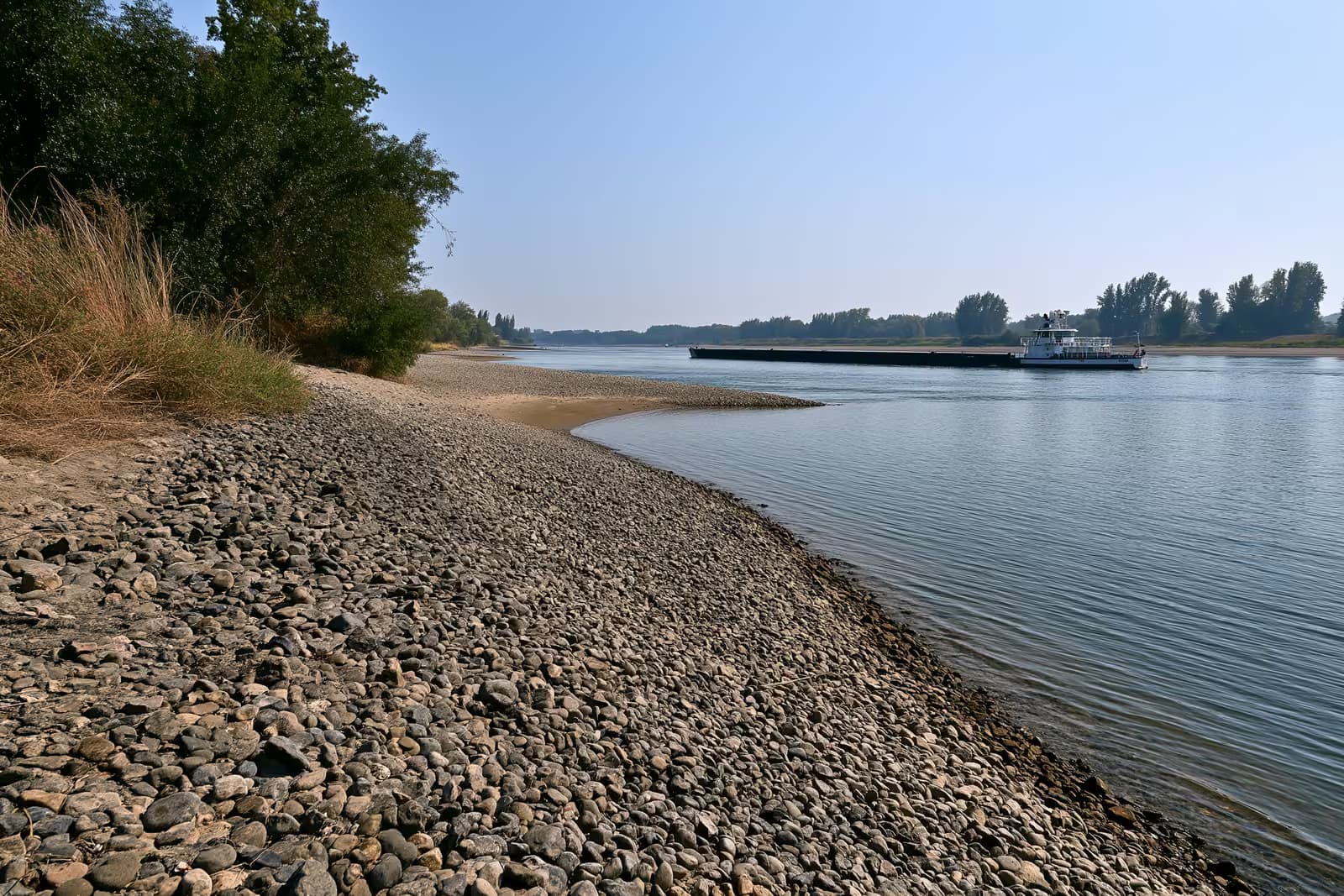
The Rhine low water crisis has pushed one of Europe’s busiest inland waterways close to its all-time record, and the strain is already showing up in freight bills. At the narrow Kaub chokepoint on the Middle Rhine, the navigable depth fell to around 25 centimetres at the end of July 2026, matching the low daily average set during the drought of October 2018. Forecasters expected the level to slip even further in the following days.
How low the Rhine low water has fallen
Kaub, a stretch near Koblenz where the river is shallow and hemmed in, is the gauge that shippers watch most closely because it sets the limit for how deeply a barge can be loaded. Around 25 centimetres of the marker on July 31 put the river level with its 2018 record, and forecasts cited by ZDFheute and t-online pointed to roughly 24 centimetres in the following days, which would set a new low.
The problem is not confined to Germany. At Lobith, where the Rhine crosses from Germany into the Netherlands, the water dropped to its lowest level ever recorded, at 6.47 metres above the Dutch reference level, just below the previous record of 6.48 metres from 2022, according to NL Times. Officials also noted that the river hit these extremes unusually early in the year, well before the late-summer weeks when Rhine low water normally peaks.
Why shallow water raises freight costs
When the river runs this low, barges cannot fill up. Operators report loading vessels to only about 20 percent of capacity so the hulls sit high enough to clear the riverbed. That means four to five ships are needed to move the cargo that one fully laden barge would normally carry, and the scarcity of space drives prices sharply higher.
Carriers have responded with low-water surcharges, known in German as Kleinwasserzuschläge, added on top of the base freight rate. For tank ships on the route from Rotterdam to Karlsruhe, the price has jumped from around 45 euros per tonne in late June to roughly 120 to 125 euros per tonne. The German Chamber of Commerce and Industry, the DIHK, warned that the shallow water is braking cargo transport on the Rhine massively.
What flows on the river
The Rhine is a backbone of German industry, carrying coal, chemicals, grain, gravel and, importantly for households, mineral oil products such as diesel and heating oil. When barge capacity shrinks, refineries and depots along the river find it harder and more expensive to move these fuels to inland storage.
Chemicals giant Evonik and other large shippers have said the low water is complicating deliveries. Because so much of the country’s fuel supply travels by water before it reaches tanker trucks and filling stations, a prolonged squeeze on the river tends to ripple outward into the prices drivers and homeowners eventually pay.
The Rhine handles a large share of Germany’s inland freight, and past droughts show how quickly problems spread. During the low water of 2018, disrupted deliveries dented industrial output and briefly lifted fuel prices in parts of the country. The 2022 drought brought similar strains. Reaching comparable levels this early in the summer, before the traditional low-water season, is what has industry groups worried that the disruption could last longer this time.
What Rhine low water means for your bills
For most residents the effect is indirect but real. Higher barge costs and thinner deliveries can nudge up the price of delivered heating oil, the Heizöl many households order to fill their tanks before winter, and can add pressure at the diesel pump. That timing matters, because late summer is when many people top up their heating-oil tanks ahead of the cold months.
If you heat with oil, it may be worth comparing offers rather than waiting, since a further drop in the river could keep surcharges in place for weeks. The situation also comes on top of other cost pressures at the pump, which we covered in our report on fuel prices and the expiring tax break. For the wider weather backdrop driving the drought, see our coverage of heat and storms across Germany.
The one factor that would ease the pressure quickly is sustained rain across the river’s catchment area in the Alps and central Germany. Until that arrives, forecasters expect the Rhine low water to persist, and surcharges to stay in force. For most households the sensible response is not alarm but awareness: watch heating-oil quotes if you rely on them, and factor a little extra into your autumn budget in case the higher transport costs linger into the heating season.