





 Turkish
 Italian
 Spanish
 Portuguese
 Romanian
 Albanian
 Lithuanian
 Latvian
 Bulgarian
 Greek
Greek Hungarian
 French
 Croatian
 Czech
Czech
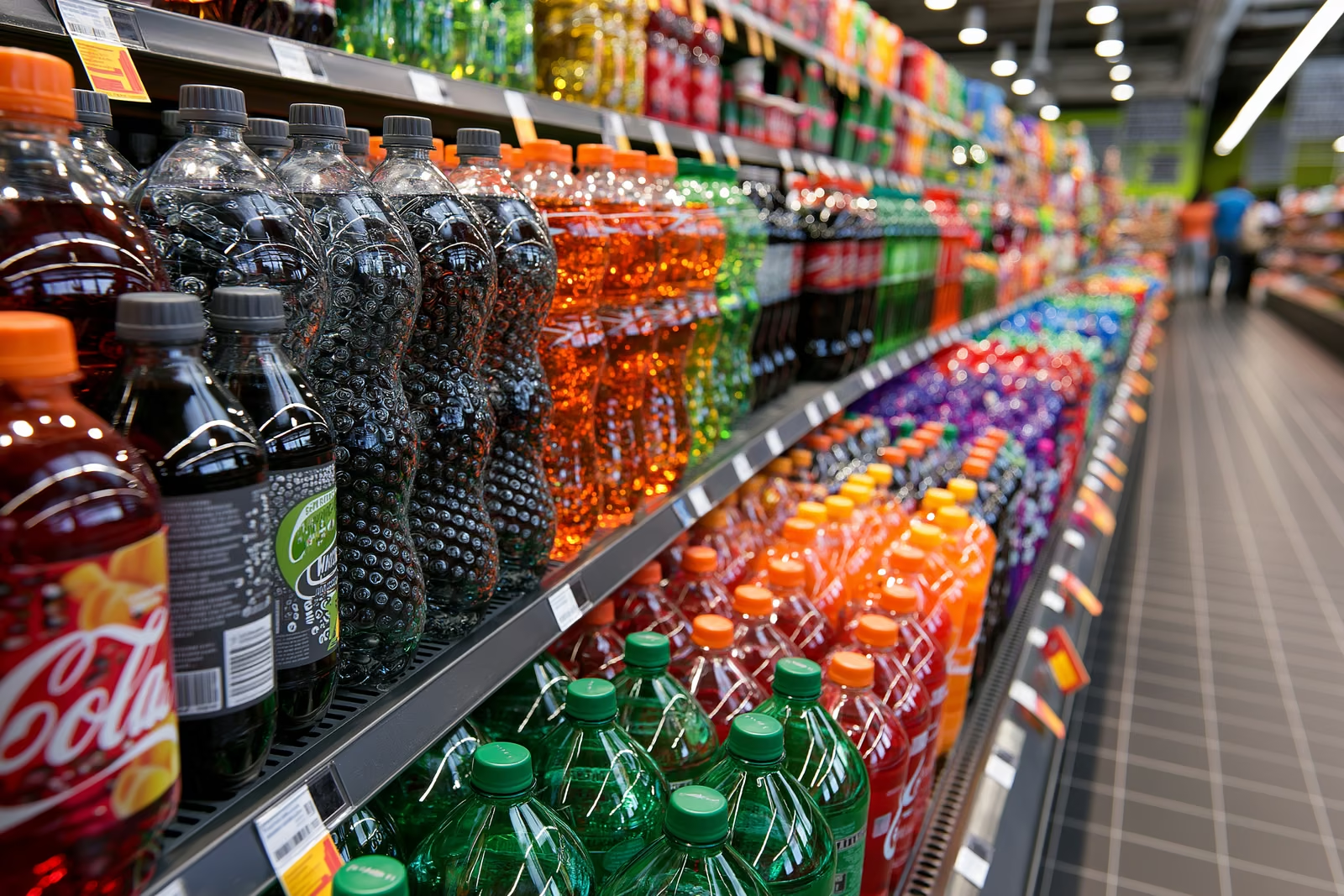
Germany is moving towards a national sugar tax on sweetened drinks. Health Minister Nina Warken said in mid-July that the levy should start in 2027 and bring in around 650 million euros a year, money she wants to steer into the strained public health insurance system rather than the general federal budget. The minister confirmed the plan in statements to the RND media group and defended it on the ZDF talk show Maybrit Illner on July 16.
If the plan survives negotiations with the Finance Ministry, Germany would join a long list of countries that already tax sugary drinks. For consumers, the change would be visible directly on the supermarket shelf, since the tax is designed to make high-sugar drinks noticeably more expensive per liter.
Why the health minister wants a sugar tax
The push comes at a moment of deep financial stress for the statutory health insurance system, the GKV. Parliament has just passed a cost-containment package meant to stop contribution rates from climbing further, a reform we covered when the GKV health insurance reform passed. Warken argues that new revenue sources are needed on top of the savings, and that a levy on sugar has a double benefit: it raises money and discourages consumption that drives obesity, type 2 diabetes and dental problems.
According to the Deutsches Ärzteblatt, Warken stressed that the health insurance funds should receive additional tax money in return for the savings they are being asked to deliver, so that insured people benefit from the new levy. The taz likewise reported that the ministry expects roughly 650 million euros in the first year, with the fine print still to be agreed. “We will agree the details together with the Finance Ministry,” Warken said.
How the sugar tax would work at the checkout
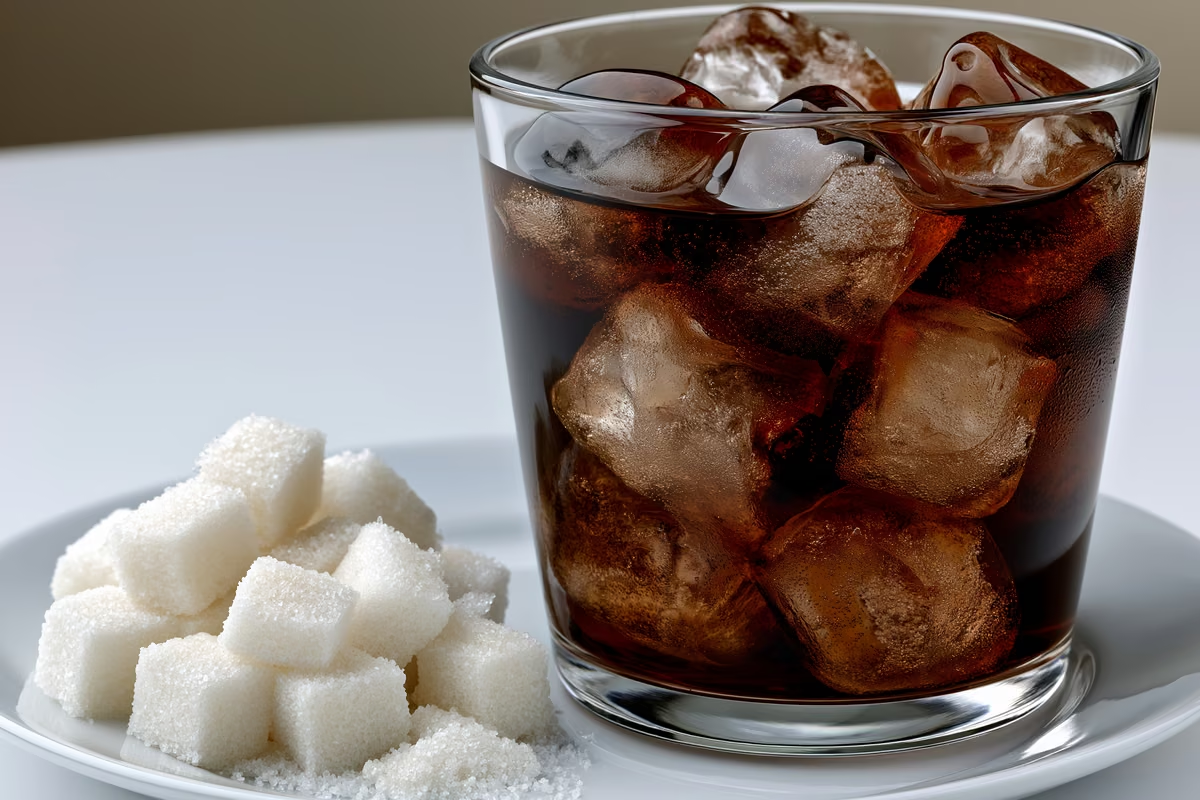
The design under discussion follows a two-step model recommended by a government expert commission. Drinks containing more than 5 grams of sugar per 100 milliliters would carry a tax of about 26 cents per liter, and drinks above 8 grams per 100 milliliters about 32 cents per liter. A standard 1.5 liter bottle of classic cola, which sits in the top band, could therefore cost roughly 48 cents more before VAT effects.
Water, unsweetened juices and most drinks below the 5 gram threshold would not be affected. The structure deliberately rewards manufacturers who reformulate their recipes, because dropping below a threshold means dropping into a cheaper band or out of the tax entirely. Not everyone in the cabinet is convinced yet: the Ärzteblatt notes that Finance Minister Lars Klingbeil has questioned both the revenue estimate and the 2027 timetable, so the final rates and start date may still shift.
Filling a 500 million euro hole
The sugar tax announcement came packaged with less pleasant news. Warken conceded that the federal government still has to find around 500 million euros it promised the states for hospital funding, a pledge that was recorded in a protocol note to the recent reform but never financed. “We still have to save the 500 million,” she said, adding that neither insured people nor employers should carry that burden.
That means a further round of savings inside the health system on top of the cuts already agreed. Health insurers remain skeptical that any of this will lower premiums. Jens Baas, head of the large insurer Techniker Krankenkasse, told the Ärzteblatt that it would already count as a success if contribution rates simply stop rising, describing the recent reform as emergency treatment rather than a cure.
What other countries’ sugar levies changed
Germany is a latecomer to this instrument. The United Kingdom introduced its Soft Drinks Industry Levy in 2018 with a similar two-band design, and the most visible effect was not the price at the till but reformulation: many producers cut sugar content below the thresholds to avoid the levy altogether. Dozens of other countries, from France to Mexico, tax sweetened drinks in some form.
Until now, Germany relied on voluntary sugar-reduction commitments from the food industry, an approach public health researchers have long criticized as too slow. A binding tax with clear thresholds would be a marked change of course for a country that has traditionally been cautious about steering diets through prices.
What the sugar tax means for expat households
For most households the direct cost will be modest and easy to manage. The tax targets a narrow product group, so the practical answer is substitution: water, sparkling water with juice, and zero-sugar variants would stay untaxed or nearly so. If you regularly buy crates of soft drinks, expect prices to move in 2027 and compare per-liter prices more carefully, a habit worth building anyway with our grocery shopping tips for Germany.
The bigger story for expats is where the money goes. Everyone employed in Germany pays into the health system, and premiums have been rising for years. A sugar tax earmarked for the GKV would be one of the first new revenue streams flowing into that system instead of out of your paycheck. Whether it arrives on schedule in 2027, and at the announced rates, now depends on the negotiations between the Health Ministry and the Finance Ministry in the coming months.

