





 Turkish
 Italian
 Spanish
 Portuguese
 Romanian
 Albanian
 Lithuanian
 Latvian
 Bulgarian
 Greek
Greek Hungarian
 French
 Croatian
 Czech
Czech
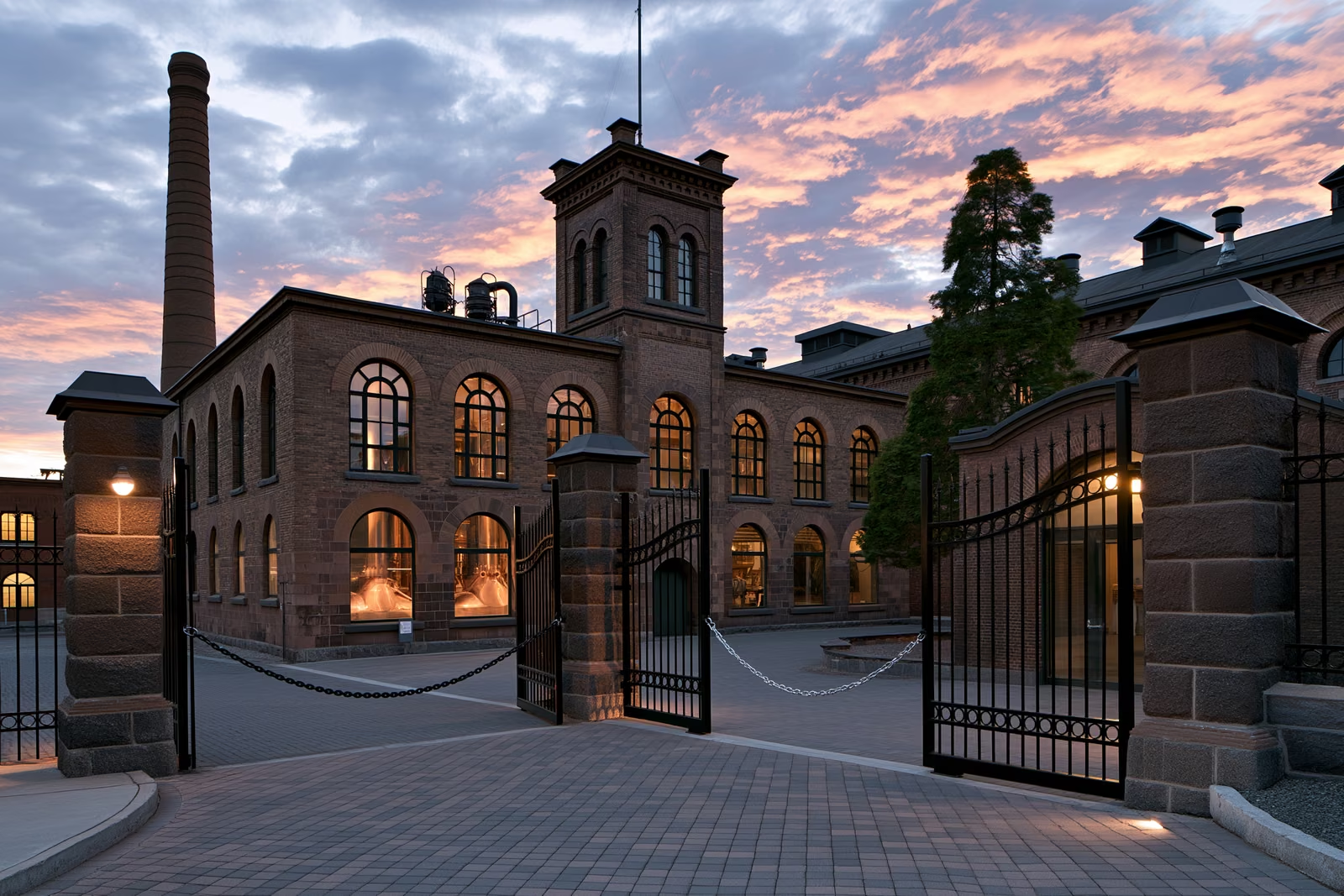
One of Germany’s oldest breweries is shutting down for good. The Eichbaum brewery in Mannheim, founded in 1679 and the city’s oldest company, will cease operations after 347 years, following the collapse of months-long rescue efforts in mid-July 2026. Around 240 employees are receiving termination notices, and the site is due to close by the end of September.
How the Eichbaum brewery rescue failed
Eichbaum filed for insolvency in self-administration at the Mannheim district court at the end of October 2025, a procedure that lets existing management restructure a company under court supervision. For months, the leadership pursued continuation scenarios, and creditors even approved a restructuring plan in late March 2026. But by July 13, the last realistic option had fallen through, and the creditors’ committee backed the decision to wind the business down.
According to WirtschaftsWoche, the final concept would have split the company between a financial investor, who was to take over the Mannheim operations and export business, and the brewing group Park & Bellheimer, which was to handle domestic brands and distribution. The arrangement never materialized. The Mannheimer Morgen reported that the brewery remained loss-making despite restructuring measures and could no longer repay the loans that had kept it running through the insolvency. Even a planned transfer company to cushion job losses will not come about.
347 years of Eichbaum brewery history
Few German companies of any kind can trace their history back to the 17th century. Eichbaum survived wars, occupations and economic crises, grew into one of the largest breweries in Baden-Württemberg, and in recent decades shipped beer to more than 60 countries. Its export business and its malt drink Karamalz made the name known far beyond the region.
The dismantling began before the final decision. The trademark rights to Karamalz were sold to the Veltins brewery shortly after the insolvency filing in autumn 2025, taking one of the company’s most valuable assets off the table. Hopes that a larger brewer might step in also faded: the state-owned Badische Staatsbrauerei Rothaus publicly ruled out taking over the insolvent Mannheim company. Now a small wind-down team will complete remaining orders before the gates close for good, and the brewery site itself is to be sold.
Why the numbers no longer worked
The Eichbaum brewery’s problems mirror those of an entire industry, magnified by its own structure. The brewery ran large production capacity but earned too little from its own premium brands, relying heavily on low-margin contract brewing and private-label beer for retail chains. When volumes fell, the fixed costs of a big plant became impossible to carry.
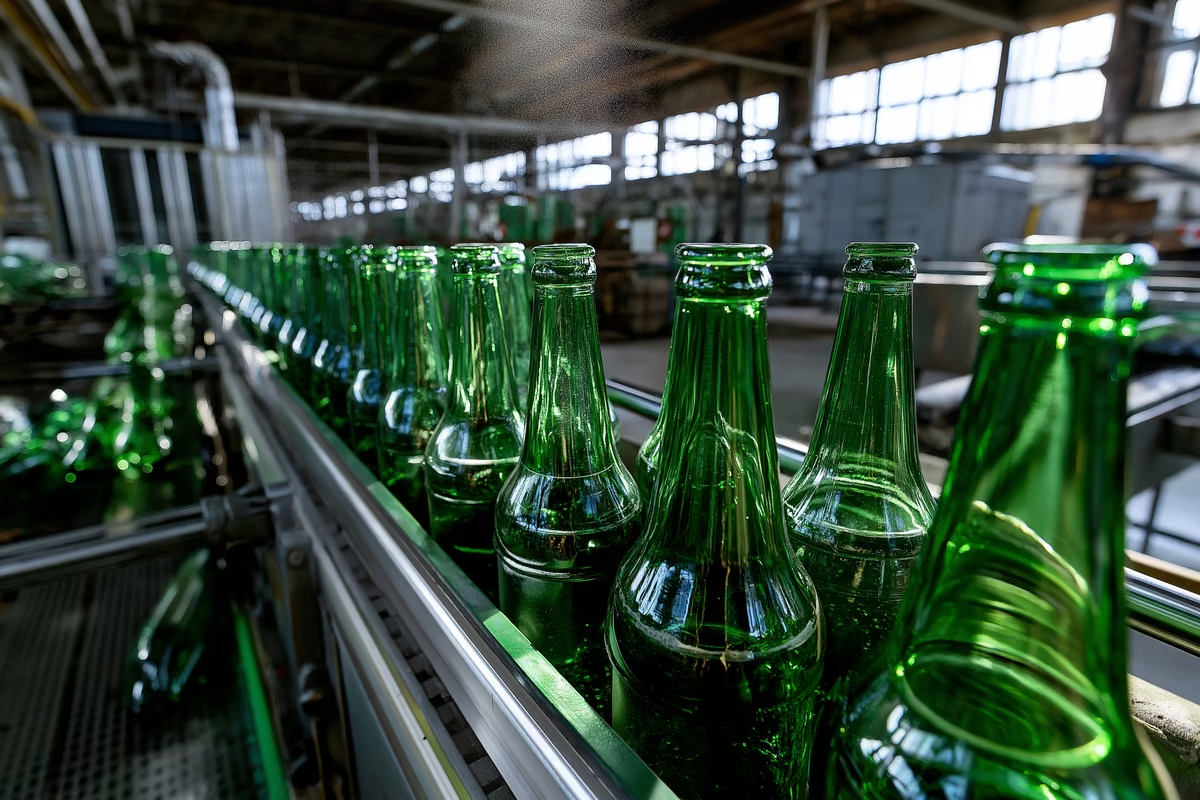
Exports made things worse. Trade reporting cites the loss of significant Russian export volumes after import restrictions as a heavy blow to a brewery that had built real business in that market. Add sharply higher energy, packaging and logistics costs since 2022, and a company with thin margins had nowhere left to go, despite a brand that many in the region grew up with.
A shrinking market for German breweries
The deeper trend is simple: Germans drink less beer every year. Per-capita consumption has been sliding for decades as habits shift toward alcohol-free drinks and health-conscious lifestyles, and breweries fight over a shrinking pool with heavy discounting. Alcohol-free beers are growing, but not fast enough to offset the decline in the classic Pilsner business that plants like Eichbaum were built for.
The closure of the Eichbaum brewery is a warning sign that even venerable names are not safe, joining a wave of brewery insolvencies across the country in recent years. It also fits a broader pattern of pressure on traditional German employers, from the auto sector, where we reported on VW’s job cuts and plant closures, to family-owned manufacturers. Longevity, in today’s German economy, is no guarantee of survival.
What this means for workers and the region
For the roughly 240 employees, the failure of the transfer company means moving straight from termination to the job market, supported by unemployment benefits and the Agentur für Arbeit. Mannheim’s industrial labor market offers alternatives in logistics, chemicals and machinery, but brewing skills are specialized, and the remaining breweries in the region are cutting rather than adding staff.
For consumers and beer lovers, Eichbaum products will disappear from shelves once stocks run out, unless brand rights find buyers the way Karamalz did. Anyone who wants to understand how deeply brewing is woven into German life, and why closures like this resonate beyond economics, can read our guide to wine and beer culture in Germany. In Mannheim, a company that outlasted the Holy Roman Empire could not outlast the modern beer market.

