





 Turkish
 Italian
 Spanish
 Portuguese
 Romanian
 Albanian
 Lithuanian
 Latvian
 Bulgarian
 Greek
Greek Hungarian
 French
 Croatian
 Czech
Czech
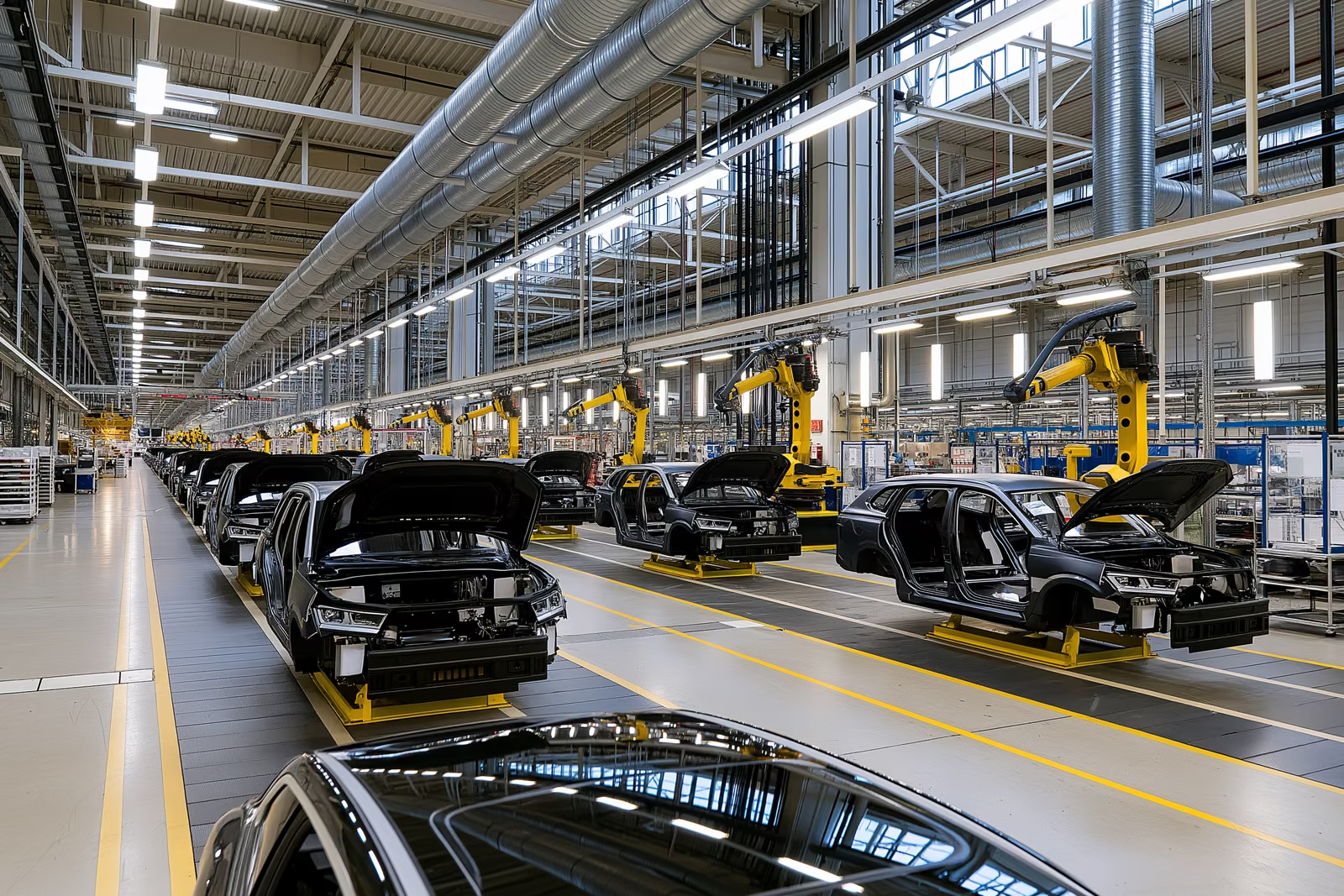
Ten days after Volkswagen’s supervisory board threw out the most radical shrinking plan in the company’s history, the battle over VW plant closures has entered a new phase. Instead of one big decision, the past week brought a flurry of rescue ideas, political manoeuvres and setbacks: a Saxon proposal to lure a Chinese partner to Zwickau with higher tariffs, a defence deal for Osnabrück reportedly blocked by Qatar, and signals that Lower Saxony could back an investor itself. For the tens of thousands of workers affected, many of them internationals, the outcome remains wide open until a decisive board meeting in September.
The starting point is the vote of July 9. Volkswagen’s supervisory board rejected CEO Oliver Blume’s restructuring package by 12 votes to 7, with worker representatives and the state of Lower Saxony, VW’s second-largest shareholder, forming the blocking majority, the investigative outlet Correctiv reported. The plan had foreseen closing Zwickau and Emden from 2031, Hannover from 2032 and Audi’s Neckarsulm site from 2034, alongside tens of thousands of additional job cuts by the early 2030s.
Where the Fight Over VW Plant Closures Stands
The rejection did not solve Volkswagen’s underlying problem; it only bought time. The company is caught between collapsing sales in China, American tariffs that together cost it billions per year, and electric-car factories running far below capacity. The board is expected to reconsider a revised package in September, which turns this summer into a race to find alternatives for the four threatened plants.
That is why the developments of the past week matter. Every credible alternative use for a factory, whether a new partner, a new product or a new investor, weakens the case for closing it. Every blocked deal does the opposite. We covered the original crisis and what it means for employees in our earlier report on VW job cuts and plant closures.
Saxony Bets on China to Save Zwickau
The most unusual proposal came from Dresden. Saxony’s economy minister Dirk Panter suggested on July 16 that the EU should roughly double its import tariffs on Chinese electric cars, which currently range from about 7.8 to 35.3 percent on top of the standard duty. His logic: the higher the trade barrier, the more attractive it becomes for a Chinese manufacturer to build cars inside Europe, ideally in a joint venture at the VW plant in Zwickau.
The stakes in the region are enormous. Around 8,500 people work at the Zwickau factory itself, Germany’s first plant converted entirely to electric vehicles, and an estimated 20,000 more jobs depend on it at suppliers across Saxony. Whether Brussels, Berlin or Volkswagen’s own management will embrace a plan that invites a Chinese competitor into a VW factory is another question, and reactions so far have been cautious.
Setback for Osnabrück, Then a Lifeline
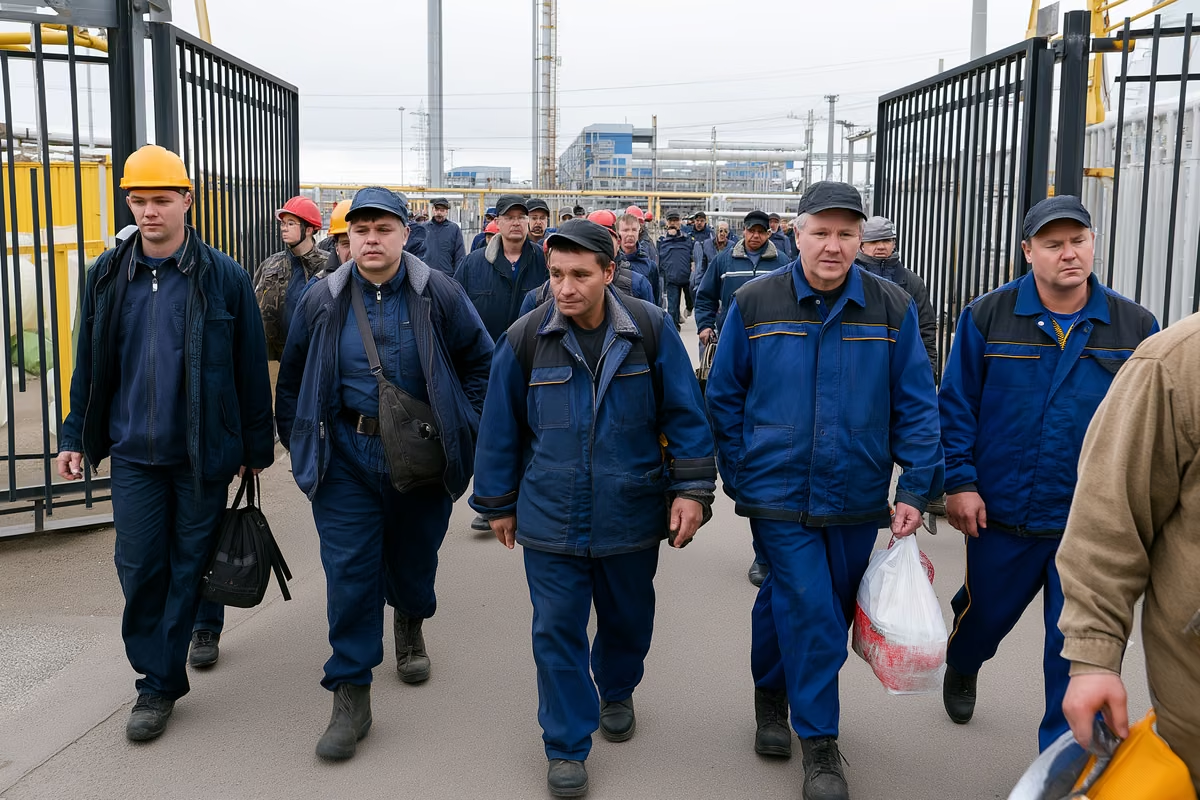
For the Osnabrück plant, where vehicle production is already scheduled to end in 2027, hopes had rested on an unusual conversion: the Israeli defence company Rafael wanted to produce components for its Iron Dome air-defence system at the site. That deal is now in doubt. According to t-online, citing earlier reporting by Merkur, Qatar’s sovereign wealth fund, which holds 10.4 percent of Volkswagen and is the company’s third-largest shareholder, is blocking the necessary decisions in VW’s governing bodies.
Days later came a counter-signal. Lower Saxony’s state government is reportedly prepared to support an investor taking over the Osnabrück site, and is even examining a stake of its own in a company that would handle the defence production, Wirtschaftswoche reported. Nothing is signed, but the message to Wolfsburg is clear: the state that helped block the closure plan intends to deliver alternatives, not just vetoes.
VW Plant Closures: What Happens Next
The next fixed point is late August, when Blume is expected to face the workforce directly and explain the revised plans after the summer break; Osnabrück is reportedly not part of that first round of briefings. Then, in September, the supervisory board takes up the savings package again. Between now and then, management must decide whether to soften the closure list, stretch the timeline or find the savings elsewhere.
None of the sides can simply wait the other out. The works council and Lower Saxony hold a majority against forced closures, but they cannot conjure up demand for cars. Blume, in turn, needs an agreement that financial markets accept as serious. The most likely outcome remains a negotiated package that trades some VW plant closures or conversions against job guarantees, but the past week shows how many outside actors, from Beijing to Doha, now have a hand in the result.
What This Means for Workers and Expats
If you or your partner work for Volkswagen or one of its suppliers, nothing changes formally before September, and existing agreements rule out compulsory redundancies at most German VW sites for now. Still, it is a good moment to understand your position: our guide to German employment contracts and rights explains notice periods, works council protections and what a Sozialplan, the negotiated compensation scheme in mass redundancies, means for employees.
Beyond the factory gates, the battle over VW plant closures is a test of how Germany handles industrial decline in its most important sector. The car industry employs hundreds of thousands of people, including a large share of international workers on the production lines in Saxony and Lower Saxony. Whether the answer turns out to be Chinese partners, defence production or managed shrinking, the decisions taken this autumn will shape jobs and local economies for a decade.

