





 Turkish
 Italian
 Spanish
 Portuguese
 Romanian
 Albanian
 Lithuanian
 Latvian
 Bulgarian
 Greek
Greek Hungarian
 French
 Croatian
 Czech
Czech
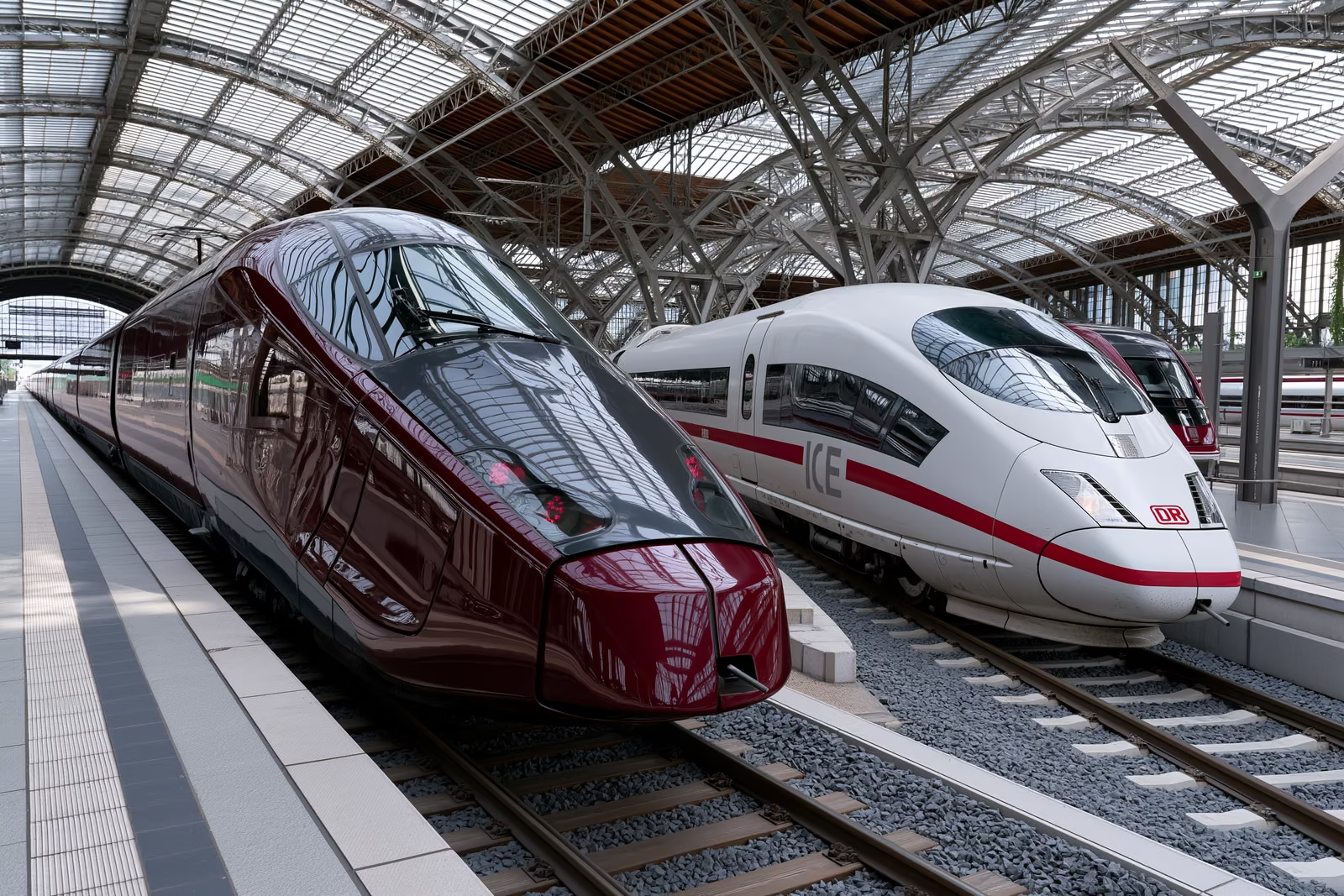
For decades, long-distance rail in Germany has meant one thing: Deutsche Bahn. That era may be ending. On July 17, 2026, the Bundesnetzagentur, the federal network regulator, issued its final decision in a case brought by the Italian operator Italo, ruling that the company may enter the German long-distance market and that the state-owned railway must give up track capacity on its busiest corridors. The Italo challenge is the first serious attempt by a foreign high-speed operator to compete head-on with the ICE network, and it could reshape how people travel between German cities.
Deutsche Bahn currently runs about 95 percent of all long-distance rail services in the country. Regulators, and many frustrated passengers, hope that real competition will do to German rail what it once did in Italy and Spain: improve service and push prices down.
What the Bundesnetzagentur Decided
The core of the ruling is a new competitor clause for congested track. On heavily used sections with formal capacity limits, the infrastructure company DB InfraGO may in future allocate only 60 to 75 percent of the available long-distance capacity to a single operator. In practice, that caps Deutsche Bahn’s own long-distance arm and reserves at least a quarter of the slots for rivals. The rule takes effect with the construction of the 2028 network timetable, which begins next year.
Bundesnetzagentur president Klaus Müller said that more competition has the potential to create better offers for passengers. According to t-online, DB InfraGO must now write the clause into its infrastructure usage conditions and submit the draft to the regulator for review in the autumn. The framework grew out of Italo’s formal complaint against the way scarce capacity has been distributed in Germany, a process that had structurally favoured the incumbent.
How the Italo Challenge Reached Germany
Italo is Italy’s private high-speed operator, known at home for its dark red trains that compete with the state railway Trenitalia. Its German plans are concrete: market entry in spring 2028, a fleet of 30 high-speed trains and 56 daily services. The company wants to run the Munich-Frankfurt-Cologne-Dortmund corridor roughly hourly and connect Munich with Berlin and Hamburg every two hours, according to a dpa roundup carried by onvista.
The commercial pitch is aimed squarely at price-sensitive travellers. Italo’s management has promised that its entry will make train tickets in Germany noticeably cheaper, and the regulator itself expects fares to fall where two operators compete for the same passengers. Experience from Italy and Spain supports the expectation: on routes where high-speed competition arrived, prices dropped and passenger numbers rose sharply.
Deutsche Bahn Pushes Back
The incumbent is not accepting the decision quietly. Deutsche Bahn said it would examine the ruling thoroughly, and DB InfraGO has called the decision legally questionable, citing what it describes as procedural and investigative errors, the Rhein-Zeitung reported. The company can challenge the ruling before the administrative court in Cologne, although a lawsuit would not automatically stop Italo’s planned 2028 start.
Politicians are split. Federal transport minister Patrick Schnieder welcomed more competition on long-distance routes as good for passengers, but warned against consequences for the wider network if a newcomer simply picks off the profitable trunk lines while contributing nothing elsewhere; he floated changes to track pricing as a possible answer. Bavaria and Brandenburg voiced sharper concerns that regional services and connections to rural areas could suffer, because Deutsche Bahn has traditionally used profits from busy routes to support thinner ones.

What the Italo Challenge Could Mean for Fares
The Italo challenge changes nothing for passengers immediately. Until 2028, the ICE keeps its near-monopoly on the main corridors, alongside the small existing alternative Flixtrain. But if Italo’s plans hold, travellers on the Munich to Berlin, Munich to Frankfurt and Rhine-Ruhr routes would gain a second full-service high-speed option, with its own pricing, its own loyalty scheme and its own timetable logic.
The open questions are real. Italo needs trains certified for the German network, staff, workshops and station capacity, all of which take years to build up. And the warnings about cross-subsidies deserve attention: if Deutsche Bahn loses revenue on its best routes, pressure on quieter connections could grow unless politics steps in. How that tension is resolved will decide whether competition helps everyone or mainly big-city travellers.
What This Means for Expats in Germany
If you regularly travel between major German cities, the ruling is good news with a delay. From 2028, the busiest corridors should see more seats and, if the pattern from other countries repeats, cheaper tickets, especially for those who book early. Long-distance trains are also the routes not covered by the Deutschlandticket, so competition is the main hope for lower prices there; the flat-rate subscription for local transport, which we explain in our guide to the Deutschlandticket, remains unaffected.
For now, nothing changes about how you plan trips on the German network, and our overview of the public transportation system covers the current options. But the Italo challenge is worth watching: a second high-speed operator would be the biggest shake-up of German rail since the ICE was introduced, and it would give residents planning weekend trips across the country, as described in our domestic travel tips, genuinely new choices.

