Thousands Protest AfD Party Conference
2 min read
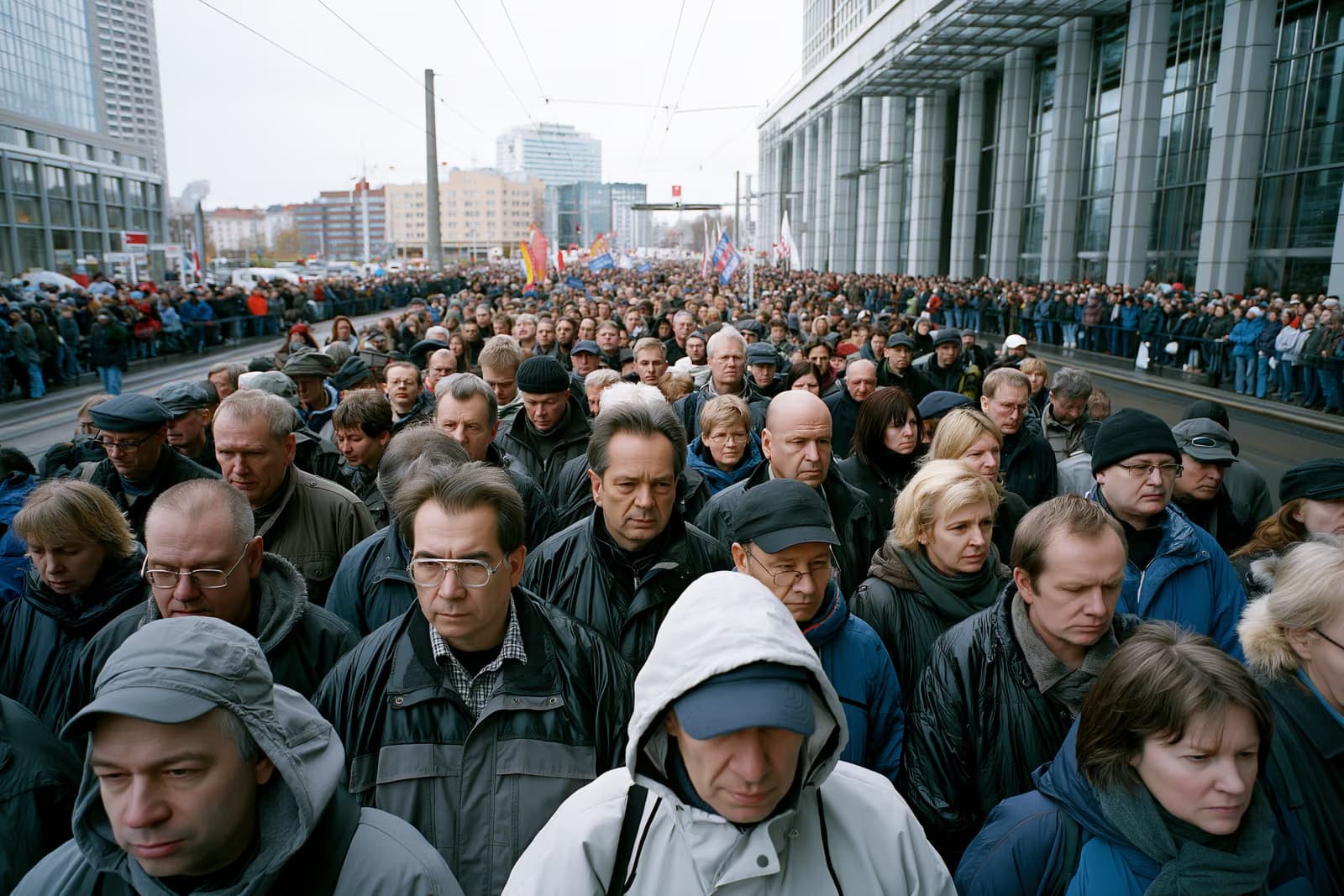
An AfD party conference in the eastern German city of Erfurt drew a mass counter-protest on 4 July 2026, when around 20,000 people took to the streets to oppose the far-right Alternative fuer Deutschland. The demonstrators blocked roads and tram lines across the Thuringian capital as delegates gathered inside. The scale of the AfD party conference protest underlined how sharply Germany is divided over the party’s rise in the country’s east.
How the AfD party conference protest unfolded
Euronews reported that roughly 20,000 people joined the demonstration and that anti-fascist protesters blocked streets and tram routes through the city. Police said an AfD constituency office and officers had been targeted with paint and fireworks, yet authorities still described the protest overall as legitimate.
The turnout was organised on a large scale. Al Jazeera reported that more than 200 buses of protesters arrived in Erfurt, with sit-in blockades around the city centre and some activists abseiling from a motorway bridge. Despite the disruption, delegates reached the conference venue, and the AfD party conference went ahead as planned.

Who organised the demonstrations
The protests brought together a broad coalition. Trade unions, civil-society groups and left-wing parties took part, coordinated by an anti-AfD umbrella group called Widersetzen, a German word meaning to resist or oppose. Organisers framed the day as a stand against what they see as an increasingly radical political force.
Their message was explicit. A Widersetzen spokesperson quoted by Euronews said the movement wants a society based on solidarity, with equal rights, equal security and the right to residence and social security for all. Others called for the party to be banned, pointing to its demands around what the AfD terms remigration, a policy of large-scale deportations that critics describe as ethnic cleansing.
Why the AfD party conference matters now
The gathering took place at a politically charged moment. At the conference the AfD re-elected Alice Weidel and Tino Chrupalla as co-leaders, and national polling has put the party ahead of Chancellor Friedrich Merz’s CDU/CSU, at around 29 percent to 22 percent according to figures cited by Euronews.
The stakes are highest in the east. State elections are approaching in Saxony-Anhalt and Mecklenburg-Vorpommern, and Al Jazeera reported polling that placed the AfD as high as 42 percent in Saxony-Anhalt, a level that could hand the party a chance to lead a German state government for the first time. That prospect is what gave the Erfurt protests their urgency.
What it means for expats in Germany
For foreigners living in Germany, this story is less about one weekend of protest and more about the political climate around migration and residence rights. A party polling near the top in several eastern states campaigns openly on tougher immigration rules, and its language on remigration has direct implications for how welcome many newcomers feel.
Day to day, large demonstrations like the one in Erfurt can affect local transport and traffic, so it is worth checking public-transport updates if protests are announced in your city. Beyond the practicalities, following how these debates translate into policy is part of settling in, and our guides at welivein.de/how-to-germany can help you understand your rights as a resident.